
Steel castings form the backbone of critical components across numerous industries, most notably in the manufacturing of large valves for power generation, oil and gas, and chemical processing plants. The inherent design flexibility and cost-effectiveness of the steel casting process make it ideal for producing these complex, pressure-containing parts. However, the very nature of this manufacturing method—involving molten metal pouring into intricate molds—introduces the potential for internal discontinuities. Defects such as gas porosity, shrinkage cavities, sand inclusions, and hot tears can be inadvertently sealed within the final steel casting. These flaws act as stress concentrators, reducing the effective load-bearing cross-section and, under operational pressures, can initiate catastrophic crack propagation leading to valve failure. Ensuring the structural integrity of these components is therefore non-negotiable, placing non-destructive testing (NDT) at the forefront of quality assurance protocols.
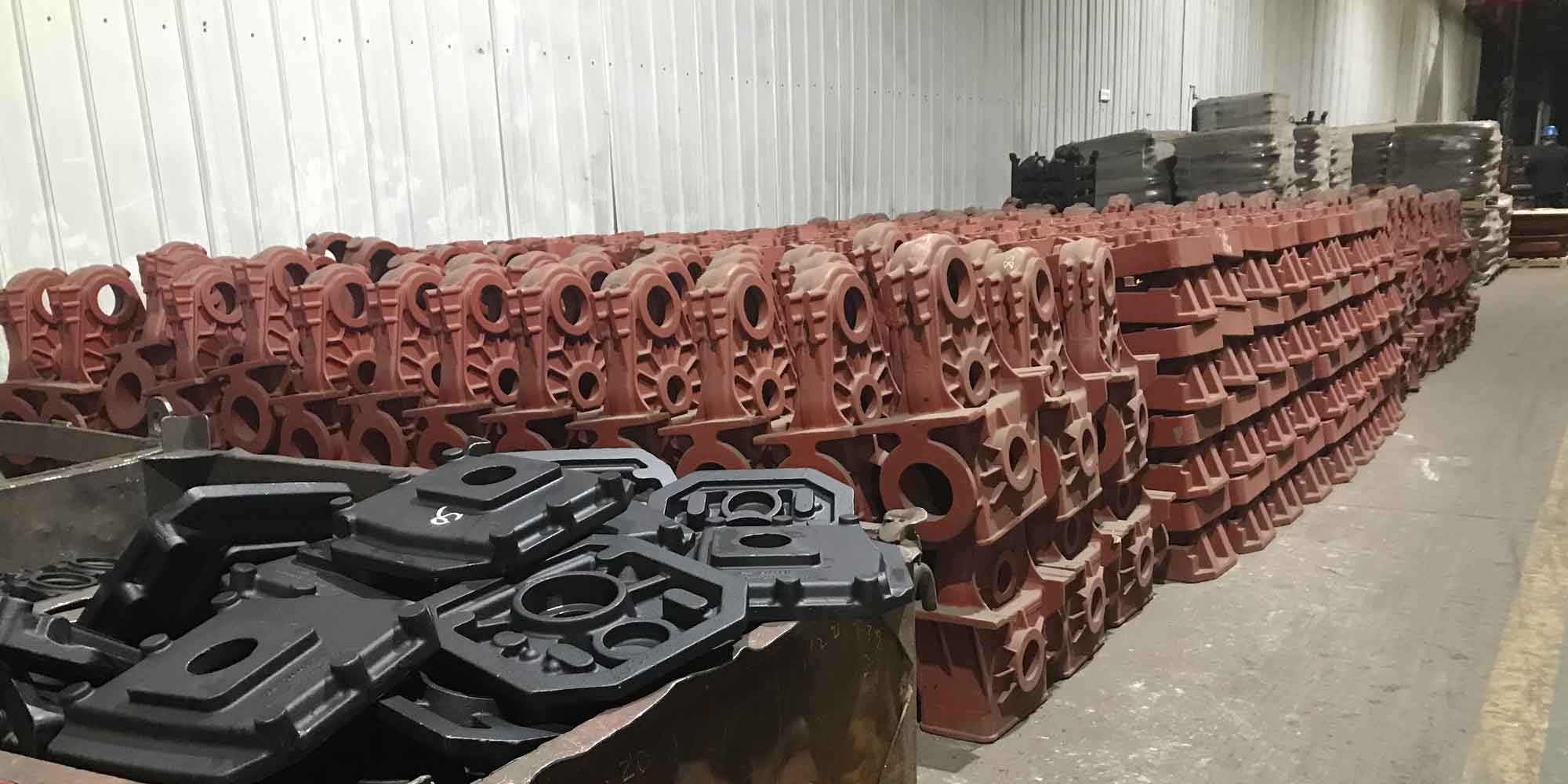
Traditional NDT methods often fall short when inspecting the complex geometries typical of valve steel castings. Radiographic testing faces difficulties with film placement in convoluted shapes, inconsistent exposure due to varying wall thicknesses, and penetration limits in thick sections. Conventional ultrasonic testing struggles with defect characterization, suffers from confusing geometric echoes, and often cannot physically access the narrow, recessed areas common in cast designs. Furthermore, it relies heavily on the technician’s skill for interpreting A-scan waveforms, leaving little objective record. Surface methods like magnetic particle and liquid penetrant testing are blind to subsurface defects. This landscape of limitations necessitates the exploration of more advanced, adaptable techniques. In this study, I investigate the application of phased array ultrasonic testing (PAUT) for the inspection of challenging, irregular structural zones within valve steel castings, focusing on the common WCB (cast carbon steel) grade.
Material Characteristics and the Imperative of Microstructure
The inspectability of any steel casting via ultrasound is fundamentally governed by its acoustic properties, which are directly tied to its microstructure. An as-cast steel casting often exhibits a coarse, inhomogeneous grain structure resulting from uncontrolled solidification. This coarse graininess is a significant impediment to ultrasonic waves. When the grain size approaches one-tenth of the ultrasonic wavelength, scattering becomes noticeable. As the grain size approaches half the wavelength, scattering increases dramatically, causing severe signal attenuation and backscatter noise (grass), which can completely mask underlying defect signals.
This relationship can be conceptually framed by considering the attenuation coefficient $\alpha$, which for scattering-dominated attenuation in a steel casting can be approximated by a function of grain size and frequency:
$$\alpha_s \propto D^3 f^4$$
where $\alpha_s$ is the scattering attenuation coefficient, $D$ is the average grain diameter, and $f$ is the ultrasonic frequency. This fourth-power dependence on frequency explains why standard high-frequency probes (e.g., 5 MHz) often fail on coarse-grained steel castings; the signal is simply scattered away.
My initial analysis of a sample WCB steel casting valve body confirmed this challenge. Chemical composition was within specification, but metallography revealed an annealed microstructure with exceptionally large grains exceeding 0.5 mm in diameter. A simple check with a 5 MHz, $\phi$10 mm normal probe showed an attenuation of approximately 40 dB higher than in a standard calibration block, and shear wave testing proved impossible as no backwall echo could be obtained.
The solution lies in heat treatment. The standard for WCB steel casting allows for either annealing or normalizing. While annealing relieves stresses, normalizing—heating to 940-960°C followed by air cooling—actively refines the grain structure. After subjecting the sample to a normalizing cycle (950°C for 2 hours, air cool), the microstructure transformed into a uniform, fine-grained mix of ferrite and pearlite. Subsequent ultrasonic tests showed attenuation levels comparable to wrought materials, and clear shear wave signals were achievable. This finding is critical: effective ultrasonic inspection of a steel casting, especially with advanced techniques like PAUT, typically requires a normalized microstructure. All subsequent work was therefore performed on normalized specimens.
| Material Condition | Microstructure | Avg. Grain Size | Ultrasonic Attenuation | Shear Wave Inspectability |
|---|---|---|---|---|
| As-Received/Annealed | Coarse Ferrite/Pearlite | > 0.5 mm | Very High | Not Possible |
| Normalized | Fine, Uniform Ferrite/Pearlite | < 0.1 mm | Low (Standard) | Fully Possible |
Phased Array Ultrasonic Testing: Principles and Advantages for Steel Casting
PAUT overcomes many limitations of conventional UT by using a probe assembly containing multiple, individually addressable piezoelectric elements. By electronically controlling the timing (phasing) of the excitation pulses to each element, the resulting ultrasonic wavefront can be dynamically shaped. This allows for three key functionalities without moving the probe: beam steering (changing the angle), beam focusing (concentrating energy at a specific depth), and electronic scanning (sweeping the beam across a range of angles).
The fundamental principle for beam steering to an angle $\theta$ is calculated by applying a linear delay $\Delta t$ between adjacent elements:
$$\Delta t = \frac{d \cdot \sin(\theta)}{c}$$
where $d$ is the inter-element pitch (center-to-center distance), $\theta$ is the desired beam angle relative to the normal, and $c$ is the sound velocity in the wedge or material. For a focused beam at a point in the material, the delays are calculated using hyperbolic or parabolic formulas based on the desired focal law.
For inspecting a steel casting with complex geometries, this technology is transformative. A single PAUT probe, placed on a often limited accessible surface, can generate a sweeping fan of sound beams (a Sectorial Scan or S-scan). This single probe position provides a wide, cross-sectional view of the underlying volume, covering weld-like junctions, thickness transition zones (misaligned surfaces), and internal passages. The data is presented in intuitive, color-coded images (S-scans, C-scans, B-scans) alongside traditional A-scans, providing a permanent, reviewable record that facilitates defect sizing, characterization, and differentiation from geometric echoes.
Inspection of Irregular Structural Zones in Valve Steel Castings
To demonstrate the efficacy of PAUT, I designed a test program using a section cut from a DN150, Q41F-16C valve body made from normalized WCB steel casting. The focus was on three critical and problematic zones common in valve steel castings: the neck radius (fillet), an external thickness transition, and an internal thickness transition. Artificial defects were introduced in each zone using wire electrical discharge machining (EDM) to simulate surface-breaking flaws.
1. Neck Radius (Fillet) Inspection
This area resembles a nozzle-to-shell weld geometry. A 30 mm long, 3 mm deep surface EDM notch was placed at the root of the fillet. The challenge is to inspect the entire root region for lack of fusion or cracking.
Procedure: A 5 MHz, 8-element linear array probe was used. The instrument’s “Pipe-to-Flange Weld” software module was selected, as it allows for precise digital modeling of the component geometry. The software’s integrated ray-tracing tool was used to design the focal laws. The goal is to ensure the entire volume of the fillet root and adjacent walls is covered by either a primary or a secondary sound path. The S-scan angle range was set from 37° to 75° to achieve this. The probe was positioned on the valve neck and scanned linearly along the circumference.
Results & Analysis: The S-scan image provided an immediate cross-sectional view. The EDM notch was clearly identified as a persistent, high-amplitude indication at the modeled surface location. The accompanying Top View (C-scan) and Side View (B-scan) displays allowed for easy length and depth sizing. The 3D volumetric rendering feature was particularly useful for spatially isolating the defect signal from the corner trap echo of the geometry itself. The measured defect length was 28 mm, with a maximum depth of 3.2 mm, closely matching the actual dimensions.
2. External Thickness Transition Inspection
This zone represents a common stress concentration point on the outer body of a steel casting. A 50 mm long, 4 mm deep EDM notch was placed on the upper edge of the transition.
Procedure: The “Elbow Weld” inspection software was utilized for this geometry. The probe was positioned on the thicker section, aiming the beam towards the sharp corner of the transition. The optimal probe index point was determined experimentally by maximizing the secondary echo from the upper edge. The S-scan range was set from 50° to 65°. This setup ensured the sound beam from multiple angles intersected with the notch location.
Results & Analysis: The scanning results were highly effective. The S-scan showed a cluster of high-amplitude signals originating precisely from the modeled corner. The electronic scanning capability meant the entire length of the notch was interrogated from a single probe position per index point, significantly speeding up inspection compared to a conventional pitch-catch technique. The system measured the notch at 53 mm in length and 4.6 mm in depth.
3. Internal Thickness Transition Inspection
Inspecting an internal, recessed corner is notoriously difficult with conventional methods due to access constraints. A 30 mm long, 2 mm deep EDM notch was placed on the internal corner of the transition.
Procedure: For this scenario, the “Longitudinal Weld” inspection software was adapted. The probe was placed on the outer surface of the thinner section. The beam was steered downwards at a shallower angle to target the internal corner with a primary beam. The S-scan was configured from 35° to 60°. The key here was to use the software’s geometry modeling to ensure the sound path reached the internal surface at the correct angle for optimal reflection from the notch.
Results & Analysis: Despite the indirect access, the PAUT system successfully detected the internal notch. The indication appeared in the S-scan at the calculated depth and angle. The ability to dynamically focus the beam at the depth of the internal corner improved signal-to-noise ratio. The measured dimensions were 33 mm in length and 2.5 mm in depth, confirming the detection and sizing capability for internal flaws in a steel casting.
| Inspection Zone (on Steel Casting) | Simulated Defect | PAUT Software Module | S-Scan Angle Range | Measured Size (L x D) | Actual Size (L x D) |
|---|---|---|---|---|---|
| Neck Radius (Fillet) | Surface EDM Notch | Pipe-to-Flange Weld | 37° – 75° | 28 mm x 3.2 mm | 30 mm x 3.0 mm |
| External Thickness Transition | Surface EDM Notch | Elbow Weld | 50° – 65° | 53 mm x 4.6 mm | 50 mm x 4.0 mm |
| Internal Thickness Transition | Surface EDM Notch | Longitudinal Weld | 35° – 60° | 33 mm x 2.5 mm | 30 mm x 2.0 mm |
Conclusions and Engineering Implications
This investigation conclusively demonstrates that phased array ultrasonic testing is a powerful and viable method for inspecting critical, irregular structural regions in valve steel castings. The success of the inspection is predicated on a favorable microstructure; a normalized heat treatment is essential to produce a fine-grained steel casting with sufficiently low acoustic attenuation to permit effective ultrasonic interrogation.
The principal advantages of PAUT for steel casting inspection are manifold:
- Geometric Flexibility: The ability to electronically steer and focus sound beams allows for comprehensive coverage of complex zones (radii, misaligned surfaces, internal corners) from a single probe position, overcoming access limitations.
- Improved Defect Characterization: Multiple data views (S-scan, B-scan, C-scan, 3D) provide an intuitive, multi-perspective visualization of indications, enabling better differentiation between true defects and geometric reflections inherent in a complex steel casting.
- Permanent, Objective Record: The entire dataset is saved, allowing for post-analysis, review, and archiving, which enhances reliability and traceability compared to conventional UT.
- Inspection Efficiency: Electronic scanning replaces multiple physical probe movements and angle changes, significantly reducing inspection time for a given volume of steel casting.
The accurate detection and sizing of artificial notches in various challenging configurations validate the technique’s potential. However, it is crucial to acknowledge that real-world defects in a steel casting—such as shrinkage porosity, ragged hot tears, or clusters of inclusions—may present different acoustic responses than clean EDM notches. Therefore, the development of reliable inspection procedures for production steel castings must involve the use of representative reference blocks containing realistic natural defects. Furthermore, the design of scan plans and focal laws requires a detailed understanding of the specific steel casting geometry and sound field modeling to ensure full coverage. When these steps are integrated into a qualified procedure, PAUT stands as a superior alternative to conventional NDT methods, offering a more complete, reliable, and efficient means of ensuring the structural integrity and safety of high-performance valve steel castings.