
In the realm of precision manufacturing, the quality of machine tool castings, particularly worktables for high-end CNC gantry machines, is paramount. As a foundry engineer with extensive experience in machine tool casting, I have encountered numerous challenges in producing defect-free castings that meet stringent requirements for strength, rigidity, hardness, and residual stress. These properties directly influence the machining accuracy and longevity of the machine tools. This article delves into my first-hand experiences and practices in addressing common defects such as surface porosity, slag inclusions, shrinkage porosity in T-slots, and nitrogen-induced fissures in slide rail surfaces. Through iterative learning, thoughtful analysis, and practical summarization, I have developed robust methodologies that significantly enhance the quality of machine tool castings. The focus here is on a specific worktable casting, but the principles apply broadly to the field of machine tool casting.
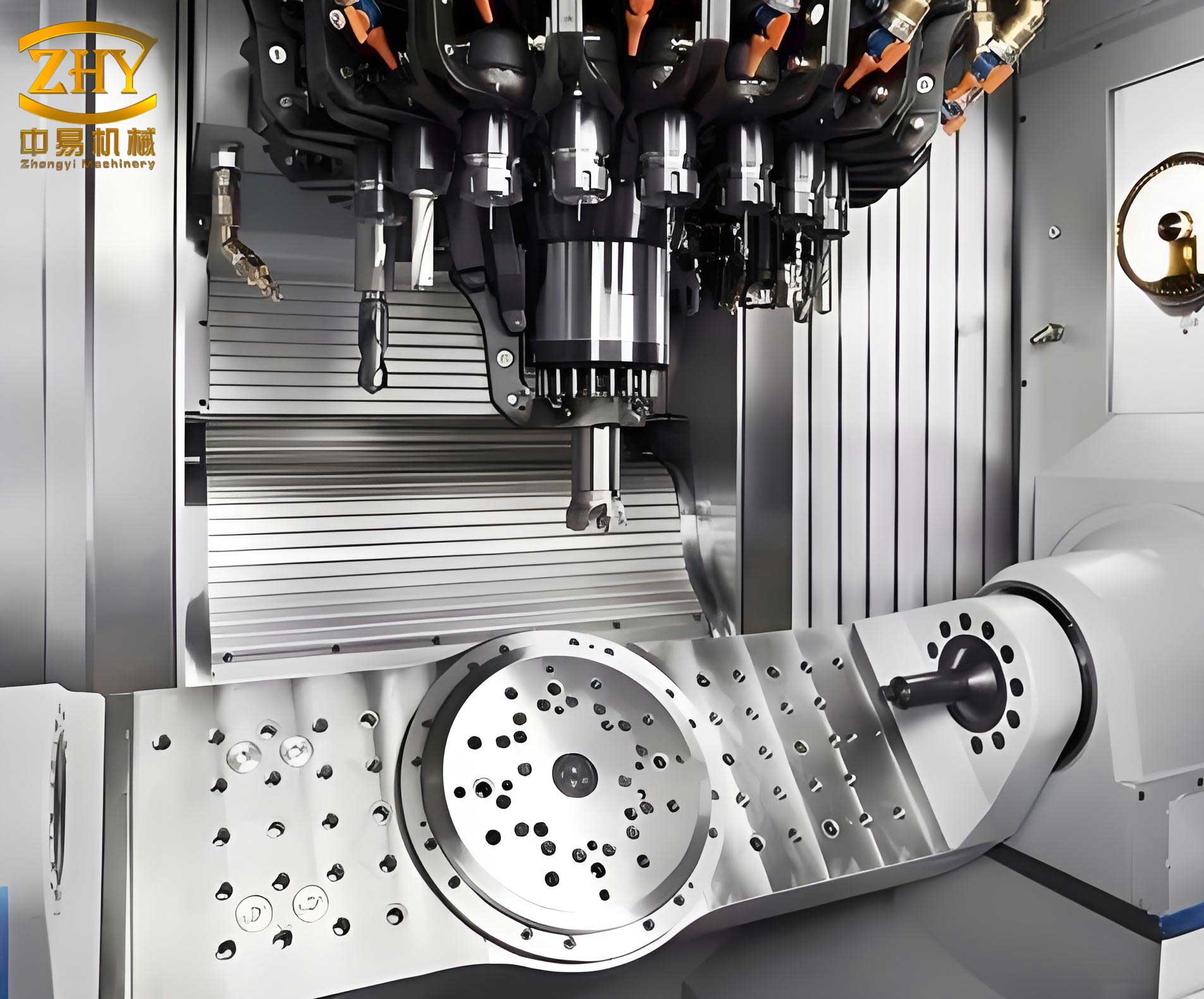
The worktable in question is a critical component of a CNC gantry machining center. Its轮廓 dimensions are 3,020 mm in length, 1,520 mm in width, and 260 mm in height, with an approximate mass of 3,100 kg. The material specification is HT300 gray iron, requiring a hardness range of 180–200 HBW. Dimensional tolerances adhere to the GB/T 6414-2017 DCTG11 standard. Such large and complex machine tool castings demand meticulous工艺 design to avoid defects that only manifest after extensive machining, leading to costly rework and delivery delays. The initial production batch of 31 pieces revealed several issues, with a defect rate of 16.1%, prompting a comprehensive review and optimization of the entire铸造 process.
The foundational step in any successful machine tool casting project is the casting工艺 design. For this worktable, the浇注 position was selected with the T-slot surface facing downward to ensure its quality, as this surface is critical for functionality. The entire casting was placed in the upper mold, and a bottom-gating system was employed. Given that chaplets could not be used on the table surface, a core-lifting technique was necessary for the upper mold cores. The pattern was divided into three large cores along the length, each with six定位芯头. During core making, four of these were embedded with lifting wires, and six nested core vents were set for upward gas evacuation to prevent gas holes from core gas evolution. The gating system originally featured a U-shaped runner with symmetrically distributed ingates on both sides and a sprue at the center. The cross-sectional areas were: total ingate area ΣSingate = 5,760 mm², total runner area ΣSrunner = 7,700 mm², and sprue area ΣSsprue = 6,358 mm², yielding a ratio of ΣSingate : ΣSrunner : ΣSsprue = 1 : 1.3 : 1.1, with the choke at the ingates. Sixteen ceramic filters (75 mm × 75 mm) were placed vertically between the runner and ingates to ensure smooth filling and effective slag trapping. Thirty-three flat vent risers (40 mm × 12 mm × 400 mm) were distributed at junction points of bosses and ribs on the upper mold. The molding process utilized furan resin sand with manual molding, while melting was conducted in a medium-frequency induction furnace using a synthetic cast iron process.
The initial trials highlighted several defects, which I analyzed and addressed through systematic improvements. The following table summarizes the defect types and their frequencies from the first batch:
| Defect Type | Location | Number of Occurrences | Defect Rate (%) |
|---|---|---|---|
| Surface Porosity | Table Surface | 2 | 6.44 |
| Slag Inclusions | Table Surface | 1 | 3.22 |
| Shrinkage Porosity | T-slot Bottom | 1 | 3.22 |
| Nitrogen-induced Fissures | Slide Rail Surface | 1 | 3.22 |
| Total Defects | 5 | 16.1 | |
To understand and mitigate these issues, I employed a combination of empirical observations and computational simulations. For surface porosity and slag inclusions, the root causes were identified as inadequate core coating practices and turbulent metal flow. During coating application, the lower portions of the mold cavity experienced prolonged冲刷, allowing alcohol-based solvent to penetrate deeply. Incomplete燃烧 and baking left residual moisture, leading to侵入性气孔 upon casting. Additionally, the symmetrical ingate design caused two streams of metal to converge in the center, creating紊流 that carried slag and gas to the ends of the table, where flow velocity decreased and temperature dropped, promoting defect formation. The改善对策 involved optimizing the coating process by minimizing冲刷 time and ensuring thorough baking with a torch. More significantly, the gating system was redesigned to use a single-side ingate plate combined with a bottom-pouring ceramic tube. This modification promoted smoother filling and more uniform temperature distribution, as confirmed by casting simulation software. The mathematical basis for fluid flow in gating systems can be described by Bernoulli’s equation for incompressible flow:
$$ P + \frac{1}{2} \rho v^2 + \rho gh = \text{constant} $$
where \( P \) is pressure, \( \rho \) is density, \( v \) is velocity, \( g \) is gravity, and \( h \) is height. By reducing cross-sectional variations and employing a single entry point, velocity fluctuations are minimized, decreasing turbulence. The Reynolds number \( Re = \frac{\rho v D}{\mu} \) (where \( D \) is hydraulic diameter and \( \mu \) is dynamic viscosity) should be kept below 2,000 to maintain laminar flow in the mold cavity. The optimized gating system also included overflow risers on the opposite side of the metal flow direction to capture cold and dirty metal, further reducing slag inclusions. The effectiveness of this optimization was validated through computer-aided engineering (CAE) simulations, which showed a more uniform temperature field compared to the original design.
The T-slot shrinkage porosity was another critical defect in machine tool casting. Analysis revealed two contributing factors: low carbon equivalent (CE) of the iron and overlapping thermal gradients. The original chemical composition was: carbon (C) 3.05–3.15%, silicon (Si) 1.60–1.70%, resulting in a CE calculated as:
$$ CE = C + \frac{1}{3} Si $$
For the original composition, \( CE \approx 3.10 + \frac{1.65}{3} = 3.65\% \). This low CE increases the solidification shrinkage tendency. Additionally, simulation of the original gating system indicated that the thermal节 from metal flow coincided with the geometric热节 at the T-slot bottom, exacerbating shrinkage. To address this, I adjusted the composition to: C 3.15–3.25%, Si 1.65–1.75%, raising the CE to approximately 3.76%. The improvement in fluidity and reduction in shrinkage can be quantified using the solidification time formula from Chvorinov’s rule:
$$ t = k \left( \frac{V}{A} \right)^2 $$
where \( t \) is solidification time, \( V \) is volume, \( A \) is surface area, and \( k \) is a constant dependent on mold material and metal properties. By optimizing the gating to distribute heat more evenly, the modulus \( \frac{V}{A} \) for the T-slot region is effectively managed, reducing isolated hot spots. The table below compares the chemical compositions before and after optimization:
| Element | Original Range (wt%) | Optimized Range (wt%) |
|---|---|---|
| Carbon (C) | 3.05–3.15 | 3.15–3.25 |
| Silicon (Si) | 1.60–1.70 | 1.65–1.75 |
| Carbon Equivalent (CE) | ~3.65 | ~3.76 |
| Micro-alloys (Sb, Sn) | Sb: 0.015–0.030, Sn: 0.020–0.040 | Same |
The nitrogen-induced fissures on the slide rail surfaces posed a unique challenge in machine tool casting. Spectroscopic analysis of defect samples revealed nitrogen content up to 105 ppm. The thick sections of the slide rails solidified slowly, allowing nitrogen segregation and pore formation. Hydrogen from residual mold moisture exacerbated the problem. The mitigation strategy involved stringent control of nitrogen sources throughout the process. I specified the use of high-quality carbon steel scrap, graphite-based inoculants with nitrogen content ≤500 ppm, and furan resin with moderate nitrogen levels (3–5%). All returns were shot-blasted before use to remove surface contaminants. Moreover, I adopted zirconium-containing inoculants for both ladle inoculation (0.3–0.4%) and stream inoculation during pouring (0.07–0.10%). Zirconium reacts with nitrogen to form stable nitrides, reducing free nitrogen in the melt. The reaction can be represented as:
$$ \text{Zr} + \text{N} \rightarrow \text{ZrN} $$
The nitrogen content in the final iron was consistently maintained at 70–90 ppm, as measured by an oxygen-nitrogen analyzer. Additionally, mold baking was intensified to eliminate hydrogen sources. The relationship between nitrogen solubility and temperature in iron can be expressed by Sieverts’ law:
$$ [N] = K_N \sqrt{P_{N_2}} $$
where \( [N] \) is dissolved nitrogen concentration, \( K_N \) is the temperature-dependent equilibrium constant, and \( P_{N_2} \) is the partial pressure of nitrogen. By controlling炉料 and using effective inoculants, the activity of nitrogen is reduced, minimizing pore formation.
The熔炼 and浇注 parameters were meticulously controlled to ensure consistency in machine tool casting. Melting was conducted at 1,500–1,520°C in a 3-ton induction furnace. The charge consisted of steel scrap, pig iron, and returns, with additions of carburizer and silicon carbide to achieve the target composition. After tapping, inoculation was performed with calcium-barium-silicon inoculant, followed by stream inoculation with 75% ferrosilicon powder. Pouring temperature was maintained at 1,380–1,400°C to balance fluidity and shrinkage. The following table outlines key process parameters:
| Process Stage | Parameter | Value or Range |
|---|---|---|
| Melting | Furnace Type | Medium-Frequency Induction |
| Melting Temperature | 1,500–1,520°C | |
| Charge Materials | Steel Scrap, Pig Iron, Returns | |
| Inoculation | Ladle Inoculant | 0.3–0.4% Ca-Ba-Si |
| Stream Inoculant | 0.07–0.10% 75% FeSi Powder | |
| Pouring | Temperature | 1,380–1,400°C |
| Gating System Type | Bottom-Pouring with Single-Side Ingate | |
| Molding | Molding Sand | Furan Resin Sand |
| Core Making | Lifted Cores with Venting | |
| Mold Baking | Thorough Torch Baking |
To further elucidate the improvements, I conducted a detailed statistical analysis of defect rates before and after optimization. The initial batch of 31 pieces had 5 defective castings, yielding a defect rate of 16.1%. After implementing all改善对策, a subsequent batch of 66 pieces was produced and fully machined by the customer. All 66 pieces were accepted without any defects, reducing the defect rate to 0%. This remarkable improvement underscores the effectiveness of the integrated approach in machine tool casting. The statistical significance can be assessed using hypothesis testing for proportions. Let \( p_1 \) be the initial defect proportion (0.161) and \( p_2 \) be the improved proportion (0). For large samples, the test statistic is:
$$ z = \frac{p_1 – p_2}{\sqrt{\bar{p}(1-\bar{p})(\frac{1}{n_1} + \frac{1}{n_2})}} $$
where \( \bar{p} = \frac{x_1 + x_2}{n_1 + n_2} \), with \( x_1 = 5 \), \( n_1 = 31 \), \( x_2 = 0 \), \( n_2 = 66 \). This yields \( \bar{p} = \frac{5}{97} \approx 0.0515 \), and \( z \approx 3.45 \), indicating a significant reduction at common confidence levels (e.g., p < 0.01).
Beyond the specific case, the principles derived from this experience have broader implications for machine tool casting. The integration of simulation tools like CAE is invaluable for predicting thermal gradients and optimizing gating designs. The governing equation for heat transfer during solidification is the Fourier heat conduction equation:
$$ \frac{\partial T}{\partial t} = \alpha \nabla^2 T $$
where \( T \) is temperature, \( t \) is time, and \( \alpha \) is thermal diffusivity. By solving this numerically, foundries can identify potential defect zones and adjust工艺 parameters proactively. Moreover, the control of nitrogen in gray iron is critical for high-integrity machine tool castings. The equilibrium between nitrogen and other elements can be modeled using thermodynamic software, but practical measures like using low-nitrogen炉料 and effective inoculants are essential.
In conclusion, the production of high-quality machine tool castings demands a holistic approach encompassing工艺 design, metallurgical control, and meticulous操作. Through the optimization of the gating system to ensure smooth filling and uniform temperature distribution, adjustment of chemical composition to reduce shrinkage倾向, and stringent control of nitrogen sources combined with effective inoculation, I successfully eliminated surface porosity, slag inclusions, T-slot shrinkage, and nitrogen-induced fissures in worktable castings. The results from 66 consecutive defect-free castings validate these practices. This experience reinforces that continuous learning, systematic analysis, and integration of simulation technologies are key to advancing the art and science of machine tool casting. As demands for precision and reliability in machine tools grow, the foundry industry must embrace such comprehensive methodologies to deliver castings that meet the highest standards.