
As a leading steel castings manufacturer, the continuous pursuit of technological innovation is paramount for maintaining competitiveness and achieving sustainable growth. The foundry industry is undergoing significant transformations, driven by the need for higher quality, improved efficiency, and stringent environmental standards. This article synthesizes key insights from advanced production practices, focusing on the dual pillars of effective resource recovery through sand regeneration and the holistic, optimized design of modern foundry plants. These principles, while often discussed in the context of specific alloys, hold universal value and can be strategically adapted by any progressive steel castings manufacturer to enhance operational performance and economic return.
The Critical Role of Sand Reclamation in Modern Foundry Economics
For a high-volume steel castings manufacturer, the management of molding sand represents a major operational cost and environmental consideration. Traditional systems often involve the costly disposal of used sand and the continuous purchase of new sand. An advanced closed-loop sand reclamation system disrupts this linear model, creating a circular economy within the foundry that delivers direct and substantial financial benefits.
Process Flow and Automated Control
The core of an efficient reclamation system lies in its seamless, automated process flow. After shakeout, castings are separated from their flasks and enter a dedicated rotary drum for surface cleaning and cooling. The sand falling from this drum is the primary feedstock for reclamation. A typical automated system follows this sequence:
- Sand collected from the rotary drum is elevated via a bucket elevator (Elevator #1) to a waste sand hopper.
- The hopper feeds the sand through a vibrating feeder to a second bucket elevator (Elevator #2).
- Elevator #2 delivers the sand into the thermal or mechanical reclamation unit.
- Reclaimed sand is screened via a linear vibrating screen to remove fines and oversized particles.
- The processed sand is either conveyed directly back to the sand preparation system or stored in an active sand hopper for later use.
The entire system’s operation is governed by Programmable Logic Controller (PLC) automation. Level sensors (high and low) on the waste sand hopper control the start and stop sequences, ensuring the system runs only when necessary and preventing overflow or underflow, thus guaranteeing unattended, efficient operation—a key reliability feature for any automated steel castings manufacturer.
Technical Principles and Regenerated Sand Quality
The economic argument for sand reclamation is fundamentally supported by the restoration of the sand’s physical and chemical properties. During the casting process, especially with high-temperature ferrous alloys common to a steel castings manufacturer, the sand grains are subjected to intense heat. This causes the clay-based binder (often bentonite) to burn, forming a hard, inactive “dead” layer or coating on each grain. This coating renders the sand ineffective for bonding in subsequent cycles.
The reclamation process, whether through aggressive mechanical scrubbing or thermal treatment, is designed to remove this inert coating. The technical outcomes are profound:
- Surface Regeneration: The burnt clay coating is completely removed, exposing a fresh, active sand surface with bonding potential equivalent to new sand.
- Phase Transformation: The high-temperature exposure causes a permanent phase change in quartz sand. The α-quartz transforms to α-cristobalite, which has a significantly lower thermal expansion coefficient. This reduces the risk of casting defects like veining or expansion scabs.
- Improved Granulometry: The process rounds the sand grains and removes fine particles, leading to a more uniform grain size distribution. The angularity factor (AF) is a critical measure of grain shape, defined as the ratio of the grain’s actual surface area to the surface area of a sphere of equivalent volume. High-quality reclaimed sand achieves an angularity factor of:
$$ AF \leq 1.30 $$
This indicates a well-rounded grain, which improves flowability, compaction, and permeability of the sand mold.
The culmination of these effects is a regenerated sand with superior casting characteristics: excellent flowability, reduced thermal expansion, consistent permeability, and high bonding strength. This allows it to fully replace new sand in both core-making and molding sand preparation.
Quantifiable Economic Benefits
The financial impact of implementing a sand reclamation system is direct and calculable. The analysis can be broken down into two primary savings categories: elimination of disposal costs and reduction in new sand purchases. The following table summarizes a typical annual savings analysis, directly applicable to the operational scale of a medium-to-large steel castings manufacturer.
| Cost Category | Parameter | Daily Rate | Calculation Basis | Annual Savings |
|---|---|---|---|---|
| New Sand Purchase | For Core Making | 15.5 t/day | Total Daily New Sand Saved: 15.5 + 1.2 = 16.7 t/day Price: $27/t (example) Annual Operating Days: 300 |
$1,352,700 |
| For Sand Preparation | 1.2 t/day | |||
| Waste Sand Disposal | Sand Sent to Landfill | ~20 t/day | Disposal Cost: $2/t Annual Operating Days: 300 |
$120,000 |
| Total Annual Savings | $1,472,700 | |||
This substantial sum represents a powerful return on investment. For a steel castings manufacturer, these savings directly improve the cost structure per ton of castings produced, enhancing market competitiveness. Furthermore, the environmental benefit of diverting thousands of tons of sand from landfills aligns with global sustainability goals and reduces regulatory burdens.
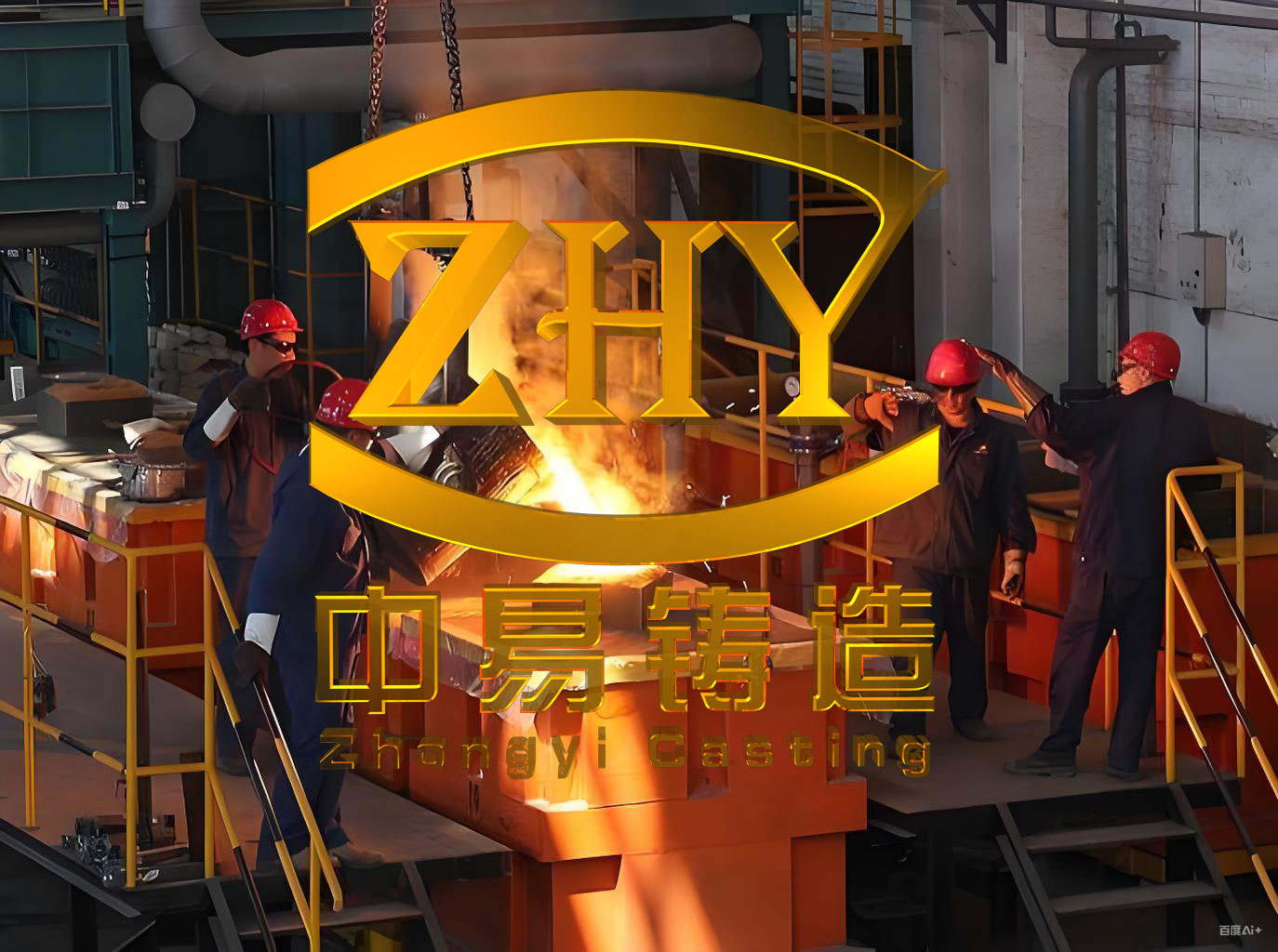
Philosophy and Practice of Modern Foundry Plant Design
Beyond process-specific innovations, the overall layout and design philosophy of a casting facility are fundamental determinants of its long-term efficiency, flexibility, and environmental footprint. The paradigm has shifted from isolated departmental planning to integrated, logistics-driven design that embodies lean manufacturing, clean production, and environmental stewardship. This holistic approach is critical for any steel castings manufacturer aiming to build or modernize a facility for world-class performance.
Guiding Design Principles
The design of a contemporary foundry should be guided by a clear and ambitious set of principles:
- Logistics-Optimized Layout: Material and product flow is the central nervous system of the plant. The layout must minimize travel distance, eliminate cross-traffic, and facilitate smooth, linear progression from raw material to finished component.
- Embrace of Lean and Clean Production: The design must inherently reduce waste (Muda) in all forms—waiting, transport, over-processing, inventory, and defects. It must also incorporate systems to prevent pollution at the source, concentrating and treating emissions rather than diluting them.
- Strategic Automation and Mechanization: Investment in machinery should target bottlenecks and operations that are hazardous, ergonomically challenging, or critical for quality consistency. The goal is not full robotization, but the intelligent application of technology to enhance human productivity and safety.
- Energy and Resource Conservation: Every design choice, from building insulation to process heat recovery, must be evaluated for its energy impact. The highest form of efficiency is often achieved by eliminating process steps entirely, such as bypassing the melting of solid metal.
- Upstream Supply Chain Integration: The most transformative designs consider the foundry not as an isolated unit, but as part of a larger industrial ecosystem. Co-locating or forging tight logistical links with metal producers can yield revolutionary savings.
The “Alliance Supply Chain” Model: Liquid Metal Direct Delivery
The most significant innovation in modern foundry logistics is the direct delivery of liquid alloy from a primary smelter or central melt shop. This model shatters the traditional paradigm where a steel castings manufacturer receives solid ingots, stores them, and then expends significant energy to re-melt them. In an integrated industrial park, the molten metal from an adjacent electric arc furnace or basic oxygen furnace can be alloyed, refined, and transported in insulated ladles directly to the casting bays.
The thermodynamic and economic advantages are staggering. The energy required to superheat liquid metal for casting is a fraction of that needed to melt solid charge from ambient temperature. The mass and energy balance highlights the saving. The heat required to melt a ton of steel from solid at 25°C to liquid at 1650°C is approximately:
$$ Q_{melt} = m \cdot [C_{p,s} \cdot (T_{m} – T_{0}) + \Delta H_{f} + C_{p,l} \cdot (T_{pour} – T_{m})] $$
Where \( m \) is mass, \( C_{p,s} \) and \( C_{p,l} \) are specific heats of solid and liquid, \( T_m \) is melting point, \( \Delta H_f \) is latent heat of fusion, and \( T_{pour} \) is pouring temperature.
In contrast, the heat required to merely compensate for the temperature drop during transfer and holding of liquid metal is:
$$ Q_{hold} = m \cdot C_{p,l} \cdot (T_{pour} – T_{receive}) $$
where \( T_{receive} \) is the temperature at which liquid metal is received at the foundry. Since \( T_{receive} \) is only marginally below \( T_{pour} \), \( Q_{hold} \ll Q_{melt} \).
The financial and environmental benefits are multifaceted:
| Aspect | Traditional Ingot Melting | Liquid Metal Direct Delivery | Advantage |
|---|---|---|---|
| Energy Consumption | Very High (~500-600 kWh/t for electric melting) | Very Low (only holding/superheating) | Eliminates ~95% of melting energy |
| Metal Yield (Oxidation Loss) | Lower due to oxidation during melting (2-5%) | Higher, minimal oxidation during transfer | Improves yield by 2-4%, saving raw material |
| Capital Investment | High (melt shop with furnaces, baghouses, charging systems) | Dramatically Reduced (only holding furnaces) | Lowers upfront CAPEX significantly |
| Emissions & Footprint | Significant (dust, CO2 from melting) | Minimal, localized to the primary smelter | Enables cleaner, quieter foundry environment |
| Process Stability | Variable (charge composition, melt rate) | Highly Consistent (chemistry controlled centrally) | Improves final product quality consistency |
For a hypothetical steel castings manufacturer producing 50,000 tons annually, the annual savings from reduced energy (assuming $0.08/kWh) and improved yield (assuming 3% less melt loss, steel at $600/t) could exceed $3 million. This model represents a pinnacle of efficient plant design.
Layout Optimization for Flow and Environmental Control
Within the foundry itself, the spatial arrangement of departments follows the product’s natural progression. A linear, U-shaped, or fishbone layout is preferred over a functional (batch) layout. Key considerations include:
- Centralized Melting/Holding and Pollution Control: Alloy receiving, treatment (degassing, modification), and holding should be concentrated in one area. This “dirty” zone can be effectively isolated, with fume capture hoods connected to a central emission control system (e.g., baghouse, scrubber). This protects workers in downstream areas, preserves equipment longevity, and simplifies environmental compliance.
- Linear Process Flow: The sequence should be logical: Molten Metal Receiving → Treatment → Casting/Coremaking → Shakeout → Cleaning/Fettling → Heat Treatment → Finishing/Inspection. Each step should feed directly into the next with minimal backtracking or long-distance transport, often facilitated by overhead cranes, conveyors, or automated guided vehicles (AGVs).
- Segregation of Critical Environments: Areas requiring strict temperature/humidity control (e.g., sand labs, core stores) or cleanliness (e.g., final inspection, packaging) should be physically separated from high-vibration or dusty production areas.
A simplified material flow for a streamlined plant, applicable to a high-mix steel castings manufacturer, can be represented as:
[Liquid Metal Delivery] → [Receiving/Ladle Furnace]
                             ↓
                 [Degassing/Alloy Adjustment Station]
                             ↓
                      [Pouring/Casting Area]
                             ↓
               [Shakeout & Sand Reclamation Loop]
                             ↓
                [Shot Blast & Grinding/Cutting]
                             ↓
            [Heat Treatment (if required)]
                             ↓
      [Non-Destructive Testing & Final Inspection]
                             ↓
                      [Finished Goods]
Deep Dive: Key Enabling Technologies for the Modern Foundry
The realization of an optimized plant design is dependent on the adoption of specific, advanced technologies. These technologies, while potentially developed for specific alloy systems like aluminum, have clear analogues or direct applications for a steel castings manufacturer.
1. Mobile Ladle/Pouring Furnace Technology
Replacing fixed pouring furnaces or hand ladles with electrically heated, mobile transfer ladles revolutionizes logistics. These vessels, lined with high-efficiency insulation, maintain precise metal temperature for extended periods. After receiving and treating the metal in a central station, they are transported directly to the molding line by crane or AGV. This eliminates temperature drops associated with repeated transfer, reduces oxidation, and provides casting operators with a consistent, ready source of metal. The energy saving comes from using highly efficient stationary heaters for the bulk treatment and small, on-demand heaters in the mobile units only to compensate for minor heat loss.
2. Centralized Molten Metal Treatment
Conducting critical metallurgical operations like degassing and inclusion removal at a single, well-equipped station, rather than at each individual pouring point, offers multiple advantages for a steel castings manufacturer:
- Process Consistency: Treatment parameters (gas flow rate, rotor speed, treatment time) are strictly controlled by a single set of sophisticated equipment, ensuring uniform quality for all castings.
- Emission Control: Fumes and particulates generated during treatment (e.g., from argon bubbling or flux addition) are generated at one point. This allows for the installation of a high-efficiency, dedicated fume extraction and filtration system, vastly simplifying air quality management compared to capturing emissions from dozens of decentralized locations.
- Capital and Operational Efficiency: One high-capacity treatment unit (e.g., a tank degasser) is more cost-effective to purchase, maintain, and operate than many smaller, less efficient units scattered across the shop floor.
3. Advanced Molding & Coremaking Processes
The choice of molding technology dictates plant layout, manpower needs, and product quality. For a high-volume steel castings manufacturer, vertically-parting flaskless molding (e.g., V-process, DISAMATIC) offers extreme linear flow, high density, and excellent sand compaction. The yield of a casting process, a key economic metric, is defined as:
$$ Yield (\%) = \frac{Weight_{casting}}{Weight_{total~metal~poured}} \times 100 $$
Modern gating and risering simulation software, coupled with processes that allow for minimal taper and optimized feeding, can push yields for steel castings from traditional levels of 50-60% to over 70-75% for suitable geometries, directly reducing melting tonnage and cost.
4. Integrated Thermal Processing
Replacing batch-type heat treatment furnaces (e.g., car-bottom, pit furnaces) with continuous conveyor furnaces aligns with lean principles. Castings move at a controlled rate through pre-defined heating, soaking, and cooling zones. The benefits are systematic:
- Uniformity: Every casting experiences an identical time-temperature profile, leading to highly consistent mechanical properties (e.g., tensile strength, hardness with a standard deviation σ satisfying \( \sigma \leq 10 \) MPa).
- Energy Efficiency: Continuous furnaces maintain steady-state operation, avoiding the large thermal cycling losses inherent in heating and cooling a batch furnace repeatedly. Heat recovery from the cooling zone can pre-heat incoming castings.
- Space and Labor Efficiency: They occupy less floor space per unit of throughput and require less manual handling for loading/unloading.
The economic impact is captured in a lower cost per treated ton, a vital metric for a steel castings manufacturer:
$$ Cost_{HT}~(\$/t) = \frac{(Energy~Cost + Labor~Cost + Maintenance~Cost)_{annual}}{Annual~Tonnage~Treated} $$
Continuous processing minimizes all three cost components in the numerator.
5. Sophisticated Process Control & Inspection
Real-time monitoring and closed-loop control are no longer luxuries. Key parameters must be tracked:
- Metallurgical Quality: Use of spectrometers for chemistry, thermal analysis cups for solidification characteristics, and ultrasonic sensors for melt cleanliness.
- Sand System Health: Continuous measurement of sand properties: compactibility, moisture, active clay, and loss on ignition (LOI). Automated feedback loops can adjust water and binder additions. LOI, critical for a steel castings manufacturer using green sand, is given by:
$$ LOI (\%) = \frac{Weight_{initial} – Weight_{after~ignition}}{Weight_{initial}} \times 100 $$
High LOI indicates dead clay buildup, triggering the need for sand system dilution or more aggressive reclamation. - Non-Destructive Testing (NDT) Integration: Automated X-ray or ultrasound inspection stations integrated into the finishing line allow for 100% inspection of critical features (like wall thickness or internal soundness of automotive components), moving quality assurance from statistical sampling to total certainty for high-risk products.
| Technology Area | Key Innovation | Primary Impact | Economic Benefit Driver |
|---|---|---|---|
| Sand Management | High-Efficiency Closed-Loop Reclamation | Eliminates new sand purchase & disposal costs | Direct material & waste cost saving (See Table 1) |
| Metal Logistics | Liquid Metal Direct Delivery | Eliminates primary melting energy & loss | Energy cost saving (~95%), Yield improvement (2-5%) |
| Metal Handling | Mobile Treatment/Pouring Furnaces | Improves temperature control, reduces oxidation | Improved quality (less scrap), energy efficiency |
| Process Layout | Centralized Fume Extraction & Treatment | Concentrates pollution for effective control | Lower compliance cost, improved workplace safety/health |
| Casting Process | High-Yield, Automated Molding Lines | Increases yield, productivity, and consistency | Higher output per man-hour, lower melting cost per good casting |
| Heat Treatment | Continuous Processing Furnaces | Ensures uniformity and reduces energy per part | Lower energy & labor cost per ton treated |
| Quality Assurance | In-line Automated NDT | Enables 100% inspection of critical attributes | Prevents costly field failures, reduces liability risk |
Conclusion: The Path Forward for the Competitive Foundry
The evolution from a traditional foundry to a modern, efficient, and sustainable manufacturing center is not merely a matter of purchasing new machines. It requires a fundamental rethinking of the entire production system, from the upstream supply chain to the final inspection dock. The case for sand reclamation presents an undeniable, quantifiable return on investment by closing a major material loop. The principles of modern plant design—logistics-driven layout, lean and clean philosophy, and strategic technology adoption—create the physical and operational framework for excellence.
For a forward-thinking steel castings manufacturer, the integration of these concepts is the blueprint for future competitiveness. The initial capital outlay for such a transformation is significant, but the long-term rewards are compelling: drastically reduced operating costs, superior and consistent product quality, a safer and more attractive workplace, and a significantly diminished environmental footprint. The technologies and methodologies discussed, from liquid metal delivery and mobile furnaces to centralized treatment and continuous processing, are not isolated solutions but interconnected components of a high-performance system. By adopting this holistic approach, a steel castings manufacturer can successfully navigate the challenges of the global market and secure a position as a leader in the advanced manufacturing landscape.