
The precise evaluation of graphite morphology, specifically the nodularity rate, is a cornerstone of quality control in the production of nodular cast iron. The mechanical properties, notably ductility and tensile strength, are intrinsically linked to the shape, size, and distribution of graphite particles. For decades, the industry standard relied heavily on manual metallographic analysis, where an operator compares a sample’s microstructure against standardized reference images. This subjective method, while established, introduces significant variability and inaccuracy due to human judgment, making it unsuitable for modern, high-precision manufacturing demands. Therefore, the primary objective of my research was to develop and validate an automated, objective, and highly accurate measurement system for graphite nodularity. This article details the implementation of a software-hardware integrated solution, leveraging image analysis algorithms combined with robust statistical processing, to overcome the limitations of traditional methods.
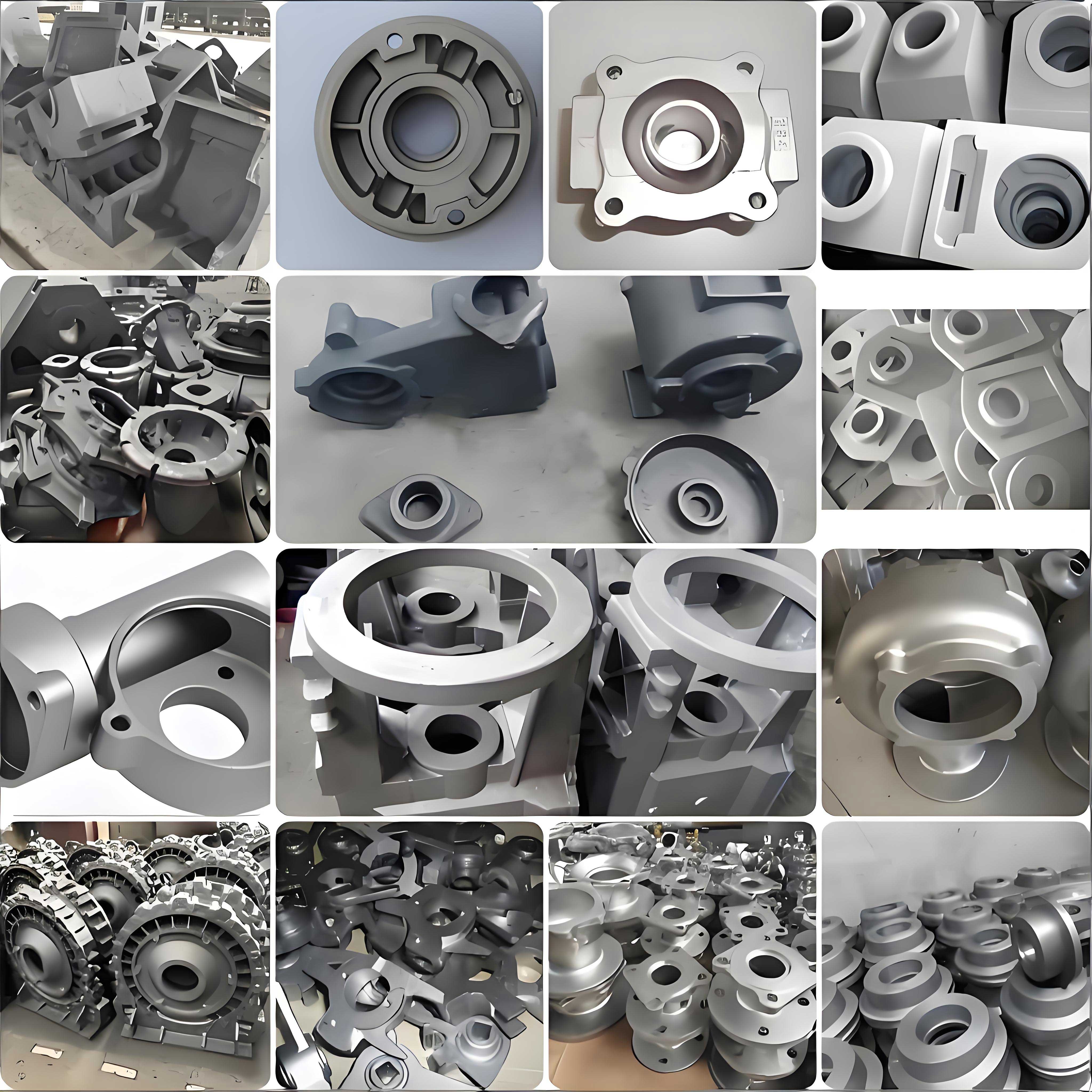
The transition from subjective visual assessment to objective computational analysis represents a significant leap forward for the nodular cast iron industry. My work focuses on creating a reliable pipeline that captures a digital representation of the microstructure, processes it to isolate key features, and calculates definitive metrics with minimal human intervention. The core of this system is a synergistic combination of a dedicated image processing library and a statistical software package (SPSS), designed to enhance sensitivity, specificity, and overall data fidelity.
1. System Architecture and Software Implementation for Nodularity Measurement
1.1 Functional Configuration of Hardware and Software
1.1.1 Hardware Connection Mode
The hardware setup for this nodular cast iron analysis system is deliberately streamlined to ensure reliability and ease of use. The core imaging chain involves a high-resolution industrial camera directly mounted onto a standard metallurgical microscope. This assembly is then connected to a host computer via a high-speed USB interface. This simple yet effective architecture allows for the direct digitization of the metallographic sample’s field of view. The system’s hardware layout is summarized in the table below:
| Component | Function | Connection |
|---|---|---|
| Metallurgical Microscope | Provides magnified view of the nodular cast iron sample. | — |
| Industrial Camera | Captures digital image of the microstructure. | Mounted on microscope. |
| Host Computer | Runs measurement software and processes data. | Connected via USB. |
| Software Suite (IPP, SPSS) | Performs image analysis and statistical computation. | Installed on computer. |
1.1.2 Software Operational Workflow
The software logic for measuring graphite nodularity in nodular cast iron follows a structured, sequential pipeline to ensure consistency. The workflow is designed to transform a raw micrograph into a definitive nodularity grade and associated parameters.
- Image Acquisition: Capture a high-quality digital image of the etched nodular cast iron sample.
- Image Pre-processing: Apply noise reduction filters and convert the image to grayscale to simplify subsequent analysis.
- Threshold Calibration: Adjust the grayscale threshold value to optimally separate graphite particles from the metallic matrix.
- Measurement Mode Selection: Choose between automated full-field analysis or manual intervention for complex microstructures.
- Coefficient Application: Apply predefined shape correction coefficients to different graphite morphologies.
- Nodularity Grading: Calculate the final nodularity percentage and assign the corresponding material grade based on international standards.
1.1.3 Principle of the Measurement Method
The fundamental principle relies on digital image segmentation. A grayscale image $I(x, y)$ consists of pixel intensities at coordinates $(x, y)$. By selecting an appropriate global threshold $T$, the image is converted into a binary (black-and-white) representation:
$$ I_{binary}(x, y) =
\begin{cases}
1 \text{ (white)}, & \text{if } I(x, y) \geq T \\
0 \text{ (black)}, & \text{if } I(x, y) < T
\end{cases}
$$
In this binary image, graphite particles are distinctly separated (typically as white objects on a black background), allowing for precise calculation of geometric properties such as area, perimeter, and maximum feret diameter, which are essential for characterizing nodular cast iron.
1.2 Software Processing for Graphite Nodularity
1.2.1 Calculation of Parameters for Individual Graphite Nodules
The first step in quantifying nodular cast iron is to isolate and analyze each graphite particle. An automatic scanning and labeling algorithm identifies connected regions (graphite particles). For each particle, the key parameter is its shape factor, often expressed as the Area Ratio or Circularity. I calculate the Area Ratio $C$ as:
$$ C = \frac{S_{actual}}{S_{circumscribed}} $$
where $S_{actual}$ is the actual pixel area of the graphite particle, and $S_{circumscribed}$ is the area of its minimum circumscribed circle. This ratio $C$ quantifies how closely the particle’s 2D cross-section approximates a perfect circle. Based on this ratio, graphite shapes in nodular cast iron are classified into standard categories, as defined below:
| Graphite Morphology | Area Ratio (C) Range | Typical Appearance |
|---|---|---|
| Nodular (Spheroidal) | $C > 0.81$ | Nearly perfect circles. |
| Compact (Nodular-Rosette) | $0.61 \leq C \leq 0.80$ | Irregular but compact shapes. |
| Vermicular (Compacted) | $0.41 \leq C \leq 0.60$ | Elongated, worm-like structures. |
| Flake (Lamellar) | $C < 0.10$ | Thin, elongated plates. |
1.2.2 Calculation of the Overall Graphite Nodularity
The overall nodularity rate $S_G$ for the nodular cast iron sample is a weighted sum based on the count and shape of all graphite particles in the field of view. After classifying each particle, the nodularity is computed using a formula that assigns a weighting factor to each morphology class:
$$ S_G = \frac{ (1.0 \times n_{1.0}) + (0.8 \times n_{0.8}) + (0.6 \times n_{0.6}) + (0.3 \times n_{0.3}) + (0.0 \times n_{0.0}) }{ n_{1.0} + n_{0.8} + n_{0.6} + n_{0.3} + n_{0.0} } \times 100\% $$
Where:
- $n_{1.0}$: Number of particles classified as Nodular (weight = 1.0).
- $n_{0.8}$: Number of particles classified as Compact (weight = 0.8).
- $n_{0.6}$: Number of particles classified as Vermicular (weight = 0.6).
- $n_{0.3}$: Number of particles classified as transitional shapes (weight = 0.3).
- $n_{0.0}$: Number of particles classified as Flake (weight = 0.0).
This calculation yields the percentage of graphite present in a nodular form, which is the critical metric for grading nodular cast iron.
1.2.3 Nodularity Grading of the Nodular Cast Iron Component
Final grading is performed by comparing the calculated nodularity percentage $S_G$ and the graphite particle size distribution against standard grading charts (e.g., ISO 945, ASTM A247). The software can automatically assign a grade (e.g., Grade I, II, III, etc.) based on these computed values, providing a direct and unambiguous quality assessment for the nodular cast iron casting.
2. Experimental Validation and Performance Assessment
2.1 Experimental Image Selection
To rigorously validate the system, I used metallographic images that conformed strictly to the standard reference images provided in international standards for nodular cast iron (e.g., ISO 945). Each image was meticulously reviewed to ensure it met the required specifications for focus, contrast, and field of view before being subjected to the analysis pipeline, guaranteeing the validity of the subsequent comparative analysis.
2.2 Experimental Methodology Design
The core analytical software employed was Image-Pro Plus (IPP), chosen for its advanced image processing toolkit, and Adobe Photoshop (PS) for minor preparatory edits. The statistical analysis was conducted using SPSS software. IPP’s strengths for this application in nodular cast iron analysis include sophisticated measurement routines, customizable macros for batch processing, and excellent filtering capabilities for enhancing graphite-matrix contrast.
2.3 Detailed Experimental Procedure
The experimental sequence was executed as follows:
- Image Preparation: The standard micrograph was imported. Minor cleanup, such as erasing field-of-view boundary marks, was performed in PS if necessary.
- Graphite Parameter Measurement in IPP:
- The image was enhanced using contrast adjustment and noise reduction filters within IPP.
- The software’s “Size” function was activated. The measurement scale was calibrated by defining the known real-world distance represented by the image diameter (e.g., 0.7 mm for a 100x magnification).
- The threshold was adjusted to clearly isolate all graphite particles.
- The “Count/Size” operation was run. For particles that were touching, the software’s manual separation tool was used to ensure accurate individual particle analysis.
- The “Statistics” report provided data for each particle, including Area, FeretMax Diameter, and Roundness. The largest graphite particle had a measured FeretMax of 4.223 pixels in the calibrated system.
- Calculation of Actual Graphite Length: From the statistics, the average maximum graphite length was found to be 6.537 pixels. Given the calibration (e.g., 100x magnification), the actual average length was calculated as:
$$ \text{Actual Length} = \frac{6.537 \text{ pixels}}{100} = 0.06537 \text{ mm} $$
This value corresponds to a specific graphite size number according to the standard.
2.4 Integrated Data Processing with SPSS
To enhance accuracy and allow for complex data transformations, the raw measurements from IPP were exported to SPSS (version 24.0) for secondary processing. The procedure within SPSS was:
- The dataset containing parameters like “Roundness” and “Area” was imported.
- A new variable for “Area Ratio 1” was computed using the “Transform -> Compute Variable” function. The command was essentially the inverse of Roundness: $$ \text{Area\_Ratio\_1} = 1 / \text{Roundness} $$
- Another, more geometrically precise “Area Ratio 2” was calculated using the Area and FeretMax diameter:
$$ \text{Area\_Ratio\_2} = \frac{\text{Area}}{\pi \times (\text{FeretMax}/2)^2} $$
This was implemented in SPSS as:Area / (3.1416 * (FeretMax**2 / 4)). - These refined area ratio values were then used to re-classify each particle more accurately before feeding into the final nodularity formula $S_G$. SPSS’s descriptive statistics functions were used to check for outliers and calculate the standard deviation of the results, ensuring robustness. If high variance was detected, the thresholding step in IPP was revisited.
2.5 Evaluation of the Image Analysis Algorithm’s Performance
To objectively evaluate the superiority of the developed method, I compared its performance against two other approaches: a standalone image analysis algorithm (without SPSS refinement) and the traditional manual comparison method. The evaluation was conducted on identical standard images of nodular cast iron. The results are summarized below:
| Evaluation Metric | Image Analysis Algorithm Only | Image Analysis Algorithm + SPSS Processing | Traditional Manual Method (Control) |
|---|---|---|---|
| Calculated Nodularity Rate (%) | 92.3 | 95.1 | 84.7 |
| Assigned Nodularity Grade | 2 | 2 | 1 (Inconsistent) |
| Average Graphite Length (mm) | 0.06537 | 0.06571 | 0.06214 |
| Graphite Size Number | 6.2 | 6.7 | 5.8 |
The data clearly shows that the integrated “Algorithm + SPSS” method produced the most consistent and theoretically accurate results for the nodular cast iron sample, aligning best with the known standard. The manual method showed significant deviation.
A more profound evaluation involves calculating the sensitivity (ability to correctly identify nodular graphite) and specificity (ability to correctly reject non-nodular graphite) of each method against a ground-truth dataset. The results are compelling:
| Performance Indicator | Image Analysis Algorithm Only | Image Analysis Algorithm + SPSS Processing | Traditional Manual Method (Control) |
|---|---|---|---|
| Sensitivity | 85.23% | 92.68% | 60.92% |
| Specificity | 77.61% | 81.44% | 64.37% |
The synergistic “Image Analysis Algorithm + SPSS” approach demonstrates a significant enhancement in both sensitivity and specificity. The improvement stems from SPSS’s ability to perform refined calculations and statistical checks on the raw image data, mitigating classification errors that can occur in a purely threshold-based image analysis. This combination effectively minimizes both false positives and false negatives in the assessment of nodular cast iron microstructure, leading to a more reliable and precise measurement of the graphite nodularity rate.
3. Conclusion and Outlook
The integration of automated image analysis algorithms with dedicated statistical processing software presents a formidable and highly effective solution for measuring graphite nodularity in nodular cast iron. This research demonstrates that moving beyond subjective manual grading to an objective, computational methodology is not only feasible but necessary for achieving high precision and repeatability in quality control. The developed system, utilizing IPP for primary image measurement and SPSS for data refinement and validation, successfully addresses the key shortcomings of traditional methods by enhancing measurement sensitivity, specificity, and overall data integrity. The consistent and accurate results confirm that this hybrid approach is a scientifically sound and technically superior method. For the future of nodular cast iron production and certification, the widespread adoption of such automated, algorithm-driven measurement systems will be crucial in ensuring material consistency, meeting stringent specifications, and driving further innovations in the field.