
In my research and development work focusing on foundry processes, I have dedicated significant effort to improving the quality and performance of machine tool castings through advanced inoculation techniques. The critical role of inoculants in refining the microstructure of cast iron cannot be overstated, especially for demanding applications like machine tool castings, which require exceptional mechanical properties, minimal casting defects, and uniform characteristics across complex geometries. This article presents a comprehensive study on a novel inoculant series, developed to outperform traditional ferrosilicon-based inoculants, with extensive laboratory experiments and production trials specifically targeting machine tool castings. The findings underscore the importance of tailored inoculation strategies in achieving superior cast iron quality for precision machine tool components.
The foundation of this work lies in addressing the limitations of conventional 75FeSi inoculants, particularly regarding their anti-fading behavior and ability to reduce section sensitivity in heavy-section castings like those used in machine tools. Machine tool castings, such as bed frames, columns, and guideways, are subject to stringent requirements for dimensional stability, vibration damping, and wear resistance. Inoculation directly influences graphite morphology, eutectic cell count, and the prevention of chill formation, all of which are paramount for the functionality of machine tool castings. Therefore, developing an inoculant with enhanced nucleation potency and longevity in molten iron is a key technological advancement for the foundry industry serving the machine tool sector.
The experimental phase began with carefully designed laboratory tests to evaluate the new inoculant series, referred to as the A-series. The base iron was selected to mimic typical grades used in machine tool castings, such as HT250 gray iron. Melting was conducted using a cupola furnace to produce raw iron, which was then remelted in a medium-frequency induction furnace to ensure precise temperature control and composition adjustment. The chemical compositions of the A-series inoculant and the reference 75FeSi inoculant are detailed in Table 1. The A-series formulation includes strategic additions of elements like strontium and aluminum to promote nucleation sites, whereas the 75FeSi inoculant serves as the industry benchmark.
| Element | A-series Inoculant | 75FeSi Inoculant |
|---|---|---|
| Silicon (Si) | 60 – 65 | 74 – 78 |
| Calcium (Ca) | 0.5 – 1.0 | 0.8 – 1.2 |
| Aluminum (Al) | 1.0 – 1.5 | 0.8 – 1.2 |
| Strontium (Sr) | 0.5 – 1.0 | Not detected |
| Iron (Fe) | Balance | Balance |
| Trace Elements | Controlled additions for nucleation enhancement | Minimal intentional additions |
One of the primary evaluation metrics was the anti-fading characteristic of the inoculant. Fading refers to the gradual loss of nucleation effectiveness as the inoculated iron is held at high temperatures, a critical factor in foundry operations where delays in pouring can occur. The anti-fading test involved inoculating the base iron at 1380°C to 1400°C with an addition rate of 0.3 wt.%, followed by holding the molten iron at temperature. Chill width measurements on standard triangular test pieces were taken at regular intervals. Simultaneously, thermal analysis was performed using a carbon equivalent analyzer to record cooling curves and determine the undercooling degree ΔT. The undercooling degree is a direct indicator of nucleation potency; effective inoculation reduces ΔT, and its return to the base iron level signifies fading. The fading time t_f was defined as the time required for ΔT to revert to the pre-inoculation value. The relationship can be expressed as:
$$ \Delta T(t) = \Delta T_0 + (\Delta T_i – \Delta T_0) \cdot e^{-k t} $$
where ΔT_0 is the undercooling of the uninoculated base iron, ΔT_i is the undercooling immediately after inoculation, k is the fading rate constant, and t is time. A lower k value indicates better anti-fading performance. For machine tool castings, prolonged nucleation activity is essential to ensure consistent microstructure even in large castings with extended solidification times.
The results from the anti-fading tests are summarized in Table 2. The A-series inoculant demonstrated a significantly longer fading time compared to the 75FeSi inoculant. For instance, while the 75FeSi inoculant showed noticeable fading within 10 minutes, the A-series inoculant maintained its effectiveness for over 20 minutes. This extended window is highly beneficial for the production of machine tool castings, where iron may need to be transported or held before pouring into intricate molds.
| Inoculant Type | Time After Inoculation (min) | Average Chill Width (mm) | Undercooling ΔT (°C) | Fading Time (min) |
|---|---|---|---|---|
| A-series | 0 | 2.1 | 8.5 | >20 |
| 10 | 2.3 | 9.0 | ||
| 20 | 2.8 | 10.2 | ||
| 75FeSi | 0 | 2.5 | 9.0 | ~10 |
| 10 | 3.5 | 11.5 | ||
| 20 | 4.0 | 12.8 | ||
| Uninoculated Base Iron | – | 4.2 | 13.5 | – |
Mechanical property evaluation was conducted on standard test bars cast in dry sand molds, simulating typical foundry conditions for machine tool castings. After bending tests, the bars were machined into tensile specimens, and additional samples were taken for hardness measurement, metallographic analysis, and eutectic cell counting. The eutectic cell count is a vital parameter, as a higher count correlates with finer graphite distribution and improved mechanical properties. The data presented in Table 3 clearly shows that the A-series inoculant yields superior tensile and bend strengths while maintaining a favorable hardness level. Moreover, the eutectic cell count is significantly higher, indicating enhanced nucleation efficiency. This is crucial for machine tool castings, where a uniform fine graphite structure ensures better damping capacity and load distribution.
| Inoculant | Tensile Strength (MPa) | Bend Strength (MPa) | Hardness (HB) | Eutectic Cell Count (per mm²) | Primary Graphite Type |
|---|---|---|---|---|---|
| A-series (0 min) | 255 | 450 | 198 | 152 | Type A, finely distributed |
| A-series (10 min) | 250 | 445 | 200 | 148 | Type A, slightly coarsened |
| 75FeSi (0 min) | 240 | 430 | 205 | 138 | Type A, some undercooled graphite |
| 75FeSi (10 min) | 225 | 400 | 210 | 125 | Mixed A and D type graphite |
Section sensitivity, or the variation in properties with casting thickness, is a major concern for machine tool castings, which often feature both thick sections (like guideways) and thin sections (like ribs or walls). To assess this, step-shaped test blocks with thicknesses ranging from 10 mm to 50 mm were cast and evaluated for hardness uniformity. The results in Table 4 demonstrate that the A-series inoculant effectively reduces section sensitivity, as evidenced by the smaller hardness differential between the edge and center of each step, and across different thicknesses. This uniformity is attributed to the sustained nucleation activity provided by the A-series inoculant, promoting consistent solidification behavior throughout the casting. For machine tool castings, minimized section sensitivity translates to more predictable machining characteristics and reduced risk of distortion during service.
| Step Thickness (mm) | Measurement Position | Hardness with A-series Inoculant (HB) | Hardness with 75FeSi Inoculant (HB) |
|---|---|---|---|
| 10 | Edge | 210 | 216 |
| Center | 208 | 214 | |
| 20 | Edge | 205 | 211 |
| Center | 202 | 209 | |
| 30 | Edge | 200 | 207 |
| Center | 198 | 204 | |
| 40 | Edge | 196 | 202 |
| Center | 194 | 200 | |
| 50 | Edge | 192 | 198 |
| Center | 190 | 196 |
The production trials were a crucial step in validating the laboratory findings under real-world conditions. The trials focused on a critical machine tool casting: the bed frame for a surface grinder, with a nominal weight of 1.5 tons and a specified material grade of HT250. This machine tool casting features substantial variation in section size, from 70 mm thick guideways to 15 mm thin walls at electrical door openings.
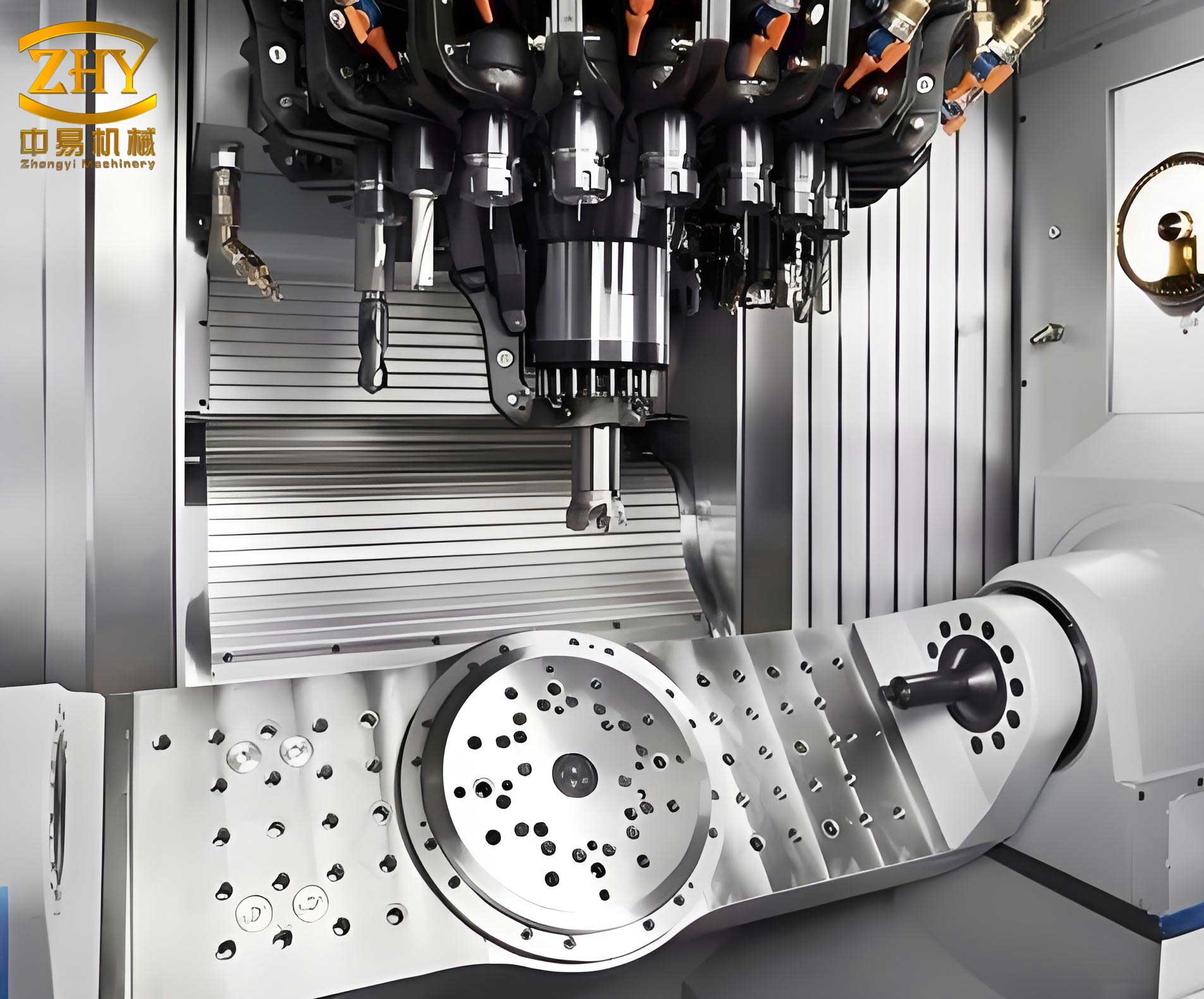
Consistent properties across these sections are vital for the performance and accuracy of the final machine tool. The cupola melting process was optimized to achieve a tapping temperature above 1400°C, with tight control over silicon and manganese burn-off to ensure consistent base iron chemistry, as shown in Table 5. The inoculant was added at 0.3% during tapping, and test bars were cast immediately (“front” samples) and after a 10-minute hold (“rear” samples) to simulate potential production delays.
| Element | Content (wt.%) | Role in Machine Tool Castings |
|---|---|---|
| Carbon (C) | 3.25 – 3.40 | Provides graphite formation and damping capacity |
| Silicon (Si) | 1.85 – 2.00 | Promotes graphite formation, influences matrix |
| Manganese (Mn) | 0.85 – 1.00 | Counteracts sulfur, strengthens pearlite |
| Phosphorus (P) | < 0.10 | Kept low to avoid brittleness |
| Sulfur (S) | < 0.10 | Controlled to prevent adverse effects on graphite |
| Calculated Carbon Equivalent (CE)* | 3.95 – 4.05 | Indicator of castability and solidification behavior |
* Carbon Equivalent calculated using: $$ CE = C + \frac{1}{3}(Si + P) $$
The tensile strength results from the production trials are compiled in Table 6. The A-series inoculant consistently produced higher tensile strengths in both front and rear samples compared to the 75FeSi inoculant. More importantly, the strength retention after the 10-minute hold was significantly better with the A-series, highlighting its superior anti-fading property in a production environment. This directly benefits the manufacturing of large or complex machine tool castings where pouring times can be extended.
| Inoculant Used | Sample Type | Average Tensile Strength (MPa) | Standard Deviation (MPa) |
|---|---|---|---|
| A-series | Front (immediate pour) | 256 | 4.2 |
| Rear (10 min hold) | 251 | 4.5 | |
| Attached to casting | 253 | 3.8 | |
| 75FeSi | Front (immediate pour) | 248 | 5.0 |
| Rear (10 min hold) | 232 | 6.1 | |
| Attached to casting | 240 | 4.9 |
To holistically assess the quality of the cast iron produced for machine tool castings, relative intensity (RI) and quality index (QI) metrics were employed. These metrics integrate strength and hardness to provide a single-figure measure of performance. The formulas used are:
$$ RI = \frac{TS_{actual}}{TS_{nominal}} \times 100\% $$
$$ QI = \frac{TS_{actual} \times (100 – \frac{HB}{10})}{100} $$
where \( TS_{actual} \) is the measured tensile strength in MPa, \( TS_{nominal} \) is the nominal strength for the grade (e.g., 250 MPa for HT250), and HB is the Brinell hardness number. A higher RI indicates strength exceeding the grade requirement relative to hardness, and a higher QI represents a better balance of strength and machinability (lower hardness favoring machinability). The calculated values for the production trial samples are given in Table 7. The A-series inoculant consistently yields higher RI and QI values, confirming its ability to produce a superior quality iron for machine tool castings that offers both high strength and good machinability.
| Inoculant & Sample | Tensile Strength (MPa) | Hardness (HB) | Relative Intensity (RI) | Quality Index (QI) |
|---|---|---|---|---|
| A-series Front | 256 | 195 | 102.4% | 80.3 |
| A-series Rear | 251 | 198 | 100.4% | 78.8 |
| 75FeSi Front | 248 | 202 | 99.2% | 77.1 |
| 75FeSi Rear | 232 | 208 | 92.8% | 72.6 |
The mechanism behind the enhanced performance of the A-series inoculant can be explained through nucleation theory. The addition of strontium and optimized aluminum content creates a higher density of stable, heterogeneous nucleation sites within the molten iron. These sites act as substrates for graphite precipitation during solidification. The potency and thermal stability of these sites are greater than those provided by conventional inoculants, leading to a higher eutectic cell count and a finer, more uniform graphite structure. This is mathematically related to the solidification undercooling. The number of eutectic cells N can be approximated by:
$$ N = N_0 \cdot e^{-Q/(R \cdot T)} \cdot f(I) $$
where \( N_0 \) is a pre-exponential factor, Q is an activation energy, R is the gas constant, T is temperature, and \( f(I) \) is a function of inoculant potency. The A-series inoculant increases the value of \( f(I) \), thereby increasing N for a given undercooling ΔT. A higher N value directly correlates with the improved mechanical properties and reduced section sensitivity observed, which are critical benchmarks for high-quality machine tool castings.
Furthermore, the impact on graphite morphology is significant. In machine tool castings, the preferred graphite form is Type A, with random, uniformly distributed flakes. The A-series inoculant promotes this morphology effectively, even in heavier sections where undercooled graphite (Type D) might otherwise form. The relationship between inoculant composition, cooling rate, and graphite type can be analyzed using phase diagram principles and growth kinetics. The growth velocity of graphite v_g in the [10ī0] direction (a-axis) versus the [0001] direction (c-axis) influences its final shape. Effective inoculation modifies the interfacial energy balance, favoring lateral growth and leading to the desired flake graphite rather than undercooled forms. This control over graphite shape is a key factor in achieving the optimal damping and thermal conductivity required for machine tool castings.
In summary, the comprehensive study and production application of the A-series inoculant demonstrate its clear advantages for manufacturing machine tool castings. Its superior anti-fading characteristics ensure consistent nucleation over longer holding times, a common scenario in foundries producing large machine tool components. The enhanced mechanical properties, particularly tensile strength retention, contribute to the load-bearing capacity and durability of castings like bed frames and columns. The significant reduction in section sensitivity guarantees uniform hardness and microstructure across varying wall thicknesses, which is essential for maintaining precision and minimizing distortion in finished machine tools. The higher quality index values indicate an excellent balance between strength and machinability, reducing manufacturing costs and improving performance. Therefore, the adoption of the A-series inoculant represents a meaningful advancement in foundry technology specifically for the machine tool industry, promising more reliable, high-performance castings that meet the ever-increasing demands of precision manufacturing.
Future work will involve extending these trials to other grades of cast iron used in machine tool castings, such as higher-strength grades or those with alloying additions for wear resistance. Additionally, investigating the synergies between the A-series inoculant and other melt treatment practices, like desulfurization or alloying, could further optimize the properties of machine tool castings. The long-term goal remains to push the boundaries of cast iron quality, ensuring that machine tool castings continue to serve as the robust, precise, and stable foundations for advanced manufacturing equipment worldwide.