
In our continuous pursuit of excellence in the machine tool industry, we have focused on developing specialized grinding equipment and enhancing the foundational quality of machine tool castings. The demand for high-precision components in military and civilian applications has driven our innovation, leading to the creation of advanced grinders and a revolutionary shift in casting processes. At the core of our success lies the improvement of machine tool castings through self-hardening furan resin sand technology, which has transformed our production capabilities and positioned us as a leader in the field. This article details our journey, emphasizing the critical role of machine tool castings in achieving superior performance and efficiency.
Our factory began by addressing specific machining challenges, such as the need for efficient grinding of internal square holes. Traditional methods involved插床 (slotting) and manual finishing, which were labor-intensive and imprecise. To overcome this, we developed a square hole grinder that utilizes a cup-shaped grinding wheel for end-face grinding, with a磨头 (grinding head) that rotates freely to machine all four surfaces of a rectangular hole. Key features include a rotary table with precise indexing, an optical readout, micro-adjustable tooling机构, and a robust welded alloy steel磨头臂 for high rigidity. The longitudinal movement is液压传动 (hydraulically driven) with manual backup, while横向运动 (cross-feed) employs rectangular rolling guides. This machine significantly improved productivity, with processing times reduced by a factor of five for workpieces measuring 长 (length) × 宽 (width) × 高 (height). The development of such specialized grinders underscored the importance of durable and precise machine tool castings to withstand operational stresses.
| Grinder Type | Key Features | Application | Improvement in Efficiency |
|---|---|---|---|
| Square Hole Grinder | Cup-shaped wheel, rotary磨头, optical indexing | Internal square hole grinding | 5x faster than traditional methods |
| Gantry Surface Grinder | Short-wide table,龙门式布局 (gantry structure), automatic wheel dressing | Large mold bases and plastic injection molds | Enhanced rigidity and precision for模具加工 (mold processing) |
| Double-Sided Grinder | Separate motor drive, automatic feeding, programmable control | Bearings, automotive parts (e.g., cross shafts) | High throughput (e.g., 40 pieces/hour) with consistent quality |
Further innovations included the design of a gantry-type surface grinder tailored for模具行业 (mold industry) needs. Most mold components have a length-to-width ratio of 1:1, whereas通用平面磨床 (universal surface grinders) often have ratios of 3:1. Our model features a龙门式布局 (gantry layout) without a crossbeam, with the磨头 mounted on a top beam for vertical feed, ensuring简洁 (simplicity) and rigidity. The磨头 spindle supports rolling bearings or静压轴承 (hydrostatic bearings), and the worktable uses液压传动 (hydraulic drive) for smooth motion. An automatic wheel dresser and无级调速 (infinitely variable speed) cross-feed enhance操作 (operation). The worktable导轨 (guides) are coated with耐磨层 (wear-resistant plastic) to maintain磨削精度 (grinding accuracy). This grinder exemplifies how optimized machine tool castings contribute to structural integrity and longevity.
For high-volume applications, we developed efficient double-sided grinders, producing over 40 models for automotive, bearing, and textile machinery sectors. These specialized machines process components like cross shafts, piston pins, and bearing rings. For instance, a model for磨削直径 (grinding diameter) × 长度 (length)轴承滚柱 (bearing rollers) achieves端面跳动 (face runout) below $$ \pm 0.005 \, \text{mm} $$, batch length variation under $$ \pm 0.02 \, \text{mm} $$, and表面粗糙度 (surface roughness) of $$ R_a \leq 0.4 \, \mu\text{m} $$. Another model for automotive cross shafts incorporates日本 (Japanese) programmable controllers and意大利 (Italian) measuring instruments, ensuring reliability and直观 (intuitive) readings. The送料机构 (feeding mechanism) enables automatic positioning, clamping, and卸料 (unloading), with a机械手 (manipulator) for工件转位 (workpiece indexing). These advancements highlight the need for high-quality machine tool castings to achieve tight tolerances and repeatability.
The performance of our grinders is intrinsically linked to the quality of their castings. Recognizing this, we initiated a comprehensive改造 (transformation) using self-hardening furan resin sand工艺 (technology). This method represents a革命 (revolution) in造型方法 (molding techniques), offering superior surface finish, dimensional accuracy, and productivity for medium-to-large machine tool castings. Our journey began with exploratory trials in the late 1980s, followed by研修 (training) in日本 (Japan) to gain hands-on experience. We then embarked on a系统工程 (systematic project) focusing on three pillars:原辅材料 (raw materials),砂处理设备 (sand processing equipment), and工艺技术 (process technology).
First, we localized raw materials through extensive research and testing. Key materials like树脂 (resin),固化剂 (hardener), and原砂 (base sand) were sourced from domestic suppliers, while辅助材料 (auxiliary materials) such as脱模剂 (release agents) and涂料 (coatings) were developed in-house. The树脂加入量 (resin addition rate) was optimized to a stable range, expressed as:
$$ R = \frac{m_{\text{resin}}}{m_{\text{sand}}} \times 100\% = 1.0\% – 1.2\% $$
where \( R \) is the resin percentage, \( m_{\text{resin}} \) is the mass of resin, and \( m_{\text{sand}} \) is the mass of sand. This optimization reduced costs while maintaining quality for machine tool castings.
| Material Type | Specification | Purpose | Performance Metrics |
|---|---|---|---|
| Furan Resin | High strength, low nitrogen | Binder for sand molds | 加入量 (Addition rate): 1.0-1.2%; tensile strength ≥ 2.5 MPa |
| Hardener | Sulfonic acid based | Catalyzes resin curing | Curing time: 2-5 minutes at 20°C |
| Base Sand | Silica sand, AFS 50-60 | Mold material | pH 7, low clay content for consistent bonding |
| Release Agent | Water-based emulsion | Prevents sticking to patterns | Compatible with树脂砂 (resin sand), non-toxic |
Second, we evolved our equipment from small-scale mixers to a full production line. Initial use of a 5 kg轮混砂机 (wheel mixer) progressed to a 100 kg碗形混砂机 (bowl mixer), and eventually, a简易生产线 (simplified line) with旧砂再生 (used sand regeneration) was established at minimal cost. This line achieved over 90% sand reuse and an annual capacity of 500 tons of machine tool castings, earning industry recognition. Based on this experience, we imported advanced equipment from Japan, completing installation in under four months. The line includes key components like砂块破碎机 (sand lump crushers) and连续式混砂机 (continuous mixers), which we later localized through消化吸收 (digestion and absorption).
Third, we refined工艺技术 (process technology) through extensive trials. Data were accumulated on浇注系统 (gating systems),工装设计 (tooling design), and木模结构 (pattern construction). For instance, patterns采用框架式结构 (adopt frame structures) with胶合板 (plywood) surfaces, and芯盒 (core boxes) use倒桶式 (inverted bucket styles) to ensure精度 (accuracy). We also standardized parameters like拔模斜率 (draft angles),收缩率 (shrinkage allowances), and加工余量 (machining allowances). Defect analysis led to对策 (countermeasures), such as adjusting resin ratios or improving venting. The relationship between sand properties and casting quality can be modeled as:
$$ Q_c = k \cdot \frac{S}{R} \cdot e^{-t/\tau} $$
where \( Q_c \) is the casting quality metric (e.g., surface roughness), \( S \) is the sand strength, \( R \) is the resin addition rate, \( t \) is the curing time, \( \tau \) is a time constant, and \( k \) is a proportionality factor. This formula guides optimization for machine tool castings.
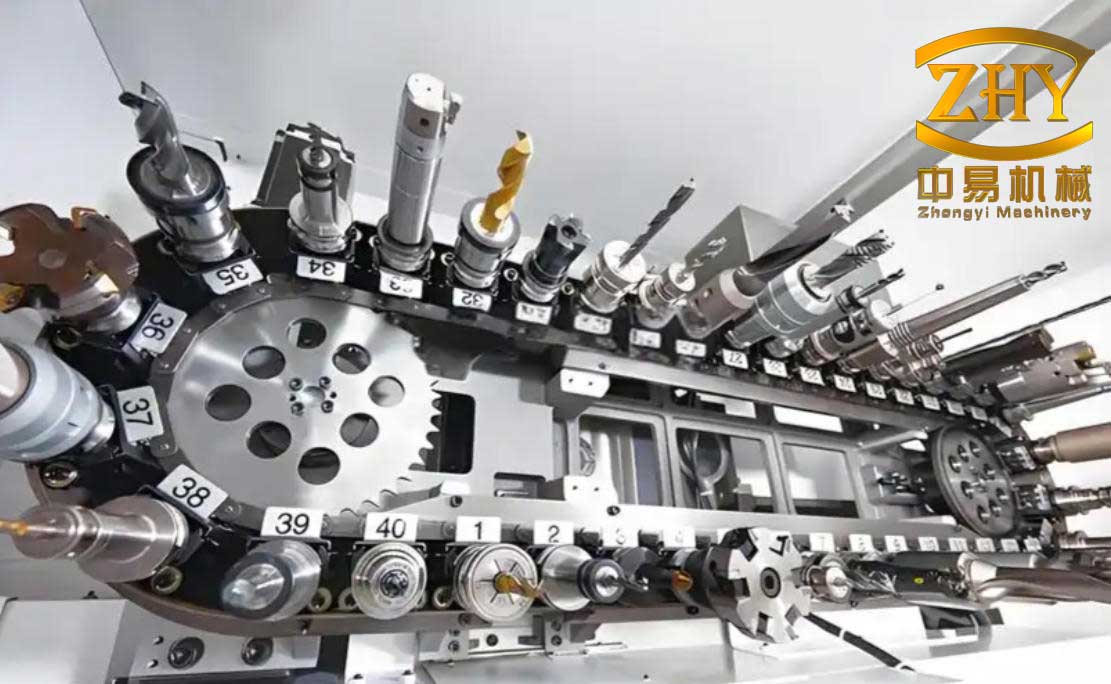
The implementation of resin sand technology has dramatically improved our machine tool castings. Key quality indicators show enhancements in dimensional stability, surface finish, and internal integrity. For example,铸件表面光洁度 (casting surface smoothness) now achieves $$ R_a \leq 6.3 \, \mu\text{m} $$ without secondary processing, and尺寸精度 (dimensional accuracy) is within $$ \pm 0.5 \, \text{mm} $$ per meter, compared to $$ \pm 1.0 \, \text{mm} $$ with traditional methods. The直线度 (straightness) and平面度 (flatness) of large castings are controlled to within $$ 0.1 \, \text{mm} $$ over 500 mm, crucial for grinders like our龙门磨床 (gantry grinders). These improvements directly contribute to the performance of our磨床 (grinding machines), reducing vibration and wear during operation.
| Quality Parameter | Traditional Sand Castings | Resin Sand Castings | Improvement Factor |
|---|---|---|---|
| Surface Roughness (Ra) | 12.5 – 25 μm | ≤ 6.3 μm | 2-4x smoother |
| Dimensional Tolerance | ± 1.0 mm/m | ± 0.5 mm/m | 50% more precise |
| Defect Rate (e.g., porosity) | 5 – 10% | < 2% | 60-80% reduction |
| Production Rate | Low due to manual labor | High with automation | 3x faster for complex shapes |
The economic benefits are substantial. By replacing imported磨床 with domestically produced ones using优质铸件 (high-quality castings), we saved millions of dollars. Moreover, our machine tool castings have become export commodities, with shipments to Japan generating significant外汇 (foreign exchange). In one quarter alone, we exported 100 tons of castings, earning over $400,000—exceeding the cost of imported equipment. This success has heightened quality awareness and provided a捷径 (shortcut) to bridging the gap with advanced international standards. Our foundry now aims to be an export base, targeting $2 million annually in创汇 (foreign exchange earnings), while serving as a推广基地 (promotion base) for resin sand technology in China.
Looking ahead, we continue to innovate. New磨床 models, such as magnetic head slot grinders and double-sided grinders for connecting rods, are under development, all reliant on superior machine tool castings. We are also enhancing post-processing treatments and pattern-making to further elevate casting quality. The integration of resin sand technology has not only upgraded our铸件 (castings) but also fostered a culture of continuous improvement. As we advance, the synergy between精密磨床 (precision grinders) and high-performance machine tool castings will drive our growth, ensuring we meet evolving industry demands for efficiency and precision.
In summary, our工厂 (factory) has demonstrated that investing in casting technology yields dividends across the machine tool价值链 (value chain). From specialized grinders to resin sand processes, every step reinforces the importance of durable and accurate machine tool castings. We remain committed to this path, confident that future innovations will emerge from our dedication to quality and efficiency. The journey underscores a fundamental truth: the strength of any machine tool lies in its castings, and by mastering this foundation, we can achieve remarkable advancements in manufacturing technology.