
In the rapidly evolving landscape of modern manufacturing, the field of prototype investment casting has undergone significant transformations. As a technical specialist involved in precision casting operations at a medium-sized enterprise, I have witnessed firsthand the challenges and opportunities presented by traditional methods. The demand for high-quality, complex metal components, especially for applications requiring stringent tolerances and superior surface finish, has driven intensive research into refining investment casting processes. This article details our comprehensive journey in enhancing prototype investment casting techniques, focusing on shell-making process improvements, systematic experimentation, and the integration of advanced materials. Our goal was to bridge the gap between cost-effective but lower-quality methods and high-performance yet expensive alternatives, ultimately achieving an optimal balance for prototype investment casting production.
The core of prototype investment casting lies in creating precise ceramic shells around wax patterns, which are then melted out to form molds for metal pouring. Historically, many facilities, including ours, relied on the sodium silicate (water glass) process combined with silica sand. While economical, this approach often resulted in castings with elevated surface roughness, defects like iron nodules (iron beans) and burrs, and issues such as excess material (flash) in intricate geometries like narrow slots and dead corners. These imperfections not only compromised aesthetic quality but also necessitated extensive post-casting operations like grinding, chiseling, and machining, increasing lead times and costs. For prototype investment casting, where precision and rapid iteration are paramount, such limitations were increasingly unacceptable.
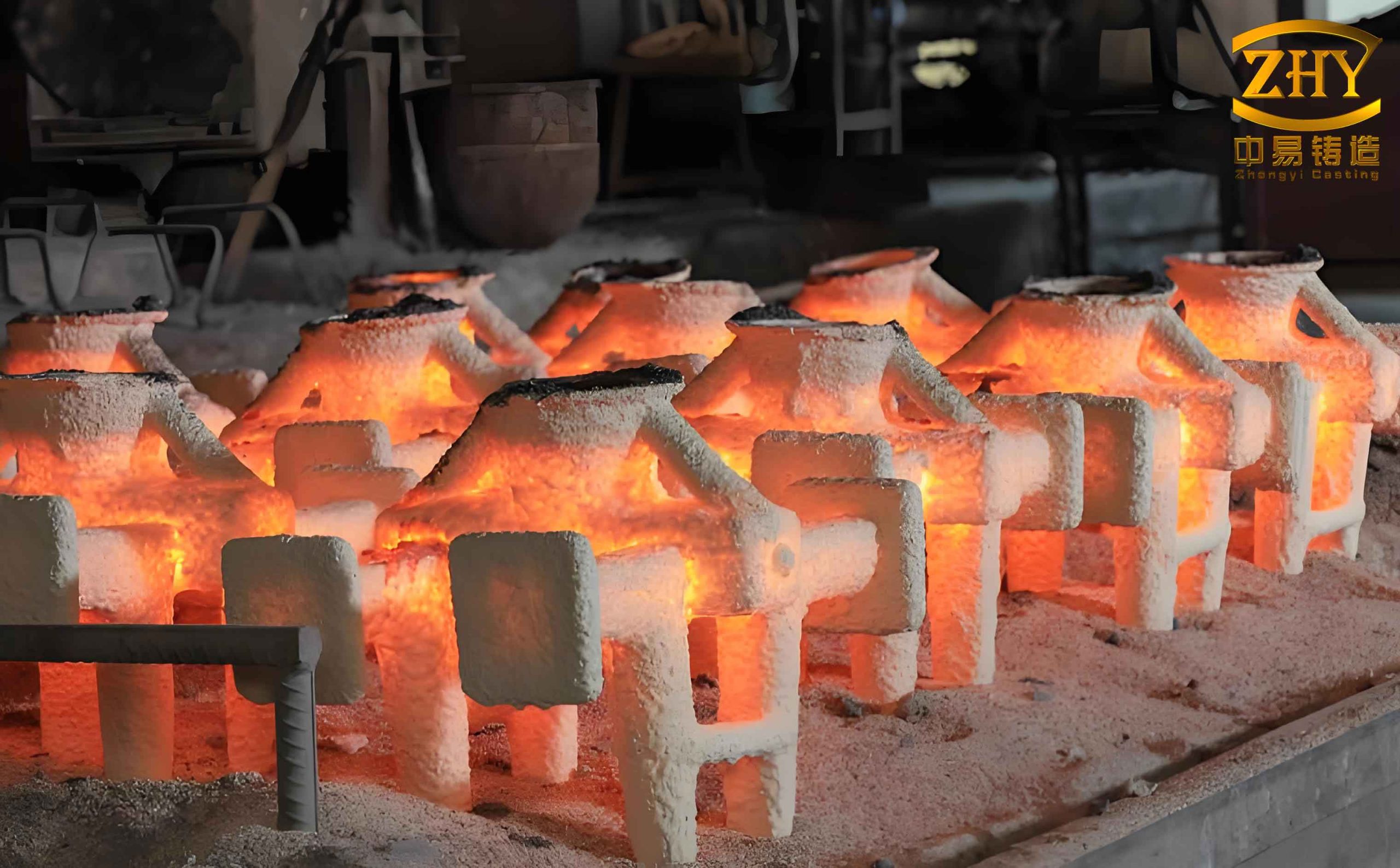
Our initial process for prototype investment casting involved using water glass as a binder, silica flour for slurry preparation, and silica sand with grain size classifications of 50/100 for the first two coating layers and 20/40 for layers three to six. Dewaxing was performed via hot water dissolution at approximately 95°C, followed by shell firing at 850°C for 2 hours. The typical defects observed in cast steel components (e.g., grade ZG270-500) are quantified in Table 1, highlighting the critical need for process innovation in prototype investment casting.
| Defect Type | Description | Approximate Frequency (%) | Impact on Post-Processing |
|---|---|---|---|
| High Surface Roughness | Ra values exceeding 12.5 µm, necessitating secondary finishing. | ~80 | Significant time increase for cleaning. |
| Iron Nodules & Burrs | Small metallic protrusions and fins on casting surfaces. | ~60 | Manual removal required; risk of tool damage during machining. |
| Excess Material (Flash) | Extra metal in narrow slots, undercuts, and死角 areas. | ~40 | Extremely difficult to clean; often must be removed via CNC machining, disrupting production flow. |
| Shell Cracking & Dimensional Inaccuracy | Due to thermal expansion mismatch. | ~25 | Leads to scrap or extensive rework. |
To address these issues, we embarked on a multi-stage experimental program aimed at revolutionizing our prototype investment casting capabilities. The fundamental objective was to enhance shell quality without prohibitively increasing costs. Two primary schemes were investigated, both centered on modifying the shell-building sequence for prototype investment casting.
Scheme A: Transition to Silica Sol Binder with Zircon Sand Face Coat. This approach represented a shift toward advanced prototype investment casting practices. The shell construction sequence was as follows:
- Binder: Silica sol.
- Face Coat (Layers 1 & 2): Zircon sand with a grain fineness of 120.
- Secondary Coats (Layers 3 & 4): Mullite sand with grain size 60/100.
- Backup Coats (Layers 5 & 6): Silica sand with grain size 20/40.
Dewaxing and firing parameters remained identical to the baseline process. This scheme promised superior refractoriness and thermal stability, key for high-integrity prototype investment casting molds.
Scheme B: Hybrid Water Glass Process with Zircon Sand Face Layers. This was a more conservative modification, aiming to upgrade the existing system. The sequence was:
- Binder: Water glass (sodium silicate).
- Face Coat (New Layers 1 & 2): Zircon sand with grain fineness 120.
- Subsequent Coats (Layers 3–6): Followed the original water glass process (silica sand, sizes 50/100 then 20/40).
This scheme sought to leverage the benefits of zircon’s properties at the critical metal-mold interface while maintaining the cost structure of water glass for the bulk of the shell—a pragmatic approach for prototype investment casting.
Our experimental campaign for prototype investment casting was conducted in three distinct phases, each involving the production of 50 test components.
Phase I: Implementation of Scheme A (Silica Sol). Initial results were disappointing. Approximately 70% of castings exhibited surface defects like pits and pinholes. Analysis revealed that the silica sol binder had poor adhesion to the wax patterns under our prevailing workshop conditions. Furthermore, the silica sol process for prototype investment casting is highly sensitive to environmental parameters such as ambient temperature ($T_a$), relative humidity ($RH$), slurry stirring time ($t_s$), and drying kinetics. The ideal conditions can be modeled, but our facility could not consistently maintain them. The adhesion failure can be partially described by considering the work of adhesion $W_a$ between the slurry and wax:
$$W_a = \gamma_{sv} + \gamma_{lv} – \gamma_{sl}$$
where $\gamma_{sv}$, $\gamma_{lv}$, and $\gamma_{sl}$ are the solid-vapor, liquid-vapor, and solid-liquid interfacial tensions, respectively. Inadequate control led to $W_a$ values below the critical threshold for proper coating, causing slurry slippage or poor wetting. Consequently, shell quality did not improve significantly over the baseline, rendering this approach unsuitable for our prototype investment casting operations despite its theoretical advantages.
Phase II: Implementation of Scheme B (Hybrid Water Glass/Zircon). This phase yielded markedly better outcomes for prototype investment casting. Over 85% of castings displayed smooth surfaces with minimal iron nodules and burrs. Surface roughness measurements indicated an improvement of roughly one grade (e.g., from Ra 12.5 µm to Ra 6.3 µm). The data is summarized in Table 2, comparing key metrics across the processes for prototype investment casting.
| Process Scheme | Avg. Surface Roughness, Ra (µm) | Defect Rate (Iron Nodules/Burrs) (%) | Relative Shell Strength (MPa)* | Estimated Cost Index (Baseline=1.0) |
|---|---|---|---|---|
| Baseline (Full Water Glass/Silica) | 12.5 – 25 | 60 | 2.5 | 1.0 |
| Scheme A (Silica Sol/Zircon) | 6.3 – 12.5 (but with pinholes) | 70 (pinhole defect) | 4.0 | 3.2 |
| Scheme B (Hybrid Water Glass/Zircon) | 6.3 – 10 | 15 | 3.2 | 1.4 |
| Scheme B Variant (Hybrid with Silica Sand Face)** | 9 – 16 | 40 | 2.8 | 1.1 |
*Shell strength estimated via modulus of rupture tests on fired shells.
**Tested in Phase III as a cost-reduction attempt.
Phase III: Cost-Optimization Test using Silica Sand Face Coat. To reduce material expense in prototype investment casting, we substituted the zircon face sand in Scheme B with silica sand of identical grain size (120 fineness). The results were intermediate: defect rates rose to around 40%, and surface roughness worsened compared to the zircon-faced hybrid. This conclusively demonstrated the critical role of face coat material in prototype investment casting quality. The underlying reasons are rooted in the thermophysical properties of the sands, which can be analyzed through their thermal expansion behavior and chemical interactions.
The superiority of zircon sand in prototype investment casting applications is primarily due to its low and linear coefficient of thermal expansion (CTE, $\alpha$) and high chemical inertness. Silica sand ($\alpha$-quartz) undergoes a disruptive polymorphic transformation at approximately 573°C, accompanied by a sudden volume increase. This phenomenon can be modeled. The volumetric strain $\epsilon_v$ during heating is:
$$\epsilon_v(T) = \int_{T_0}^{T} 3\alpha(T’) dT’$$
For silica sand, $\alpha(T)$ is not constant; it increases sharply near the transformation temperature $T_t$:
$$\alpha_{\text{silica}}(T) \approx \alpha_0 + \Delta \alpha \cdot \delta(T-T_t)$$
where $\delta$ represents a sharp peak. This causes micro-cracking in the shell, reducing its strength and dimensional accuracy. In contrast, zircon sand (ZrSiO₄) has a nearly constant, low CTE:
$$\alpha_{\text{zircon}} \approx 4.5 \times 10^{-6} \, \text{K}^{-1} \quad \text{(from 20°C to 1500°C)}$$
which is about one-sixth that of silica sand above $T_t$. The thermal stress $\sigma$ generated in a shell layer can be approximated by:
$$\sigma = E \cdot \Delta \alpha \cdot \Delta T$$
where $E$ is the Young’s modulus of the shell material, $\Delta \alpha$ is the CTE mismatch between layers, and $\Delta T$ is the temperature change. Using zircon at the face minimizes $\Delta \alpha$ at the critical metal-shell interface, reducing stress and cracking.
Furthermore, the chemical resistance of zircon is vital. During the pouring of steel in prototype investment casting, iron oxides (e.g., FeO) can form and react with silica:
$$\text{SiO}_2(s) + 2\text{FeO}(l) \rightarrow 2\text{FeO}\cdot\text{SiO}_2(l) \quad \text{(Fayalite slag)}$$
This reaction leads to penetration and burning-on defects (sand adhesion). Zircon is thermodynamically more stable:
$$\text{ZrSiO}_4(s) + \text{FeO}(l) \rightarrow \text{No significant reaction below 1600°C}$$
Thus, it acts as an effective barrier against metal penetration, a key advantage for achieving clean surfaces in prototype investment casting.
Based on the Phase II success, we formally adopted the hybrid Scheme B as our standard for prototype investment casting. The refined shell-building sequence is detailed in Table 3, along with optimized process parameters that we established through iterative testing.
| Layer Number | Binder System | Refractory Flour (Slurry) | Stucco Sand (Type & Grain Size) | Drying Conditions (Temp., RH, Time) | Primary Function |
|---|---|---|---|---|---|
| 1 (Face) | Water Glass (Módulus ~3.3, density 1.28 g/cm³) | Zircon Flour (~325 mesh) | Zircon Sand, AFS 110-120 | 22±2°C, 50±5% RH, 4-6 h | Provide smooth, reactive interface. |
| 2 (Face) | Water Glass | Zircon Flour | Zircon Sand, AFS 110-120 | 22±2°C, 50±5% RH, 4-6 h | Reinforce face coat, ensure continuity. |
| 3 | Water Glass | Silica Flour (~200 mesh) | Silica Sand, AFS 50/100 | Ambient, 6-8 h | Transition layer. |
| 4 | Water Glass | Silica Flour | Silica Sand, AFS 50/100 | Ambient, 6-8 h | Build shell thickness. |
| 5 & 6 | Water Glass | Silica Flour | Silica Sand, AFS 20/40 | Ambient, 8-12 h each | Provide mechanical strength for handling and metal static pressure. |
Dewaxing: Hot water at 92-98°C for 25-35 minutes. Shell Firing: Ramp to 850°C, hold for 2.5 hours to ensure complete burnout and sintering.
The adoption of this optimized prototype investment casting process yielded substantial benefits, which we have monitored over long-term production. The advantages are multifaceted and quantitatively significant:
- Enhanced Surface Quality: The surface roughness of castings improved by approximately one full grade (e.g., from Ra 12.5 to Ra 6.3 µm), meeting higher aesthetic and functional standards for prototype investment casting components. This directly reduces the need for secondary finishing.
- Drastic Reduction in Post-Casting Labor: The time required for cleaning, grinding, and deburring castings decreased to about one-third of the original duration. This efficiency gain is critical in prototype investment casting, where rapid turnaround is often required.
- Improved Dimensional Accuracy and Yield: The reduction in shell cracking and metal penetration minimized dimensional deviations and excess material in features. The first-pass qualification rate for raw castings increased from 75% to over 92%, significantly lowering scrap and rework costs in prototype investment casting operations.
- Downstream Manufacturing Benefits: Machining operations became more predictable and efficient, as tools encountered fewer hard spots (iron nodules) and unexpected flash. This streamlined the entire manufacturing chain for parts produced via prototype investment casting.
- Cost-Effectiveness: While the hybrid process incurs a higher material cost than the baseline (Cost Index ~1.4 vs. 1.0), the overall economics are favorable. The savings from reduced labor, lower scrap rates, and improved machining yield result in a net decrease in total cost per qualified casting. A simplified cost model can be expressed as:
$$C_{\text{total}} = C_{\text{material}} + C_{\text{labor}} + C_{\text{scrap}} + C_{\text{machining}}$$
Our data shows that for prototype investment casting, the increase in $C_{\text{material}}$ is more than offset by reductions in $C_{\text{labor}}$, $C_{\text{scrap}}$, and $C_{\text{machining}}$.
To further generalize our findings for the broader context of prototype investment casting, we developed predictive models for shell performance. The shell’s resistance to failure during pouring can be related to its hot strength and thermal shock resistance. A figure of merit ($FOM$) for a shell system in prototype investment casting can be proposed:
$$FOM = \frac{\sigma_{hf} \cdot R”}{\alpha \cdot E}$$
where $\sigma_{hf}$ is the high-temperature flexural strength, $R”$ is the thermal shock resistance parameter, $\alpha$ is the average CTE, and $E$ is the modulus. Our hybrid shell exhibits a higher $FOM$ than the traditional shell, explaining its better performance.
Moreover, the selection of face coat materials in prototype investment casting can be guided by phase diagram analysis. For ferrous alloys, the system FeO-SiO₂-ZrO₂ shows that zircon is stable in contact with iron oxides, while silica forms low-melting eutectics. This fundamental materials science principle underpins our practical choice.
In conclusion, our systematic investigation into shell-making for prototype investment casting demonstrates that significant quality improvements are achievable without adopting prohibitively expensive full ceramic sol processes. The hybrid water glass binder system with zircon sand face coats represents an optimal compromise, delivering enhanced surface finish, dimensional accuracy, and production efficiency for prototype investment casting. This approach has proven robust in our manufacturing environment, where control over all ideal parameters is not always feasible. The key lessons extend beyond our specific case: successful innovation in prototype investment casting often involves tailored hybridization of materials and processes, rigorous experimental validation through structured phases, and deep understanding of the underlying materials thermodynamics and mechanics. As prototype investment casting continues to evolve, such pragmatic yet scientifically informed optimizations will remain essential for meeting the ever-increasing demands for precision, complexity, and cost-effectiveness in manufacturing. The journey has solidified our conviction that continuous, data-driven refinement is the cornerstone of excellence in the field of prototype investment casting.
Looking forward, we are exploring further enhancements, such as graded shell architectures with computational modeling of thermal stresses, and the potential use of alternative binders like colloidal silica-alumina hybrids for specific applications within prototype investment casting. Each step is guided by the principle established here: balancing advanced material properties with practical process economics to push the boundaries of what is possible in prototype investment casting.