
The relentless advancement of railway technology demands increasingly robust and reliable components for maintenance equipment. Among these, the ballast cleaning machine is a critical asset, and at the heart of its operation lies the excavating chain—a heavily stressed assembly whose failure leads to significant operational downtime. This article details a first-person, investigative journey into the failure of a critical steel casting within such an excavating chain. The component, which failed prematurely before reaching its specified service life, initiated a comprehensive failure analysis. By meticulously examining the fracture surface, mechanical properties, and metallurgical structure, and correlating these findings with a deep dive into the existing casting and production processes, the root causes were identified. Subsequently, a targeted improvement plan was formulated, implemented, and validated, resulting in a significant enhancement of the steel casting’s quality and performance metrics. This case study underscores the intricate relationship between casting process design, production discipline, and the final performance of high-integrity steel castings.
I. Comprehensive Failure Analysis of the Fractured Steel Casting
The investigation commenced with a detailed forensic examination of the failed steel casting to understand the mechanism and origin of the fracture.
1.1 Fractographic Examination
Macroscopic observation of the fracture surface revealed a grey, non-oxidized appearance, indicating a recent, non-corrosive failure. The convergence pattern of crack arrest lines definitively pointed to a crack initiation site at the edge of the casting’s cross-section. Critically, no gross defects such as massive slag inclusions, shrinkage cavities, or pores were visible to the naked eye at this origin. However, evidence of wear and plastic deformation was noted on the edge adjacent to the crack initiation zone, suggestive of localized stress concentration and possible contact fatigue.
Following meticulous cleaning, scanning electron microscopy (SEM) was employed for微观分析. The dominant micro-mechanism was a mixture of ductile dimples and quasi-cleavage, typical of a overload fracture in a material with moderate toughness. More importantly, the analysis revealed several concerning features:
- Localized Brittle Zones: Isolated areas exhibited a “bone-like” or skeletal morphology, indicative of localized embrittlement.
- Micro-shrinkage/Porosity: Evidence of casting micro-shrinkage was present, often following the prior dendritic structure of the steel. This type of discontinuity acts as a potent stress raiser.
- Non-Metallic Inclusions: The fracture path was populated with various non-metallic inclusions, which were analyzed in detail in the metallographic phase.
1.2 Mechanical Properties Evaluation
Tensile, impact, and hardness specimens were extracted from the sound body of the failed steel casting, adjacent to the fracture. The results highlighted a critical deviation from the required material specification.
| Property | Measured Value | Technical Requirement | Status |
|---|---|---|---|
| Tensile Strength | Consistent with Spec | Met | Acceptable |
| Yield Strength | Consistent with Spec | Met | Acceptable |
| Reduction of Area (Z%) | Below Minimum Limit | Minimum XX% | FAIL |
| Charpy Impact Energy (KV2) | At or Near Lower Limit | Minimum YY J | Marginal/FAIL |
| Rockwell Hardness (HRC) | Above Maximum Limit | Max ZZ HRC | FAIL |
This data profile is highly revealing: while strength was adequate, the combination of low ductility (Z%), low toughness (KV2), and excessive hardness points towards a sub-optimal microstructure and/or the presence of embrittling factors. The relationship between hardness (H), yield strength (σ_y), and toughness (K_IC) can be conceptually framed, acknowledging its complexity:
$$ H \propto \sigma_y $$
$$ K_{IC} \propto \frac{1}{\sqrt{\text{Inclusion Content, Dislocation Density}}} $$
Often, an increase in hardness/strength is achieved at the expense of toughness, especially when accompanied by microstructural defects.
1.3 Metallurgical and Microstructural Analysis
Samples from the crack initiation region underwent detailed metallographic preparation and examination, yielding conclusive evidence.
Non-Metallic Inclusion Assessment: Rating per relevant standards (e.g., ASTM E45) revealed an excessive population of harmful inclusions. The most detrimental were Type II (oxides, often alumina) and Type IV (oxides, silicates) inclusions. These hard, brittle particles act as internal notches, severely compromising fatigue life and impact resistance. The stress concentration factor (K_t) around an elliptical inclusion can be approximated if we consider it as an internal flaw:
$$ K_t \approx 1 + 2\sqrt{\frac{a}{\rho}} $$
where ‘a’ is the flaw depth and ‘ρ’ is the root radius. For sharp, brittle inclusions, ρ is very small, leading to a very high K_t, initiating micro-cracks under load.
Microstructure: Etching revealed a matrix consisting primarily of tempered martensite with a significant presence of bainite, particularly in prior austenite grain boundary regions. Grain size was assessed as ASTM 3-4, which is relatively coarse for a high-strength steel casting. Coarse grains generally lower toughness, as described by the Hall-Petch relationship for yield strength, where a similar trend applies to toughness:
$$ \sigma_y = \sigma_0 + k_y d^{-1/2} $$
Here, σ_y is yield strength, σ_0 and k_y are constants, and d is the average grain diameter. While this directly relates to strength, finer grains typically provide more tortuous paths for crack propagation, enhancing toughness.
Defects: The analysis confirmed the presence of interdendritic micro-shrinkage, aligning with the observations from the fracture surface. This shrinkage, combined with the inclusion clusters, created a network of potential failure initiation sites.
| Analysis Area | Key Observations | Impact on Performance |
|---|---|---|
| Fractography | Edge crack initiation; Mixed dimple/quasi-cleavage; Micro-shrinkage; “Bone-like” brittle zones. | Indicates stress concentration at edge, compromised ductility, and casting defects acting as crack starters. |
| Mechanical Properties | Low reduction of area; Low impact energy; Excessive hardness. | Directly correlates with poor in-service toughness and high susceptibility to brittle fracture. |
| Metallurgy | High levels of Type II & IV inclusions; Coarse grain size (3-4 ASTM); Tempered Martensite + Bainite matrix; Micro-shrinkage. | Inclusions and shrinkage provide failure nuclei; Coarse grains and bainite reduce overall toughness and ductility. |
II. Root Cause Investigation: Linking Failure to Process
The material analysis provided the “what,” but understanding the “why” required an audit of the entire steel casting production chain.
2.1 Deficiencies in the Foundry Process Design
The original casting process for this steel component harbored several inherent weaknesses that predisposed it to the observed defects:
- Pouring Method & Gating System: The use of a top-pouring ladle system with a conventional gating approach was a primary culprit. This method leads to high metal velocity, turbulence, and oxide film entrainment (bifilms) during mold filling. These entrained oxides manifest as the Type II and IV inclusions later found in the microstructure. The Reynold’s Number (Re) concept, while simplified for porous media flow, highlights the risk:
$$ Re = \frac{\rho v D}{\mu} $$
Where ρ is density, v is velocity, D is characteristic diameter (e.g., sprue), μ is viscosity. High Re indicates turbulent flow, which is detrimental for clean steel casting. - Feeding and Risering: The design of feeders and risers was suboptimal for the component’s geometry, failing to ensure directional solidification towards a thermal gradient favorable for feeding. This resulted in the interdendritic micro-shrinkage. The Niyama criterion, a predictor of shrinkage porosity, was likely not satisfied in critical sections:
$$ N_y = \frac{G}{\sqrt{\dot{T}}} $$
Where G is thermal gradient and \dot{T} is cooling rate. A low Niyama value indicates a high risk of shrinkage formation.
2.2 Lapses in Production and Quality Control
Beyond process design, procedural inconsistencies directly contributed to variable and inferior steel casting quality:
- Raw Material Management: The use of scrap steel with visible rust, oil contamination, and poorly prepared returns (e.g., insufficient shot blasting) introduced high levels of hydrogen, oxygen, and other impurities into the melt, exacerbating inclusion formation and gas-related defects.
- Lack of Traceability: The absence of strict batch control from melting through heat treatment meant that process parameters could not be reliably correlated with final properties. This made consistent quality impossible and problem-solving reactive rather than preventive.
- Heat Treatment Practice: The excessive hardness and the presence of bainite suggested that either the austenitizing temperature was too high (causing grain growth) or the quenching/ tempering cycle was not adequately controlled to achieve the desired fully tempered martensitic structure with optimal toughness.
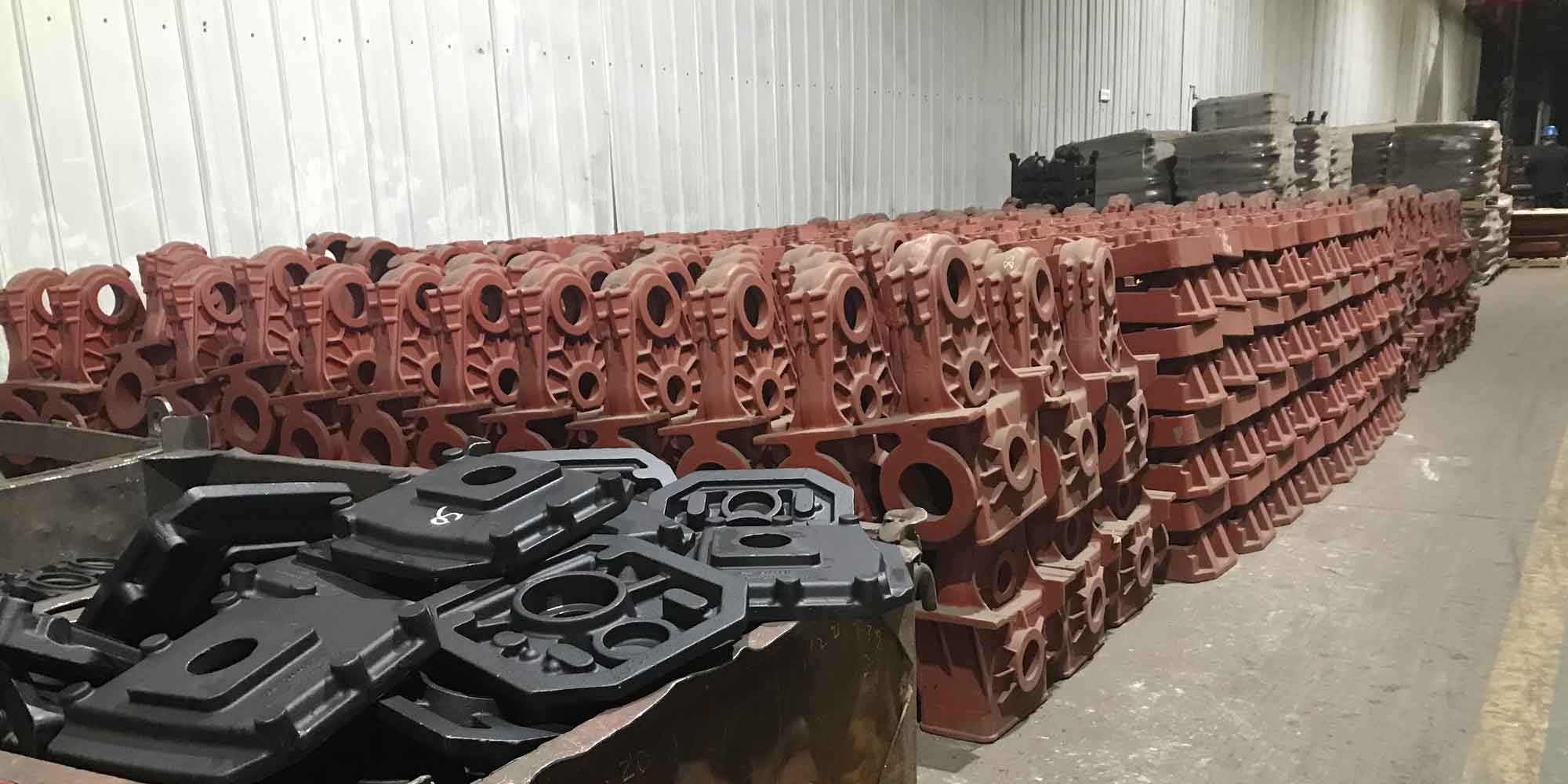
Modern, controlled foundry environments, as depicted, are essential for producing high-integrity steel castings. The improvements we implemented aimed to bring our process in line with such standards, emphasizing cleanliness, control, and traceability at every stage—from raw material receiving to final heat treatment.
III. Formulation and Implementation of Corrective Actions
The improvement strategy was dual-pronged, addressing both the fundamental casting process and the production quality system.
3.1 Optimization of the Steel Casting Process
A completely redesigned casting process was developed and simulated using advanced casting simulation software (CAE) prior to trial.
| Process Parameter | Original Process | Improved Process | Rationale & Benefit |
|---|---|---|---|
| Mold Technology | Conventional Green Sand | Precision Assembled Cores (e.g., Resin-Coated Sand) | Superior dimensional accuracy, better surface finish, reduced risk of sand-related defects. |
| Gating Design | Top-Pouring, Turbulent | Bottom Gating with Runner Extension/Spinner | Promotes laminar fill, minimizes oxide entrainment and slag incorporation into the casting cavity. |
| Pouring Method | Open Stream from Lip-Pour Ladle | Teapot Spout Ladle or Tundish | Ensures only metal from below the slag layer is poured, dramatically improving metal cleanness. |
| Feeding System | Conventional Risers | Optimized Risers Aided by Chills & Insulating Sleeves | Enforces directional solidification, eliminating shrinkage porosity. Achieved via CAE simulation to meet Niyama criterion. |
The fundamental fluid dynamics and thermal principles were central to this redesign. The goal was to achieve a critical velocity threshold to prevent mold erosion while maintaining a non-turbulent flow front (often managed by the Bernoulli equation applied to gating design). The thermal modulus of risers (V/A ratio) was carefully calculated to ensure they remained liquid longer than the casting section they were feeding.
3.2 Strengthening of the Quality Management System
Procedural and control enhancements were instituted to ensure process stability and product traceability:
- Raw Material Specification & Control: Strict standards were enacted for all charge materials (scrap, ferroalloys, deoxidizers). Pre-heating of alloys became mandatory to remove moisture.
- Batch Traceability System: A “melt lot” system was implemented. Every steel casting from a single melt is tracked together through all subsequent operations (molding, heat treatment, finishing). This allows for statistical process control and targeted corrective action if a batch shows anomalies.
- Standardized Thermal Cycles: Precise, validated, and documented austenitizing, quenching, and tempering parameters were established and enforced using furnace recording charts. This ensured consistent microstructure (fine-grained tempered martensite) and mechanical properties.
IV. Validation of Improvements and Results
Prototype batches of the steel casting were produced using the new process and quality system. Comprehensive testing was conducted to validate the improvements.
4.1 Mechanical Performance
The mechanical properties showed a dramatic recovery, now consistently exceeding the technical requirements.
| Property | Average Value (Improved) | Technical Requirement | Improvement Note |
|---|---|---|---|
| Reduction of Area (Z%) | Significantly Above Minimum | Minimum XX% | ~YY% increase over failure batch average. |
| Charpy Impact Energy (KV2) | Consistently Above Minimum | Minimum YY J | Values now cluster in the upper range of the specification. |
| Rockwell Hardness (HRC) | Within Specified Range | AA – BB HRC | Controlled via precise tempering, eliminating over-hardening. |
The improvement in toughness can be partially modeled by considering the reduction in inclusion content, which lowers the effective stress intensity factor at crack initiation sites.
4.2 Metallurgical Quality
Metallographic evaluation confirmed the elimination of the prior deficiencies:
- Non-Metallic Inclusions: Inclusions were now rated predominantly at very low levels (e.g., 0-1 for Type II and IV). The cleanness of the steel casting was vastly improved.
- Microstructure: A uniform, fine-grained microstructure of fully tempered martensite was achieved, with negligible bainite. Grain size was refined to ASTM 6-7 or finer.
- Soundness: No micro-shrinkage or porosity was detected in critical sections, confirming the efficacy of the new feeding design.
The relationship between grain size (d), inclusion spacing (λ), and yield strength (σ_y) can be combined in a modified model to illustrate the improvement:
$$ \sigma_y = \sigma_0 + k_y d^{-1/2} + k_\lambda \lambda^{-1/2} $$
Where k_λ is a constant. By refining grains (decreasing d) and reducing inclusion content (effectively increasing λ), the overall strength-toughness synergy is enhanced without resorting to excessive hardness.
V. Conclusion
This investigation into the premature failure of a railway machinery steel casting exemplifies a systematic approach to quality improvement in foundry engineering. The failure was conclusively traced to a combination of detrimental metallurgical factors—high levels of brittle oxide inclusions, micro-shrinkage, coarse grains, and a non-ideal matrix phase mixture—all stemming from a sub-optimal casting process design and lax production controls. By fundamentally redesigning the steel casting process to prioritize metal cleanness (via bottom gating and slag-free pouring) and soundness (via CAE-optimized feeding), and by enforcing rigorous quality discipline in raw materials and thermal processing, the product was transformed. The improved steel castings now exhibit consistent, superior mechanical properties, excellent metallurgical cleanness, and a refined microstructure. This case reinforces that achieving reliable performance in demanding applications is not merely about chemistry specification but is fundamentally governed by the synergy of precise process engineering and unwavering production control throughout the entire steel casting manufacturing chain. The lessons learned are universally applicable to the production of any high-value, safety-critical steel casting component.