
The global automotive industry is undergoing a profound transformation, driven by the imperatives of environmental protection, energy conservation, emission reduction, and lightweighting. Electric vehicles (EVs) have emerged as a pivotal solution to curtail tailpipe emissions. Central to the performance of an EV is its power battery pack, a critical assembly that houses the battery cells and manages thermal and structural integrity. The casing or enclosure for this pack is a key component whose performance directly dictates the safety, stability, and reliability of the vehicle’s energy source. Therefore, in-depth research into the design and manufacturing of these enclosures is essential.
While significant research has been dedicated to the structural analysis, lightweight optimization, and welding techniques for battery packs, there remains a notable gap in exploring advanced manufacturing methods for complex, high-integrity housings. This article addresses this gap by presenting a comprehensive study on the application of the investment casting process for producing aluminum alloy battery packs. The investment casting process, renowned for its ability to produce components with excellent dimensional accuracy, complex geometries, and superior surface finish, is investigated here as a viable route for creating lightweight, high-strength battery enclosures. We will detail the design, simulation, and experimental validation of casting a ZL210A aluminum alloy battery pack, providing theoretical and technical support for the adoption of this advanced investment casting process in EV component manufacturing.
Aluminum alloy battery packs serve as the primary structural support for EV battery modules. Their comprehensive mechanical properties—encompassing strength, stiffness, fatigue resistance, and thermal management—are paramount. A flawed casting with internal defects like shrinkage porosity can compromise these properties, leading to potential failure. Thus, selecting an appropriate manufacturing route is critical. The investment casting process offers distinct advantages for this application, including the ability to integrate cooling channels, mounting bosses, and complex rib structures directly into the casting, reducing the need for secondary operations and assembly.
Principles and Steps of the Investment Casting Process
The investment casting process, also known as the lost-wax process, is a precision forming technique capable of producing near-net-shape components. The fundamental steps involved are as follows:
- Pattern Creation: A disposable pattern, typically made of wax or a similar polymer, is produced in the exact shape of the desired part, often using injection molding. For complex parts like a battery pack, multiple patterns may be assembled into a cluster, including the gating and riser systems.
- Shell Building: The pattern cluster is repeatedly dipped into a ceramic slurry and coated with refractory sand. This process builds up a multi-layered ceramic shell around the patterns. Each layer must be dried thoroughly.
- Dewaxing: The ceramic shell is heated, typically in a steam autoclave or furnace, to melt out the wax pattern material, leaving behind a precise, hollow cavity within the ceramic mold.
- Mold Firing: The empty ceramic shell is fired at a high temperature (e.g., 900-1100°C) to burn out any residual pattern material and to develop the final strength and permeability of the mold.
- Casting: The fired shell is preheated to a specific temperature to control the cooling rate. Molten metal is then poured into the shell under gravity, vacuum, or pressure assistance. In this study, we focus on the gravity-pour variant of the investment casting process.
- Cooling and Shell Removal: The filled mold is allowed to cool and solidify. Once solid, the ceramic shell is broken away via vibration or water jetting, revealing the raw metal casting.
- Cut-off and Finishing: The individual castings are cut away from the central gating system (sprue, runners). Subsequent finishing operations like grinding, shot blasting, and heat treatment are performed to meet final specifications.
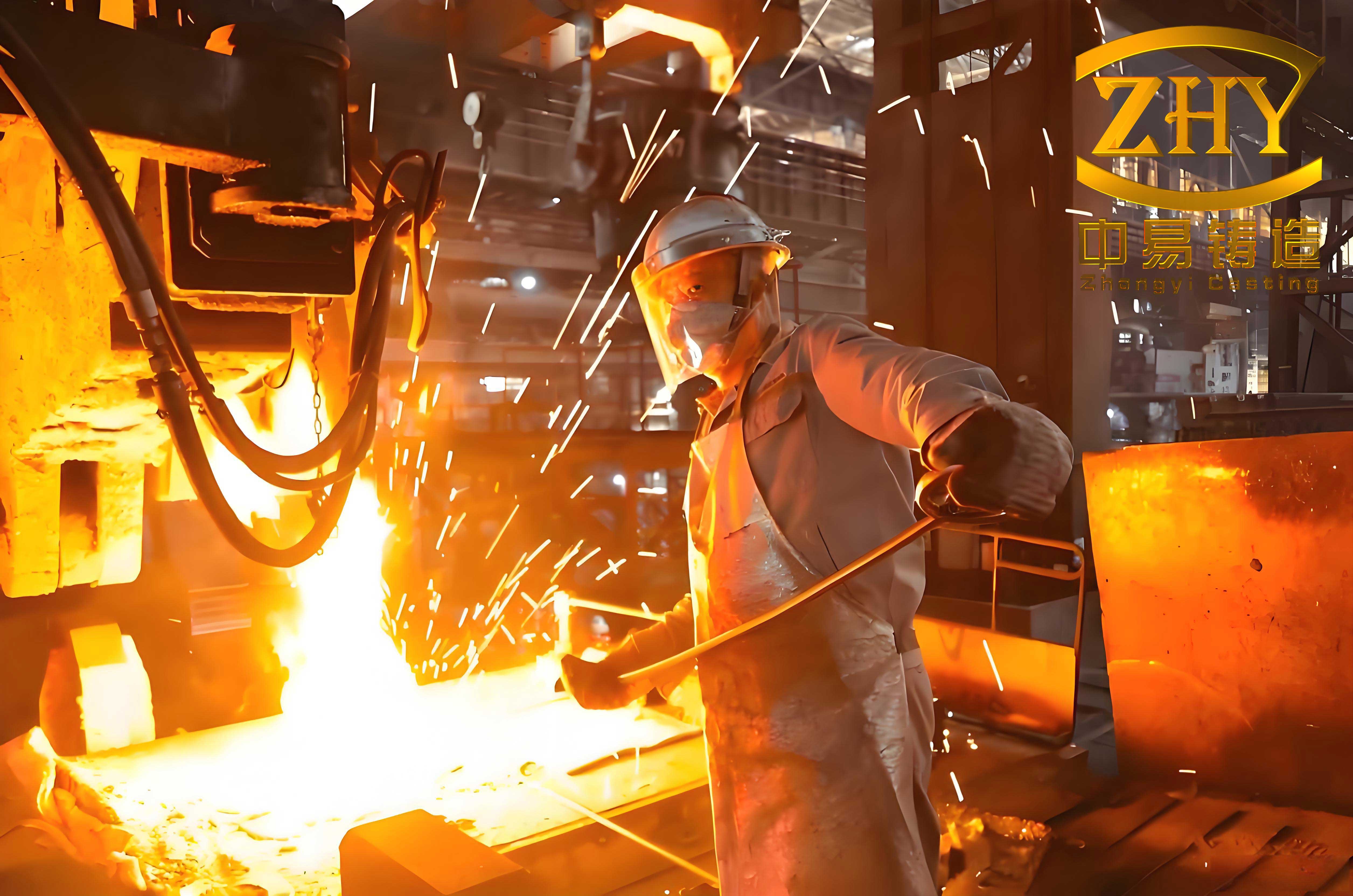
The success of the investment casting process hinges on precise control over every stage, particularly the thermal conditions during pouring and solidification. Computational simulation has become an indispensable tool for optimizing the process before costly physical trials.
Case Study: ZL210A Aluminum Alloy Battery Pack
In our research, we focused on a specific EV battery pack enclosure manufactured using the investment casting process. The material selected was ZL210A, a high-strength cast aluminum alloy known for its excellent mechanical properties, which are crucial for structural components. The nominal chemical composition of ZL210A is provided in Table 1.
| Cu | Ti | Fe | Si | Mn | Zn | Other | Al |
|---|---|---|---|---|---|---|---|
| 5.00 | 0.25 | 0.10 | 0.05 | 0.80 | 0.03 | ≤0.30 | Bal. |
The key physical properties for simulation are: density (ρ) = 2700 kg/m³, liquidus temperature (TL) = 650°C, and solidus temperature (TS) = 547.5°C.
1. Geometric Design and Gating System
The battery pack casing was designed with an envelope dimension of approximately 1250 mm × 1000 mm × 150 mm. The wall thickness varied from 5 mm to 16 mm, with an average thickness of 8.5 mm. The design incorporated numerous internal ribs for structural stiffening and mounting points for battery modules and cooling plates. The complexity of this geometry makes it an ideal candidate for the investment casting process, which excels at forming such intricate shapes in a single piece.
A critical aspect of the investment casting process design is the gating and feeding system. The objectives are to ensure smooth, non-turbulent filling of the mold cavity, to establish favorable thermal gradients for directional solidification, and to provide adequate liquid metal feed to compensate for solidification shrinkage. We designed a system with the following features:
- Symmetrical Gating: To fill the large, relatively flat cavity uniformly, a symmetrical runner and ingate system was designed. Two main runners distributed metal to multiple ingates along the longer sides of the pack.
- Flow Control: The ingate cross-sections were calculated to control the fill time and velocity, minimizing turbulence and oxide formation.
- Feeding with Riser: Three strategically placed cylindrical risers (feeders) were positioned over hot spots—areas where heavy sections or junctions (like rib intersections) are expected to solidify last. These risers act as reservoirs of hot metal to feed shrinkage in the casting body.
The design principle can be summarized by ensuring that the solidification sequence progresses from the extremities of the casting towards the risers, expressed by the empirical Chvorinov’s rule governing solidification time (ts):
$$t_s = k \left( \frac{V}{A} \right)^n$$
where \( V \) is the volume of the region, \( A \) is its surface area, \( k \) is a mold constant, and \( n \) is an exponent (typically ~2). For sound casting, the modulus (\( V/A \)) of the riser must be greater than that of the casting region it is intended to feed.
2. Numerical Simulation of the Investment Casting Process
To predict and optimize the solidification behavior and defect formation, we employed ProCAST, a dedicated finite element-based simulation software for casting processes. The 3D CAD model of the battery pack, including the gating system, was imported and meshed. The boundary conditions and material properties were assigned as summarized in Table 2.
| Parameter | Value / Type | Description |
|---|---|---|
| Alloy | ZL210A | Material database within ProCAST |
| Pouring Temperature | 750 °C | Superheat (Tpour – TL) = 100°C |
| Mold Preheating Temp. | 325 °C | Ceramic shell temperature |
| Ambient Temperature | 25 °C | Room temperature for radiation/convection |
| Heat Transfer Coefficient | 905 W/(m²·K) | Interface between metal and ceramic shell |
| Pouring Rate / Method | 15 kg/s (Gravity) | Controlled filling simulation |
| Cooling Mode | Natural Air Cooling | After filling |
The governing energy equation solved during solidification is the transient heat conduction equation including the latent heat release (L):
$$ \rho c_p \frac{\partial T}{\partial t} = \nabla \cdot (k \nabla T) + \rho L \frac{\partial f_s}{\partial t} $$
where \( \rho \) is density, \( c_p \) is specific heat, \( k \) is thermal conductivity, \( T \) is temperature, \( t \) is time, and \( f_s \) is the solid fraction.
Simulation Results and Analysis
Solidification Sequence: The simulation predicted a largely symmetrical solidification pattern, which validated the symmetrical gating design. The temperature distribution at a key intermediate time during solidification showed that the molten metal in the gating channels and risers remained at a higher temperature than the main cavity, staying above the liquidus temperature for a longer duration. This is crucial as it ensures these channels remain “open” to feed liquid metal to compensate for volumetric shrinkage as the casting solidifies. The last areas to solidify were, as intended, located at the junctions of major ribs and directly under the three risers.
Shrinkage Porosity Prediction: The primary metric for casting soundness in this study was the predicted percentage of shrinkage porosity (micro- and macro-porosity). ProCAST uses criteria functions based on the local thermal conditions (temperature gradient G, solidification rate R) and pressure drop to predict areas susceptible to shrinkage defects. The software’s porosity module calculated a total predicted shrinkage porosity volume fraction of 3.68% for the entire casting (part + gating system). The defect map indicated that the majority of this predicted porosity was concentrated within the gating system itself and the three risers—regions which are subsequently removed during finishing. Significantly, the critical structural body of the battery pack showed only minimal, isolated predicted porosity in a few complex junction areas. This result confirmed the effectiveness of the designed feeding system within our investment casting process plan. The localization of defects to the sacrificial risers is a key indicator of a well-designed process.
We can relate the formation of shrinkage porosity to the local thermal parameters. A common criterion for sound metal is the Niyama criterion (Ny), often used for aluminum alloys:
$$ Ny = \frac{G}{\sqrt{R}} $$
where \( G \) is the temperature gradient (°C/m) and \( R \) is the solidification rate (m/s). Regions with a Niyama value below a critical threshold are prone to microporosity. Our simulation allowed us to map this criterion and validate that most of the casting body exceeded the safe threshold.
| Metric | Simulation Prediction | Experimental Measurement (Average of 20 samples) | Deviation |
|---|---|---|---|
| Total Shrinkage Porosity | 3.68% | 3.72% (Range: 3.51% – 3.96%) | +0.04% (1.1%) |
| Last-to-Solidify Zones | Under risers & rib junctions | Confirmed via sectioning | N/A |
| Casting Integrity | Sound structural body | No leaks or structural faults in functional tests | N/A |
3. Experimental Validation and Physical Casting
To validate the simulation, physical castings were produced using the identical investment casting process parameters: a ceramic shell preheated to 325°C was poured with ZL210A alloy at 750°C under gravity. After cooling and shell removal, the castings were cut from the tree, shot blasted, and inspected.
Defect Analysis: Twenty production castings were randomly selected for quantitative analysis. Sections were cut from standardized locations across the casting body, including the identified critical junctions. These sections were polished and examined using X-ray radiography and quantitative image analysis software to measure the area fraction of porosity on the cross-section. This 2D measurement was then statistically extrapolated to estimate the 3D volumetric porosity fraction for the entire casting body and feed system.
The experimental results showed remarkable consistency with the simulation. The average total shrinkage porosity measured was 3.72%, with a range from 3.51% to 3.96% across the samples. The distribution of porosity also matched the prediction: significant porosity was found in the cut-off gating system and riser necks, while the battery pack enclosure itself exhibited only very minimal, acceptable levels of microporosity in non-critical areas. The deviation of less than 1.1% between the simulated and average experimental porosity value strongly validates the accuracy of the numerical model for this investment casting process.
Functional Testing: Furthermore, finished battery packs (machined to final dimensions and including sealing surface preparation) underwent standard functional tests, including pressure decay leak tests and vibration tests. All units passed these tests, confirming the structural integrity and sealing capability of the castings produced via this optimized investment casting process. Prototype packs were installed in test vehicles and have successfully completed over 8,000 km of operational testing without issue.
Discussion and Advantages of the Investment Casting Process for Battery Packs
The successful application of the investment casting process to a large, thin-walled component like an EV battery pack demonstrates its significant potential. The key advantages elucidated by this study include:
- Design Freedom and Integration: The process allows for the consolidation of multiple parts into a single, complex casting. Features like coolant channels, electrical conduit paths, mounting bosses, and intricate stiffening ribs can be cast integrally, reducing weight, assembly time, and potential leak paths compared to fabricated assemblies.
- Superior Metallurgical Quality: When combined with simulation-driven optimization, the process can yield castings with controlled solidification, minimized shrinkage defects in critical areas, and excellent mechanical properties. The use of high-strength alloys like ZL210A is fully supported.
- Excellent Dimensional Accuracy and Surface Finish: The ceramic shell provides a smooth mold surface, resulting in castings with good surface finish (typically Ra 3.2-6.3 µm) and dimensional tolerances (CT 5-7 per ISO 8062), reducing the amount of subsequent machining required.
- Lightweighting: The ability to design with varying wall thicknesses—placing material only where needed for strength and stiffness—makes the investment casting process a powerful tool for lightweight design, a critical factor for EV range.
- Predictability and Cost-Effectiveness: As demonstrated, modern simulation tools allow for highly accurate prediction of the investment casting process outcome. This reduces the number of costly trial runs, shortens development cycles, and ensures right-first-time production, making it economically viable even for complex components.
Future Outlook and Conclusion
This research provides a validated framework for employing the investment casting process in manufacturing high-performance aluminum alloy battery packs for electric vehicles. The synergy between sophisticated gating/feeding design, advanced numerical simulation (ProCAST), and rigorous experimental validation proved highly effective.
Future work can build upon this foundation in several directions:
- Exploring the use of even higher-strength or higher-thermal-conductivity aluminum alloys within the investment casting process.
- Integrating conformal cooling channel design directly into the casting simulation to optimize thermal management performance.
- Investigating hybrid processes, such as combining investment casting with additive manufacturing for the wax patterns to achieve unprecedented geometric complexity or for rapid prototyping.
- Conducting detailed fatigue and crashworthiness simulations on the as-cast microstructure to fully validate the component’s lifecycle performance.
In conclusion, the investment casting process presents a robust, precise, and efficient manufacturing solution for the next generation of electric vehicle battery enclosures. It successfully addresses the dual challenges of producing complex, lightweight geometries while ensuring the structural integrity and reliability required for such a safety-critical component. The methodology outlined here—from design and simulation to experimental proof—offers a reliable template for engineers seeking to leverage the full potential of precision casting in the automotive electrification era.