
The relentless pursuit of enhanced performance, efficiency, and reduced weight in aerospace vehicles has driven the continuous evolution of manufacturing technologies and materials. Titanium alloys, renowned for their high specific strength, excellent corrosion resistance, and good elevated temperature capabilities, have become indispensable for critical structural components. However, conventional manufacturing routes like machining from wrought stock are often characterized by high buy-to-fly ratios, significant tool wear, and consequently elevated costs. Precision investment casting has emerged as a pivotal and cost-effective solution for producing large, thin-walled, and complex titanium alloy components in a near-net-shape manner, dramatically reducing material waste and machining requirements.
This article provides a comprehensive overview of the application and development of titanium alloy precision investment casting within the aerospace sector. It will detail the progression of casting processes, the development of advanced casting alloys, and the expanding application of cast components. Finally, it will address existing challenges and outline future directions to further solidify the role of this critical manufacturing technology.
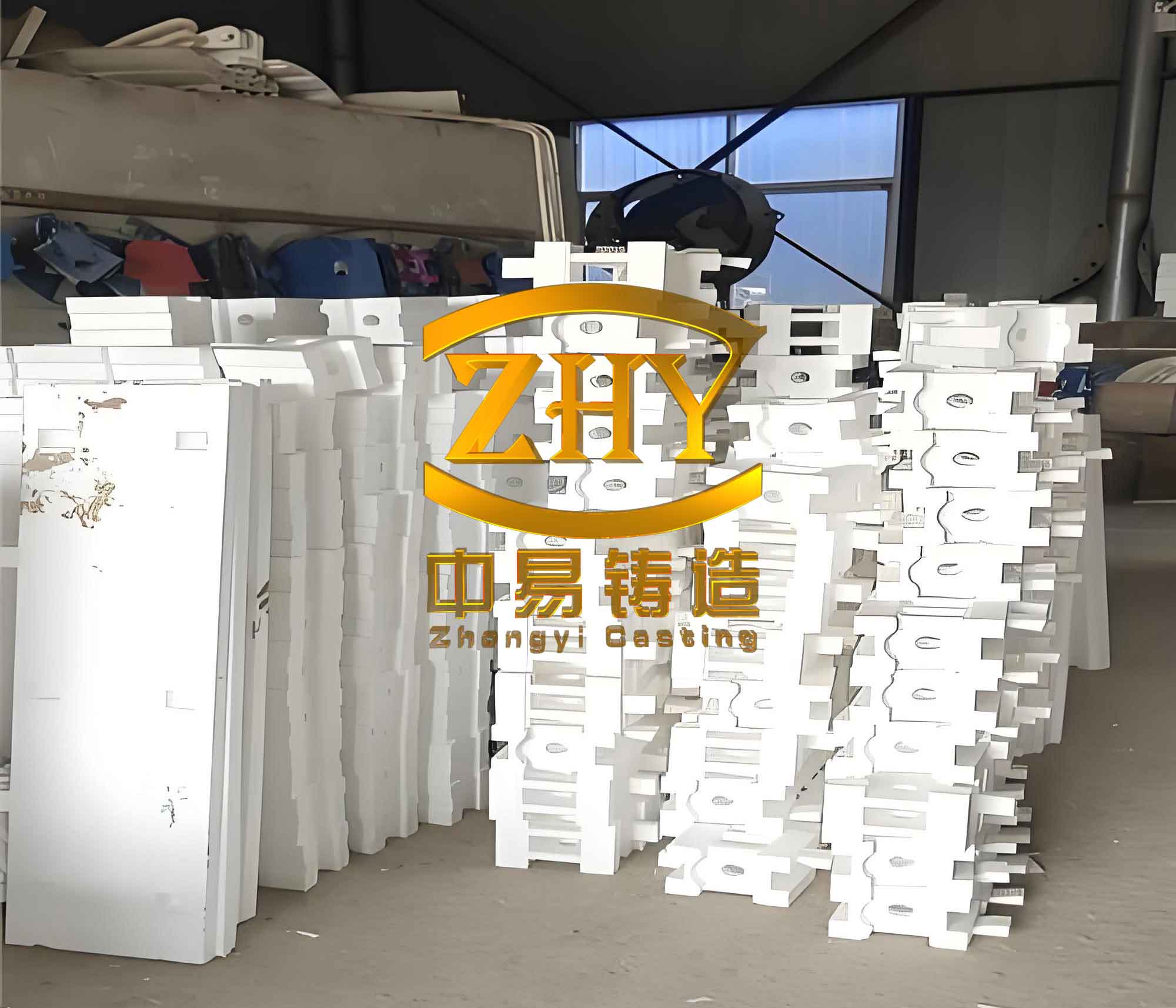
Evolution of Precision Investment Casting Processes
The foundational process of precision investment casting, also known as the lost-wax process, involves creating a wax or polymer pattern, building a ceramic shell around it, removing the pattern, and pouring molten metal into the resulting cavity. For reactive metals like titanium, this process occurs under vacuum. Recent advancements have pushed the technology towards structural integration, precise成形, and intelligent process control.
Pattern Manufacturing
The quality of the initial pattern is paramount, as inaccuracies propagate through the entire precision investment casting chain. Traditional methods rely on injecting wax blends into metal dies. While suitable for high-volume production, die fabrication is time-consuming and inflexible for prototyping. The advent of Additive Manufacturing (AM) has revolutionized rapid prototyping and low-volume production. Techniques like Stereolithography (SLA) and Binder Jetting are now routinely used to produce patterns directly from CAD models, drastically shortening lead times. The choice of pattern material and AM process involves trade-offs between surface finish, accuracy, strength, and cost, as summarized below:
| Additive Manufacturing Process | Key Advantages for Patterns | Key Limitations for Patterns |
|---|---|---|
| Stereolithography (SLA) | Excellent surface finish, high dimensional accuracy, good strength for shelling. | Limited, often expensive resin materials; requires support structures. |
| Binder Jetting | Relatively fast build speed, no support structures needed, lower material cost. | Generally lower strength and surface finish; often requires infiltration (e.g., with wax). |
| Selective Laser Sintering (SLS) | Wide range of polymer materials possible, good mechanical properties. | Rougher surface finish, higher equipment and maintenance costs. |
Shell Building Technology
The ceramic shell is the heart of the precision investment casting process for titanium. It must withstand severe thermal shock from molten metal exceeding 1600°C, exhibit minimal chemical interaction with the reactive melt to prevent surface contamination, and possess adequate permeability and collapsibility to avoid hot tearing. The facecoat layer, which contacts the metal directly, is most critical. Zirconia (ZrO2) and yttria (Y2O3) are the dominant refractory materials due to their high thermodynamic stability against molten titanium. Yttria offers superior inertness, leading to thinner reaction layers and better surface quality, but it is more expensive and can have poorer sintering characteristics. Shells are typically built using multiple layers of ceramic slurry (containing fine refractory powder and a binder) stuccoed with coarse refractory grains. The choice of binder (e.g., colloidal silica, yttria sol) and sintering cycle profoundly affects shell strength and reactivity.
| Shell Facecoat Material | Primary Advantages | Primary Challenges |
|---|---|---|
| Zirconia (ZrO2) | Lower cost, established processing, acceptable performance for many alloys. | Thicker alpha-case surface contamination layer possible; potential for silica contamination from binders. |
| Yttria (Y2O3) | Excellent chemical inertness, minimal surface reaction, superior cast surface finish. | Higher material cost, more complex slurry rheology, lower thermal shock resistance. |
Melting and Pouring Techniques
Titanium must be melted and poured under high vacuum or inert atmosphere to prevent oxidation. Several furnace technologies are employed in precision investment casting foundries:
- Vacuum Arc Skull Melting (VASM): The most common method. A consumable electrode is arc-melted into a water-cooled copper crucible (skull), forming a molten pool. The furnace is then tilted to pour the metal into the shell.
- Induction Skull Melting (ISM): Uses a segmented, water-cooled copper crucible with an induction coil. The electromagnetic field melts the charge while also stirring it, promoting homogeneity. It allows more flexibility in charge stock form.
- Cold Crucible Induction Melting (CCIM) / Levitation Melting: An advanced form of ISM with stronger magnetic confinement, further reducing crucible contact and contamination risk.
Gravity pouring and centrifugal casting are the primary filling methods. Centrifugal casting is particularly beneficial for thin sections and complex geometries, as the additional pressure improves mold filling and feeding. Process modeling software (e.g., ProCAST, MAGMAsoft) is indispensable for designing gating systems and optimizing pouring parameters to minimize defects like shrinkage porosity, mistuns, and inclusions. The governing equations for fluid flow and solidification, such as the Navier-Stokes equations with a porosity function and the energy equation, are solved numerically:
$$ \frac{\partial (\rho \vec{v})}{\partial t} + \nabla \cdot (\rho \vec{v} \vec{v}) = -\nabla p + \nabla \cdot (\mu \nabla \vec{v}) + \rho \vec{g} + S_{mush} $$
$$ \frac{\partial (\rho H)}{\partial t} + \nabla \cdot (\rho \vec{v} H) = \nabla \cdot (k \nabla T) + S_h $$
where $\rho$ is density, $\vec{v}$ is velocity, $p$ is pressure, $\mu$ is viscosity, $\vec{g}$ is gravity, $S_{mush}$ is the momentum source term for the mushy zone, $H$ is enthalpy, $k$ is thermal conductivity, $T$ is temperature, and $S_h$ is the enthalpy source term.
Post-Casting Treatments
Castings undergo several critical post-processing steps to ensure integrity and performance:
- Hot Isostatic Pressing (HIP): This is a standard treatment for aerospace castings. The component is subjected to high temperature (typically near the beta transus) and high argon pressure (e.g., 100-150 MPa) for several hours. HIP effectively closes internal shrinkage porosity and homogenizes the microstructure, significantly enhancing fatigue life and ductility. The process can be described as a time-dependent densification mechanism.
- Heat Treatment: While HIP often provides a stabilized microstructure, additional heat treatments like annealing or solution treatment and aging may be applied to achieve specific mechanical property balances (strength, ductility, creep resistance). For $\alpha+\beta$ alloys like Ti-6Al-4V, heat treatments are performed below the beta transus temperature to prevent excessive grain growth.
- Welding and Repair: Surface defects exposed after HIP or machining can be repaired using techniques like Gas Tungsten Arc Welding (GTAW) or Laser Beam Welding (LBW) in a controlled atmosphere chamber. Repair weld procedures must be carefully qualified to maintain the properties of the base casting.
Development of Cast Titanium Alloys
The advancement of precision investment casting is intrinsically linked to the development of alloys tailored for the casting process. The ideal cast alloy combines good fluidity and hot tear resistance with superior mechanical properties in service.
Conventional Cast Alloys
The workhorse alloy for precision investment casting remains cast Ti-6Al-4V (e.g., ZTC4 in China), an $\alpha+\beta$ alloy used up to approximately 400°C. Another widely used near-$\alpha$ alloy is Ti-6.5Al-1.6Zr-3.3Mo-0.3Si (similar to ZTA15, IMI834 derivative), offering improved creep resistance up to 520-550°C. Alloy design for castability often involves managing the effects of various elements:
| Alloying Element | Primary Role in Cast Alloys | Influence on Castability |
|---|---|---|
| Aluminum (Al) | $\alpha$ stabilizer; strengthens, reduces density. | Generally improves fluidity; increases solidification range which can affect feeding. |
| Vanadium (V), Molybdenum (Mo) | $\beta$ stabilizers; enhance hardenability, strength. | Can reduce fluidity; affect segregation patterns. |
| Silicon (Si) | Eutectoid former; improves creep resistance. | Small additions can improve fluidity. |
| Interstitials (O, N) | Strengthen $\alpha$ phase significantly. | Excessive levels drastically reduce ductility and increase cracking tendency. |
The relationship between yield strength and interstitial content, particularly oxygen, is often described by a strengthening coefficient:
$$ \Delta \sigma_{y} = k \cdot [O]^{n} $$
where $\Delta \sigma_{y}$ is the increase in yield strength, $[O]$ is the oxygen concentration, and $k$ and $n$ are material constants.
Advanced High-Temperature Cast Alloys
Demand for higher operating temperatures and specific strengths has driven the development of more advanced alloys for precision investment casting.
- High-Temperature Near-$\alpha$ Alloys: Alloys like Ti-1100 (Ti-6Al-2.75Sn-4Zr-0.4Mo-0.45Si), IMI834, and their casting variants aim for service up to 600-625°C. They contain higher levels of $\alpha$ stabilizers (Al, Sn, Zr) and small additions of silicon for creep resistance. Their castability is generally more challenging than Ti-6Al-4V.
- TiAl Intermetallic Alloys: $\gamma$-TiAl based alloys (e.g., Ti-48Al-2Cr-2Nb) represent a major leap, with densities around 4.0 g/cm³ and potential service temperatures of 700-900°C. They are inherently brittle at room temperature, making precision investment casting a primary net-shape manufacturing route. However, they present significant casting challenges: low room-temperature ductility leads to high hot-tearing susceptibility, and the high melting point and reactivity demand extremely stable shell systems (e.g., Y2O3 facecoats). The solidification path and phase transformations are critical to control.
- Ti2AlNb Based Alloys: Orthorhombic (O-phase) based alloys offer an attractive balance of room-temperature ductility and high-temperature capability (up to ~750°C). Their development for precision investment casting is ongoing, facing challenges related to high melting points, fluidity, and complex solidification sequences.
Applications in Aerospace Systems
Precision investment casting enables the production of complex, integral components that consolidate multiple parts, reducing weight, assembly time, and potential failure points. Applications span both airframe and engine sectors.
- Airframe Components: Critical structural fittings, brackets, hinge supports, and wing-attachment lug castings are used in modern military and commercial aircraft. Large, thin-walled titanium castings are employed in airframe structures to replace built-up assemblies.
- Engine Components: This is a major application area. Castings include complex static structural parts such as:
- Intermediate and rear compressor casings.
- Fan frames and inlet cases.
- Bearing housings and support structures.
- Various housings, manifolds, and ducts.
- Emerging Applications for TiAl: Low-pressure turbine (LPT) blades for commercial jet engines are now in serial production using Ti-48Al-2Cr-2Nb castings. This substitution for nickel-based superalloys offers significant weight savings in the rotating components. Other potential components include turbocharger wheels and exhaust nozzles.
Challenges and Future Perspectives
Despite significant progress, challenges remain in fully leveraging the potential of titanium alloy precision investment casting.
- Cost Reduction: The process remains capital and material-intensive. High-cost refractories (Y2O3), energy consumption, and yield rates for complex castings drive up cost. Future efforts will focus on optimizing processes through digitalization, predictive analytics, and perhaps recyclable shell materials.
- Integrated Computational Materials Engineering (ICME): A critical need is the development of robust material property databases for casting simulation, encompassing thermo-physical properties, constitutive equations for stress modeling, and data for new alloys. Coupling process simulation with microstructure and property prediction will enable true “first-part-correct” manufacturing.
- Competition from Additive Manufacturing (AM): Metal AM, particularly Laser Powder Bed Fusion (LPBF), offers comparable design freedom for complex geometries. The choice between AM and precision investment casting will depend on factors like production volume (casting favors higher volumes), part size (casting can produce larger parts), surface finish requirements (casting can offer superior surfaces), and material choice (some advanced alloys are currently more suited to casting).
- Development of Next-Generation Alloys: Continued alloy development for improved castability of high-temperature materials like TiAl and Ti2AlNb is essential. This includes understanding the effect of trace elements on grain refinement, hot tear resistance, and post-casting heat treatment response.
In conclusion, titanium alloy precision investment casting is a mature yet dynamically evolving technology that is critical to the aerospace industry. Its ability to produce complex, high-performance components in a cost-effective manner ensures its continued importance. Future advancements will hinge on the synergistic development of advanced alloys, intelligent and optimized process control, and the integration of digital tools, solidifying its role in manufacturing the next generation of lightweight and efficient aerospace systems.