
In the aerospace industry, the demand for high-performance, lightweight, and heat-resistant materials has driven significant research into titanium and titanium-aluminum (TiAl) alloys. As a key player in this field, I have witnessed how investment casting, or foundry technology, enables the cost-effective mass production of complex integrated components. This process leverages the unique properties of titanium alloys, such as low density, high specific strength, and excellent corrosion resistance, to enhance aircraft efficiency and performance. For instance, the use of titanium alloys in commercial aircraft like the C919 and military jets like the F-22 underscores their critical role. However, challenges such as titanium’s high chemical reactivity and low thermal conductivity necessitate advanced foundry technology to achieve precise, near-net-shape components with minimal defects. Over the years, foundry technology has evolved from simple graphite mold methods to sophisticated ceramic shell systems, incorporating numerical simulations and material innovations to optimize casting processes. In this article, I will explore the progress in numerical simulation applications and TiAl intermetallic compounds within titanium alloy investment casting, highlighting how these advancements are shaping the future of aerospace manufacturing from an industrial perspective.
Foundry technology for titanium alloys has undergone a remarkable transformation, moving from rudimentary techniques to highly refined processes. Initially, graphite molds were used, but they produced parts with poor surface quality and dimensional accuracy. The adoption of investment casting with ceramic shells, particularly those based on yttrium oxide (Y₂O₃), revolutionized the industry by reducing interfacial reactions and improving finish. Today, foundry technology allows for the production of large, thin-walled components, such as engine casings exceeding 1600 mm in size with wall thicknesses as low as 2 mm. This progress is largely due to innovations in shell materials, melting techniques like water-cooled copper crucibles, and post-processing methods such as hot isostatic pressing (HIP). These developments have made foundry technology a cornerstone of aerospace manufacturing, enabling the replacement of forged parts with cast ones in critical applications. For example, brake torque tubes produced via investment casting are now used in aircraft like the A380, demonstrating the reliability and efficiency of modern foundry technology. As we continue to push the boundaries, the integration of digital tools and new alloys promises further gains in performance and cost reduction.
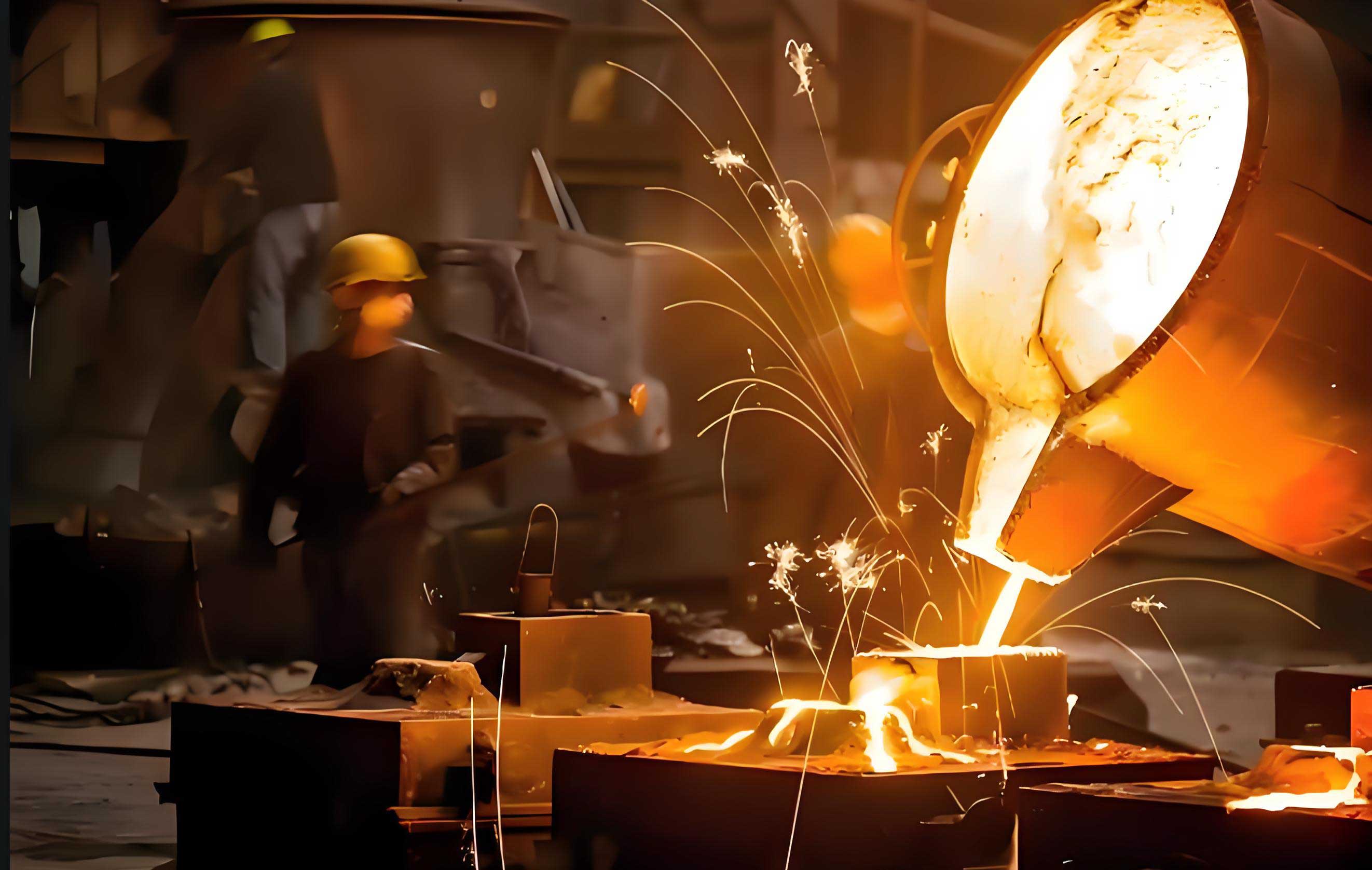
Numerical simulation has become an indispensable tool in advancing foundry technology for titanium alloys, addressing the limitations of traditional trial-and-error methods. By modeling the casting process, simulations predict potential defects like shrinkage porosity, inclusions, and stress concentrations, thereby reducing development time and costs. Widely used finite element analysis software, such as ProCAST, MagmaSoft, and HuaZhu CAE, enables the calculation of temperature fields, flow patterns, and grain growth during solidification. For instance, in centrifugal casting of ZTC4 alloy casings, simulations analyze the effects of parameters like rotational speed, pouring temperature, and mold preheat temperature on filling behavior and defect formation. The governing equations for heat transfer and fluid flow in these simulations often include the heat conduction equation: $$ \frac{\partial T}{\partial t} = \alpha \nabla^2 T $$ where \( T \) is temperature, \( t \) is time, and \( \alpha \) is thermal diffusivity. Additionally, the Navier-Stokes equations for incompressible flow are simplified to model mold filling: $$ \rho \left( \frac{\partial \mathbf{v}}{\partial t} + \mathbf{v} \cdot \nabla \mathbf{v} \right) = -\nabla p + \mu \nabla^2 \mathbf{v} + \mathbf{f} $$ where \( \rho \) is density, \( \mathbf{v} \) is velocity, \( p \) is pressure, \( \mu \) is dynamic viscosity, and \( \mathbf{f} \) represents body forces. These models help optimize process parameters, leading to higher quality castings and more efficient foundry technology. Recent trends involve integrating high-throughput computing and machine learning to create platforms like AI-CAST, which facilitate multi-objective optimization and rapid iteration. This evolution in simulation capabilities is transforming foundry technology from a sequential process to an integrated system, enhancing predictive accuracy and scalability for complex aerospace components.
To illustrate the impact of numerical simulation in foundry technology, the following table summarizes key software tools and their applications in titanium alloy investment casting:
| Software | Key Features | Applications in Titanium Casting |
|---|---|---|
| ProCAST | Finite element analysis for thermal and flow fields | Predicting shrinkage defects in ZTC4 alloy components |
| MagmaSoft | Integrated modeling of filling and solidification | Optimizing centrifugal casting parameters for engine casings |
| HuaZhu CAE | Domestic solution with high accuracy for defect prediction | Simulating grain growth and porosity in thin-walled structures |
Another critical aspect of foundry technology is the use of TiAl intermetallic compounds, which offer superior high-temperature performance and lightweight properties compared to conventional titanium alloys. TiAl alloys, such as Ti-48Al-2Cr-2Nb (4822) and Ti-45Al-2Mn-2Nb-0.8%TiB₂ (XD), have densities around 3.8–4.0 g/cm³, significantly lower than nickel-based superalloys, making them ideal for high-Mach-number applications. However, their low room-temperature ductility and high reactivity pose challenges for foundry technology. The casting process must address issues like high solidification shrinkage, which can exceed 3% in small castings, leading to cracking and low yield rates. Key to success is the development of advanced shell materials that minimize interfacial reactions. Y₂O₃-based shells have shown the least reaction thickness, approximately 20–170 μm, compared to Al₂O₃ or ZrO₂, as described by the reaction kinetics equation: $$ \delta = k \cdot t^n $$ where \( \delta \) is the reaction layer thickness, \( k \) is a rate constant, \( t \) is time, and \( n \) is an exponent dependent on temperature and composition. Additives like YF₃ or B₂O₃ can further reduce this thickness to below 10 μm, enhancing casting quality. Despite the higher cost of Y₂O₃, ongoing research focuses on optimizing Al₂O₃-based shells for better compatibility and lower risk of cracking, leveraging their similar thermal expansion coefficients to TiAl alloys. Post-casting treatments, such as HIP and heat treatment, are essential to eliminate internal pores and improve mechanical properties, enabling the production of complex parts like turbine blades. The progress in TiAl foundry technology underscores its potential to replace heavier materials in aerospace engines, contributing to fuel efficiency and performance gains.
The following table compares different shell materials used in TiAl alloy investment casting, highlighting their impact on interfacial reactions and casting quality:
| Shell Material | Reaction Thickness (μm) | Advantages | Disadvantages |
|---|---|---|---|
| Y₂O₃ | 20–170 | Minimal reaction, high surface quality | High cost, difficult slurry preparation |
| ZrO₂ | ~20 | Good thermal stability | Moderate reaction, potential for contamination |
| Al₂O₃ | ~40 | Low cost, similar thermal expansion | Higher reaction risk, requires additives |
In addition to material considerations, the solidification behavior of TiAl alloys can be modeled using phase-field simulations, which describe the evolution of microstructure. The phase-field equation for dendritic growth is given by: $$ \frac{\partial \phi}{\partial t} = M \left( \epsilon^2 \nabla^2 \phi – f'(\phi) \right) $$ where \( \phi \) is the phase-field variable, \( M \) is mobility, \( \epsilon \) is a gradient energy coefficient, and \( f(\phi) \) is a free energy function. This approach helps in predicting grain morphology and reducing defects in foundry technology. For example, in Ti-48Al-2Cr-2Nb casting, simulations guide the control of cooling rates to achieve fine, uniform microstructures, enhancing ductility and strength. The integration of such models with experimental data accelerates the development of robust casting processes, making foundry technology more adaptive to the demands of aerospace components.
Looking ahead, the future of foundry technology for titanium and TiAl alloys lies in further digitalization and material optimization. Numerical simulations are evolving into integrated platforms that combine multi-scale modeling, data analytics, and machine learning. These systems enable rapid optimization of casting parameters, reducing the need for physical prototypes. For instance, generative design algorithms can propose optimal gating and riser configurations based on stress and thermal analysis, expressed as an optimization problem: $$ \min_{\mathbf{x}} F(\mathbf{x}) = \int_{\Omega} \sigma(\mathbf{x}) \, d\Omega + \lambda \cdot V(\mathbf{x}) $$ where \( F(\mathbf{x}) \) is the objective function, \( \sigma \) is stress, \( V \) is volume, \( \mathbf{x} \) represents design variables, and \( \lambda \) is a Lagrange multiplier. This approach minimizes weight while ensuring structural integrity, aligning with aerospace goals. Moreover, the adoption of TiAl alloys is expected to expand with improved alloy designs, such as those incorporating Nb, Ta, or W for enhanced high-temperature strength and oxidation resistance. However, challenges like room-temperature brittleness and cost-effective manufacturing remain. Foundry technology must address these through innovative heat treatments and hybrid processes, such as combining casting with additive manufacturing for complex geometries. As the industry moves toward more sustainable and efficient production, foundry technology will continue to be a driving force in aerospace innovation, enabling lighter, faster, and more reliable aircraft.
In summary, foundry technology has revolutionized the production of titanium and TiAl alloy components for aerospace, with numerical simulations and material advances playing pivotal roles. The continued integration of digital tools and alloy development will further enhance the capabilities of investment casting, solidifying its position as a key enabler of next-generation aerospace systems. Through persistent research and collaboration, we can overcome existing challenges and unlock new possibilities in this dynamic field.