
In the evolving landscape of modern industry, traditional foundry technology has increasingly revealed its limitations in meeting the demands for low-cost, short-cycle, and environmentally efficient production of components. As a researcher immersed in this field, I have observed how conventional methods, which rely on intricate mold and core box fabrication, often lead to prolonged lead times and high expenses, particularly for single-unit or small-batch productions. This is where rapid foundry technology emerges as a transformative approach, integrating advanced manufacturing techniques like additive and subtractive processes to streamline production. By converting complex three-dimensional designs into layered two-dimensional builds, we can significantly enhance efficiency while reducing costs. Throughout this discussion, I will delve into various applications of this technology, emphasizing how it revolutionizes foundry technology through real-world examples, mathematical models, and comparative analyses. The core of this advancement lies in its ability to adapt quickly to design changes and market needs, making foundry technology more agile and responsive.
Foundry technology has long been the backbone of metal part production, but its traditional forms often involve time-consuming steps such as pattern making, molding, and core setting. In contrast, rapid foundry technology leverages innovations like 3D printing and computerized numerical control to bypass these hurdles. For instance, in one of our projects, we applied selective laser sintering (SLS) to produce complex sand cores for a transmission housing, cutting the production time by nearly 75% compared to conventional methods. This not only accelerated the prototyping phase but also allowed for iterative design improvements without the sunk costs of permanent molds. As we explore these methodologies, I will incorporate formulas to quantify benefits, such as the relationship between layer thickness and build time in additive processes, and tables to highlight efficiency gains. Repeatedly, we see that foundry technology benefits from such integrations, enabling faster turnaround and cost savings in trial productions and small batches.
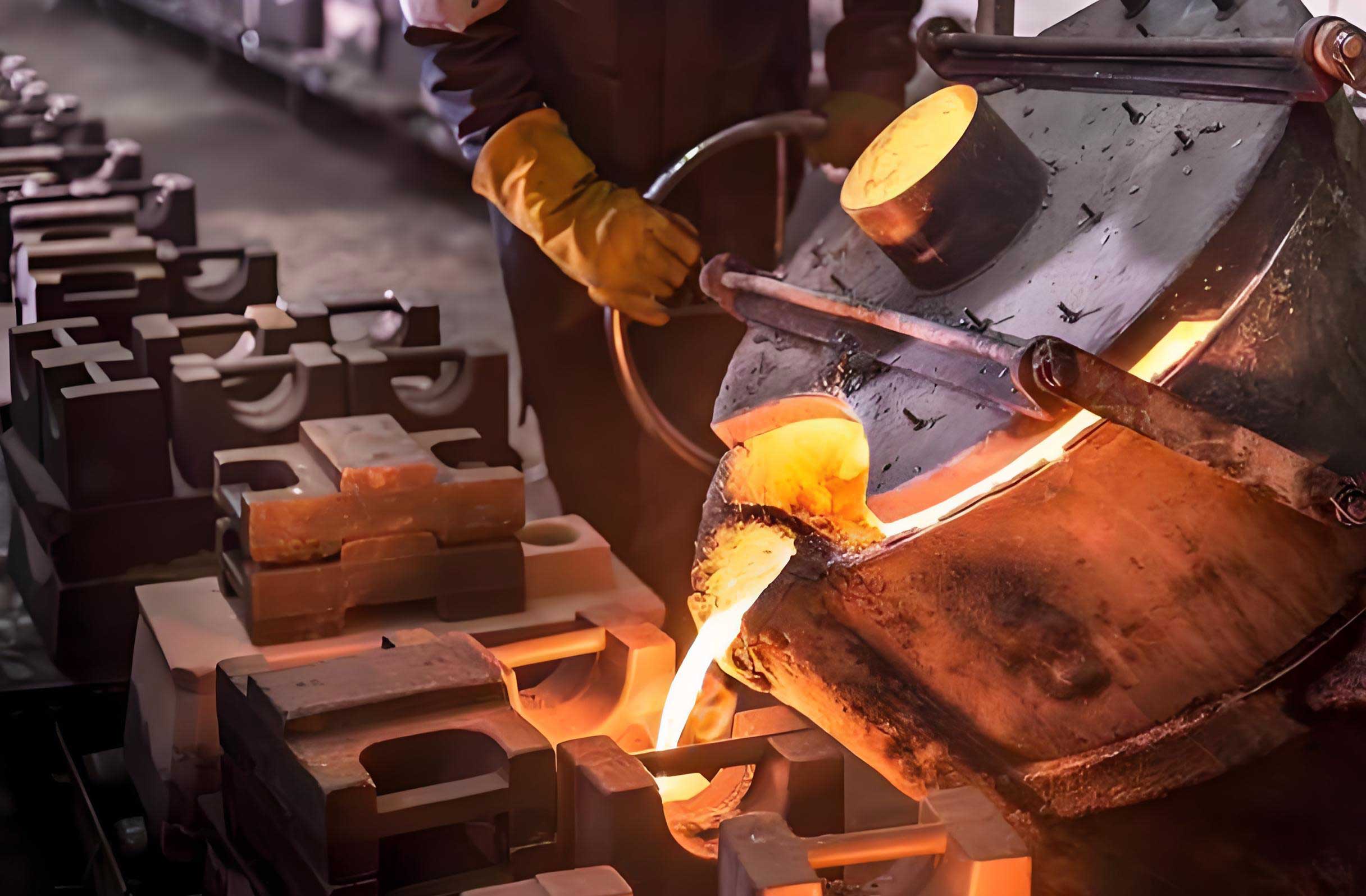
One of the most impactful aspects of rapid foundry technology is its application in additive manufacturing, which includes techniques like SLS and 3DP. In SLS, for example, a CO₂ laser sinters powdered materials layer by layer, building up parts or sand cores with high precision. The energy input during sintering can be modeled using formulas that account for laser power and scan speed. For instance, the energy density \( E \) applied per unit area is given by \( E = \frac{P}{v \cdot d} \), where \( P \) is the laser power, \( v \) is the scan velocity, and \( d \) is the beam diameter. This equation helps optimize the process parameters to achieve desired mechanical properties in the final cast parts. In our work on a rear axle housing, we used SLS to fabricate intricate cores, which were then assembled with subtractively produced molds. The entire process, from design to casting, took just ten days, underscoring how foundry technology can be accelerated through such hybrid approaches.
| Parameter | Traditional Foundry Technology | Rapid Foundry Technology (SLS-based) |
|---|---|---|
| Lead Time (days) | 40 | 10 |
| Cost (relative units) | 1.0 | 0.4 |
| Design Flexibility | Low | High |
| Material Waste (%) | 15-20 | 5-10 |
Another additive method, 3DP, involves jetting a binder onto a powder bed to form layers, offering advantages in speed and cost for larger components. In a case involving an oil pan, we employed 3DP to create integrated sand molds that combined upper and lower sections with cores, eliminating assembly steps and reducing dimensional errors. The production time for eight units was compressed to under ten days, a feat unattainable with conventional foundry technology. The binding process can be described by diffusion models, such as \( C(x,t) = C_0 \text{erfc}\left(\frac{x}{2\sqrt{Dt}}\right) \), where \( C \) is the concentration of binder, \( D \) is the diffusion coefficient, and \( t \) is time. This formula aids in predicting the curing behavior and ensuring uniform strength in the printed molds. By repeatedly applying these principles, we have demonstrated that foundry technology can achieve higher precision and faster iterations, especially in low-volume scenarios.
Subtractive manufacturing also plays a crucial role in rapid foundry technology, particularly for simpler parts where material removal is more efficient than layer-by-layer addition. For example, in producing adjustment nuts with multiple teeth, we used CNC machining to carve the entire pattern into the lower mold half, with the upper half serving as a cover. This approach allowed for a one-piece, multi-cavity setup that yielded 100 parts in three days with zero defects. The material removal rate \( \text{MRR} \) in such processes can be expressed as \( \text{MRR} = f \cdot d \cdot v \), where \( f \) is the feed rate, \( d \) is the depth of cut, and \( v \) is the cutting speed. Optimizing this equation ensures minimal waste and high throughput, highlighting how subtractive methods complement additive ones in advancing foundry technology. The table below summarizes the key parameters for this application, illustrating the efficiency gains in small-batch production.
| Metric | Value |
|---|---|
| Production Volume (units) | 100 |
| Time to Delivery (days) | 3 |
| Defect Rate (%) | 0 |
| Cost Reduction vs. Traditional (%) | 60 |
Integrating these technologies, we have developed a holistic framework for rapid foundry technology that selects the optimal method based on part complexity, volume, and timeline. For instance, in hybrid approaches, we combine additive and subtractive processes to leverage their respective strengths—additive for complex geometries and subtractive for high-speed production of simpler forms. The overall efficiency \( \eta \) of such a system can be modeled as \( \eta = \frac{T_{\text{traditional}} – T_{\text{rapid}}}{T_{\text{traditional}}} \times 100\% \), where \( T \) represents time, showing percentage improvements. In numerous projects, this has led to reductions in lead times by over 70% and costs by 50%, reaffirming the transformative potential of foundry technology in modern manufacturing. Moreover, the adaptability of rapid foundry technology allows for seamless updates to designs, which is critical in industries like automotive and aerospace where iterations are frequent.
Looking ahead, the future of foundry technology lies in further refining these rapid methods through advanced materials and digital twins. For example, we are exploring the use of AI-driven simulations to predict casting defects in 3D-printed molds, using equations like the Navier-Stokes for fluid flow: \( \rho \left( \frac{\partial \mathbf{v}}{\partial t} + \mathbf{v} \cdot \nabla \mathbf{v} \right) = -\nabla p + \mu \nabla^2 \mathbf{v} + \mathbf{f} \), where \( \rho \) is density, \( \mathbf{v} \) is velocity, \( p \) is pressure, \( \mu \) is viscosity, and \( \mathbf{f} \) represents body forces. This enables pre-emptive corrections, reducing trial-and-error in foundry technology. Additionally, the sustainability aspect is enhanced, as rapid methods often use less material and energy, aligning with green manufacturing goals. As we continue to push the boundaries, foundry technology will undoubtedly become more integral to agile production systems, driving innovation across sectors.
In conclusion, rapid foundry technology represents a paradigm shift in how we approach metal part manufacturing, particularly for prototypes and small batches. By embracing additive and subtractive techniques, we have overcome many limitations of traditional foundry technology, achieving remarkable gains in speed, cost, and flexibility. The formulas and tables presented here underscore the quantitative benefits, while real-world applications validate its practicality. As this field evolves, I am confident that foundry technology will continue to be a cornerstone of industrial advancement, enabling faster responses to market demands and fostering continuous improvement in production workflows.