
In my extensive experience within the aerospace industry, particularly in the manufacturing of hydraulic pumps, I have come to understand the critical importance of rigorous quality control for forging and casting blanks. Aerospace hydraulic pumps, as energy conversion elements within hydraulic systems, are characterized by their compact size, light weight, intricate structures, and complex geometries. Key components such as housings, mounting bases, port plates, rotors, swashplates, and main shafts are predominantly machined from forged or cast blanks. Therefore, strengthening the quality control of these blanks is a fundamental环节 for ensuring the reliable operation of hydraulic pumps and the proper fit of their components. This article shares my insights and methodologies for implementing effective quality control throughout the manufacturing process of aerospace casting and forging blanks.
The selection of appropriate materials is the foundational step in ensuring blank quality. Different metallic materials offer distinct combinations of properties, making them suitable for specific operational environments. For aerospace casting and forging blanks, the material must not only exhibit high strength but also possess good machinability and corrosion resistance. Based on the function and service conditions of parts within an aerospace hydraulic pump, the material selection can be summarized as follows.
| Component Name | Function and Service Condition | Blank Type | Recommended Materials |
|---|---|---|---|
| Swashplate | Variable mechanism, subject to friction and wear | Forging | 1) High-quality alloy structural steels: 40CrNiMoA, 38CrMoAlA 2) Titanium alloys: TC4, TC6 |
| Port Plate | Controls flow direction and rate, subject to friction and wear | Forging | 1) High-quality alloy steels: 40CrNiMoA, 38CrMoAlA 2) Wrought aluminum alloys: 2A50, 2A70, 2B50 3) Titanium alloys: TC4, TC6 |
| Main Shaft | Transmission mechanism,承受扭矩 | Forging | High-quality alloy structural steels: 40CrNiMoA, 38CrMoAlA |
| Housing | Pump enclosure, internal chambers withstand high pressure | Casting | Aluminum-silicon alloys: e.g., HZL-105 |
| Mounting Base | Sealing and installation,承受重量 | Casting | Aluminum-silicon alloys: e.g., HZL-105 |
The procurement and use of raw materials must adhere to strict standardization principles. Raw materials for aerospace casting and forging should first comply with national military standards, aviation industry standards, or other national/industry standards that meet aviation requirements. When enterprise-specific standards are employed, they must not be lower than the requirements of national and aviation industry standards. The principle of standardization is outlined below.
| Material Grade | Product Form | Applicable Standard |
|---|---|---|
| 40CrNiMoA, 38CrMoAlA (Alloy Steel) | Bar Stock | GJB1951 |
| LD6, LD7 (Wrought Aluminum Alloy) | Bar Stock | GB/T3191 |
| TC4, TC6 (Titanium Alloy) | Bar Stock | GB2965 |
| HZL-105 (Al-Si Alloy) | Ingot / Bar Stock | HB962 (or equivalent) |
In practice, I enforce several material usage rules. Firstly, raw materials for aerospace casting and forging must be sourced from approved suppliers, accompanied by relevant quality certificates, and are only released for use after passing incoming inspection and verification. Secondly, materials must be stored and managed according to heat/batch number and material category, with clear identification to prevent any mixing. This is crucial for traceability, especially in aerospace casting processes where material consistency directly impacts final part integrity.
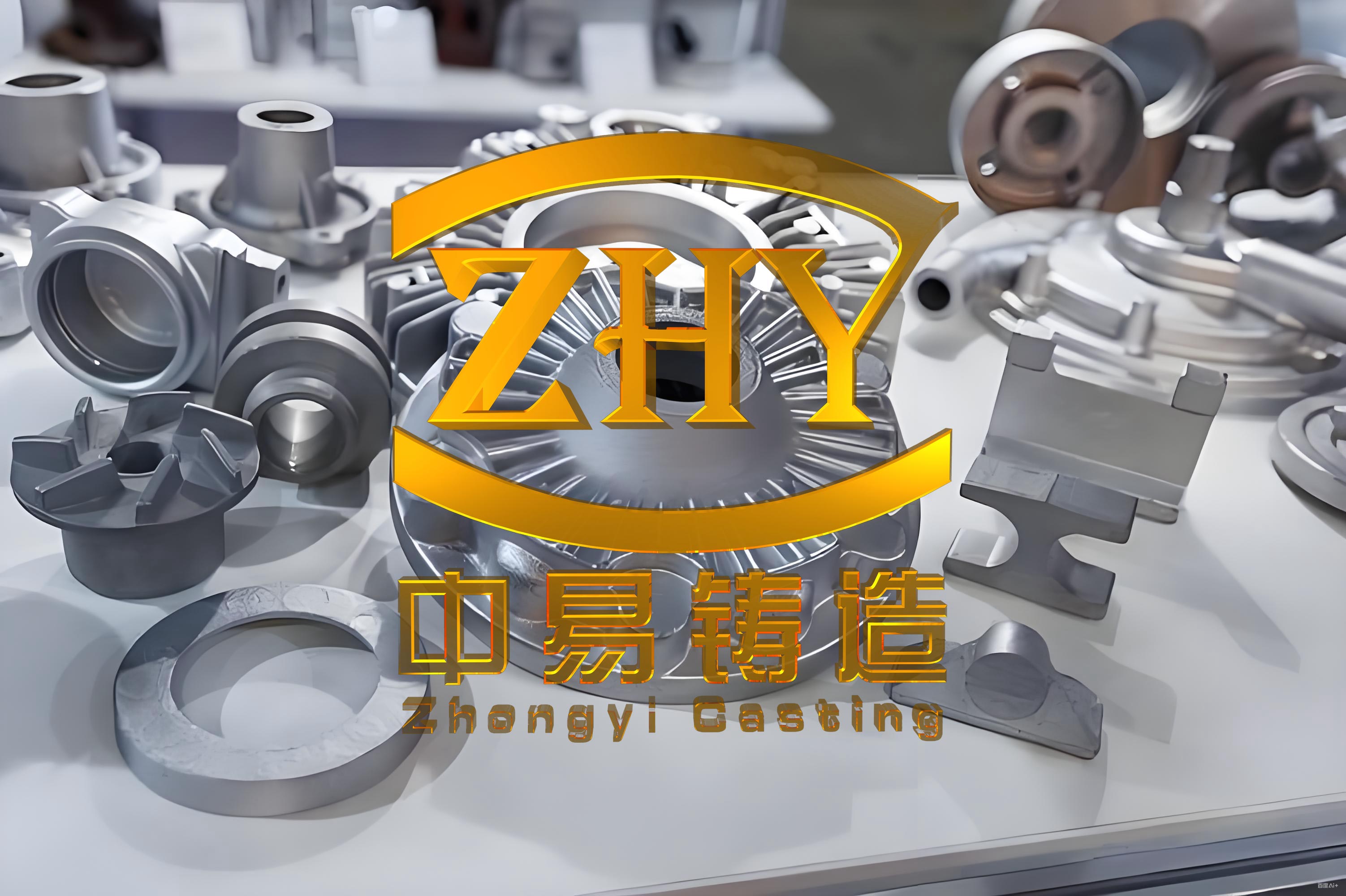
The working environment for producing these blanks significantly influences quality. The production facility must maintain a clean, orderly workspace with clear aisles. Ventilation systems should be fully operational to control airborne contaminants, which is particularly vital during melting and pouring stages of aerospace casting. Environmental parameters such as temperature, illumination, and noise levels must conform to relevant regulations to ensure operator safety and process stability. For instance, maintaining a controlled temperature is essential for consistent material behavior during forging and heat treatment.
All equipment, instruments, gauges, and tooling used in the manufacture of aerospace casting and forging blanks require stringent control. They must undergo initial calibration and periodic re-verification against technical standards before being approved for production use. Each piece of equipment or instrument should have a user manual or maintenance guide; for custom-built equipment, detailed blueprints are necessary. Furthermore, I ensure that a dedicated team is responsible for the maintenance, repair, and保管 of these assets to prevent equipment-induced quality variations.
The core of quality control lies in the工艺过程. A structured approach involving trial production, qualification, and batch production assessments is essential. For a new aerospace casting or forging blank design, trial production is mandatory to validate the manufacturing process against design requirements.
For forged blanks, the typical process flow is: Cutting → Heating → Pre-forming → Die Forging → Heat Treatment → Cleaning → Inspection & Storage → Machining → Assembly & Testing. During trial production, the blank must meet specific criteria, which can be quantified. Let us define a quality index $Q_f$ for forgings that incorporates key parameters:
$$ Q_f = w_1 \cdot C_{\text{dim}} + w_2 \cdot S_{\text{surf}} + w_3 \cdot M_{\text{int}} $$
where $C_{\text{dim}}$ is a score for dimensional accuracy and geometrical conformity, $S_{\text{surf}}$ is a score for surface quality (absence of folds, cracks), and $M_{\text{int}}$ is a score for internal metallurgical quality (fiber flow, absence of defects). The weights $w_1$, $w_2$, $w_3$ sum to 1 and are assigned based on component criticality. The control requirements during inspection are summarized below.
| Material Type | Inspection Items and Frequency | |||
|---|---|---|---|---|
| Geometric Dimensions | Surface Quality | Macrostructure | Hardness / Other | |
| Alloy Structural Steel | 100% | 100% | Sampled per heat treatment batch | Sampled per batch (3-5 pieces) |
| Wrought Aluminum Alloy | 100% | 100% | Sampled per heat treatment batch | Sampled per batch |
| Titanium Alloy | 100% | 100% | Sampled per heat treatment batch | Sampled per batch |
Internal quality for forgings demands that the macrostructure shows no defects like flakes, shrinkage cavities, pores, laps, cracks, or visible inclusions. The断口 should be free of rock candy or faceted features.
For aerospace casting blanks, the process flow is: Batching & Melting → Pouring → Cleaning → Heat Treatment → Inspection & Storage → Machining → Assembly & Testing. Trial production for a cast blank focuses on different aspects. A similar quality index $Q_c$ for aerospace casting can be proposed:
$$ Q_c = \alpha \cdot (1 – D_{\text{surf}}) + \beta \cdot (1 – D_{\text{int}}) + \gamma \cdot C_{\text{spec}} $$
Here, $D_{\text{surf}}$ represents the severity of surface defects (cold shuts, cracks, shrinkage porosity), $D_{\text{int}}$ represents the severity of internal defects (cracks, excessive shrinkage, pinholes), and $C_{\text{spec}}$ measures conformity to specified standards for permissible defect levels. $\alpha$, $\beta$, $\gamma$ are weighting factors. The control points are as follows.
| Inspection Area | Key Requirements | Acceptance Criteria |
|---|---|---|
| Surface | No cold shuts, cracks, shrinkage cavities, or penetrating porosity. | 100% visual and penetrant/magnetic particle inspection. |
| Internal | No cracks allowed. Shrinkage, pinholes等缺陷 permitted within limits. | Radiographic or ultrasonic inspection per sampling plan. Defect levels must be below standard thresholds (e.g., ASTM E505 levels). |
The permissible level of internal porosity in an aerospace casting can be modeled. If $V_p$ is the volume of porosity and $V_t$ is the total volume of the region of interest, the porosity percentage $P$ is:
$$ P = \frac{V_p}{V_t} \times 100\% $$
For a given casting standard, the maximum allowable $P_{\text{max}}$ is specified for different zones (e.g., high-stress vs. non-critical areas). The condition for acceptance is $P \leq P_{\text{max}}$.
Following successful trial production, any significant change to the established master process necessitates formal qualification through three distinct assessments: machining qualification, assembly qualification, and metallurgical qualification.
1. Machining Qualification: This assesses whether the blank’s machining allowances, datum surfaces, and relevant dimensions satisfy the machining process specifications. It involves statistical process control (SPC). For example, the capability index $C_{pk}$ for a critical machined dimension $X$ with nominal value $\mu_0$, tolerance $\pm T$, and process standard deviation $\sigma$ is calculated:
$$ C_{pk} = \min \left( \frac{\mu_0 + T – \bar{X}}{3\sigma}, \frac{\bar{X} – (\mu_0 – T)}{3\sigma} \right) $$
A $C_{pk} \geq 1.33$ typically indicates the blank provides sufficient and consistent material for machining.
2. Assembly Qualification: This evaluates the parts machined from the blanks for fit, function, structural strength, and service life during trial assembly. It often involves fatigue life testing. The relationship between applied stress $S$ and cycles to failure $N$ can be described by models like the Basquin equation for high-cycle fatigue:
$$ S = S_f’ (2N)^b $$
where $S_f’$ is the fatigue strength coefficient and $b$ is the fatigue strength exponent, material properties influenced by the blank’s quality.
3. Metallurgical Qualification: This involves全程监控 of the blank manufacturing process to ensure geometric conformity, dimensional stability, and consistent冶金质量. Key metrics include the first-pass yield $Y$ and the defect rate $D_r$ over a production run of $N$ blanks with $N_d$ defectives:
$$ Y = \frac{N – N_d}{N} \times 100\%,\quad D_r = \frac{N_d}{N} \times 100\% $$
Stable high $Y$ and low $D_r$ values, along with compliance to all blank drawings and technical specifications, are required for metallurgical qualification.
Only after passing these three qualifications does the blank process proceed to batch production qualification. A small pilot batch is manufactured to verify the readiness of all technical, equipment, and logistical preparations. Statistical analysis, such as control charts for key characteristics, is employed. If all parameters remain within control limits and meet specifications, full-scale batch production is authorized.
The human element is indispensable. In my management of aerospace casting and forging operations, I insist that production, technical, and quality control personnel possess solid theoretical knowledge and practical experience. Operators, instrument technicians, and inspectors must undergo specialized training and assessment, obtaining relevant操作 licenses before being permitted to work independently. Continuous training programs are vital, especially as aerospace casting technologies evolve.
The implementation of this comprehensive quality control system has yielded significant results. In aerospace hydraulic pump production, proactive quality control over forging and casting blanks has enabled the early detection and correction of process deviations. This has directly enhanced the safety, reliability, and service life of the pumps. For instance, by严格控制 the melt practice and solidification parameters in aerospace casting, we have consistently achieved cast housings with minimal porosity in critical sections, leading to improved pressure cycle performance. The structured qualification framework ensures that any process change is thoroughly vetted, preventing quality escapes. Ultimately, robust blank quality control provides a reliable foundation for the development and mass production of high-performance aerospace hydraulic systems.
Furthermore, the principles of quality and reliability information management are integral to this control system. Maintaining detailed records for each batch of aerospace casting or forging—from material certificates through every process step to final inspection—creates a valuable database. Analyzing this data allows for predictive quality trends. For example, a correlation might be found between a specific furnace parameter during melting for an aerospace casting and the subsequent pinhole等级 detected. This data-driven approach facilitates continuous improvement.
To encapsulate the interdependencies in aerospace casting blank quality, consider a simplified holistic model. The final quality attribute $Q_{\text{total}}$ is a function of multiple factors:
$$ Q_{\text{total}} = f(M, E, Eq, P, H, I) $$
where:
– $M$: Material properties and compliance.
– $E$: Environmental conditions.
– $Eq$: Equipment and tooling condition and calibration.
– $P$: Process parameters (e.g., pouring temperature $T_p$, mold preheat temperature $T_m$ for casting; forge temperature $T_f$, strain rate $\dot{\epsilon}$ for forging).
– $H$: Human factor (skill, training).
– $I$: Information management and feedback loops.
Optimizing this function requires careful attention to each variable. In conclusion, the meticulous quality control of aerospace casting and forging blanks, encompassing material, environment, equipment, process, people, and information, is not merely a procedural requirement but a critical engineering discipline that underpins the performance and safety of modern aerospace液压 systems. The repeated emphasis on stringent controls in every stage of aerospace casting, in particular, highlights its sensitivity and importance in creating components that must perform reliably under extreme conditions.