
In the field of advanced manufacturing, particularly for aerospace and defense applications, the production of high-performance aluminum alloy casings is critical. These casings, often used in engines and transmission systems, demand exceptional precision, strength, and durability. Traditional manufacturing methods often fall short in meeting these stringent requirements due to issues like material waste, low efficiency, and inconsistent quality. This study focuses on integrating precision investment casting with advanced mechanical machining to enhance the production efficiency and accuracy of aluminum alloy casings. Through systematic research and experimentation, I aim to develop a robust process that optimizes both casting and machining stages, resulting in casings with superior surface finish, dimensional accuracy, and mechanical properties. The keyword “precision investment casting” is central to this work, as it forms the foundation for achieving high-integrity near-net-shape blanks that minimize subsequent machining efforts. By leveraging materials like A356 aluminum alloy and combining them with数控加工 techniques, this approach seeks to push the boundaries of casing manufacturing, contributing to advancements in industrial capabilities.
Aluminum alloys are widely favored in casing manufacturing due to their excellent strength-to-weight ratio, corrosion resistance, and thermal conductivity. For instance, wrought aluminum alloys such as 6061-T6 and 7075-T6 offer tensile strengths up to 310 MPa and 572 MPa, respectively, with a density of approximately 2.7 g/cm³—about one-third that of steel. Their high thermal conductivity, around 167 W/(m·K), facilitates efficient heat dissipation during engine operation, which is crucial for maintaining performance and longevity. However, aluminum alloys also present challenges, such as a high coefficient of thermal expansion (around 23.6 × 10⁻⁶/K in the temperature range of 223.15 to 373.15 K), which can affect dimensional stability during machining. Cast aluminum alloys, like A356, are particularly advantageous for complex geometries due to their good castability, but they often exhibit as-cast microstructural defects like porosity, necessitating careful process control. In casing applications, these materials must be tailored through alloy composition optimization, heat treatment, and precise machining to meet specific mechanical and precision demands. The integration of precision investment casting allows for the production of intricate near-net-shape blanks, reducing material waste and machining time while enhancing overall part integrity.
Precision investment casting, often referred to as lost-wax casting, is a sophisticated manufacturing technique that enables the production of complex, high-accuracy metal parts. Its theoretical underpinnings involve principles from materials science, heat transfer, and fluid dynamics. In this process, a wax pattern is coated with ceramic slurry to form a shell, which is then heated to remove the wax and create a mold for metal pouring. For aluminum alloys like A356, the composition is carefully controlled—for example, silicon content is typically maintained between 6% and 8% to balance castability and mechanical properties. Rapid solidification techniques, with cooling rates of 10² to 10³ K/s, are employed to refine grain structures, thereby improving density and reducing defects. The shell-building process involves multiple layers: a primary coat of 0.1 to 0.5 mm thickness is applied, followed by secondary ceramic layers of 5 to 10 mm after 6 to 8 coating and drying cycles. This ensures dimensional accuracy for internal casing features. To mitigate issues like segregation and shrinkage, numerical simulation tools are used to optimize gating system design. Key parameters include a sprue-to-runner cross-sectional area ratio of 1:2 to 1:4 to minimize turbulence and oxide inclusions, and the use of top or side risers with pressure gradients of 4 to 6 kPa/mm to compensate for solidification shrinkage. The precision investment casting process thus provides a critical foundation for achieving high-quality blanks that are essential for subsequent machining.
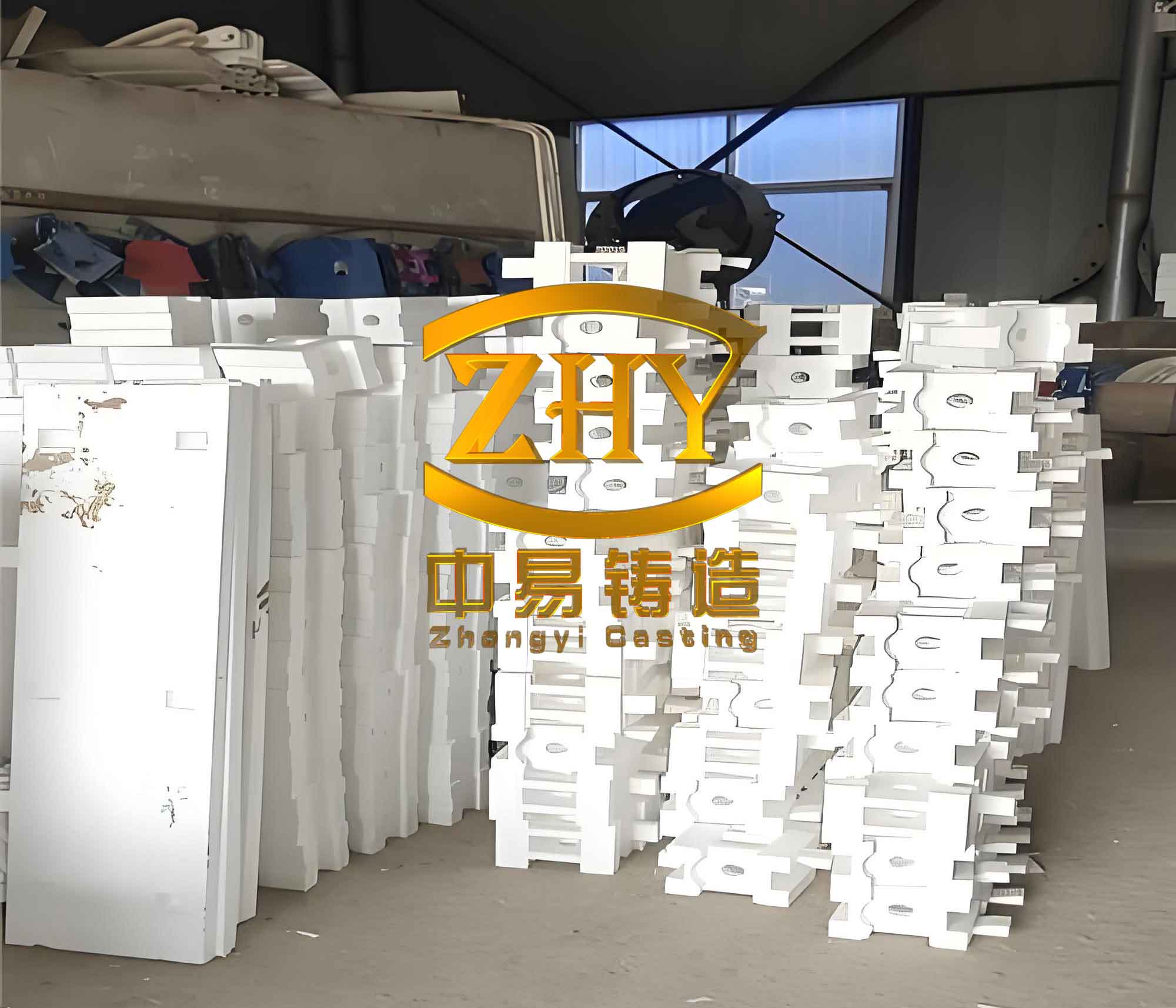
The mechanical machining of aluminum alloy casings derived from precision investment casting involves a multi-step process designed to achieve tight tolerances and excellent surface finishes. This integrated approach can be broken down into four main stages: blank preparation, rough machining, finish machining, and surface treatment. Each stage is meticulously controlled to ensure optimal results. The use of precision investment casting as the starting point significantly reduces initial machining allowances, leading to faster production cycles and lower material costs. Below is a summary table outlining the key steps and their objectives in the machining process.
| Stage | Key Activities | Objectives |
|---|---|---|
| Blank Preparation | Alloy composition optimization, shell building, pouring simulation, heat treatment | Produce high-density, low-defect blanks via precision investment casting |
| Rough Machining | Clamping, rough milling, semi-finish milling | Remove excess material and shape the casing to near-final dimensions |
| Finish Machining | Key feature machining, surface grinding, dimensional accuracy checks | Achieve high precision and surface quality for critical features |
| Surface Treatment | Nitriding strengthening, DLC coating deposition, performance evaluation | Enhance hardness, wear resistance, and corrosion resistance |
Blank preparation is the first critical step after precision investment casting. It focuses on ensuring that the cast blanks have minimal defects and are suitable for machining. For A356 aluminum alloy, the composition is optimized with silicon around 7% and magnesium between 0.3% and 0.7% to achieve a balance of mechanical strength and castability. The precision investment casting process employs ceramic shells with a primary layer thickness of about 0.3 mm and secondary layers of 6 to 8 mm, which are crucial for maintaining dimensional accuracy of internal cavities. Pouring parameters are simulated to optimize the gating system; for example, a sprue-to-runner area ratio of 1:3 is used to reduce turbulence, and top risers with a pressure gradient of 5 kPa/mm are applied to address solidification shrinkage. Heat treatment follows the T6 protocol: solution treatment at 540°C for 4 hours, water quenching, and aging at 180°C for 6 hours. This results in blanks with hardness above 150 HB and tensile strength exceeding 350 MPa. To quantitatively assess blank quality, a defect sensitivity function F is introduced, defined as:
$$ F = \frac{1}{V} \int_V f(x,y,z) \, dV $$
Here, V represents the volume of the casting, and f(x,y,z) is a defect distribution function ranging from 0 to 1. A lower F value indicates fewer defects; through optimized precision investment casting, F can be controlled below 0.05, ensuring high-quality blanks for subsequent machining.
Rough machining is performed on数控加工 centers to remove excess material and approximate the final shape of the casing. The blanks from precision investment casting are clamped onto fixtures, with the transmission hole axis used as a reference for alignment in X, Y, and Z directions. Rough milling employs a φ20 mm solid carbide end mill with spindle speeds of 800 to 1200 r/min, feed per tooth of 0.2 to 0.3 mm/z, and depth of cut of 1 to 2 mm, leaving an allowance of 1 to 2 mm. Semi-finish milling of internal cavities and grooves uses a φ10 mm ball-nose end mill at higher speeds of 2000 to 3000 r/min, feed per tooth of 0.1 to 0.2 mm/z, and an allowance of about 0.5 mm. After 3 to 5 cycles, surface roughness is reduced to Ra 6.3 μm or below, and dimensional errors are within ±0.2 mm. To enhance tool life and efficiency, minimum quantity lubrication (MQL) is applied, delivering a mixture of vegetable oil and compressed air at 20 to 50 mL/h. An optimization model for milling parameters can be established to maximize efficiency while constraining cutting forces. The milling efficiency Q is given by:
$$ Q = \frac{a_p \cdot v_f \cdot f_z \cdot d}{1000} $$
In this formula, \(a_p\) is the axial depth of cut in mm, \(v_f\) is the feed rate in mm/min, \(f_z\) is the feed per tooth in mm/z, and d is the cutter diameter in mm. By solving this model, optimal parameter combinations are derived, speeding up rough machining without compromising quality.
Finish machining targets critical features such as mounting seats, transmission holes, and locating structures to meet tight tolerances. This stage utilizes数控 boring and grinding machines. For instance, boring of mounting seats is done on数控 boring machines with CBN tools, achieving diameter tolerances of +0.01/0 mm, roundness within 0.005 mm, and surface roughness below Ra 0.4 μm. Parameters include spindle speeds of 800 to 1000 r/min, feed rates of 100 to 150 mm/min, and cutting depths of 0.2 to 0.3 mm. Dynamic probe tracking compensates for errors in real-time to ensure coaxiality. Thread rolling is employed for internal threads, with rolling forces of 20 to 30 kN and feed rates of 20 to 30 mm/min, yielding threads with hardness above HRC 55 and surface roughness under Ra 0.2 μm. For slot features like seal grooves,数控 wire electrical discharge machining (EDM) is used with pulse widths below 2 μs and peak currents over 400 A, achieving dimensional accuracy of ±0.01 mm and roughness under Ra 0.8 μm. Small holes for定位 are drilled using ultrasonic vibration drilling at frequencies of 20 to 30 kHz, amplitudes of 5 to 10 μm, and feed rates of 0.5 to 1 mm/s, resulting in hole diameter errors under 0.01 mm and roughness below Ra 0.2 μm. Finally, surface grinding on数控 grinders with wheel speeds of 30 to 50 m/s, workpiece speeds of 50 to 100 r/min, and feed rates of 500 to 800 mm/min produces uniform surfaces with roughness under Ra 0.4 μm. The overall machining accuracy P can be expressed as:
$$ P = \left( \frac{L}{l} + \frac{Ra}{20} \right) \times 100\% $$
Here, L is the deviation between machined and nominal dimensions in mm, l is the nominal dimension in mm, and Ra is the arithmetic average surface roughness in μm. A lower P value indicates higher precision.
Surface treatment is applied to enhance the wear and corrosion resistance of the machined casings. Plasma nitriding is employed, where nitrogen and hydrogen gases are ionized in a vacuum chamber to form a high-energy particle beam that bombards the aluminum surface, creating a nitride layer. Key parameters include a gas flow ratio of N₂:H₂ at 1:3, plasma power density of 1.0 to 1.5 W/cm², nitriding temperature of 450 to 550°C, and duration of 10 to 20 hours. This process forms a 20 to 30 μm thick composite layer of AlN and AlN-FeN, with surface hardness exceeding HV 1000—more than three times the base material hardness—and strong adhesion to the substrate. Additionally, a diamond-like carbon (DLC) coating of 1 to 2 μm thickness is deposited via filtered cathodic vacuum arc deposition, with biases of -100 to -200 V, arc currents of 50 to 100 A, and deposition times of 60 to 120 minutes. The adhesion strength of the DLC coating to the nitride layer is evaluated using scratch testing, with critical load L_c given by:
$$ L_c = R \left( \frac{E_f h_f}{k(1 – \nu_f^2)} \right)^{2/3} $$
In this equation, R is the indenter radius in μm, E_f is the film’s elastic modulus in GPa, h_f is the film thickness in μm, k is an interfacial strength factor dependent on materials, and ν_f is the film’s Poisson’s ratio. This combined surface treatment significantly boosts the casing’s durability, with wear and corrosion resistance improved by factors of 2 to 3 compared to untreated surfaces.
To validate the integrated precision investment casting and machining process, an experimental study was conducted using A356 aluminum alloy. Blanks were produced via precision investment casting with a φ20 mm sprue, a pouring height of 200 mm, and a pressure gradient of 5 kPa/mm. Rough machining was performed on a VMC850E数控加工 center with a φ32 mm solid carbide end mill at spindle speed S=1000 r/min, axial depth of cut a_p=1.5 mm, radial depth of cut a_e=20 mm, and feed rate v_f=800 mm/min. Finish machining involved a φ10 mm solid carbide end mill for external contours (S=4000 r/min, f_z=0.08 mm/z, a_p=0.5 mm, a_e=0.4 mm) and a φ8 mm tungsten carbide ball-nose end mill for internal cavities (S=6000 r/min, f_z=0.03 mm/z, a_p=0.3 mm, a_e=0.2 mm). Key performance metrics assessed included the defect sensitivity function F, surface roughness Ra (external and internal), machining accuracy P, hardness HV, wear resistance (wear amount ΔRa after 1000 hours), and corrosion resistance (corrosion depth h after 1000 hours). The results are summarized in the table below, comparing three process routes: traditional machining only, traditional casting plus machining, and precision investment casting plus machining.
| Process Route | Defect Sensitivity F | External Ra (μm) | Internal Ra (μm) | Machining Accuracy P (%) | Hardness HV | 1000h Wear ΔRa (μm) | 1000h Corrosion h (μm) |
|---|---|---|---|---|---|---|---|
| Traditional Machining Only | — | 0.85 | 1.12 | 0.032 | 135.8 | 0.42 | 4.28 |
| Traditional Casting + Machining | 0.086 | 0.64 | 0.82 | 0.018 | 152.3 | 0.35 | 3.13 |
| Precision Investment Casting + Machining | 0.032 | 0.25 | 0.45 | 0.008 | 186.4 | 0.12 | 1.35 |
The data clearly demonstrates the advantages of the precision investment casting based approach. The defect sensitivity F is significantly lower at 0.032, indicating fewer internal flaws and higher density in the blanks produced through precision investment casting. Surface roughness values are superior, with external Ra as low as 0.25 μm and internal Ra at 0.45 μm, compared to higher values in traditional methods. Machining accuracy P reaches 0.008%, showcasing enhanced dimensional control. Hardness improves to HV 186.4, and both wear and corrosion resistance are markedly better, with wear reduced to 0.12 μm and corrosion depth to 1.35 μm after 1000 hours. These improvements are attributed to the refined microstructure from precision investment casting, which provides a uniform base for machining, and the effective surface treatments that form hard, adherent coatings. The plasma nitriding and DLC deposition processes, in particular, contribute to a surface hardness over HV 1000 and strong interfacial bonding, as reflected in the critical load formula. Overall, the integration of precision investment casting with optimized machining and surface treatment results in casings with exceptional performance, validating the efficacy of this holistic manufacturing strategy.
In conclusion, this research presents a comprehensive approach to manufacturing aluminum alloy casings by combining precision investment casting with advanced mechanical machining. The process begins with precision investment casting to produce high-quality, near-net-shape blanks with minimal defects, as quantified by the defect sensitivity function. Subsequent rough and finish machining stages, guided by mathematical models for efficiency and accuracy, achieve tight tolerances and excellent surface finishes. Surface treatments like plasma nitriding and DLC coating further enhance hardness, wear resistance, and corrosion resistance. Experimental results confirm that this integrated method outperforms traditional techniques in key metrics such as surface quality, dimensional accuracy, and mechanical properties. The repeated emphasis on precision investment casting throughout this work underscores its critical role in enabling these advancements. Future efforts will focus on refining casting parameters, exploring novel alloy compositions, and integrating emerging surface technologies to push the boundaries of casing performance. This work contributes to the broader goal of advancing manufacturing capabilities in high-stakes industries, leveraging precision investment casting as a cornerstone for innovation and efficiency.