
In the field of precision manufacturing, investment casting is a critical process for producing complex, high-integrity components, particularly in aerospace and defense applications. However, the occurrence of porosity in casting remains a pervasive challenge, leading to significant scrap rates and compromising component performance. Porosity in casting refers to the formation of voids or gas pockets within the solidified metal, which can severely degrade mechanical properties such as fatigue strength and pressure tightness. As an engineer involved in quality improvement initiatives, I have led a project team to systematically address this issue using the Six Sigma DMAIC (Define, Measure, Analyze, Improve, Control) methodology. This article details our comprehensive approach, employing various analytical tools to identify, analyze, and control the key factors influencing porosity in investment casting, with the ultimate goal of achieving near-zero defect levels.
The investment casting process is inherently complex, involving a series of physical and chemical transformations from pattern making to final solidification. Numerous interdependent parameters across materials, equipment, and operations contribute to defect formation. Among these, porosity in casting consistently accounts for a high proportion of rejections, often exceeding 50% of total defects in critical components. While traditional corrective actions have yielded some improvement, the sporadic recurrence of porosity indicated an underlying systemic instability. To attain sustainable quality, we adopted the structured framework of Six Sigma, which emphasizes data-driven problem-solving and process optimization. The DMAIC model provides a disciplined sequence for defining the problem, measuring current performance, analyzing root causes, implementing improvements, and establishing controls to sustain gains.
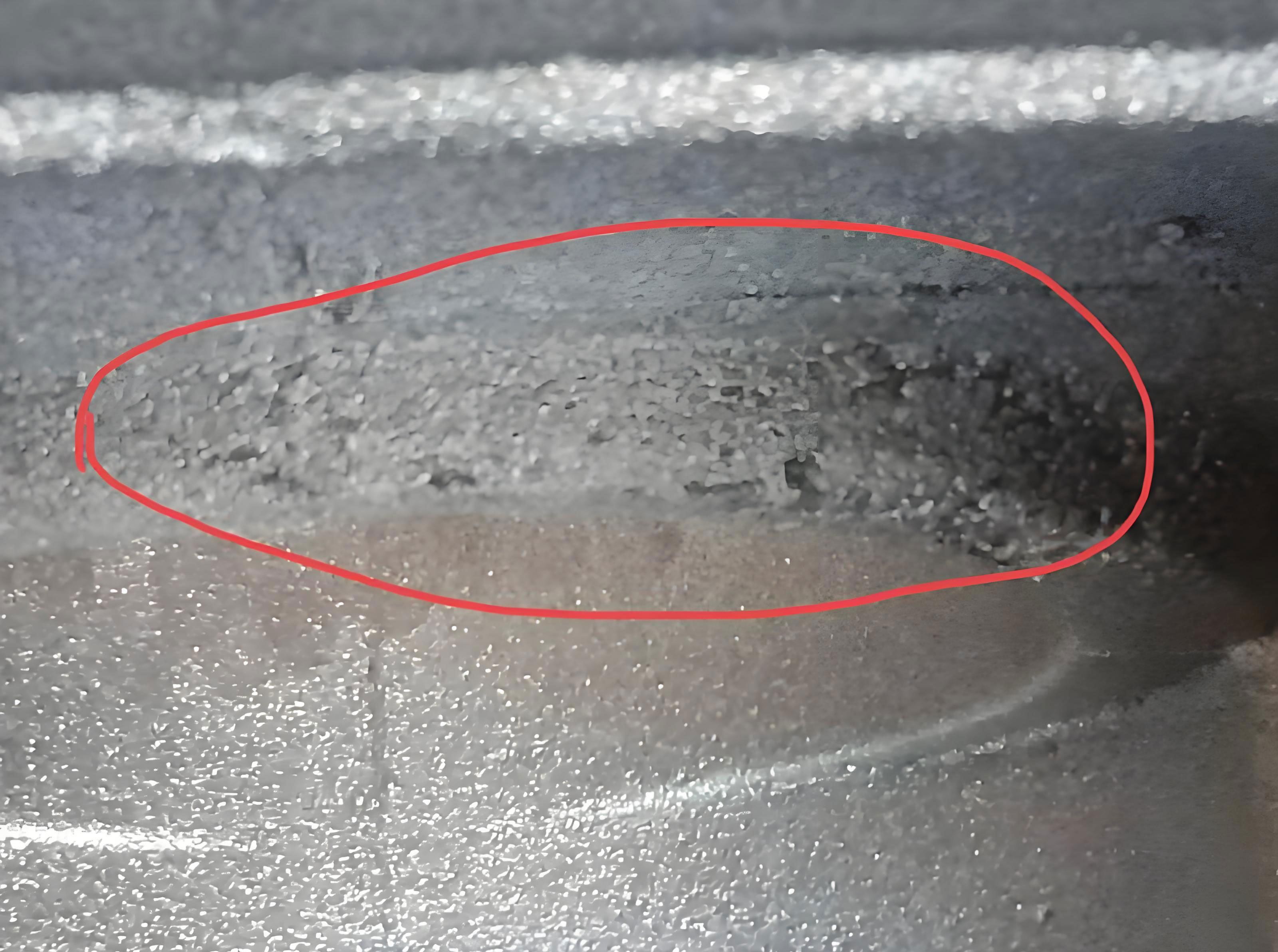
Our project focused on a representative investment casting component, a structural part made of ZG35CrMnSi alloy, commonly used in aerospace assemblies. The initial situation was alarming: the raw casting rejection rate reached 79%, with porosity in casting constituting 49.8% of all defects, as illustrated in the Pareto chart below. This highlighted porosity as the predominant quality bottleneck. We formed a cross-functional team comprising specialists from technology, production, operations, inspection, management, and finance. The team charter established clear objectives: to reduce the porosity-related scrap rate by at least 60% and stabilize the process using statistical control methods.
The Define phase involved mapping the entire investment casting process flow to understand the context and scope. The key stages include pattern production, shell building, dewaxing, shell baking, preheating, melting, pouring, and solidification. Each stage introduces potential variables affecting porosity in casting. We documented the existing equipment and specifications, as shown in Table 1. The process capability analysis revealed that the current state was both highly defective and unstable, with a Cp index far below 1.0, indicating an incapable process. This underscored the necessity for a thorough investigation into the root causes of porosity.
| Equipment Name | Model/Specification | Capacity | Rated Temperature |
|---|---|---|---|
| Medium Frequency Induction Furnace | GW0.1-17S/2.5PS | 100 kg | 1700°C |
| Semi-Automatic Wax Injection Machine | 130 cavities per 15 min cycle | N/A | N/A |
| Shell Baking and Preheating Furnace | HPs-120-9.5, 2450×1030×1750 mm | N/A | 1100°C |
In the Measure phase, we collected historical data on process parameters and defect rates. The process flow diagram was instrumental in identifying measurement points. We conducted a Gage R&R study to ensure the measurement system for detecting porosity in casting was reliable, with an acceptable %GRR below 10%. The initial process performance metrics were quantified: the defect rate for porosity was 0.498 per unit, with a high standard deviation, confirming variability. The baseline process capability index (Cpk) was calculated as:
$$ Cpk = \min\left(\frac{USL – \mu}{3\sigma}, \frac{\mu – LSL}{3\sigma}\right) $$
where USL and LSL are the upper and lower specification limits for acceptable porosity levels (near zero), μ is the process mean defect rate, and σ is the standard deviation. The calculated Cpk was negative, indicating the process mean was outside specification limits, necessitating immediate improvement.
The Analyze phase aimed to uncover the root causes of porosity in casting. We began with a theoretical review of porosity formation mechanisms. Porosity in casting generally falls into three categories:
- Entrained Gas Porosity: Caused by gases trapped during pouring from mold gases, air entrainment, or decomposition of binders.
- Precipitated Gas Porosity: Results from dissolved gases (e.g., hydrogen, nitrogen) in the molten metal that precipitate out during solidification due to decreasing solubility.
- Reaction Gas Porosity: Forms from chemical reactions between the molten metal and mold materials (e.g., moisture in the shell) or within the alloy itself.
Understanding these mechanisms guided our cause-and-effect analysis. We employed a fishbone (Ishikawa) diagram to brainstorm potential factors across six categories: Man, Machine, Material, Method, Measurement, and Environment. The diagram highlighted several suspects, including pouring temperature, gating system design, holding time, shell cleanliness, and baking parameters. To move from qualitative to quantitative analysis, we used Binary Logistic Regression (BLR) to statistically assess the impact of each factor on the probability of porosity occurrence. The BLR model is expressed as:
$$ \log\left(\frac{p}{1-p}\right) = \beta_0 + \beta_1 X_1 + \beta_2 X_2 + \cdots + \beta_k X_k $$
where p is the probability of porosity in casting, β0 is the intercept, βi are coefficients, and Xi are the predictor variables (e.g., pouring temperature, shell cleanliness score). We collected data from 200 castings, recording parameters and defect outcomes. The regression analysis initially included variables like pouring temperature (Tpour), holding time (thold), and baking time (tbake). The results, summarized in Table 2, showed that these factors had p-values > 0.05, indicating they were not statistically significant influencers of porosity in this process context.
| Factor | Coefficient (β) | Standard Error | p-value | Odds Ratio (eβ) |
|---|---|---|---|---|
| Pouring Temperature | -0.002 | 0.0015 | 0.187 | 0.998 |
| Holding Time | 0.015 | 0.008 | 0.062 | 1.015 |
| Baking Time | -0.010 | 0.006 | 0.101 | 0.990 |
| Constant | 1.200 | 0.500 | 0.016 | 3.320 |
Subsequently, we analyzed the gating system design and shell cleanliness. The gating system was evaluated using a dimensionless parameter, the gating ratio (sprue:runner:gate), and the presence of vents or risers. Shell cleanliness was quantified by measuring residual wax content after dewaxing via a washing test. The BLR for these factors yielded significant results, as shown in Table 3. The odds ratio for shell cleanliness was particularly high, indicating that poor cleanliness dramatically increases the risk of porosity in casting. Similarly, an inadequate gating system (lack of risers) significantly raised the porosity probability.
| Factor | Coefficient (β) | Standard Error | p-value | Odds Ratio (eβ) |
|---|---|---|---|---|
| Gating System (0=inadequate, 1=adequate) | -1.850 | 0.320 | <0.001 | 0.157 |
| Shell Cleanliness (0=dirty, 1=clean) | -2.100 | 0.350 | <0.001 | 0.122 |
| Constant | 2.500 | 0.400 | <0.001 | 12.182 |
The analysis conclusively identified two critical factors: gating system design and shell cleanliness. An inadequate gating system impedes proper venting of gases and feeding of molten metal, promoting entrained and shrinkage-related porosity. Poor shell cleanliness, characterized by residual wax or debris, leads to reaction gas porosity due to pyrolysis during pouring, releasing gases that become trapped. These insights directed our improvement strategies.
In the Improve phase, we designed and implemented targeted actions to address the root causes. For the gating system, we modified the design by adding strategic risers (feeders) to enhance gas escape and metal feeding. The original design had a single sprue-runner system; the improved design incorporated two additional risers at hot spots, calculated using modulus method to ensure directional solidification. The riser volume (Vriser) was determined based on the casting volume (Vcasting) and solidification shrinkage factor (ε):
$$ V_{riser} \geq \frac{V_{casting} \cdot \varepsilon}{1 – \varepsilon} $$
where ε for ZG35CrMnSi is approximately 4%. This change facilitated better degassing and reduced porosity in casting.
For shell cleanliness, we revised the process flow to include a mandatory shell washing step after dewaxing and before baking. The shells were washed with hot water (≥90°C) 1-3 times until no floating wax was observed. We introduced a cleanliness check using a standard operating procedure (SOP) and a record sheet. The washing efficiency can be modeled by a first-order decay equation for wax removal:
$$ C(t) = C_0 \cdot e^{-kt} $$
where C(t) is the wax concentration at time t, C0 is initial concentration, and k is the removal rate constant dependent on water temperature and agitation. This step significantly reduced reaction gas sources.
The revised process flow compared to the original is summarized in Table 4. We also conducted a Failure Mode and Effects Analysis (FMEA) to preempt risks from the changes, such as over-washing weakening shells. The Risk Priority Number (RPN = Severity × Occurrence × Detection) for each potential failure was kept below 120, indicating acceptable risk.
| Process Step | Original Flow | Improved Flow |
|---|---|---|
| After Dewaxing | Direct transfer to baking | Shell washing with hot water (≥90°C) and cleanliness check |
| Gating System | Basic sprue-runner design | Enhanced design with added risers for venting and feeding |
| Process Control | Limited monitoring | SOPs for washing, checklists, and parameter tracking |
The Control phase ensures the improvements are sustained. We implemented Statistical Process Control (SPC) using a p-chart to monitor the porosity defect rate over time. The p-chart plots the proportion of defective castings in weekly samples. The center line (CL), upper control limit (UCL), and lower control limit (LCL) are calculated as:
$$ CL = \bar{p} = \frac{\text{total defects}}{\text{total castings}} $$
$$ UCL = \bar{p} + 3\sqrt{\frac{\bar{p}(1-\bar{p})}{n}} $$
$$ LCL = \bar{p} – 3\sqrt{\frac{\bar{p}(1-\bar{p})}{n}} $$
where n is the sample size. We set action triggers: if a point exceeds UCL, or 6 consecutive points show a trend, or 9 points lie on one side of CL, an investigation is initiated. The p-chart demonstrated a stable process with porosity rates reduced to below 0.05, as shown in the control chart data. Additionally, we documented all changes in updated work instructions and trained personnel to embed the new standards.
The results were compelling. Post-improvement, the porosity in casting defect rate dropped from 49.8% to under 5%, achieving an 85% reduction. The process capability index Cpk improved to 1.33, indicating a capable and stable process. Comparative data before and after implementation are presented in Table 5. The reduction in porosity in casting not only cut scrap costs but also enhanced component reliability, critical for aerospace applications.
| Metric | Before Improvement | After Improvement |
|---|---|---|
| Porosity Defect Rate | 0.498 per unit | 0.048 per unit |
| Process Mean (μ) | 0.498 | 0.048 |
| Standard Deviation (σ) | 0.102 | 0.012 |
| Cpk Index | -0.85 (incapable) | 1.33 (capable) |
| Estimated Annual Scrap Reduction | Baseline | 75% cost saving |
In conclusion, addressing porosity in casting requires a systematic, data-driven approach. The Six Sigma DMAIC framework proved invaluable in diagnosing and mitigating this defect. By leveraging tools like process mapping, cause-and-effect diagrams, binary logistic regression, and control charts, we pinpointed gating system design and shell cleanliness as dominant factors. The implemented solutions—redesigned gating with risers and rigorous shell washing—significantly curtailed porosity formation. Continuous monitoring via SPC ensures sustained gains. This case underscores that porosity in casting is not an insurmountable problem; with disciplined analysis and control, it can be effectively managed to achieve near-zero defect levels, enhancing product quality and operational efficiency in investment casting.
Future work could explore advanced predictive models using machine learning to further optimize parameters and prevent porosity in casting. Variables such as alloy composition, atmospheric conditions, and furnace dynamics could be integrated into a holistic digital twin of the process. Nevertheless, the foundational principles of DMAIC provide a robust methodology for any organization seeking to conquer the challenge of porosity in casting and achieve excellence in precision manufacturing.