
In the production of nodular cast iron components using furan resin-bonded sand molds, a recurring and critical quality issue is the formation of a subsurface layer exhibiting degenerate graphite morphologies. This defect, often manifesting as dark spots upon machining, typically consists of flake, vermicular, and exploded graphite to a depth of several millimeters. Since the mechanical properties of nodular cast iron are intrinsically linked to the spherical shape of its graphite precipitates, such subsurface degradation leads to non-uniform hardness, reduced strength, and accelerated tool wear during machining, potentially resulting in component scrapping. The primary cause of this subsurface deterioration is the depletion of nodularizing elements (Mg, rare earths) at the metal-mold interface, often due to reaction with sulfur released from the mold materials. This article, from my perspective based on extensive foundry investigation, systematically analyzes the causes of this defect from four key aspects: curing agent, coating, cooling rate, and sand reclamation. Corresponding preventive measures are proposed, supported by experimental data and theoretical analysis.
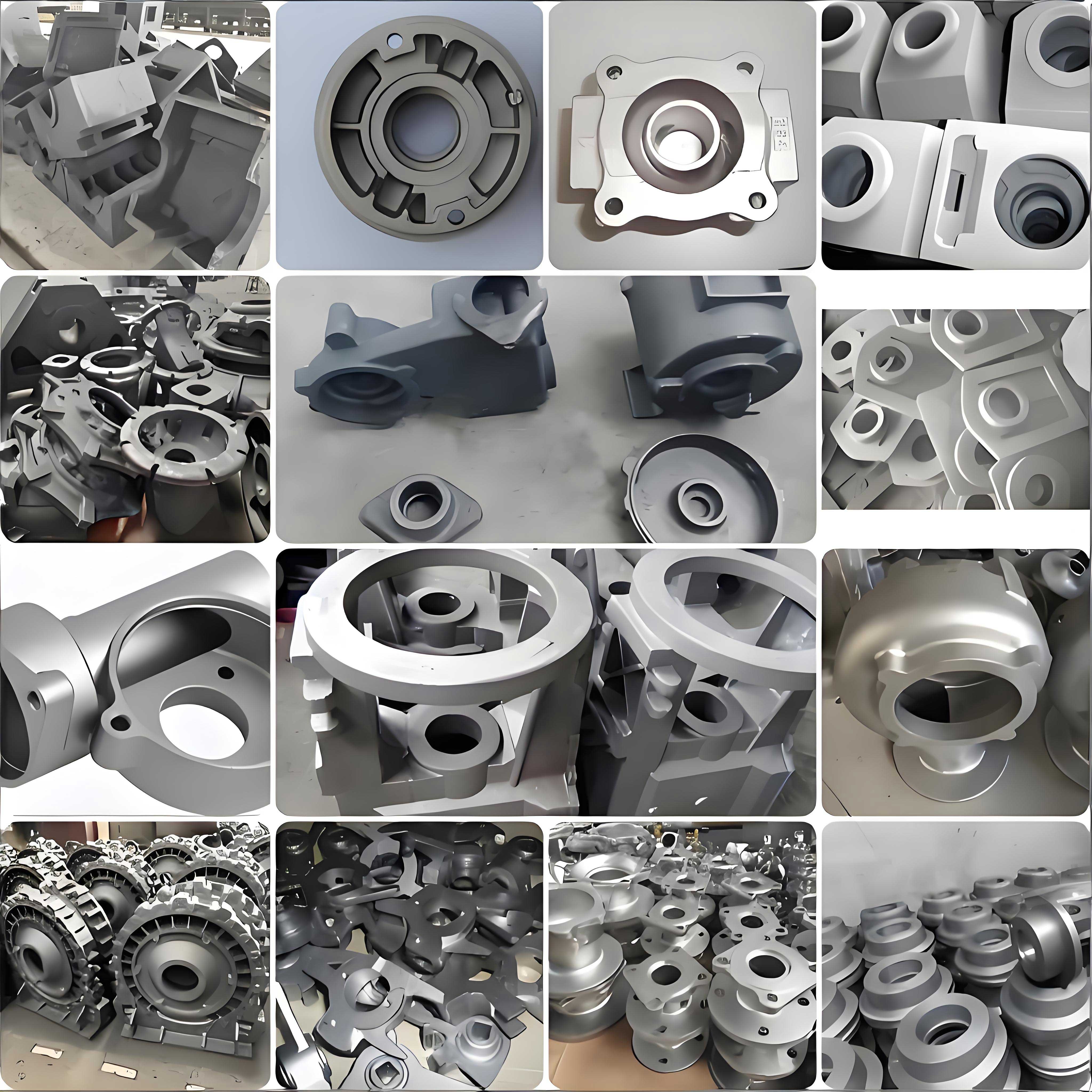
The fundamental metallurgical principle governing the formation of sound nodular cast iron is the preservation of a critical level of residual magnesium (Mg) in the melt to ensure graphite spheroidization. Any process that consumes this Mg at the casting surface before or during solidification can lead to degenerate graphite. In furan resin systems, especially those cured with benzenesulfonic acid-based agents, sulfur (S) plays a detrimental role. Upon contact with the high-temperature iron, the curing agent decomposes, releasing sulfur-bearing gases. These gases permeate through the coating layer and react with the Mg or rare earth (RE) elements in the liquid metal at the mold interface. This reaction can be simplified as:
$$ \text{Mg}_{(in\ Fe)} + \text{S}_{(from\ mold)} \rightarrow \text{MgS}_{(slag)} $$
This reaction effectively reduces the concentration of “active” nodularizing elements at the critical solidifying front, allowing graphite to grow in non-spherical forms. The thickness of this affected layer, denoted as $d_{defect}$, is therefore a function of the competing rates of sulfur supply from the mold and the diffusion/availability of magnesium from the bulk melt. The following analysis explores the factors influencing this balance.
1. Influence of Curing Agent and Coating
The choice of curing agent for the furan resin sand is arguably the most significant factor. Conventional acid catalysts contain substantial sulfur. My experimental work involved preparing test castings using identical melts and molding methods but varying the curing agent and coating type. The thickness of the degenerate graphite layer was measured metallographically. The results are summarized in Table 1.
| Curing Agent Type | Coating Type | Avg. Defect Layer Thickness, $d_{defect}$ (mm) |
|---|---|---|
| Conventional (High-S) | Standard Zirconia-based | 2.72 |
| Coating with Nodularizer Additive | 2.10 | |
| Si-Mg Alloy Coating | 1.48 | |
| Low-Sulfur Formulation | Standard Zirconia-based | 1.52 |
| Coating with Nodularizer Additive | 0.72 | |
| Si-Mg Alloy Coating | 0.15 |
The data unequivocally demonstrates that using a low-sulfur curing agent drastically reduces $d_{defect}$. This directly correlates to a lower initial sulfur potential in the mold atmosphere, reducing the driving force for the Mg-consuming reaction described by the equilibrium constant $K_{eq}$ for MgS formation:
$$ K_{eq} = \frac{a_{\text{MgS}}}{a_{\text{Mg}} \cdot a_{\text{S}}} $$
where $a$ denotes activity. Lower sulfur activity ($a_S$) from a low-S agent shifts the equilibrium to the left, preserving more active magnesium ($a_{Mg}$) in the metal.
The coating acts as a barrier, but it is inherently porous after drying. Its composition can actively influence the interfacial chemistry. Standard coatings offer little protection beyond a physical barrier. Coatings containing nodularizer additives provide a supplemental source of Mg or RE at the interface, partially countering the sulfur attack. The most effective solution, as shown, is a coating rich in Si-Mg alloy. This coating actively introduces magnesium at the exact location where it is being depleted, effectively nullifying the sulfur’s effect and promoting the formation of fully nodular graphite at the surface. The beneficial effect can be conceptualized by modifying the critical magnesium balance equation at the surface. The required residual magnesium in the bulk melt, $[Mg]_{bulk, min}$, must satisfy:
$$ [Mg]_{bulk, min} \geq [Mg]_{required\ for\ nodulization} + \Delta[Mg]_{lost\ to\ reaction} – \Delta[Mg]_{supplied\ by\ coating} $$
For a Si-Mg coating, $\Delta[Mg]_{supplied\ by\ coating} > 0$, thereby reducing the demand on the bulk melt’s magnesium to prevent subsurface degradation in the final nodular cast iron component.
2. Influence of Cooling Rate
Observations in production often indicated that subsurface defects were more pronounced in thicker sections. This prompted an investigation into the role of cooling rate, which governs the time available for the interfacial sulfur-magnesium reaction.
2.1 Effect of Chills
The placement of chills provides localized rapid solidification. Measurements of $d_{defect}$ were taken from castings at various distances from chill inserts. The results are presented in Table 2.
| Measurement Location Relative to Chill | Avg. Defect Layer Thickness, $d_{defect}$ (mm) | Relative Cooling Rate |
|---|---|---|
| At chill surface | 0.0 | Very High |
| 3 cm from chill | 1.0 | High |
| 10 cm from chill | 2.0 | Moderate |
| 50 cm from chill | 2.5 | Low |
The inverse correlation is stark: faster cooling near the chill completely suppresses the defect, while slower cooling in distant areas allows a thick degenerate layer to form. The mechanism is kinetic. The reaction between sulfur and magnesium requires time, $t_{reaction}$. The local solidification time, $t_f$, is a function of cooling rate. For a section solidifying under a constant temperature gradient, a simplified relation is $t_f \propto (V/A)^{-n}$, where V/A is the volume-to-surface area ratio (modulus) and n is a constant. A high cooling rate minimizes $t_f$. If $t_f < t_{reaction}$, the metal solidifies before the interfacial reaction can significantly deplete the surface magnesium. This principle is crucial for designing robust processes for nodular cast iron.
2.2 Effect of Section Thickness (Wall Thickness)
Similarly, the inherent cooling rate difference between thin and thick walls leads to a variation in defect severity. Measurements across different casting geometries confirm this, as shown in Table 3.
| Wall Thickness Range (mm) | Avg. Defect Layer Thickness, $d_{defect}$ (mm) | Typical Solidification Character |
|---|---|---|
| < 30 | 0.27 | Fast, directional |
| 30 – 60 | 1.50 | Intermediate |
| 60 – 200 | 2.17 | Slow, mushy |
Thicker sections, with their inherently longer solidification times, provide an extended window for the sulfur-Mg reaction to proceed, resulting in deeper penetration of the graphite degradation. This highlights a significant challenge in producing heavy-section nodular cast iron with sound surface microstructure. The governing equation for the defect layer depth can be modeled as a diffusion-controlled process:
$$ d_{defect} \approx \sqrt{D_{eff} \cdot t_f} $$
where $D_{eff}$ is an effective diffusion coefficient for the reaction front, which is itself a function of sulfur concentration and temperature. Since $t_f$ increases with wall thickness, $d_{defect}$ increases correspondingly.
3. Influence of Sand Reclamation and Reuse
The practice of reclaiming and reusing molding sand is economically essential but introduces a cumulative risk for nodular cast iron production. Each casting cycle leaves behind sulfur-containing residues from decomposed binders and coatings, which are not fully removed by standard thermal-mechanical reclamation. This leads to a steady-state buildup of sulfur in the system sand. To quantify this, tests were conducted using new sand versus system (reclaimed) sand, combined with different curing agents and coatings. The results are consolidated in Table 4.
| Molding Material Combination | Avg. Defect Layer Thickness, $d_{defect}$ (mm) | Notes |
|---|---|---|
| New Sand + Conventional Curing Agent + Standard Coating | 1.5 | Baseline with new sand |
| Reclaimed Sand + Conventional Curing Agent + Standard Coating | 2.8 | Worst case: high-S system |
| New Sand + Low-S Curing Agent + Standard Coating | 1.2 | Improvement from low-S agent |
| Reclaimed Sand + Conventional Curing Agent + Si-Mg Coating | 0.5 | Coating mitigates high-S sand |
| Reclaimed Sand + Low-S Curing Agent + Si-Mg Coating | 0.5 | Effective combination for used sand |
| New Sand + Low-S Curing Agent + Si-Mg Coating | 0.0 | Optimal scenario |
The data reveals a clear trend: reclaimed sand, due to its higher background sulfur level, consistently promotes thicker degenerate layers when used with conventional materials. The sulfur pickup can be described as an accumulation process over N casting cycles:
$$ w(S)_{sand,N} = w(S)_{sand,0} + \sum_{i=1}^{N} \Delta w(S)_{i} – R_{reclaim} $$
where $w(S)_{sand,0}$ is the initial sulfur content, $\Delta w(S)_{i}$ is the sulfur added per cycle from binder/curing agent decomposition, and $R_{reclaim}$ is the removal efficiency of the reclamation system. For sustainable production of high-quality nodular cast iron, $R_{reclaim}$ must be high, or countermeasures like low-sulfur additives and active coatings must be employed. Table 4 shows that using a Si-Mg alloy coating can effectively neutralize the detrimental effect of high-sulfur reclaimed sand, bringing the defect thickness down to acceptable levels. The combination of low-sulfur curing agent and Si-Mg coating on new sand represents the gold standard, completely eliminating the subsurface defect.
4. Synthesis and Preventive Strategy Framework
Based on the foregoing analysis, the formation of subsurface graphite degeneration in furan resin sand cast nodular cast iron is a multi-factorial problem rooted in the interfacial sulfur-magnesium reaction. The key variables are the sulfur potential of the mold atmosphere ($P_S$), the availability of magnesium at the interface ($[Mg]_i$), and the time available for reaction ($t_{reaction}$). A comprehensive strategy to prevent this defect must address all three.
1. Minimize Mold Sulfur Potential ($P_S$):
- Mandate the use of low-sulfur or sulfur-free curing agents for all production of nodular cast iron.
- Implement strict control over sand reclamation to limit sulfur buildup. Consider periodic dilution with new sand or investing in high-efficiency reclamation that removes fines and contaminants more effectively.
- Monitor the sulfur content of system sand regularly.
2. Maximize Interfacial Magnesium ($[Mg]_i$):
- Employ active coatings containing Mg or RE alloys (e.g., Si-Mg coatings). These provide a local reservoir to counteract sulfur pick-up.
- Consider a slight, controlled increase in the nominal nodularizer addition for the melt to ensure a robust residual magnesium level in the bulk, providing a larger reservoir to draw from. However, this must be balanced against the risk of creating other defects like carbides or dross.
3. Minimize Reaction Time ($t_{reaction}$):
- Optimize casting geometry and gating to promote directional solidification where possible.
- Strategically use chills, especially in thick sections and areas prone to slow cooling, to accelerate solidification at critical surfaces.
- Recognize that thin-walled sections of nodular cast iron castings are inherently less susceptible to this defect due to their fast solidification.
The interaction of these factors can be summarized in a conceptual process control equation aiming to keep the defect depth $d_{defect}$ at zero:
$$ d_{defect} = k \cdot \left( \frac{P_S \cdot t_f}{[Mg]_i \cdot f_{coating}} \right) \approx 0 $$
where $k$ is a process constant, $t_f$ is the local solidification time, and $f_{coating}$ is a factor >1 representing the magnesiac effect of the coating. The goal is to drive the numerator down and the denominator up.
In conclusion, producing nodular cast iron components with flawless subsurface microstructure in furan resin sand requires a holistic approach. It is not sufficient to focus solely on melt treatment; equal attention must be paid to mold materials and process kinetics. The adoption of low-sulfur chemical binders, the development and use of reactive barrier coatings, prudent sand management, and intelligent use of chills to control solidification are all essential elements of a robust foundry practice dedicated to high-integrity nodular cast iron. Through systematic control of these variables, the persistent problem of subsurface graphite degradation can be effectively eliminated, ensuring the full performance potential of the nodular cast iron material is realized in every casting.