
In the production of large-scale ductile iron castings, achieving defect-free components is a significant challenge due to the material’s tendency towards shrinkage porosity and prolonged solidification times. As a researcher focused on material forming technologies, I have extensively studied the casting process for a machine tool stand made of ductile iron. This article details the analysis and optimization of the casting process, emphasizing the transition from a traditional riser-based approach to a riser-free method. The goal is to enhance the quality of ductile iron castings while simplifying the manufacturing process and improving yield.
Ductile iron castings are widely used in industrial applications due to their excellent mechanical properties, such as high strength and ductility. However, the solidification behavior of ductile iron, characterized by a mushy mode, makes it prone to defects like shrinkage cavities and porosity, especially in thick sections. In this study, the focus is on a machine tool stand with complex internal cavities and significant wall thickness variations. The original process utilized risers for feeding shrinkage in thick areas, but production issues led to the exploration of alternative methods. Through numerical simulation and practical trials, a riser-free casting process was developed, incorporating optimized gating systems and chill placements to ensure uniform solidification and high-quality ductile iron castings.
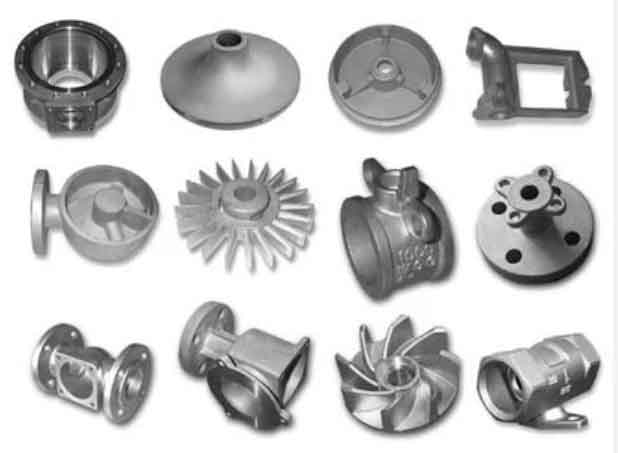
The machine tool stand is fabricated from QT400-18 ductile iron, with overall dimensions of 2,230 mm in length, 1,750 mm in width, and 550 mm in height, weighing approximately 2,483 kg. Its structure includes multiple internal cavities, with wall thicknesses ranging from 20 mm to 80 mm, resulting in a high thickness ratio that complicates the casting process. The top section features thick support frames with shaft holes of 70 mm diameter, which require superior microstructural integrity to meet performance standards. The casting must adhere to strict quality levels, such as EN 12890 H2, and dimensional accuracy per DIN ISO 8062-CT12, with surface roughness not exceeding Ra 12.5 μm after machining. Defects like shrinkage porosity, sand inclusions, or voids are unacceptable, necessitating a robust casting design for these ductile iron castings.
In the initial casting process, a manual molding approach with furan resin-bonded self-hardening sand was employed, along with a stepped gating system to facilitate uniform filling. The molten iron was prepared using scrap steel and carburizing agents, with composition controls to ensure optimal properties. For instance, the base iron composition included 3.6–4.0% C, 1.3–1.6% Si, Mn ≤ 0.5%, S ≤ 0.03%, and P ≤ 0.04%, while after spheroidization with rare earth magnesium alloy, the composition adjusted to 3.5–3.9% C, 2.2–2.5% Si, Mn ≤ 0.45%, S ≤ 0.02%, P ≤ 0.04%, and residual Mg ≤ 0.05%. The pouring temperature was maintained between 1,310 °C and 1,330 °C to minimize liquid shrinkage. The gating system was designed as an open-type stepped configuration with multiple ingates to promote balanced filling and solidification. The ingates featured a flat rectangular cross-section of 18 mm thickness to reduce flow resistance and allow for early solidification, which is critical in riser-free processes for ductile iron castings.
However, the original method incorporated risers to compensate for shrinkage in the thick shaft hole support areas. Numerical simulations using AnyCasting software revealed that the risers solidified before the casting, leading to inadequate feeding and shrinkage defects at the riser roots. This is a common issue in ductile iron castings due to their mushy solidification, where risers are less effective. The simulation results, including solidification time fields and sequence diagrams, indicated that the last solidifying regions were near the shaft holes, confirming the propensity for defects. Consequently, alternative approaches were investigated to eliminate risers and rely on the graphitization expansion of ductile iron to counteract shrinkage.
The optimized process involves a riser-free design, where the original risers are replaced with wedge-shaped vent holes, and the ingate thickness is reduced to ensure they solidify before the casting. Additionally, external or internal chills are applied near the shaft holes to accelerate cooling and improve microstructural properties. The high strength of the resin sand mold, combined with metal jacket tightening, confines the expansion during graphitization, enabling it to compensate for liquid and solidification shrinkage. This principle can be mathematically represented using a model for shrinkage compensation in ductile iron castings. For example, the net volume change during solidification can be expressed as:
$$ \Delta V_{\text{net}} = \Delta V_{\text{liquid}} + \Delta V_{\text{solidification}} – \Delta V_{\text{graphitization}} $$
where $\Delta V_{\text{liquid}}$ is the liquid contraction, $\Delta V_{\text{solidification}}$ is the solidification shrinkage, and $\Delta V_{\text{graphitization}}$ is the expansion due to graphite precipitation. In successful riser-free casting, the condition $\Delta V_{\text{net}} \leq 0$ must be achieved, which is facilitated by process controls such as low pouring temperatures and early ingate solidification.
To quantify the solidification behavior, Chvorinov’s rule can be applied to estimate the solidification time for different sections of the casting. The rule states:
$$ t = B \left( \frac{V}{A} \right)^n $$
where $t$ is the solidification time, $V$ is the volume of the section, $A$ is the surface area, $B$ is a mold constant, and $n$ is an exponent typically around 2 for sand castings. For the shaft hole support area, with a high $V/A$ ratio, the solidification time is prolonged, increasing the risk of shrinkage. By incorporating chills, the effective $A$ is increased, reducing $t$ and promoting directional solidification. Numerical simulations confirmed that with chills, the solidification time in critical areas decreased significantly, as shown in comparative analyses.
In production trials, several schemes were tested, including casting the shaft holes with external chills or omitting them for post-machining, with internal chills added. All variations produced qualified ductile iron castings, demonstrating the versatility of the riser-free approach. The table below summarizes the key parameters and outcomes for different optimization schemes in the production of ductile iron castings.
| Scheme | Riser Usage | Chill Type | Shaft Hole Treatment | Solidification Time (min) | Defect Occurrence | Process Yield (%) |
|---|---|---|---|---|---|---|
| Original | Yes | None | Cast | ~45 | Shrinkage at riser root | ~85 |
| Optimized 1 | No | External | Cast | ~30 | None | ~95 |
| Optimized 2 | No | Internal | Machined | ~28 | None | ~96 |
| Optimized 3 | No | External | Machined | ~32 | None | ~94 |
The chemical composition control is crucial for achieving the desired properties in ductile iron castings. The table below outlines the target composition ranges for the base iron and after spheroidization, which influence the graphitization process and overall casting quality.
| Element | Base Iron | After Spheroidization |
|---|---|---|
| C | 3.6–4.0 | 3.5–3.9 |
| Si | 1.3–1.6 | 2.2–2.5 |
| Mn | ≤ 0.5 | ≤ 0.45 |
| S | ≤ 0.03 | ≤ 0.02 |
| P | ≤ 0.04 | ≤ 0.04 |
| Mg | – | ≤ 0.05 |
The gating system design plays a pivotal role in the success of riser-free casting for ductile iron castings. The stepped gating system with multiple ingates ensures uniform filling, while the thin ingate cross-sections promote early solidification to seal the mold cavity. This allows the graphitization expansion to act internally, reducing shrinkage defects. The dimensions of the ingates, such as a thickness of 18 mm, are optimized based on fluid dynamics principles to minimize turbulence and ensure efficient feeding during the initial stages. The use of pre-embedded ceramic pipes in the sprue and bottom ingates further enhances the stability of the process.
Numerical simulations were instrumental in validating the optimized process. The solidification time fields for riser-free castings showed that the ingates and vent holes solidified before the main casting, creating a closed system that leverages graphitization expansion. When chills were added, the solidification time in the shaft hole areas decreased, leading to more uniform cooling and improved mechanical properties. The effectiveness of chills can be analyzed using heat transfer equations. For instance, the rate of heat extraction by a chill can be approximated by:
$$ Q = h \cdot A_c \cdot (T_c – T_m) $$
where $Q$ is the heat flow rate, $h$ is the heat transfer coefficient, $A_c$ is the chill surface area, $T_c$ is the chill temperature, and $T_m$ is the metal temperature. This accelerates solidification in localized regions, reducing the risk of defects in ductile iron castings.
Production trials confirmed that all riser-free schemes yielded qualified castings, with no shrinkage defects observed. The use of external chills on the shaft hole supports or internal chills for machined holes both resulted in acceptable microstructures and dimensional accuracy. This demonstrates the robustness of the riser-free approach for large ductile iron castings, provided that process parameters are tightly controlled. The overall process yield increased from approximately 85% in the original method to over 94% in the optimized schemes, highlighting the economic benefits.
In conclusion, the transition to a riser-free casting process for ductile iron stand components has proven highly effective. By eliminating risers and incorporating optimized gating, venting, and chilling strategies, the casting process becomes simpler and more efficient, while maintaining high quality standards. The key factors include the use of high-strength molds, controlled pouring temperatures, and early solidification of ingates to harness graphitization expansion. This approach not only reduces defects but also enhances the productivity and sustainability of producing ductile iron castings for heavy-duty applications. Future work could focus on further refining chill designs and expanding this methodology to other complex ductile iron castings.