
In the high-stakes world of internal combustion engine manufacturing, the quality of core components is paramount. Among these, the wet cylinder liner plays a critical role. Characterized by its direct contact with engine coolant, this design offers superior heat dissipation and rigidity. However, this very advantage imposes stringent demands on its structural integrity. Any internal flaw can compromise the seal, leading to catastrophic failures like coolant leakage or cylinder wall collapse during service. Therefore, the pursuit of flawless casting is not merely a quality goal but a fundamental economic and reputational imperative for manufacturers.
The journey begins with the centrifugal casting process, the dominant method for producing these liners. Molten iron is poured into a rapidly rotating, water-cooled metal mold. The centrifugal force, defined by $F = m r \omega^2$, where $m$ is mass, $r$ is radius, and $\omega$ is angular velocity, drives the denser metal against the mold wall while pushing lighter impurities, like slag or gases, toward the inner surface. This principle is key to understanding defect formation. Despite process controls, a persistent and costly defect known as casting holes frequently emerges. These are not simple voids; they are complex discontinuities often filled with foreign materials like sand, slag, or oxides, hence the common industry term “sand holes” or casting holes.
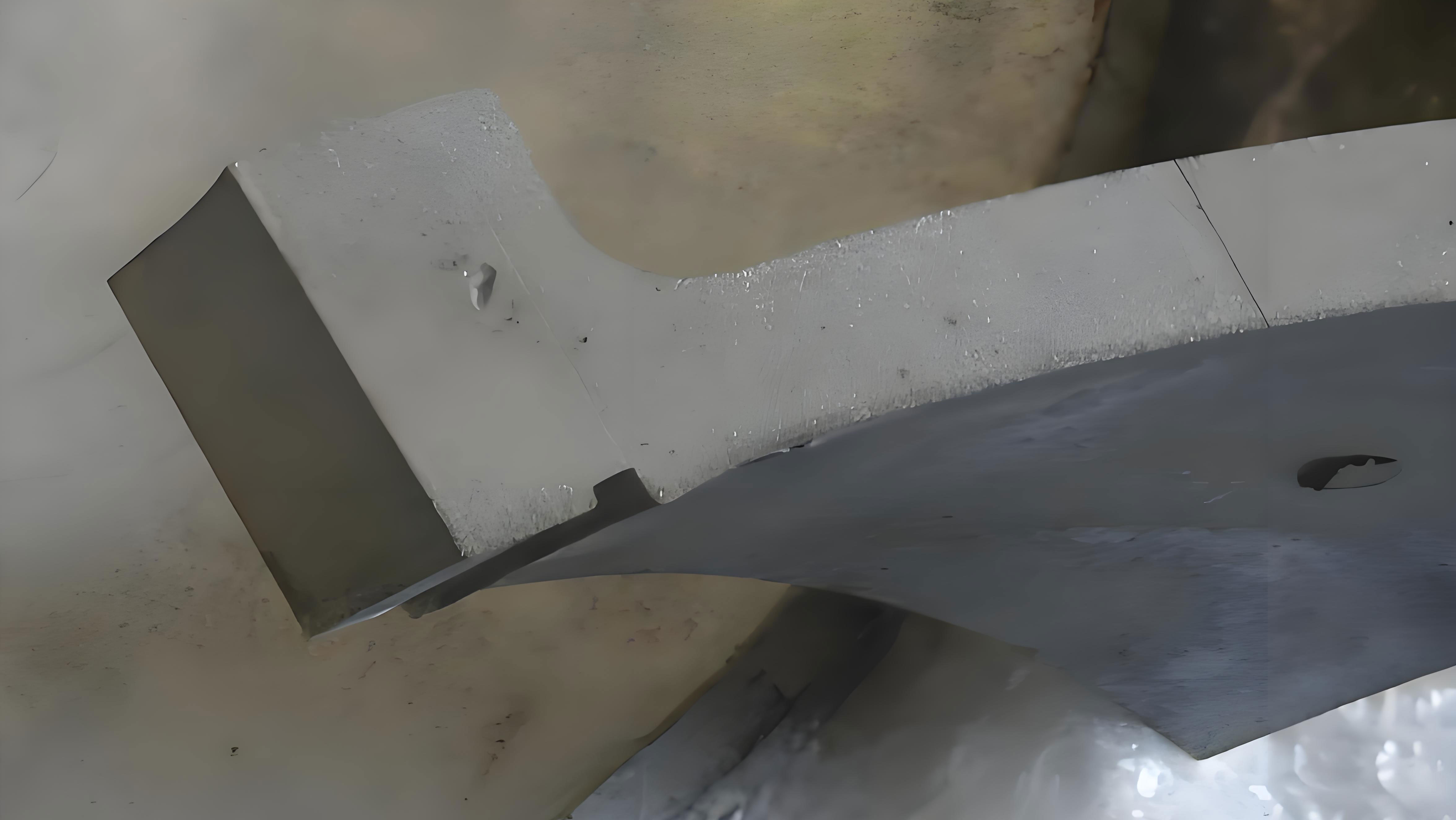
In a recent production campaign for a specific wet liner model, the scrap rate due to these casting holes soared to an alarming 20%, far exceeding the typical sub-1% baseline. This crisis prompted a detailed investigation. Initial visual inspection and mapping of the defective liners revealed two distinct types of casting holes, each with a unique signature, as summarized below:
| Defect Type | Axial Location | Radial Location | Typical Depth | Morphology & Characteristics |
|---|---|---|---|---|
| Outer Casting Holes | Near the trailing (far-from-pour) end | Outer wall surface | < 1.5 mm | Irregular shape, contains coating residue. |
| Inner Casting Holes | Near the section with maximum wall thickness | Mid-wall or toward inner surface | > 2 mm | Oblique, elongated pores; internal surfaces are relatively smooth. |
This clear differentiation suggested two separate root causes within the same casting process. To move beyond hypothesis, samples containing these casting holes were extracted, meticulously cleaned, and subjected to Scanning Electron Microscopy (SEM) and Energy Dispersive X-ray Spectroscopy (EDS) analysis. The results were revealing.
Decoding Outer Casting Holes: The First Wave Contamination
The SEM analysis of the outer casting holes presented a chaotic, non-metallic landscape. The cavity base was rough and uneven, littered with white, blocky inclusions. EDS elemental mapping told a clear story. The primary constituents were Carbon (C) and Oxygen (O), signaling the presence of oxides. Crucially, the spectrum also showed significant peaks for Sodium (Na), Silicon (Si), Potassium (K), Titanium (Ti), and Lead (Pb).
This elemental fingerprint was the key. Na and Si are core components of the sodium-bentonite bonded quartz powder coating applied to the mold interior. K, Ti, and Pb-based compounds, however, are trace elements associated with the fiber-based insulating pads placed at the ends of the mold to control solidification. The conclusion was inescapable: the outer casting holes were caused by physical contamination at the start of the pour.
Formation Mechanism: The formation sequence is a precise failure of process dynamics. The initial, high-velocity stream of molten iron entering the rotating mold acts as a highly erosive jet. If the mold coating has insufficient hot strength or adhesion, this first wave scours off particles. Simultaneously, fragile or poorly placed end pads can fragment. The centrifugal force immediately acts on these contaminants. However, their trajectory is not a simple radial movement. The molten metal follows a complex helical path along the mold length, described by its axial velocity $v_a$ and the mold’s tangential speed $v_t = \omega r$. The first metal to enter also hits the coldest part of the mold, leading to extremely rapid solidification at the point where the metal stream finally stops—typically the trailing end. This rapid freeze traps the entrained coating and pad fragments against the mold wall before they can fully float or dissolve, creating the characteristic irregular outer casting holes.
Prevention Strategy: The countermeasures target the vulnerable process initiation phase:
- Optimized Pouring Speed Profile: Dramatically reducing the mold rotation speed at the very moment of metal entry to 500-800 rpm minimizes the erosive kinetic energy of the first wave. The speed is then rapidly increased to the standard casting rotation speed once the mold is partially filled. This reduces the helical travel distance and coating shear stress. The modified speed profile can be conceptualized as:
$$ \omega(t) = \begin{cases} \omega_{\text{low}} & \text{for } t \leq t_{\text{fill}} \\ \omega_{\text{high}} & \text{for } t > t_{\text{fill}} \end{cases} $$
where $t_{\text{fill}}$ is the initial mold filling time. - Advanced Coating Development: Investing in or formulating coatings specifically engineered for centrifugal casting, with enhanced high-temperature bond strength and erosion resistance, is a fundamental solution.
- Elimination of Fragile Insulators: The most effective step is to redesign the process to eliminate the end pads. Alternatively, using high-durability pads and instituting a strict protocol to remove any debris from the mold cavity after pad installation are essential procedural controls.
Decoding Inner Casting Holes: The Legacy of Entrapped Moisture
The analysis of the inner casting holes told a different tale. The SEM morphology showed a smoother cavity with dendritic “buds” protruding from the walls—a signature of a gas or shrinkage pore. The EDS results were markedly different from the outer holes: high Iron (Fe) and Oxygen (O), with significant Manganese (Mn) and some Silicon (Si). This indicated the presence of iron-manganese-silicate slags (e.g., FeO, MnO, SiO2), classic products of metal oxidation.
This defect was identified as a slag-lined gas pore. The root cause was traced not to solid contamination, but to a gaseous one: water vapor. The specific liner model had a long, narrow bore and was cast using a “one-mold-two-liners” design, with end caps that severely restricted airflow.
Formation Mechanism: After the water-based refractory coating is sprayed into the mold, the trapped moisture must evaporate. In this constrained geometry, drying was incomplete, leaving residual dampness. Upon pouring, the superheated iron ($\sim$1380°C) reacts violently with this water vapor via the reaction:
$$ \text{H}_2\text{O (g)} + \text{Fe (l)} \rightarrow \text{FeO (s/l)} + \text{H}_2\text{(g)} $$
The generated hydrogen gas, along with other volatiles, becomes entrapped in the solidifying metal. The FeO forms a slag that lines the pore. These defects preferentially form in the thickest sections because these areas solidify slowest (according to Chvorinov’s rule, $t_s = k (V/A)^2$, where $t_s$ is solidification time, V is volume, A is area, and k is a constant), giving hydrogen bubbles more time to nucleate and grow before being trapped. The final location—mid-wall or inner-diameter—is dictated by the complex interplay of solidification front velocity and bubble buoyancy in the centrifugal field.
Prevention Strategy: The focus here is on guaranteeing a perfectly dry mold environment:
- Forced Ventilation System: Redesigning the rear end cap to include ventilation ports and integrating an active extraction system to pull steam out of the mold cavity immediately after coating application and during the drying cycle.
- Process Parameter Optimization for Drying: While simply extending drying time can help, it reduces productivity. A more sophisticated approach involves modeling the heat and mass transfer to define the minimum, most efficient drying cycle. The drying rate can be influenced by the temperature and flow rate of the extraction air, optimizing the process without extending the cycle time unnecessarily.
Integrated Process Control and Economic Impact
The resolution of this high scrap-rate crisis required a systemic view. It was not enough to address each casting holes type in isolation; the solution lay in implementing a coherent set of controls across the entire centrifugal casting process. The table below summarizes the root causes and the corresponding corrective actions that were deployed in an integrated manner:
| Defect Type | Primary Root Cause | Elemental Fingerprint (EDS) | Implemented Corrective Actions |
|---|---|---|---|
| Outer Casting Holes | Erosion of mold coating & fragmentation of end pads by the first iron wave. | C, O, Na, Si, K, Ti, Pb | 1. Two-stage rotational speed control. 2. Sourcing of high-adhesion coatings. 3. Phased elimination of end pads. |
| Inner Casting Holes | Incomplete drying of mold coating leading to steam reaction and hydrogen entrapment. | Fe, O, Mn, Si, C | 1. Installation of vented end caps & steam extraction system. 2. Optimized thermal drying cycle based on mold geometry. |
The effectiveness of these measures was not theoretical. By deploying this combined strategy, the scrap rate for this challenging wet liner model was reduced from the crisis level of 20% back to the plant’s standard excellence level of below 1%. This represents a direct and substantial recovery of production yield. Beyond the immediate cost savings from reduced scrap and rework, the elimination of these latent casting holes significantly enhances the reliability of the final engine. It prevents field failures, thereby safeguarding the manufacturer’s brand reputation and avoiding warranty costs—a value far exceeding the raw material savings.
Conclusion and Future Perspectives
This investigation into severe casting holes formation in a wet cylinder liner underscores a critical principle in foundry engineering: identical symptoms (pores) can stem from vastly different pathologies. A rigorous, analytical approach combining defect mapping, advanced material characterization (SEM/EDS), and thorough process kinematics analysis is essential for accurate diagnosis.
The study conclusively demonstrated that outer casting holes were inclusion-driven, originating from process-initiation erosion, while inner casting holes were reaction-driven, stemming from inadequate process environment control. The successful remediation highlights that solutions often lie in precise adjustments to established parameters—like the pouring speed profile—and in targeted technological upgrades, such as enhanced ventilation.
Looking forward, the battle against casting holes and other defects will increasingly leverage digital tools. Real-time process monitoring sensors, coupled with machine learning algorithms, could predict defect formation by analyzing temperature gradients, vibration spectra, and rotational dynamics during the cast. Furthermore, multi-physics simulation software can model the complete process—from turbulent metal flow and coating erosion to hydrogen nucleation and solidification shrinkage—allowing for virtual prototyping of molds and processes before metal is ever poured. The integration of such Industry 4.0 technologies represents the next frontier in moving from defect correction to defect prevention, ensuring that the pursuit of zero casting holes becomes an achievable standard in high-performance component manufacturing.