
In the field of wind energy, ductile iron castings play a critical role due to their excellent mechanical properties, fatigue resistance, toughness, and vibration damping capabilities. Components such as hubs, main frames, bearing housings, and gearbox casings in wind turbines are predominantly manufactured using ductile iron castings. However, shrinkage defects, particularly micro-shrinkage or porosity, are common challenges in these large and complex ductile iron castings. Shrinkage defects can significantly reduce mechanical strength, fatigue resistance, and overall integrity, leading to potential failures in harsh operational environments. This article comprehensively analyzes the causes of shrinkage defects in wind turbine ductile iron castings and proposes effective preventive measures, focusing on chemical composition, casting processes, and smelting techniques. The analysis incorporates mathematical models, empirical data, and industrial practices to provide a holistic understanding.
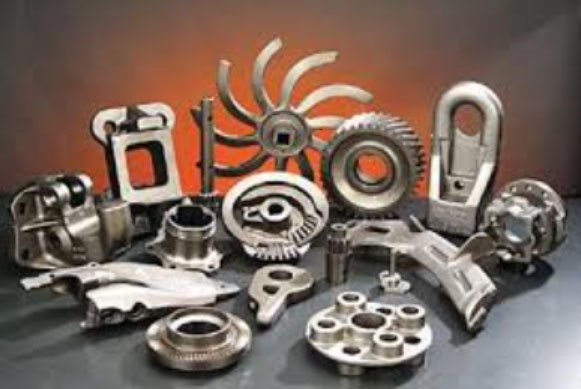
Ductile iron castings exhibit a “mushy” solidification behavior, characterized by a prolonged eutectic solidification time, a high number of eutectic cells, and significant solidification expansion pressure. These inherent properties make ductile iron castings prone to shrinkage defects. Shrinkage typically manifests as dispersed, fine cavities within the casting, often undetectable by visual inspection. The formation of shrinkage in ductile iron castings is influenced by multiple factors, including casting geometry, sand mold quality, gating system design, melting parameters, and pouring temperature. Understanding these factors is essential for optimizing the production of high-quality ductile iron castings.
Causes of Shrinkage Defects in Ductile Iron Castings
The occurrence of shrinkage defects in ductile iron castings can be attributed to several interrelated factors. Below, we delve into each cause, supported by theoretical explanations, empirical observations, and quantitative analyses.
Casting Structure and Geometry
Wind turbine ductile iron castings are often large and intricate, with wall thicknesses ranging from 60 mm to 120 mm and weights exceeding 30 tons. Variations in wall thickness and abrupt transitions between sections create thermal hotspots, which are prime locations for shrinkage. In thick sections, the outer surface cools rapidly, forming a solid shell, while the inner core remains molten for an extended period. This temperature gradient leads to significant液态收缩 (liquid contraction), resulting in shrinkage porosity at the thermal centers. Additionally, isolated heavy sections may lack adequate feeding, exacerbating the problem.
To quantify this, consider the solidification behavior. The solidification time \( t_s \) for a section can be approximated using Chvorinov’s rule:
$$ t_s = k \left( \frac{V}{A} \right)^2 $$
where \( V \) is the volume, \( A \) is the surface area, and \( k \) is a constant dependent on the material and mold properties. In thick sections, the volume-to-surface area ratio \( \frac{V}{A} \) is high, leading to longer solidification times and increased shrinkage risk. For ductile iron castings, the mushy zone solidification further complicates this, as the expanding graphite nodules can create internal pressure that counteracts feeding.
Sand Mold Quality
The quality of the sand mold directly impacts the dimensional stability and thermal behavior during casting. Inadequate refractoriness, low high-temperature strength, or insufficient compaction can cause mold wall movement under the influence of metallostatic pressure, graphite expansion forces, and pouring pressure. This movement enlarges the mold cavity, increasing the demand for liquid metal feeding and promoting shrinkage. Moreover, high moisture content in the sand reduces the dry layer thickness and increases the water condensation zone, further enhancing mold wall mobility and shrinkage tendency.
The mold’s ability to resist deformation can be modeled using the following relationship for mold wall displacement \( \delta \):
$$ \delta = \frac{P \cdot A}{E_m} $$
where \( P \) is the pressure exerted by the metal, \( A \) is the area, and \( E_m \) is the effective modulus of the mold material. A lower \( E_m \) indicates higher deformability, which is undesirable for controlling shrinkage in ductile iron castings. Typical resin-bonded sand molds used for ductile iron castings should have a compactness density of at least 1.6 g/cm³ to minimize wall movement.
Gating System Design
An improperly designed gating system can hinder directional solidification, increasing the propensity for shrinkage in ductile iron castings. If ingates are placed in thick sections or are themselves thick, they may remain molten longer than the casting, causing metal to flow back into the gating system due to graphite expansion. This backflow reduces the effective feeding and leads to shrinkage. Similarly, inadequate riser placement, size, or quantity can fail to promote sequential solidification from the casting to the riser. The absence of vent holes in blind risers or improper use of chills can also contribute to shrinkage defects.
To optimize the gating system, the modulus method is often employed. The modulus \( M \) is defined as the volume-to-surface area ratio:
$$ M = \frac{V}{A} $$
Risers should have a modulus approximately 1.2 times that of the casting section they are intended to feed. For ductile iron castings, computer simulations like ProCAST are used to analyze solidification patterns and identify potential shrinkage zones. The feeding efficiency \( \eta \) can be expressed as:
$$ \eta = \frac{V_f}{V_c} \times 100\% $$
where \( V_f \) is the volume of fed metal and \( V_c \) is the volume of the casting. A well-designed gating system for ductile iron castings should achieve a feeding efficiency above 80% to minimize shrinkage.
Melting Composition and Inoculation
The chemical composition of the molten metal significantly affects shrinkage behavior in ductile iron castings. Key elements include carbon (C), silicon (Si), magnesium (Mg), sulfur (S), phosphorus (P), and rare earth (RE) elements. Carbon enhances fluidity and graphite nucleation up to a certain limit, beyond which it may reduce fluidity and increase shrinkage. Phosphorus widens the solidification range and forms low-melting-point phosphide eutectics, impairing feeding. Sulfur inhibits graphite formation, reducing fluidity. Magnesium and RE elements promote carbide formation, increasing solidification shrinkage.
Inoculation is crucial for achieving a high nodule count and fine graphite distribution in ductile iron castings. Effective inoculation increases the number of graphite nodules, reduces inter-nodule spacing, and accelerates the transformation of austenite to ferrite and graphite. This improves feeding by reducing the carbon diffusion distance and enhancing liquid metal flow through eutectic cell boundaries. Inadequate inoculation leads to carbide precipitation and increased shrinkage.
The relationship between inoculation and shrinkage can be described using the nodule count \( N_n \) and the solidification contraction \( \Delta V_s \):
$$ \Delta V_s = \alpha \cdot (1 – f_g) \cdot \Delta T $$
where \( \alpha \) is the thermal contraction coefficient, \( f_g \) is the volume fraction of graphite, and \( \Delta T \) is the temperature drop. Higher nodule counts (e.g., >150 nodules/mm²) in ductile iron castings reduce \( \Delta V_s \) by promoting graphite expansion that compensates for contraction.
Table 1 summarizes the recommended chemical composition ranges for wind turbine ductile iron castings to minimize shrinkage defects while meeting mechanical properties.
| Element | Range | Effect on Shrinkage |
|---|---|---|
| C | 3.75–3.95 | Enhances fluidity and graphite formation; excess reduces fluidity |
| Si | 1.8–2.3 | Promotes ferrite formation; high levels may increase shrinkage |
| Mn | 0.1–0.3 | Low levels preferred to avoid segregation |
| P | ≤0.04 | Reduces phosphide eutectics and solidification range |
| S | ≤0.015 | Minimizes sulfide inclusions and improves graphite morphology |
| Mg | 0.035–0.06 | Controls nodularity; excess promotes carbides |
| RE | 0.005–0.015 | Aids nodularity; high levels increase shrinkage tendency |
Pouring Temperature
Pouring temperature plays a dual role in shrinkage formation in ductile iron castings. Low pouring temperatures reduce the feeding capacity of risers, as the metal may solidify before fully compensating for contraction. Conversely, high pouring temperatures increase the total liquid contraction and thermal load on the mold, leading to greater mold wall movement and an increased demand for feeding. Optimal pouring temperatures ensure adequate fluidity without excessive mold expansion.
The effect of pouring temperature \( T_p \) on shrinkage can be modeled using the thermal contraction volume \( \Delta V_t \):
$$ \Delta V_t = V_0 \cdot \beta \cdot (T_p – T_s) $$
where \( V_0 \) is the initial volume, \( \beta \) is the volumetric thermal expansion coefficient, and \( T_s \) is the solidus temperature. For ductile iron castings, a pouring temperature range of 1340–1360°C is typically recommended to balance fluidity and shrinkage risk.
Preventive Measures for Shrinkage Defects
To mitigate shrinkage defects in ductile iron castings, a multi-faceted approach involving chemical composition control, casting process optimization, and smelting process management is essential. The following sections detail these strategies, incorporating practical guidelines and theoretical foundations.
Chemical Composition Control
Precise control of chemical composition is paramount for producing high-quality ductile iron castings with minimal shrinkage. The target composition should align with the requirements for mechanical properties and low-temperature impact resistance, as specified in standards for wind turbine components. Carbon equivalent (CE) is a critical parameter, defined as:
$$ CE = \%C + \frac{\%Si + \%P}{3} $$
For ductile iron castings, a CE value between 4.3 and 4.5 is often optimal to ensure good fluidity and graphite expansion without excessive contraction. Additionally, harmful elements like sulfur and phosphorus must be minimized, as they form inclusions and eutectics that impede feeding. Inoculation practices should combine pre-inoculation and post-inoculation techniques to achieve a high nodule count and uniform graphite distribution. The inoculant efficiency \( I_e \) can be expressed as:
$$ I_e = \frac{N_n}{C_i} $$
where \( N_n \) is the nodule count and \( C_i \) is the inoculant addition rate. Effective inoculation in ductile iron castings typically requires 0.2–0.4% ferrosilicon-based inoculants.
Table 2 outlines the mechanical and metallurgical requirements for wind turbine ductile iron castings, which guide composition control.
| Property | Requirement | Test Condition |
|---|---|---|
| Tensile Strength | ≥370–400 MPa | Depending on wall thickness |
| Yield Strength | ≥220–240 MPa | Depending on wall thickness |
| Elongation | ≥12–18% | Depending on wall thickness |
| Impact Energy | ≥7–12 J at -30°C | V-notch Charpy test |
| Graphite Nodularity | ≥90% | Metallographic analysis |
| Ferrite Content | ≥90% | Metallographic analysis |
| Carbide Content | ≤1% | Metallographic analysis |
Casting Process Control
Optimizing the casting process is crucial for preventing shrinkage in ductile iron castings. This includes mold design, gating and risering, and the use of chills. Furan resin-bonded sand is commonly used for its high strength and low deformation characteristics. Molds must be adequately compacted and dried to minimize wall movement. The gating system should be designed to promote directional solidification, with ingates placed in thin sections and risers positioned to feed thick areas. Chills can be employed to accelerate cooling in hotspots, reducing shrinkage risk.
Computer simulation tools, such as ProCAST, are invaluable for predicting solidification patterns and optimizing process parameters. The solidification gradient \( G \) and cooling rate \( R \) are key indicators:
$$ G = \frac{dT}{dx} $$
$$ R = \frac{dT}{dt} $$
where \( T \) is temperature, \( x \) is distance, and \( t \) is time. A high gradient and cooling rate favor directional solidification, reducing shrinkage in ductile iron castings. Additionally, riser design should follow the modulus principle, and venting should be provided to avoid gas entrapment.
Smelting Process Control
Smelting process control involves managing melting, inoculation, and pouring operations to ensure consistent quality in ductile iron castings. Medium-frequency induction furnaces are preferred for their ability to produce homogeneous melts with low gas content. Real-time monitoring of chemical composition using spectrometers allows for adjustments during melting. Inoculation should be performed in stages: pre-inoculation during tapping and post-inoculation during pouring to maintain high nodule counts.
Pouring temperature must be tightly controlled, with recommended ranges of 1450±10°C for tapping and 1350±10°C for pouring. The use of automated pouring systems can enhance consistency. Furthermore, degassing treatments may be applied to reduce hydrogen and oxygen levels, which can exacerbate shrinkage. The gas content \( C_g \) should be maintained below critical levels, e.g., hydrogen < 2 ppm, to prevent microporosity.
The overall quality of ductile iron castings can be assessed using the shrinkage propensity index \( SPI \), derived from composition and process parameters:
$$ SPI = k_1 \cdot (\%Mg) + k_2 \cdot (\%CE) + k_3 \cdot (T_p) $$
where \( k_1 \), \( k_2 \), and \( k_3 \) are empirical constants. A lower SPI indicates reduced shrinkage risk in ductile iron castings.
Conclusion
Shrinkage defects in wind turbine ductile iron castings are a complex issue influenced by casting structure, mold quality, gating design, melting composition, and pouring temperature. Through systematic analysis and implementation of preventive measures—including precise chemical composition control, optimized casting processes, and rigorous smelting practices—it is possible to significantly reduce or eliminate shrinkage defects. The integration of mathematical models, simulation tools, and empirical data enhances the reliability of ductile iron castings for critical wind energy applications. Continuous research and development in this field will further improve the quality and performance of ductile iron castings, supporting the growing demand for sustainable energy solutions.