
For a long time, surface pitting has been a major defect affecting the quality of precision casting components. This issue commonly occurs in 200 series stainless steel, 400 series stainless steel, as well as carbon steel and low-alloy steel surfaces. After shot blasting or sandblasting, gray-black spots, pits, and even depressions appear on the castings, making post-processing repairs challenging. Minor cases can be addressed with grinding tools, but severe instances often lead to scrap, increasing production costs and delaying deliveries. Through extensive research, I have determined that pitting results from the aggregation of metallic oxide inclusions in the molten steel on the casting surface. Contributing factors include gating system design, shell-making materials, shell firing, and melting and pouring processes. In this article, I will provide a detailed analysis and solutions based on my experience to help prevent recurrence and avoid unnecessary losses.
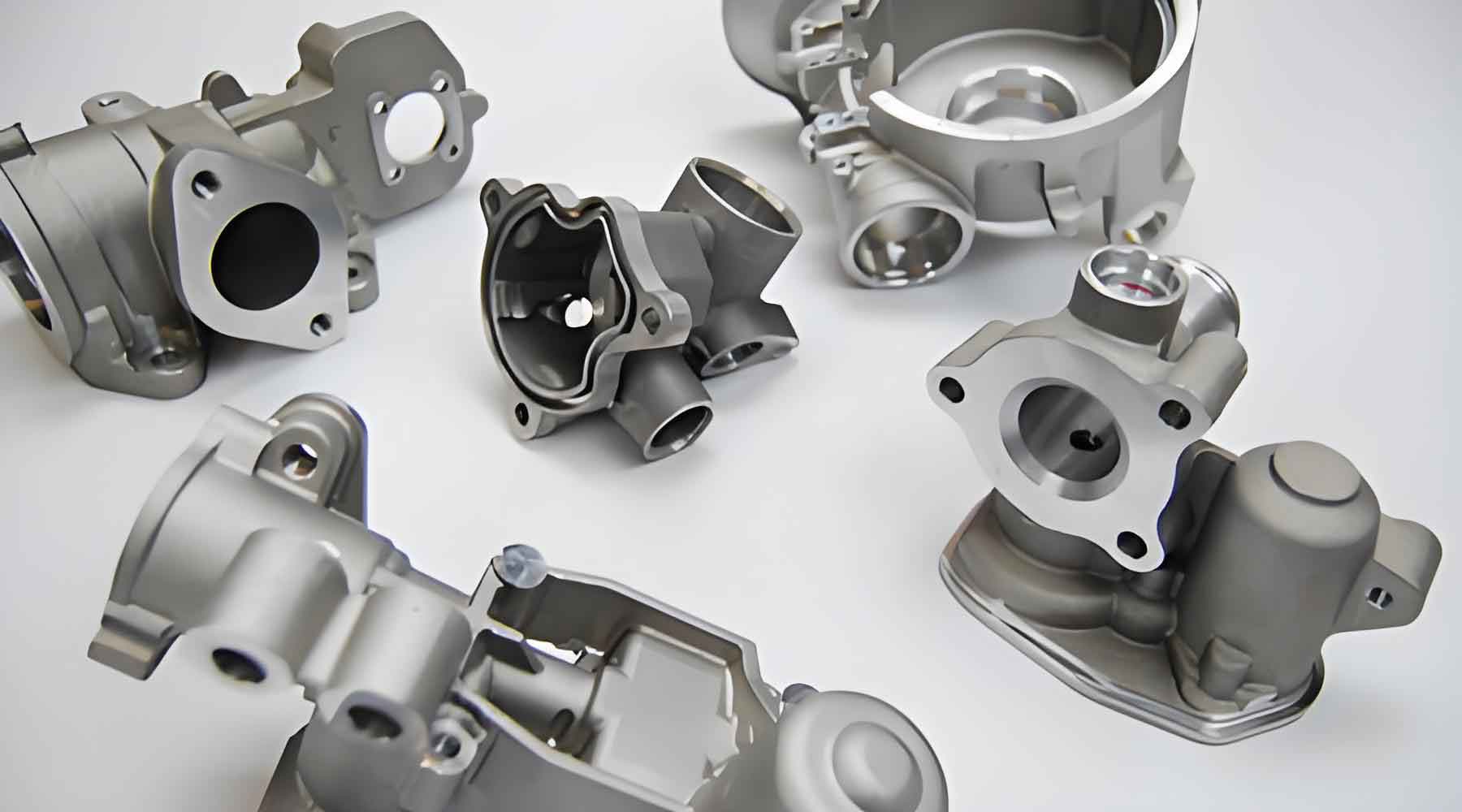
The characteristic of this defect is the presence of numerous pinpoint depressions on the casting surface, frequently observed in 200 series and 400 series martensitic stainless steels, as well as carbon steels and low-alloy steels. These imperfections not only compromise aesthetics but also structural integrity, necessitating rigorous quality control in investment casting operations.
Root Causes and Preventive Measures
Gating System Design Issues
Improper gating system design, incorrect placement of ingates, and unreasonable cluster orientation can lead to incomplete dewaxing. In my practice, I have found that many investment casting designs place ingates centrally for mold convenience, but this can cause overheating and residual wax. During firing, leftover wax decomposes into carbides that react with the alloy melt, promoting oxidation and pitting. To prevent this, the gating system should be designed to deviate from hot spots, reducing overheating and improving yield. Additionally, clusters should facilitate complete wax removal; if not feasible, additional wax drainage channels or process ribs can be added. For high-quality castings, secondary dewaxing and cleaning are recommended. Emphasizing these details is crucial in precision casting to mitigate defects.
| Parameter | Optimal Value | Effect on Pitting |
|---|---|---|
| Ingate Position Relative to Hot Spot | Offset by 5-10 mm | Reduces overheating and oxidation |
| Cluster Orientation | Maximize drainage angles | Prevents wax residue |
| Additional Drainage Channels | As needed for complex geometries | Minimizes carbon formation |
The relationship between gating design and pitting can be modeled using the oxidation potential equation: $$O_p = k \cdot \frac{R_w}{T_h}$$ where \(O_p\) is the oxidation potential, \(k\) is a material constant, \(R_w\) is the residual wax percentage, and \(T_h\) is the thermal gradient. By optimizing these factors, pitting in investment casting can be significantly reduced.
Shell-Making Materials and Their Impact
Excessive metal oxides in face coat refractory materials, or poor-quality backup layers, can cause surface pitting. Zircon sand is often preferred in precision casting for its high thermal conductivity and refractoriness, but impurities like Ca, Mg, K, and Na oxides lower its decomposition temperature, leading to reactive silica formation. This silica interacts with alloy elements such as Cr, Ni, Ti, Mn, and Al at high temperatures, resulting in pitting. High Fe2O3 content exacerbates this by introducing oxygen into the melt. To address this, I recommend using high-purity neutral refractories like white fused alumina or mulite for face coats, as they minimize reactions. Incoming materials must be tested, with Fe2O3 content controlled below 0.05%, and regular re-inspection of stored materials is essential. Additionally, transition and backup layers should use low-impurity materials to prevent iron silicate infiltration.
| Material | Fe2O3 Content (%) | Main Composition (%) | Decomposition Temperature (°C) |
|---|---|---|---|
| Zircon Sand | ≤0.10 | ZrSiO4 ≥ 66 | 2000+ (pure) |
| White Fused Alumina | ≤0.05 | Al2O3 ≥ 99 | Stable up to 1800 |
| Mulite | ≤0.60 | Al2O3 40-46 | 1600-1700 |
The chemical reaction responsible for pitting can be expressed as: $$\text{SiO}_2 + 2\text{Cr} \rightarrow \text{Cr}_2\text{O}_3 + \text{Si}$$ This highlights the importance of controlling silica activity in investment casting shells to prevent defects.
Shell Firing Imperfections
Inadequate shell firing leaves residual moisture, organics, and volatiles, which cause secondary oxidation during pouring. This generates gases and new oxides that react with shell materials, forming pitting. Under-fired shells produce minor gases that facilitate interfacial reactions. To prevent this, shells must be fired at 950–1200 °C for 0.5–2 hours to remove free water, crystallized water, and inorganic salts, ensuring high permeability and low gas evolution. After pouring, immediately covering with specialized insulating agents can prevent re-oxidation and improve feeding. The firing process can be quantified by the efficiency equation: $$F_e = \frac{T_f \cdot t_f}{M_r}$$ where \(F_e\) is firing efficiency, \(T_f\) is firing temperature, \(t_f\) is firing time, and \(M_r\) is moisture residue. Maximizing \(F_e\) is critical in precision casting to eliminate pitting sources.
Incomplete Melting and Deoxidation
Pitting primarily stems from metal oxides reacting with shell oxides, often due to excessive oxides in the melt or poor deoxidation. In induction melting, rusty charge materials or high revert ratios increase oxide content. Inadequate deoxidizer selection or quantity leaves residual oxides, while improper melting practices, such as prolonged exposure to air, amplify oxidation of elements like Cr and Si. Pre-deoxidation with ferromanganese followed by ferrosilicon and calcium silicon, then a 2-minute stillness period before final deoxidation with aluminum, is essential. For investment casting, complete deoxidation ensures oxides float out, and sealing the mold after pouring prevents re-oxidation. The deoxidation reaction can be summarized as: $$3\text{FeO} + 2\text{Al} \rightarrow 3\text{Fe} + \text{Al}_2\text{O}_3$$ where proper Al dosage (0.10–0.12% initially, plus 0.02–0.05% in the ladle) is vital. Excessive Al promotes pitting, so residual Al should be maintained at 0.015–0.02%.
| Step | Deoxidizer | Addition Time | Purpose |
|---|---|---|---|
| Pre-deoxidation | Ferromanganese | After meltdown | Initial oxide reduction |
| Secondary Deoxidation | Ferrosilicon | Following pre-deoxidation | Enhances oxide flotation |
| Tertiary Deoxidation | Calcium Silicon | Before stillness | Forms low-melting-point oxides |
| Final Deoxidation | Aluminum | After 2-min stillness | Completes deoxidation |
The kinetics of oxide inclusion removal can be described by Stokes’ law: $$v = \frac{2gr^2(\rho_p – \rho_m)}{9\eta}$$ where \(v\) is the flotation velocity, \(g\) is gravity, \(r\) is the inclusion radius, \(\rho_p\) and \(\rho_m\) are densities of the particle and melt, and \(\eta\) is viscosity. Optimizing these parameters in precision casting ensures efficient inclusion removal.
Preventive Measures for Carbon and Low-Alloy Steel Castings
In carbon and low-alloy steel investment casting, improving melt quality is paramount. Use dry, clean charge materials and limit revert usage to reduce native oxides. Implement full deoxidation with ferromanganese, ferrosilicon, calcium silicon, and aluminum, followed by stillness for oxide flotation. Ladle additions of 0.02–0.05% Al provide supplementary deoxidation. Strict melting and pouring protocols, including slag removal and vacuum pouring if necessary, prevent re-oxidation. Shell firing should adhere to temperatures of 950–1050 °C for water glass shells and 1050–1200 °C for silica sol shells, with holds of 0.5–2 hours. Neutral or basic binders can be considered for problematic cases, and pouring temperatures must be controlled to minimize interaction time with the shell.
The susceptibility to pitting in these materials can be estimated using the pitting index formula: $$PI = \frac{[O] \cdot [Cr]}{[C]}$$ where \([O]\), \([Cr]\), and \([C]\) are the concentrations of oxygen, chromium, and carbon, respectively. Lowering \([O]\) through effective deoxidation in investment casting reduces PI and pitting risk.
Key Process Focus: Melting and Pouring
Melting and pouring are critical in preventing pitting in precision casting. Follow the sequence: bottom slag → melt coverage → pre-deoxidation → stillness and slag removal → final deoxidation. Control Al addition precisely to avoid excess, and use clean charge with limited reverts. Minimize melt exposure to air to prevent Cr, Fe, and Si oxidation. After pouring at 800–900 °C shell temperatures and ~1600 °C metal temperatures, add sawdust or waste wax and seal the mold to create a reducing atmosphere. This is especially important for thick-section castings where solidification is slow. Shell firing must exceed 1150 °C for at least 45 minutes; under-fired shells contribute to oxidation. Refractory materials with low Fe2O3 are essential to minimize interfacial reactions.
To prevent surface re-oxidation during pouring in investment casting, avoid blowing air on the melt or hot shells, use pre-fired dry sand for molding instead of moist sands, and for susceptible alloys like low-Ni austenitic or martensitic stainless steels, seal the mold within 5 seconds of pouring. This promotes cooling in a reducing atmosphere, eliminating pitting. The effectiveness of sealing can be modeled as: $$R_e = e^{-k \cdot t}$$ where \(R_e\) is the re-oxidation effect, \(k\) is a constant dependent on atmosphere, and \(t\) is time. Faster sealing improves outcomes in precision casting.
Conclusion
Over two decades of experience in investment casting have shown that pitting is an aggregation of complex oxides of iron, chromium, silicon, and aluminum on the casting surface. Primary prevention involves complete deoxidation with efficient inclusion flotation and preventing secondary oxidation during cooling. Strict adherence to shell firing protocols is essential. Innovative measures, such as adding 0.3–0.5% graphite powder to backup coats or using graphite-based materials like petroleum coke granules in transition layers, have proven effective in reducing pitting. By integrating these strategies, precision casting processes can achieve higher surface quality and minimize defects.
In summary, the key to mitigating pitting in investment casting lies in a holistic approach: optimizing gating design, selecting high-purity refractories, ensuring thorough shell firing, and executing precise melting and deoxidation. Continuous improvement in these areas will enhance the reliability and efficiency of precision casting operations worldwide.