
Within the high-voltage power transmission industry, the proliferation of Gas Insulated Switchgear (GIS) has been a defining trend, driven by demands for compact, reliable, and maintenance-free substation solutions. Having worked extensively in the design and manufacturing of these critical systems, I have come to understand that the choice of materials, particularly for the complex, pressure-containing enclosures, is not merely a technical specification but a fundamental determinant of product performance, manufacturability, and overall cost. The shell castings for components like disconnectors (DS) and earthing switches (ES) form the primary gas barrier and structural backbone of the GIS modules. This article presents a detailed, first-person analysis of the rationale behind selecting the optimal aluminum alloy for these shell castings, focusing on a comparative evaluation of two prevalent materials: AlSi10Mg and AC4CH (akin to ZL104A and ZL101A in Chinese standards, respectively).
The primary function of DS and ES shell castings is to form a hermetic, mechanically robust chamber for containing SF6 insulation gas at typical operating pressures ranging from 0.39 to 0.80 MPa. Unlike conductive parts, the electrical conductivity of these shell castings is not a primary design driver, as they are isolated from the main current path by insulating spacers. The critical performance requirements are unequivocally linked to structural integrity and leak-tightness, validated through a series of stringent tests:
- Design Pressure (P_d): The nominal operating pressure, serving as the baseline for all calculations.
- Strength Tests: These prove the structural safety margin. A common hydrostatic test involves pressurizing the shell casting to 2*P_d for a sustained period (e.g., 30 minutes) with no permanent deformation. The ultimate validation is a destructive hydrostatic test, where pressure is increased to 3.5*P_d or even 5*P_d until failure, demonstrating a substantial safety factor.
- Gas Tightness Test: The most critical quality indicator for shell castings. The assembled chamber, filled with SF6 at P_d, must exhibit an annual leakage rate of less than 0.5%. This requirement places immense importance on the intrinsic soundness and homogeneity of the casting, demanding an alloy with superior casting characteristics to minimize micro-porosity and shrinkage defects.
The mechanical stress in a thin-walled cylindrical shell casting under internal pressure can be approximated by the standard formula for a pressure vessel:
$$\sigma_h = \frac{P \cdot D_i}{2 \cdot t}$$
$$\sigma_a = \frac{P \cdot D_i}{4 \cdot t}$$
where $\sigma_h$ is the hoop stress, $\sigma_a$ is the axial stress, $P$ is the internal pressure, $D_i$ is the inner diameter, and $t$ is the wall thickness. The selected alloy must provide a yield strength ($\sigma_{0.2}$) significantly higher than these operational stresses, incorporating the mandated safety factors.
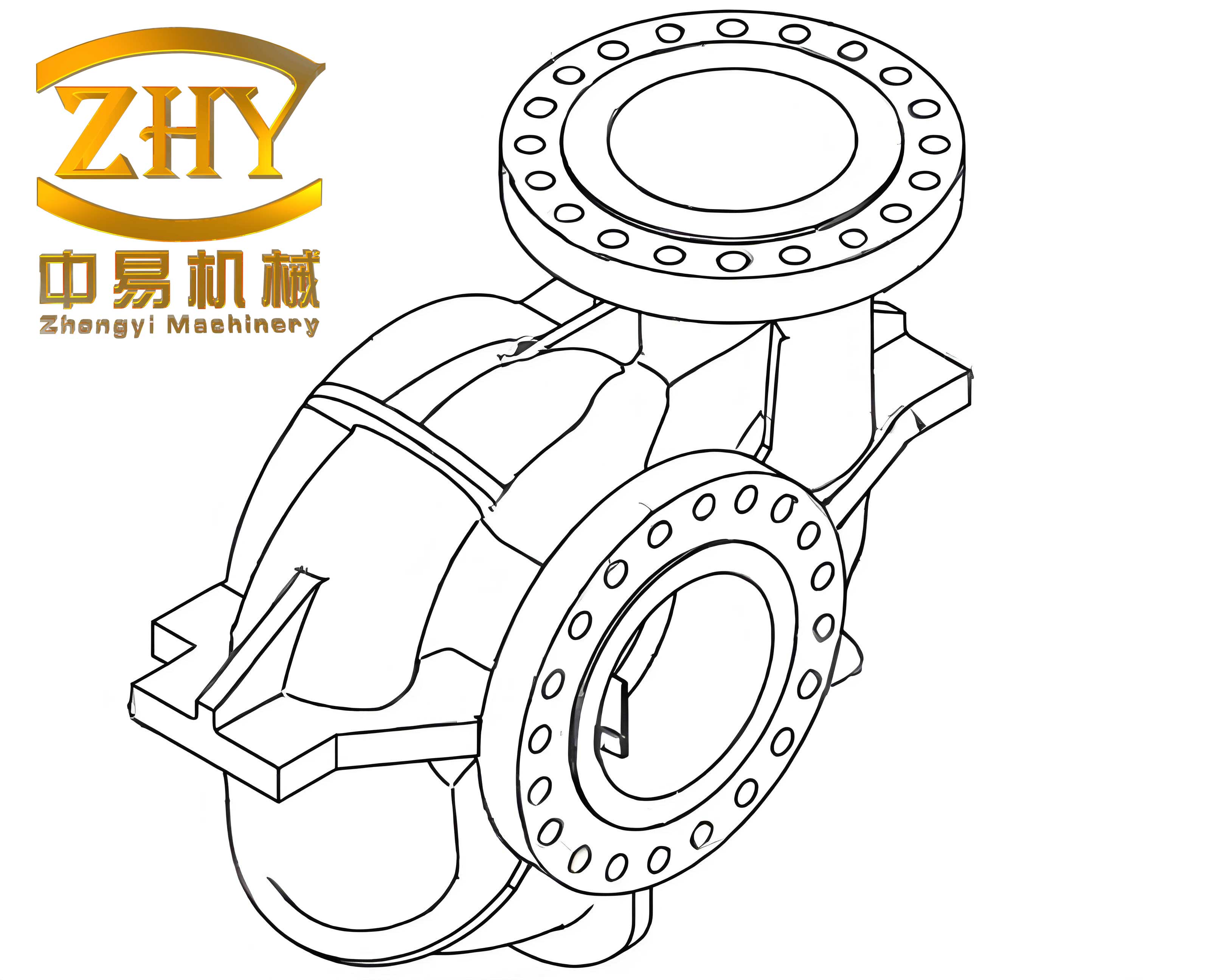
Two aluminum-silicon (Al-Si) alloys dominate the specification sheets for GIS shell castings: AlSi10Mg and AC4CH. While both belong to the same alloy system, subtle differences in their composition lead to significant divergences in their properties and processing economics. The cornerstone of understanding their behavior lies in the Al-Si phase diagram. The eutectic point occurs at approximately 12.6 wt% Si. Alloys with compositions near this point solidify over a narrow temperature range, leading to excellent fluidity and feeding characteristics.
The compositional differences are detailed in the table below, which expands upon basic specifications to include typical impurity limits and the impact of key elements.
| Element | AC4CH / ZL101A (Typical wt.%) | AlSi10Mg / ZL104A (Typical wt.%) | Primary Influence on Shell Castings |
|---|---|---|---|
| Silicon (Si) | 6.5 – 7.5 | 9.0 – 11.0 | Defines casting character. Higher Si moves alloy closer to eutectic, improving fluidity and reducing hot tearing. |
| Magnesium (Mg) | 0.2 – 0.4 | 0.2 – 0.5 | Enables precipitation hardening (Mg₂Si phase) during heat treatment (T6 temper), crucial for achieving required mechanical strength in shell castings. |
| Iron (Fe) | ≤ 0.20 (strict) | ≤ 0.50 (standard) | Forms brittle intermetallic phases (e.g., β-Al₅FeSi). Strict Fe control in AC4CH is costly but reduces detrimental plate-like compounds that can impair toughness and machinability. |
| Manganese (Mn) | ≤ 0.10 | 0.001 – 0.4 | Can modify Fe-intermetallics from platelets to less harmful Chinese script morphology, slightly improving ductility. |
| Copper (Cu) | ≤ 0.05 (impurity) | ≤ 0.05 (impurity) | Generally undesirable as it can reduce corrosion resistance and increase susceptibility to hot tearing in complex shell castings. |
The mechanical and physical properties of the two alloys in their standard heat-treated (T6) condition are compared below. It is critical to note that properties can vary significantly with casting method (sand, permanent mold, low-pressure die casting) due to differences in cooling rate and solidification structure.
| Property | AC4CH (Permanent Mold, T6) | AlSi10Mg (Permanent Mold, T6) | Implication for GIS Shell Castings |
|---|---|---|---|
| Tensile Strength ($\sigma_b$) | ~240 – 260 MPa | ~240 – 320 MPa | Both provide ample strength for pressure containment; AlSi10Mg can achieve higher values with optimal processing. |
| Yield Strength ($\sigma_{0.2}$) | ~180 – 220 MPa | ~190 – 250 MPa | Key for withstanding pressure-induced stresses without permanent deformation. Comparable performance. |
| Elongation ($\delta_5$) | ~4 – 7 % | ~1 – 4 % | AC4CH typically offers better ductility, which can be a minor advantage for impact resistance. |
| Brinell Hardness (HB) | ~80 – 90 | ~85 – 115 | AlSi10Mg tends to be harder, which can slightly affect machinability but indicates good wear resistance for sealing surfaces. |
| Electrical Conductivity (%IACS) | ~40 – 42 | ~36 – 38 | AC4CH is measurably better. This is the primary reason for its selection in shell castings that also carry current, like certain busbar housings. |
| Thermal Conductivity | ~150 W/(m·K) | ~130 W/(m·K) | Important for dissipating heat from internal losses. AC4CH has a slight edge. |
From a purely mechanical standpoint, both alloys are more than capable of meeting the strength requirements for GIS shell castings. The equation for the minimum required wall thickness ($t_{min}$) based on yield strength can be derived from the hoop stress formula:
$$t_{min} = \frac{P \cdot D_i \cdot SF}{2 \cdot \phi \cdot \sigma_{0.2}}$$
where $SF$ is the safety factor (e.g., 3.5 for destructive test) and $\phi$ is the weld joint efficiency (1.0 for a seamless casting). For a typical 400mm diameter shell casting at 0.8 MPa with a $\sigma_{0.2}$ of 200 MPa, the calculated $t_{min}$ is around 2.8 mm, well below the typical design thickness of 8-12 mm used for rigidity and foundry reasons. Therefore, strength is not the limiting factor.
The decisive differentiator lies in castability and its direct impact on soundness. Castability encompasses fluidity, hot tearing tendency, shrinkage characteristics, and gas porosity susceptibility—all of which culminate in the component’s leak-tightness. The high silicon content of AlSi10Mg positions it much closer to the eutectic composition than AC4CH. This has profound effects, which can be described qualitatively and approximated quantitatively.
1. Fluidity and Feeding: Fluidity ($L_f$), the distance molten metal can flow in a mold before freezing, is paramount for filling the thin sections and complex geometries of GIS shell castings. It increases dramatically near the eutectic. An empirical relationship for Al-Si alloys shows fluidity peaks around the eutectic composition. We can model it roughly as a parabolic function centered near 12.6% Si:
$$L_f \approx -k(Si\% – 12.6)^2 + L_{f_{max}}$$
where $k$ is a positive constant and $L_{f_{max}}$ is the maximum fluidity. AlSi10Mg (10% Si) lies closer to the peak than AC4CH (7% Si), granting it superior flow, which translates into sharper definition and better fill in intricate core regions of the shell casting.
2. Solidification Range & Shrinkage: The temperature difference between the liquidus and solidus defines the “mushy zone” range. AC4CH has a wider solidification range ($\Delta T_{AC4CH} \approx 60^\circ C$) compared to AlSi10Mg ($\Delta T_{AlSi10Mg} \approx 40^\circ C$). A wider range promotes a more pasty mode of solidification, increasing the risk of dispersed micro-porosity and interdendritic shrinkage, which are prime paths for gas leakage in shell castings. The total volumetric shrinkage ($\beta_v$) must be compensated by feed metal from risers. While AlSi10Mg has a slightly higher overall shrinkage volume, it is more concentrated, making it easier to control with strategically placed risers. The shrinkage in AC4CH is more dispersed, making it inherently more challenging to achieve a perfectly sound shell casting.
3. Hot Tearing Tendency: This is the formation of cracks during solidification due to thermal stress. It is minimized for alloys with narrow solidification ranges and high eutectic content, which “heal” incipient tears. AlSi10Mg’s composition gives it a distinct advantage here, significantly reducing the scrappage rate for complex shell castings with varying section thicknesses.
4. Gas Porosity & Leak Tightness: Hydrogen solubility drops abruptly during solidification. The narrow freezing range of AlSi10Mg allows hydrogen bubbles to escape more easily or be pushed into the last-to-freeze riser. The extensive eutectic network also tends to block the growth of large pores. This results in superior intrinsic leak resistance. Test data from foundries consistently show that shell castings made from ZL104A/AlSi10Mg can withstand significantly higher burst pressures before leakage occurs compared to those from ZL101A/AC4CH, directly validating its superiority for pressure-retaining applications.
The economic argument for selecting AlSi10Mg for standard pressure shell castings is compelling and multifaceted. Let’s break it down into key cost drivers.
1. Material and Melting Cost: The stringent requirement for low iron (≤0.20%) in AC4CH necessitates the use of high-purity primary aluminum and tightly controlled, low-iron master alloys. It also severely restricts the use of in-house process returns (gates, risers, scrap castings), as repeated recycling increases iron content. A typical foundry might only be able to recycle 50-60% of AC4CH returns back into high-specification melt. In contrast, AlSi10Mg’s more forgiving Fe tolerance (≤0.50%) allows for the use of a higher proportion of secondary (recycled) aluminum and nearly 100% recirculation of internal returns. The cost differential per metric ton of liquid metal ready for casting can exceed 25-30%. For a production volume of, say, 350 tons of shell castings annually, this translates to direct material savings in the range of $100,000 to $150,000.
2. Yield and Defect Rate (First-Pass Yield): This is where AlSi10Mg’s superior castability delivers enormous economic value. A higher first-pass yield means more good castings from the same amount of metal, labor, and machining effort. Let’s define a simple cost model:
$$C_{casting} = \frac{C_{melt} + C_{labor} + C_{mold} + C_{machining}}{Y}$$
where $C_{casting}$ is the final cost per good casting, and $Y$ is the yield (fraction of castings passing all tests). If AC4CH shell castings have a yield of 75% due to leakage-related scrap and rework, and AlSi10Mg achieves 90%, the cost impact is significant even if other costs are equal. Reworking a leaking shell casting through impregnation or welding is expensive and not always reliable. The higher inherent soundness of AlSi10Mg drastically reduces these non-conformance costs.
3. Machining and Finishing: While AlSi10Mg can be slightly harder, its more homogeneous structure with fine, well-dispersed eutectic silicon (especially after modification) generally provides good, consistent machinability with longer tool life compared to AC4CH, which can have harder, irregular Fe-intermetallic inclusions that cause tool wear.
The transition to AlSi10Mg for shell castings previously made in AC4CH is not without technical considerations. Foundry engineering must adapt to the material’s characteristics:
- Riser Design: The more concentrated shrinkage of AlSi10Mg necessitates well-calculated risers (feeders) to provide directional solidification towards these feed points. Riser size and placement must be optimized using solidification simulation software to ensure the critical sections of the shell casting are fed properly, avoiding internal shrinkage cavities.
- Melt Treatment: The high silicon content requires effective modification (typically with Strontium or Sodium) to transform the acicular eutectic silicon morphology into a finer, fibrous form. This modification significantly improves mechanical properties, particularly elongation and fatigue resistance, which benefits the long-term durability of the shell casting under pressure cycling. The reaction is often represented as a first-order decay: $$[Sr]_t = [Sr]_0 \cdot e^{-kt}$$ where $[Sr]_t$ is the remaining strontium concentration after time $t$, highlighting the need for careful melt handling to maintain effectiveness.
- Process Segregation: To avoid cross-contamination, dedicated furnaces, ladles, and even return material streams for AlSi10Mg and AC4CH are ideal. Introducing high-Si returns into an AC4CH melt would push its composition out of specification, and vice-versa, contaminating an AlSi10Mg melt with low-Fe returns is an unnecessary cost.
In conclusion, the selection of aluminum alloy for GIS shell castings must be a holistic decision balancing performance, manufacturability, and cost. For the vast majority of pressure-containing, non-current-carrying shell castings like those for disconnectors and earthing switches, AlSi10Mg (or equivalent ZL104A) presents a superior choice. Its near-eutectic composition delivers exceptional castability, resulting in higher integrity shell castings with superior inherent leak-tightness. This directly translates into higher production yields, lower scrap and rework rates, and reduced total cost of ownership. The alloy’s mechanical properties are fully adequate for the pressure-retaining function. The argument for AC4CH is specific and limited: it should be reserved for shell castings or other components where its higher electrical or thermal conductivity is a mandatory design requirement, such as in conductive housings or parts acting as thermal bridges. In all other cases, specifying AlSi10Mg for GIS shell castings is a technically sound and economically prudent strategy that enhances product reliability and manufacturing efficiency.