
In my investigation into the failure of steel castings used in high-speed train brake discs, I focused on the occurrence of cracks in bolt holes, which pose significant safety risks. Steel castings are critical components in braking systems, and their integrity directly impacts operational reliability. The brake disc in question, a wheel-mounted steel casting, had developed cracks in two bolt holes after approximately 630,000 kilometers of service. This prompted a comprehensive analysis to determine the root causes and propose mitigation strategies. As a researcher in materials science, I employed various techniques to dissect the problem, emphasizing the role of casting defects and thermal fatigue in steel castings.
The methodology I adopted included macroscopic and microscopic fracture morphology observation using scanning electron microscopy (SEM), metallographic examination to assess microstructure, and mechanical property tests such as tensile, impact, and Brinell hardness measurements. These methods are standard for evaluating steel castings, particularly in high-stress applications like brake discs. The goal was to correlate the observed defects with the material’s performance under cyclic thermal loading. Steel castings often exhibit inherent imperfections due to the casting process, and understanding these is key to improving durability.
Upon examining the cracks, I found that both originated at the chamfered edges of the bolt holes near the friction surface. The fracture surfaces displayed characteristic features of thermal fatigue, including oxidized regions and fatigue striations. For instance, Crack 1 had a fatigue zone measuring about 20 mm in width and 9 mm in depth, while Crack 2 showed multiple initiation sites. Microstructural analysis revealed coarse tempered martensite with pronounced dendritic segregation, a common issue in steel castings if not properly heat-treated. The presence of shrinkage pores and porosity along these dendritic structures was particularly notable, as these casting defects act as stress concentrators.
To quantify the material properties, I conducted mechanical tests. The results are summarized in the table below, which shows that the steel castings met the minimum technical requirements for strength and hardness, but the impact toughness was borderline, indicating reduced ductility due to microstructural flaws.
| Property | Measured Value | Technical Requirement (TJ/CL 310-2014) |
|---|---|---|
| Tensile Strength (Rm) | 1079 MPa | ≥1050 MPa |
| Yield Strength (Rp0.2) | 1009 MPa | ≥900 MPa |
| Elongation (A) | 8.5% | ≥8.0% |
| Impact Energy (Average) | 38 J | ≥27 J |
| Brinell Hardness (Friction Surface) | 328 HBW5/750 | ≥305 HBW5/750 |
The metallographic images confirmed that the steel castings had a grain size of approximately 2.5, which is excessively coarse compared to industry standards where finer grains (e.g., 7-10) are preferred for enhanced fatigue resistance. The dendritic segregation facilitated the accumulation of non-metallic inclusions and casting defects like shrinkage cavities, compromising the homogeneity of steel castings. This inhomogeneity can be modeled using material science principles; for example, the effect of defects on stress concentration can be expressed as:
$$ K_t = 1 + 2\sqrt{\frac{a}{\rho}} $$
where \( K_t \) is the stress concentration factor, \( a \) is the defect size, and \( \rho \) is the radius of curvature at the defect tip. In steel castings, shrinkage pores often have sharp edges, leading to high \( K_t \) values that promote crack initiation under thermal cycling.
Thermal fatigue in steel castings arises from repeated heating and cooling during braking. The temperature fluctuations induce thermal stresses calculated by:
$$ \sigma_{th} = E \alpha \Delta T $$
Here, \( \sigma_{th} \) is the thermal stress, \( E \) is Young’s modulus, \( \alpha \) is the coefficient of thermal expansion, and \( \Delta T \) is the temperature change. For steel castings, typical values are \( E \approx 200 \) GPa and \( \alpha \approx 12 \times 10^{-6} \) /°C. During braking, \( \Delta T \) can exceed 500°C, generating stresses that may exceed the yield strength, especially at defect sites. The cyclic nature leads to crack propagation governed by Paris’ law:
$$ \frac{da}{dN} = C (\Delta K)^m $$
where \( da/dN \) is the crack growth rate per cycle, \( \Delta K \) is the stress intensity factor range, and \( C \) and \( m \) are material constants. In these steel castings, the coarse microstructure and casting defects accelerate growth by increasing \( \Delta K \) locally.
Further analysis of the fracture surfaces using energy-dispersive spectroscopy (EDS) detected elements like Fe, Mn, O, Cu, Cr, C, and Ca at crack origins. The presence of Cu, likely from brake pad transfer, and oxides indicated environmental interaction during service. However, the primary drivers were the internal casting defects. The table below summarizes the key observations from microstructural examination, highlighting how defects in steel castings degrade performance.
| Defect Type | Location | Impact on Material |
|---|---|---|
| Shrinkage Pores | Bolt hole chamfer and near friction surface (within 8 mm) | Reduces load-bearing area, acts as crack initiation site |
| Dendritic Segregation | Throughout the matrix | Causes inhomogeneity, lowers toughness and fatigue resistance |
| Coarse Grains (Size 2.5) | Entire casting | Decreases strength and thermal fatigue life |
| Non-Metallic Inclusions (Type I, III) | Along dendritic boundaries | Weakens interfaces, promotes brittle fracture |
In discussing the implications, I emphasize that steel castings are susceptible to such issues if process controls are lax. The casting process involves solidification dynamics that can lead to shrinkage and porosity if not properly managed. For instance, the solidification time \( t_s \) can be estimated using Chvorinov’s rule:
$$ t_s = k \left( \frac{V}{A} \right)^2 $$
where \( V \) is volume, \( A \) is surface area, and \( k \) is a constant. Inadequate cooling or feeding in steel castings can result in prolonged \( t_s \), exacerbating defect formation. Additionally, heat treatment is crucial to refine the microstructure; the coarse tempered martensite observed suggests insufficient austenitizing or tempering, which fails to alleviate dendritic segregation common in steel castings.
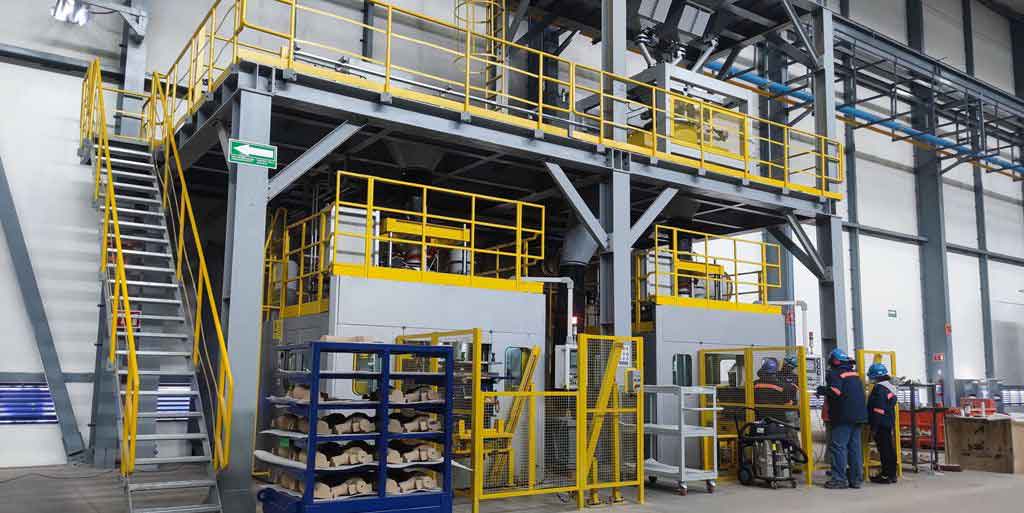
The role of thermal cycling cannot be overstated. During braking, the friction surface experiences rapid temperature spikes, while the bolt holes remain relatively cooler, creating steep thermal gradients. This induces multiaxial stresses that concentrate at geometric discontinuities like chamfers. When combined with casting defects, the fatigue life \( N_f \) can be approximated by the Coffin-Manson relation:
$$ \Delta \epsilon_p \cdot N_f^c = \theta $$
where \( \Delta \epsilon_p \) is the plastic strain range, and \( c \) and \( \theta \) are constants. For steel castings with defects, \( \Delta \epsilon_p \) increases locally, reducing \( N_f \) significantly. My findings align with literature on steel castings, where poor quality control leads to premature failures in dynamic applications.
To address these issues, I recommend enhancing the casting and heat treatment processes for steel castings. Implementing advanced techniques like vacuum casting or controlled solidification can minimize shrinkage and porosity. For example, using chills or risers optimizes feeding in steel castings, reducing defect formation. Heat treatment should involve normalizing and tempering to achieve a fine, uniform microstructure with grain sizes refined to at least level 7. This improves toughness and thermal fatigue resistance in steel castings. Regular non-destructive testing (NDT), such as ultrasonic or radiographic inspection, can detect subsurface defects in steel castings before they enter service.
In conclusion, the bolt hole cracks in these steel castings for brake discs are primarily due to thermal fatigue initiated at casting defects like shrinkage pores and porosity, exacerbated by coarse dendritic structures. The mechanical properties, while meeting basic standards, were undermined by microstructural inhomogeneities inherent in poorly processed steel castings. By refining casting parameters and heat treatment, the performance of steel castings can be significantly enhanced, ensuring reliability in high-speed transportation. This analysis underscores the importance of quality assurance in manufacturing steel castings for critical applications.
Further research could explore alloy design modifications for steel castings to improve thermal conductivity and reduce stress concentrations. For instance, adding elements like Mo or V might refine grains and enhance hardenability. Additionally, computational modeling of thermal stresses in steel castings during braking could predict failure sites and guide design optimizations. The continuous improvement of steel castings is vital for advancing railway safety and efficiency.