
In my experience with automotive engine cylinder block casting, the vertical pouring process using resin sand core assembly is widely adopted for its precision and dimensional stability. However, casting holes, often referred to as sand hole defects, remain a persistent challenge, typically ranking among the top three defects in production. These casting holes can lead to significant scrap rates, often between 1% and 2%, which impacts overall efficiency and cost. As quality standards evolve, with repair of such defects becoming unacceptable, a deep understanding and control of casting holes are crucial. In this article, I will delve into the causes, analysis, and preventive measures for casting holes in the vertical pouring process, emphasizing practical insights and technical strategies to reduce scrap rates to below 0.2%.
Casting holes in this context refer to imperfections caused by the inclusion of sand particles, slag, or other non-metallic materials into the molten iron during pouring, resulting in voids or inclusions in the final casting. These defects commonly occur on the top surface of the cylinder block (the浇注 position顶面), as well as on external surfaces, end faces, and bearing seats. The prevalence of casting holes underscores the need for a comprehensive approach that addresses raw materials, process design, and operational practices. Through my analysis, I aim to provide a detailed guide on mitigating these casting holes, leveraging data, tables, and formulas to summarize key points.
The vertical pouring process for cylinder blocks typically involves assembling resin sand cores in a bottom-gating configuration, with the cylinder bores facing upward. This method offers advantages such as high dimensional accuracy (up to CT8 grade) and efficient production, but it also introduces specific vulnerabilities to casting holes. Unlike horizontal pouring processes where clay sand molds contribute to defects, in vertical pouring, casting holes are primarily linked to resin sand quality and handling. To illustrate, a common setup includes cores like the base core, cylinder core, water jacket core, and external molds, each made from different resin sand types (e.g., cold-box, furan, or shell sand) to balance strength and detail. The scrap rate due to casting holes, as observed in production batches, can vary, but with proper controls, it is possible to achieve remarkable improvements.
In this analysis, I will first outline the statistical occurrence and locations of casting holes, followed by a thorough examination of contributing factors. I will then propose targeted measures, supported by quantitative data and engineering principles. The goal is to equip practitioners with actionable knowledge to minimize casting holes and enhance casting quality.
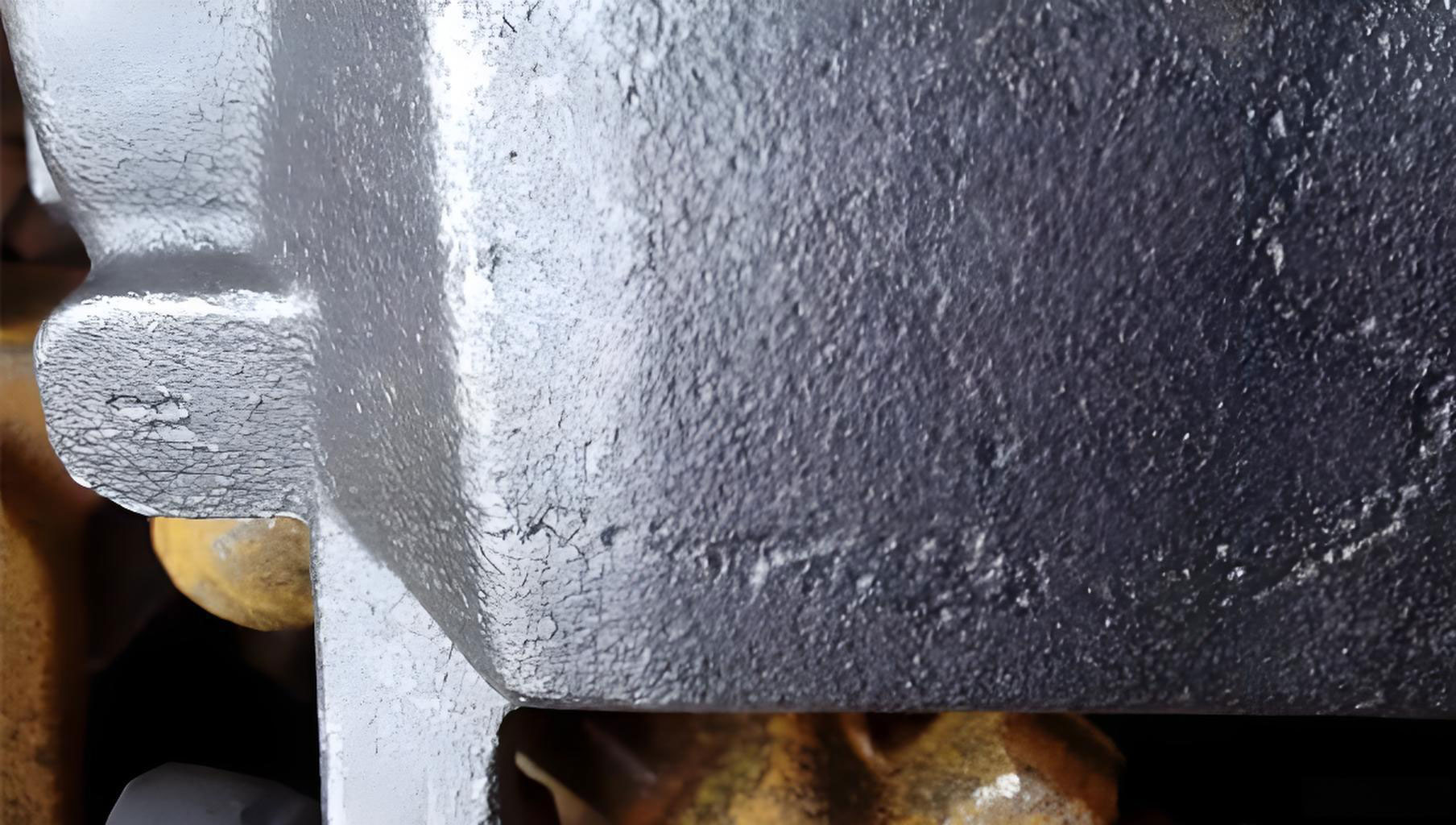
From my observations, casting holes are not merely random defects but often correlate with specific process parameters. For instance, in a monthly analysis of over 60,000 machined cylinder blocks, casting holes accounted for approximately 29% of total scrap, highlighting their significance. These casting holes predominantly manifest on the top surface (about 40% of cases) and external surfaces (another 40%), with the remainder on end faces and critical functional areas. This distribution points to issues during core assembly, pouring, or gating system design. Understanding these patterns is the first step toward effective prevention of casting holes.
To systematically address casting holes, I categorize the causes into three main areas: raw material quality, operational factors, and casting process design. Each area interacts with the others, and a holistic approach is necessary. Below, I elaborate on these aspects, using tables and formulas to encapsulate key information.
Raw Material Influences on Casting Holes
The quality of raw materials, particularly sand and resins, plays a pivotal role in the formation of casting holes. In vertical pouring processes, resin sand cores are directly exposed to molten iron, and any weakness or contamination can lead to sand erosion or detachment, resulting in casting holes. Based on my practice, I emphasize the following points:
- Sand Quality: New sand and reclaimed sand must meet stringent specifications. High micro-powder content, moisture, or ignition loss can degrade core strength and increase the risk of sand inclusion. For example, micro-powder (particles ≤200 mesh) should be controlled to ≤0.4%, as higher levels reduce binding efficiency and promote friability. Moisture content above 0.2% can cause gas evolution and weaken cores, while ignition loss (a measure of organic content) exceeding 0.2% in new sand or 2% in mechanically reclaimed sand leads to poor thermal stability. These factors collectively contribute to casting holes by making cores prone to breakdown during handling or pouring.
- Resin Systems: The choice of resin (e.g., furan for self-hardening sand, cold-box resins, or shell sand binders) affects core strength and durability. Inadequate resin addition or poor quality can result in low tensile strength, increasing the likelihood of sand particles dislodging and forming casting holes. I recommend minimum tensile strengths (σb) for cores, as detailed later.
- Coatings: Protective coatings on cores must have high adhesion strength to prevent flaking or peeling during pouring. If coatings detach, they can introduce non-metallic inclusions that manifest as casting holes.
To summarize, I have compiled a table of sand quality standards that are critical for minimizing casting holes:
| Sand Type | SiO2 Content (%) | Grain Size (Mesh) | Concentration (%) | Micro-powder Content (%) | Moisture (%) | Ignition Loss (%) | Acid Demand Value |
|---|---|---|---|---|---|---|---|
| New Sand | 80-85 | 50/100 or 40/70 | ≥85 | ≤0.2 | ≤0.2 | ≤0.2 | ≤5 |
| Thermal Reclaimed Sand | 80-85 | 50/100 or 40/70 | ≥85 | ≤0.4 | ≤0.1 | ≤0.1 | ≤5 |
| Mechanical Reclaimed Sand | 80-85 | 50/100 or 40/70 | ≥85 | ≤0.4 | ≤0.3 | ≤2 | ≤5 |
Adhering to these standards helps ensure core integrity and reduces the incidence of casting holes. In my experience, deviations from these values often correlate with increased scrap rates due to casting holes.
Operational Factors Contributing to Casting Holes
Operational errors are a common source of casting holes, often stemming from inexperience or lack of diligence. During core assembly, handling, and mold closing, abrasive actions or collisions can dislodge sand particles from cores, which then enter the mold cavity and lead to casting holes. Key operational aspects include:
- Core Handling: Cores with insufficient strength are vulnerable to damage. Proper training and standardized procedures are essential to prevent accidental sand loss.
- Mold Assembly: Inadequate cleaning of mold cavities or gating systems can leave loose sand or debris, which becomes embedded in the casting as casting holes. Regular inspections and cleanliness protocols are vital.
- Pouring Practices: Irregular pouring speeds or temperatures can exacerbate turbulence, carrying sand particles into critical areas. Maintaining consistent pouring parameters, as calculated via formulas, is crucial to avoid casting holes.
From a management perspective, addressing these issues requires a combination of training and accountability. By educating operators on the causes of casting holes and implementing strict quality checks, many operational-related casting holes can be eliminated.
Casting Process Design and Its Impact on Casting Holes
The design of the casting process, especially the gating system and core strength specifications, significantly influences the occurrence of casting holes. In my analysis, I focus on three design elements: core strength requirements, gating system skimming capability, and core fit tolerances.
Core Strength Requirements
To resist mechanical stress during handling and thermal shock during pouring, resin sand cores must have adequate tensile strength. I recommend specifying minimum常温 tensile strengths (σb) for each core type, as weak cores are prone to erosion and sand inclusion, leading to casting holes. Based on my work, the following strengths are effective:
| Core Name | Resin Sand Type | Grain Size (Mesh) | Minimum Tensile Strength, σb (MPa) | Typical Equipment |
|---|---|---|---|---|
| Base Core | Furan or Cold-box | 50/100 | ≥1.2–2.0 | Manual or 40L Cold-box Machine |
| Cylinder Core (Main) | Cold-box | 40/70 | ≥1.5–2.0 | 40L Cold-box Machine |
| Riser Core | Cold-box | 50/100 or 40/70 | ≥1.5–2.0 | 40L Cold-box Machine |
| Water Jacket Core | Shell Sand | 40/70 | 2.0–5.0 | Z8012L Shell Core Machine |
| End Cores (2) | Cold-box or Shell Sand | 50/100 or 40/70 | ≥1.2–2.0 (Cold-box) | Integrated with Riser Core |
| Oil Gallery Cores (8) | Shell Sand | 40/70 or 50/100 | 2.0–5.0 | Z8012L Shell Core Machine |
| Left External Mold | Cold-box | 50/100 or 40/70 | ≥1.2–2.0 | 40L Cold-box Machine |
| Right External Mold | Cold-box | 50/100 or 40/70 | ≥1.2–2.0 | Integrated with Left Mold |
In general, I advise that the minimum σb should not fall below 0.6 MPa to prevent core degradation and subsequent casting holes. Regular testing of core samples ensures compliance and helps identify issues early.
Gating System Design for Skimming
A well-designed gating system is critical for separating slag, sand, and other impurities from the molten iron, thereby preventing casting holes. In vertical pouring with bottom gating, the system must promote calm filling and effective skimming. I often use the following principles and formulas to optimize gating design:
- Pouring Time Calculation: The pouring time (t) in seconds can be estimated based on the pour weight (G) in kg. A common formula is:
$$ t = \sqrt{G} + \frac{G}{3} $$
This ensures adequate flow control to reduce turbulence that might carry sand particles and cause casting holes. - Gating Ratios: Proper ratios of sprue, runner, and ingate areas help maintain a pressurized system that minimizes air entrainment and sand pickup. For instance, using a sprue-runner-ingate ratio of 1:1.5:1.2 has proven effective in my projects.
- Skimming Criteria: To ensure the runner is fully filled and acts as a skimmer, the pressure head at the ingate (hp) must satisfy:
$$ h_p > \left( h_{\text{runner}} – \frac{h_{\text{ingate}}}{2} \right) $$
where \( h_{\text{runner}} \) is the runner height and \( h_{\text{ingate}} \) is the ingate thickness. A higher hp enhances skimming and reduces the risk of casting holes. - Ingate Placement: Avoid placing ingates on the top of the runner, as this allows inclusions to easily enter the mold cavity. Instead, position ingates along the runner’s side or bottom. Additionally, the distance from the sprue center to the first ingate (L) should be sufficient to allow flow stabilization; I recommend \( L \geq 5h_{\text{runner}} \) or \( L = 2.0–2.5 D_{\text{sprue}} \). If this is not feasible, installing ceramic filters or fiber mesh at critical points can trap impurities and prevent casting holes.
- Sprue Well Design: A sprue well at the base of the sprue helps dissipate energy and capture initial dirty metal, reducing the chance of casting holes. Its dimensions should be optimized based on pouring rates.
To illustrate, consider a gating system for a large cylinder block: the runner may include energy-reduction pools at its end to calm flow and settle sand particles, thus mitigating casting holes. The use of filters, while adding cost, can be beneficial in designs with limited skimming capability, but I prefer to achieve skimming through geometric design to avoid reliance on filters.
Core Fit and Tolerances
Improper core fits or excessive gaps can lead to sand infiltration during pouring, contributing to casting holes. I design core prints with adequate clearances (e.g., 0.5–1.0 mm) to ease assembly while preventing sand leakage. Overly tight fits (e.g., ≤0.3 mm) may cause abrasion during handling, generating loose sand that becomes casting holes.
Comprehensive Measures to Control Casting Holes
Based on the above analysis, I propose a multi-faceted approach to reduce casting holes to below 0.2% scrap rate. These measures integrate raw material control, process design refinements, and operational discipline.
Raw Material Quality Control
Implement strict incoming inspection for sand and resins, focusing on the parameters in the earlier table. For reclaimed sand, monitor micro-powder and ignition loss regularly, and blend with new sand as needed (e.g., adding ≥15% new sand to mechanical reclaimed systems). Use high-adhesion coatings and test them for peel resistance. In my practice, maintaining sand moisture below 0.2% and ignition loss below 0.2% (for thermal reclaimed sand) has directly reduced instances of casting holes.
Optimized Casting Process Design
Revise gating systems to enhance skimming: ensure runner fullness via calculated pressure heads, use sprue wells, and avoid top ingates. Specify core strengths explicitly in工艺 documents and verify through sample testing. For vertical pouring with a base core, I prefer designs that incorporate a base core for better skimming, as opposed to base-less designs that require filters and are more prone to casting holes. The choice between with-base and without-base processes involves trade-offs, as summarized below:
| Aspect | With-Base Core Process | Without-Base Core Process |
|---|---|---|
| Core Count | Includes a base core, adding one more core type | Eliminates the base core, simplifying assembly |
| Dimensional Accuracy | Slightly affected by base core alignment | Potentially higher accuracy due to fewer components |
| Core Handling | Cores are shorter, reducing deformation risk | Cores are taller, increasing weight and handling difficulty |
| Gating Design | Normal gating with inherent skimming; filters optional | Abnormal gating (ingates on runner top) requires ceramic filters |
| Leakage Risk | Minimal risk of bottom leakage during pouring | Higher risk, necessitating sealants at mold bottom |
In my view, the with-base process offers better control over casting holes due to its natural skimming ability, though it adds a manufacturing step.
Operational and Management Controls
Train operators on the causes of casting holes, emphasizing gentle handling and cleanliness. Implement checklists for mold assembly and pouring, and conduct regular audits. Use statistical process control to monitor scrap rates and identify trends in casting holes. By fostering a culture of quality, many operational-induced casting holes can be prevented.
Conclusion
In summary, casting holes in the vertical pouring process for engine cylinder blocks are a multifaceted defect influenced by raw material quality, process design, and operational practices. Through my analysis, I have highlighted key strategies: controlling sand properties to minimize micro-powder and moisture, specifying adequate core strengths (with σb ≥ 0.6 MPa), and designing gating systems for effective skimming using principles like the pressure head criterion. Additionally, operational vigilance and management systems play a crucial role in reducing human error. By integrating these measures, I have achieved scrap rates due to casting holes below 0.2%, demonstrating that a systematic approach can significantly mitigate these defects. Future work could explore advanced simulation tools to further optimize gating and core designs, but the fundamentals outlined here provide a robust foundation for combating casting holes in foundry operations.
To reinforce these points, I often refer to the formula for pouring time and skimming criteria, as they are essential for preventing turbulence-related casting holes. For instance, ensuring that the initial ingate pressure head \( h_p(\text{initial}) \) is sufficiently high can be calculated using:
$$ h_p(\text{initial}) = \frac{K_n^2}{1 + K_1^2 + K_2^2 + \dots + K_n^2} H $$
where \( K_i = \frac{\mu_1 F_1}{\mu_i F_i} \) for each gating element, with \( \mu \) being flow coefficients and \( F \) the cross-sectional areas. This mathematical approach helps quantify design choices and their impact on casting holes.
Ultimately, the battle against casting holes is ongoing, but with diligent application of these principles, foundries can achieve higher quality and efficiency. I encourage continuous monitoring and adaptation to specific production conditions, as casting holes remain a critical focus in casting excellence.