
As a professional deeply involved in industrial engineering and plant layout, I have dedicated significant effort to understanding the intricate principles behind effective and safe foundry operations. The design of a foundry plant, particularly for a dedicated steel castings manufacturer, is a complex interplay of production flow, structural integrity, environmental control, and paramount safety considerations. Among these, fire safety design for both the main production buildings and the finished casting warehouses stands out as a non-negotiable pillar. This analysis delves into the foundational requirements, planning intricacies, and specific fire protection strategies essential for modern foundry facilities, with a continuous focus on the operational context of a steel castings manufacturer.
The core of any foundry lies in its industrial buildings. The design of these structures must be fundamentally driven by production needs, which for a steel castings manufacturer, involves handling molten metal at extreme temperatures. This primary requirement dictates everything from spatial layout to material selection. The design must facilitate an efficient workflow for processes like molding, melting, pouring, cooling, and finishing, while inherently managing the associated risks of heat, sparks, and combustible materials.
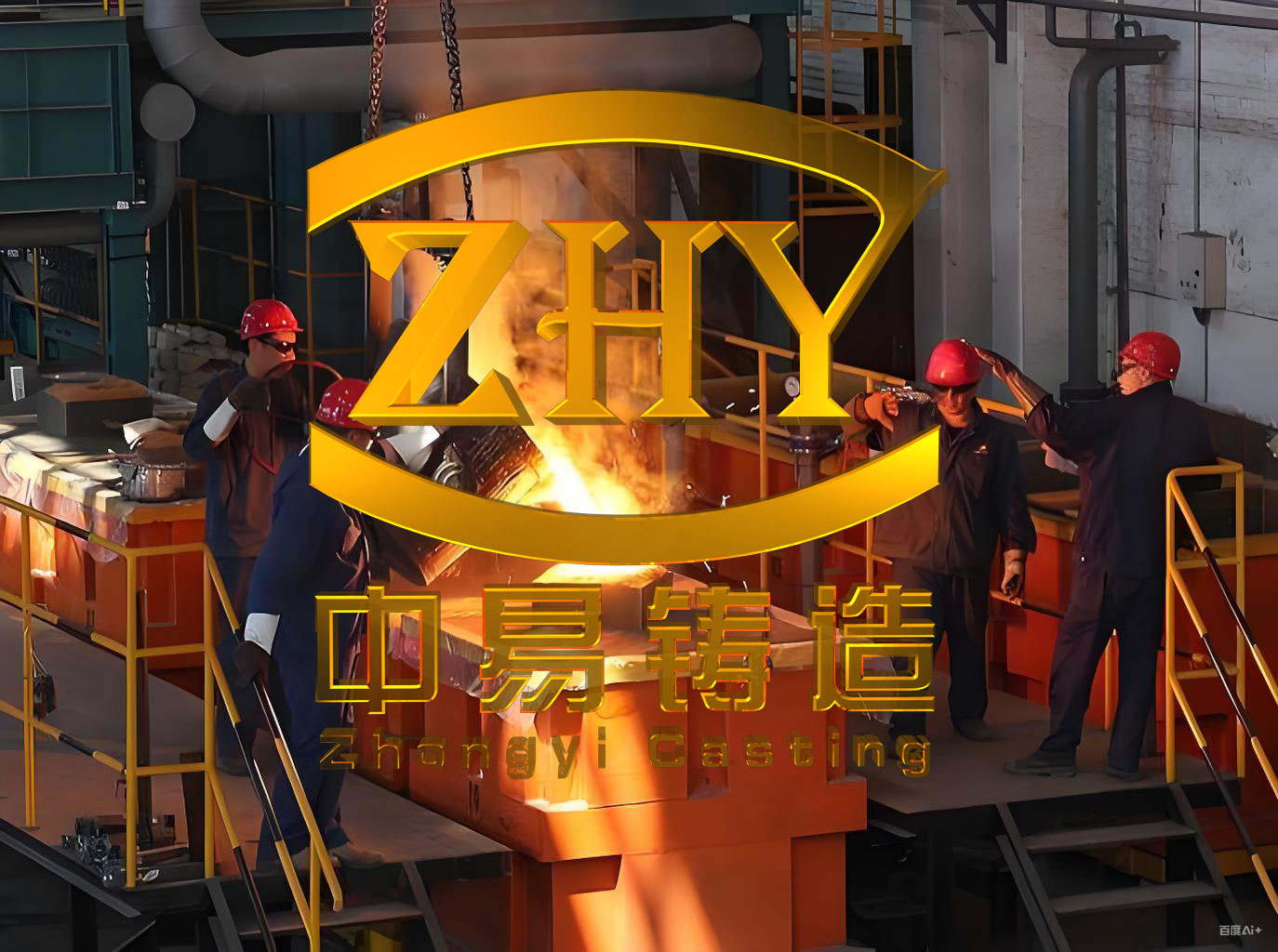
Structural form selection is critical. The choice between reinforced concrete and steel framing involves a calculated trade-off. Reinforced concrete offers excellent fire resistance, durability, and can be formed into various shapes, making it a robust choice for many foundry buildings. Its inherent fire-resistive properties are a significant advantage. Steel structures, while offering speed of construction and large, clear spans, require additional fireproofing treatments (like intumescent coatings) to meet safety standards. The decision often hinges on the specific scale and processes of the steel castings manufacturer. The economic and operational impact can be summarized by considering construction cost (C), maintenance cost (M), and fire safety rating (F). A simplified evaluation metric (E) for a structural option might be conceptualized as:
$$E = \frac{w_1 \cdot F}{w_2 \cdot C + w_3 \cdot M}$$
where \(w_1, w_2, w_3\) are weighting factors assigned based on the priority of safety, initial budget, and long-term upkeep, respectively, for the specific project.
| Design Requirement | Key Considerations for a Steel Castings Manufacturer | Primary Design Response |
|---|---|---|
| Production Process Flow | Linear flow from raw materials to finished castings; handling of molten steel. | Layout minimizing backtracking; dedicated, isolated melting/pouring bays. |
| Structural Form | Resistance to thermal loads, vibration; column spacing for crane operation. | Reinforced concrete or fire-protected steel framing; wide bays. |
| Environmental Control | Massive heat, fumes, dust generation; high ventilation demand. | High-efficiency roof and wall exhaust systems; planned air intake locations. |
| Noise & Vibration | High noise from cleaning, grinding, and material handling. | Acoustic enclosures for loud equipment; vibration-damped foundations. |
| Lighting | Consistent, high-level illumination required for detailed inspection and safety. | Predominantly artificial lighting systems with high Color Rendering Index (CRI). |
Environmental control within the foundry is paramount. Unlike office buildings, natural lighting is often secondary to controlled artificial lighting, which provides consistent levels for quality inspection and safe operation. Ventilation, however, is the lifeblood of the facility. A steel castings manufacturer must design for powerful exhaust systems to remove copious amounts of heat, smoke, and particulate matter. The required air exchange rate (Q) can be roughly estimated based on the heat load (H) from furnaces and castings, the allowable temperature rise (ΔT), air density (ρ), and specific heat (cp):
$$Q \approx \frac{H}{\rho \cdot c_p \cdot \Delta T}$$
This calculated volume directly influences the size and capacity of fans, ducts, and dust collection systems.
The overarching plant layout must integrate the foundry building with auxiliary functions. Administrative offices, maintenance shops, and pattern storage must be positioned to support production without interfering with the main material flow or safety zones. Crucially, the relationship between the production building and the finished casting warehouse is symbiotic. For a steel castings manufacturer, the warehouse is not an afterthought but a vital buffer in the supply chain, storing high-value, often heavy products before shipment.
Effective management of this warehouse is enabled by robust Inventory Management Systems (IMS). An IMS transforms the warehouse from a static storage area into a dynamic logistics hub. It tracks every item from production acceptance through to dispatch, ensuring traceability and optimizing space utilization. Key performance indicators (KPIs) like inventory turnover ratio and days sales of inventory (DSI) become crucial for financial health:
$$\text{Inventory Turnover} = \frac{\text{Cost of Goods Sold}}{\text{Average Inventory Value}}$$
$$\text{Days Sales of Inventory (DSI)} = \frac{365}{\text{Inventory Turnover}}$$
A high turnover and low DSI indicate efficient inventory management, reducing capital tied up in stored castings for the steel castings manufacturer.
| Storage Method Principle | Implementation in a Casting Warehouse | Benefit |
|---|---|---|
| Dedicated Aisles & Zoning | Clear, wide aisles separating different casting families (e.g., engine blocks, gear housings). | Safe forklift movement; prevents damage; facilitates inventory counts. |
| High-Density Racking | Use of cantilever or heavy-duty pallet racking to utilize vertical space. | Maximizes storage capacity per square meter; improves organization. |
| Location Based on Velocity | Fast-moving items stored near dispatch areas; slow-movers in higher or deeper locations. | Reduces picking and loading time; increases operational efficiency. |
| Family Grouping | All castings from the same order or of the same alloy stored together. | Simplifies picking and packing; reduces retrieval errors. |
| Weight-Based Placement | Heavier castings stored on lower rack levels or directly on the floor on pads. | Ensures structural safety of racks; stabilizes center of gravity. |
All these operational efficiencies pale if the fundamental safety of the facility is compromised. This brings us to the critical focus: fire safety design. For a steel castings manufacturer, the risk is inherent. The presence of molten metal, hot castings, flammable binders in sand, hydraulic oils, and electrical systems creates a multifaceted fire hazard. The finished casting warehouse, often perceived as low-risk, can harbor significant danger if hot castings are placed prematurely near combustible packaging or if electrical faults occur in lighting/forklift charging stations.
The financial and human cost of a fire is catastrophic. Therefore, fire prevention and protection must be integrated into the design from the outset, governed by stringent national codes and standards. These codes dictate parameters such as building fire resistance ratings, maximum compartment sizes (fire areas), required number and type of exits, and the design of active fire suppression systems.
A key concept in warehouse fire safety is the classification of commodities. While finished metal castings themselves are typically non-combustible, their packaging (wooden crates, plastic wraps, pallets) contributes to the fire load. The design of a sprinkler system for the warehouse must account for this combined fuel load. The required density (D) of a sprinkler system, in mm/min, is a function of the commodity classification and the storage configuration (height, aisle width). This is often determined using standardized formulas or lookup tables from codes like NFPA 13.
For the main foundry building, special hazards require special solutions. Areas like the melt deck might be protected by deluge sprinkler systems or specialized foam systems tailored for metal-related fires. The placement and capacity of indoor hydrants are also critical. The minimum flow rate and pressure are specified by code and are significantly higher than those for residential buildings. For a large, single-story foundry of a major steel castings manufacturer, the required hydrant flow (Qhydrant) might be determined as:
$$Q_{\text{hydrant}} = A_{\text{fire area}} \times D_{\text{required}}$$
where \(A_{\text{fire area}}\) is the area of the designed fire compartment in m², and \(D_{\text{required}}\) is the required fire-fighting water density in L/(s·m²).
| Fire Safety System | Application in Foundry Building | Application in Casting Warehouse | Key Design Parameter |
|---|---|---|---|
| Passive Compartmentation | Fire-rated walls/doors to separate melting, sand preparation, and finishing departments. | Separating warehouse from production; sub-dividing very large warehouse spaces. | Fire Resistance Rating (e.g., 2-hour, 4-hour walls). |
| Automatic Sprinklers | Wet-pipe systems in general areas; specialized systems (deluge) for high-hazard zones. | Early Suppression Fast-Response (ESFR) or control-mode sprinklers based on storage height. | Design Density (e.g., 12 mm/min over 280 m²). |
| Indoor Hydrants | Strategically placed for manual firefighting attack on incipient stage fires. | Located to allow coverage of all warehouse areas without excessive hose lay. | Flow Rate & Pressure (e.g., ≥ 10 L/s at specified pressure). |
| Fire Detection & Alarm | Heat and smoke detectors in electrical rooms, control panels; manual pull stations. | Smoke detectors or beam detectors at high roof level; manual pull stations at exits. | Detector Spacing, Alarm Zone Configuration. |
| Egress Design | Multiple, clearly marked exits from every workshop area, leading to safe assembly points. | Unobstructed aisles leading directly to exits; exit doors opening in direction of travel. | Travel Distance to Exit, Door Width, Number of Exits. |
Ultimately, the规范性 (normative aspect) of fire safety design is what transforms good intentions into a compliant, insurable, and resilient facility. It is not merely about adding fire extinguishers as an afterthought. It is a holistic engineering discipline that analyzes potential fire scenarios, calculates required fire loads, and designs integrated systems to mitigate them. For a steel castings manufacturer, adhering to these norms is a direct investment in business continuity, asset protection, and workforce safety. A well-designed foundry, where production flow, structural soundness, inventory intelligence, and rigorous fire protection coalesce, forms the bedrock of a competitive and sustainable operation. The lessons learned from past industrial tragedies are codified into these standards; ignoring them jeopardizes not just the physical plant, but the very future of the enterprise. The final design must present a coherent package where safety systems are seamlessly woven into the architectural and operational fabric, ensuring that the valuable output of the steel castings manufacturer is produced and stored within an environment where risk is systematically managed and minimized.