
In my extensive experience with heat treatment processes, I have encountered numerous cases where nodular cast iron components exhibit unexpected microstructural issues after high-frequency induction hardening. One particularly instructive case involved a planet carrier made from nodular cast iron grade QT700-2, where the high-frequency induction hardened zone showed a low graphite nodularity and an excessive volume fraction of ferrite. This article details my investigation into the root causes, employing metallographic analysis, experimental comparisons, and process optimization. The findings underscore the critical interplay between casting practices and subsequent heat treatments in determining the final microstructure and performance of nodular cast iron parts.
Nodular cast iron, or ductile iron, is renowned for its excellent combination of strength, ductility, and wear resistance, making it a preferred material for demanding applications such as automotive drivetrains, heavy machinery, and wind turbine components. Its superior mechanical properties are fundamentally derived from its unique microstructure: spheroidal graphite particles embedded in a metallic matrix. The matrix can be tailored through heat treatment to be primarily pearlitic, ferritic, or a mixture, with martensite achieved through quenching for surface hardening. High-frequency induction hardening is a prevalent surface strengthening technique for such components, offering rapid heating and localized hardening with minimal distortion. However, the success of this process is highly dependent on the initial as-cast and pre-hardening microstructure. Any deviation, such as poor graphite morphology or an unfavorable matrix phase distribution, can lead to substandard hardened layers, compromising component lifespan and reliability.
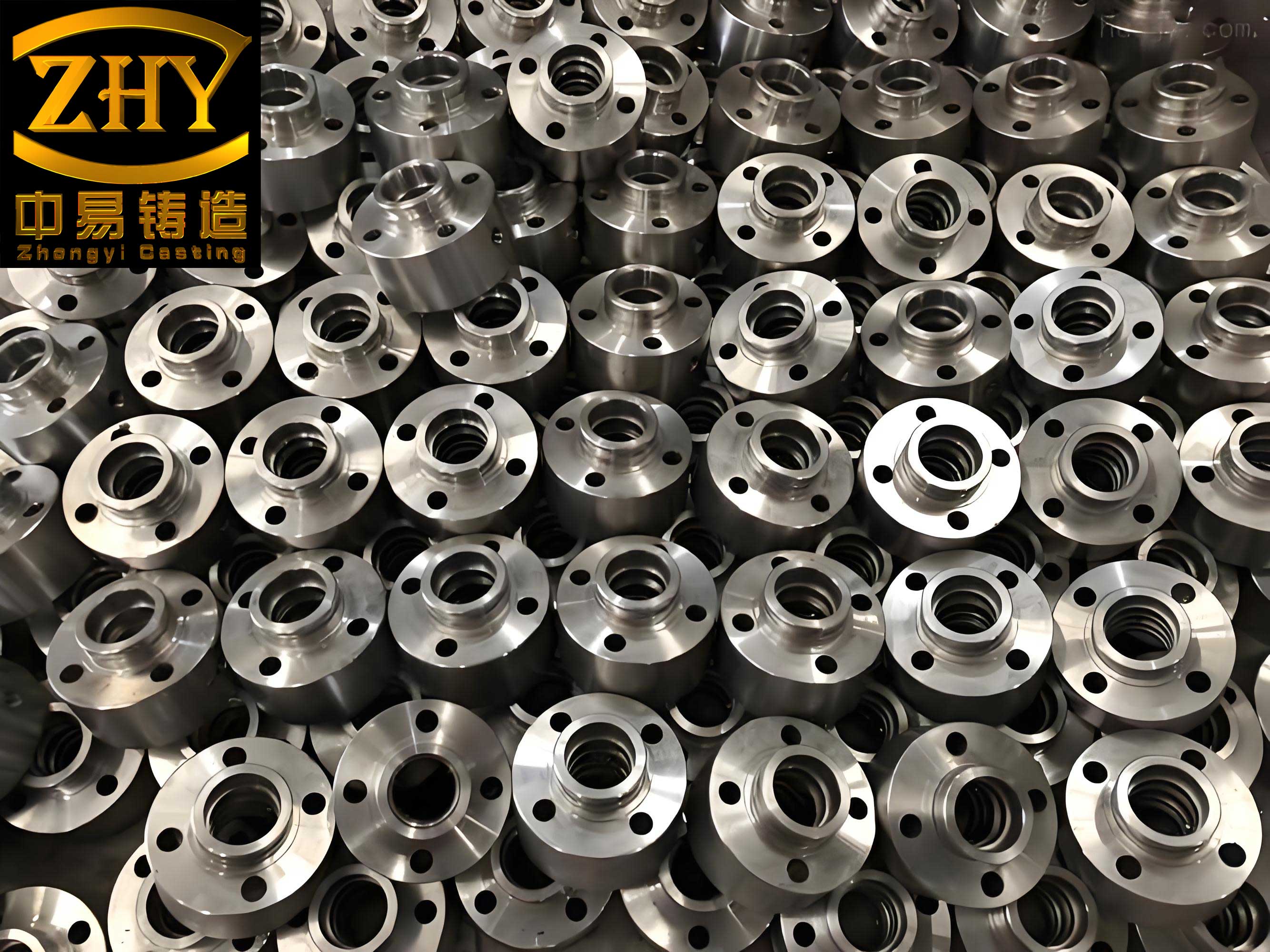
The specific component under investigation was a nodular cast iron planet carrier. Its overall heat treatment sequence was casting, followed by normalizing, and finally, high-frequency induction hardening on the internal bore surface, which was later machined into a spline. The technical specifications for the induction-hardened zone required a graphite nodularity of no less than 70% and a ferrite volume fraction not exceeding 30%. The standard chemical composition range for QT700-2, as per GB/T 1348-2009, and the actual measured composition of the casting are summarized in Table 1. Carbon and silicon are the primary graphitizing elements, while manganese tends to stabilize pearlite. The levels of phosphorus and sulfur, which can form detrimental inclusions, were within acceptable limits.
| Element | C | Si | Mn | P | S | Fe |
|---|---|---|---|---|---|---|
| Specification Range (Typical for QT700-2) | 3.4-3.8 | 2.3-2.7 | 0.2-0.4 | <0.05 | <0.02 | Balance |
| Measured Value | 3.2 | 2.5 | 0.6 | 0.047 | 0.020 | Balance |
My initial step was to section the component after the complete heat treatment cycle. Samples were extracted from two critical locations: the outer rim area (non-hardened) and the internal bore area designated for high-frequency induction hardening. These samples were prepared using standard metallographic techniques—mounted, ground, polished, and etched with 4% nital. Graphite morphology was examined in the unetched condition, while the matrix microstructure was observed after etching. Quantitative image analysis was performed using specialized software to determine graphite nodularity (according to ISO 945-4) and the area fraction of ferrite.
The results from the outer rim area were entirely satisfactory. The graphite nodularity was consistently around 90%, and the matrix after induction hardening consisted predominantly of martensite with a ferrite content of only 6-8%. This met all technical requirements. However, the high-frequency induction hardened zone told a different story. The graphite morphology was severely degraded, with a nodularity of merely 25%. Instead of well-formed spheroids, the graphite existed predominantly as compacted or vermicular forms. Furthermore, the matrix contained approximately 39% ferrite, significantly exceeding the 30% limit. The martensitic transformation was evidently incomplete. This discrepancy between the hardened zone and the bulk material prompted a deeper investigation into the genesis of these abnormalities.
A fundamental principle in ferrous metallurgy is that the morphology and distribution of graphite in cast iron are immutable by heat treatment. Graphite transformation temperatures far exceed those used in standard austenitizing treatments for nodular cast iron. Therefore, the aberrant graphite structure observed in the hardened zone was unquestionably a legacy of the casting process. To understand why, one must consider the solidification dynamics of the specific casting. The induction hardening zone coincided with the location of the casting riser. Riser areas are inherently prone to microstructural issues due to two interrelated factors: diminished effectiveness of nodularizing agents and slower cooling rates.
During the pouring and solidification of nodular cast iron, magnesium or rare earth-based nodularizers are added to promote the formation of spheroidal graphite. In riser sections, the prolonged exposure to the atmosphere and the thermal gradient can lead to fading—the oxidation and burn-off of these active nodularizing elements. This results in a local depletion of the elements responsible for graphitic spheroidization. Concurrently, the riser, designed to remain molten longest to feed shrinkage, cools at a rate slower than the rest of the casting. Research has consistently shown that slower cooling rates during the eutectic solidification of nodular cast iron favor the growth of non-spheroidal graphite, such as compacted or flake forms, over perfect spheroids. The combined effect of nodularizer fading and slow cooling in the riser area perfectly explained the low nodularity found in what would become the induction hardening zone. This can be conceptually modeled by considering the critical cooling rate for spheroidal graphite formation, $R_c$, which is influenced by the residual nodularizing element concentration, $[N]$. A simple relationship can be expressed as:
$$ R_c \propto \frac{1}{[N]^k} $$
where $k$ is a positive exponent. When the local cooling rate $R$ falls below $R_c$ due to riser geometry and $[N]$ is simultaneously low due to fading, the system favors vermicular/compacted graphite growth.
The excessive ferrite content in the hardened zone required a separate but linked analysis. I first examined samples taken from the part after the normalizing treatment but before induction hardening. This pre-hardening microstructure is the crucial starting point for the subsequent rapid austenitization cycle. The findings were revealing. The matrix in the future induction hardening zone already contained a large amount of blocky, proeutectoid ferrite, approximately 35-40% by volume. In contrast, the outer areas showed a nearly fully pearlitic matrix with negligible ferrite. This indicated that the normalizing treatment (880°C for 2.5 hours, air cooling) had failed to homogenize the microstructure in the riser-affected zone. The root cause again lay in the casting stage. The slow cooling in the riser area not only affected graphite shape but also the matrix formation. It provided ample time for the preferential nucleation and growth of ferrite from the austenite during the eutectoid transformation, leading to an as-cast structure rich in blocky ferrite. Normalizing, intended to produce a pearlitic matrix by re-austenitizing and air cooling, was insufficient to dissolve these large, stable ferrite regions completely. The austenitizing temperature or time was inadequate for complete carbon diffusion from pearlite/graphite into these ferrite zones.
This pre-existing ferrite had profound consequences for the high-frequency induction hardening process. Induction hardening relies on extremely rapid heating (often in seconds) to a temperature above $A_{c3}$, followed by immediate quenching. The kinetics of austenite formation ($\gamma$) from ferrite ($\alpha$) and carbide/pearlite are diffusion-controlled. The transformation can be described by the Johnson-Mehl-Avrami-Kolmogorov (JMAK) equation for the fraction transformed, $f$:
$$ f = 1 – \exp(-k t^n) $$
where $k$ is a rate constant dependent on temperature and composition, $t$ is time, and $n$ is the Avrami exponent. For high-carbon austenite formation from pearlite, $k$ is large. However, for transforming low-carbon ferrite into austenite, the process requires long-range carbon diffusion and is significantly slower ($k$ is much smaller). During the short heating pulse of induction, carbon-saturated austenite readily forms from pearlite and the areas adjacent to graphite. However, the interior of large, carbon-poor ferrite regions may not reach the required temperature or have sufficient time for carbon in-diffusion to achieve the uniform carbon content necessary for full hardenability. Consequently, upon quenching, these untransformed or low-carbon austenite regions either remain as residual ferrite or transform to soft, low-carbon phases instead of martensite. The resulting microstructure is a mixture of hard martensite and soft ferrite, the latter acting as stress concentrators and reducing wear resistance.
To corroborate this hypothesis, I conducted an additional experiment. A sample from the pre-hardening state (after initial normalizing) was subjected to a more aggressive normalizing cycle: heating to 970°C for 100 minutes, followed by air cooling. The results were telling. The volume fraction of ferrite in the problematic zone decreased markedly but was not entirely eliminated. Some blocky ferrite remnants persisted. This confirmed that the abnormal ferrite was indeed a stubborn casting defect that required more extreme conditions to dissolve. The relationship between austenitizing temperature ($T$), time ($t$), and the resulting austenite carbon homogeneity can be approximated for diffusion-controlled growth. The diffusion distance $x$ is given by:
$$ x \approx \sqrt{D_c(T) \cdot t} $$
where $D_c(T)$ is the temperature-dependent carbon diffusion coefficient in austenite, which follows an Arrhenius relationship: $D_c(T) = D_0 \exp(-Q/RT)$. For the short times and moderate temperatures of standard normalizing, $x$ may be insufficient to homogenize carbon across large ferrite grains. The higher temperature in my experiment increased $D_c$ exponentially, allowing for greater homogenization.
The interplay between casting defects and heat treatment response is summarized in Table 2, which contrasts the characteristics of the sound outer region and the defective riser/hardening zone.
| Characteristic | Outer Rim Area (Sound) | Internal Bore / Riser Area (Defective) | Primary Cause |
|---|---|---|---|
| As-Cast Graphite Nodularity | High (>90%) | Low (~25%, vermicular) | Nodularizer fading & slow cooling in riser |
| As-Cast Matrix | Mostly pearlitic with fine ferrite | High fraction of blocky proeutectoid ferrite | Slow eutectoid transformation in riser |
| Matrix after Standard Normalizing | Near-fully pearlitic (Ferrite <10%) | Pearlite + significant blocky ferrite (~35-40%) | Insufficient dissolution of as-cast ferrite | Matrix after Aggressive Normalizing (970°C) | Fully pearlitic | Pearlite + reduced but persistent ferrite | Partial dissolution of stable as-cast ferrite |
| Suitability for Induction Hardening | Excellent. Forms fully martensitic case. | Poor. Leads to mixed martensite-ferrite case. | Pre-existing ferrite impedes full austenitization. |
Having identified the root causes—casting-related deficiencies in the riser area—the path to remediation was clear. Modifying the heat treatment parameters alone, such as increasing the induction heating temperature or time, was not a viable solution. It risked excessive distortion, grain growth, or cracking. The only robust solution was to prevent the formation of the defective microstructure during casting. Therefore, I focused on optimizing the foundry process for the nodular cast iron planet carrier. The key interventions were: 1) Redesigning the riser system: The size and placement of the risers were altered to minimize their thermal impact on the critical internal bore surface. The goal was to shift the slowest cooling region away from the future functional zone. 2) Enhancing inoculation and nodularizing practice: The timing, method, and amount of nodularizing and inoculating alloys were fine-tuned to ensure a more uniform and potent effect throughout the casting, particularly countering fading in upper sections. This often involves late stream inoculation or the use of more fade-resistant inoculants.
After implementing these casting optimizations, the components were processed through the original heat treatment sequence: normalizing at 880°C for 2.5 hours, followed by identical high-frequency induction hardening parameters. Subsequent metallographic examination of the hardened bore zone revealed a dramatic improvement. The graphite nodularity now measured 92%, well above the 70% requirement. The matrix after quenching consisted primarily of martensite with only about 9% ferrite, comfortably within the specification limit. This confirmed that by addressing the casting-stage anomalies, the responsiveness of the nodular cast iron to subsequent thermal processing was fully restored. The successful microstructure is characterized by a high density of spheroidal graphite particles in a matrix that is predominantly martensitic, ensuring good surface hardness, wear resistance, and load-bearing capacity for the spline function.
This case study offers several generalized insights and quantitative considerations for the heat treatment of nodular cast iron. Firstly, the susceptibility of different casting regions to microstructure anomalies must be mapped during process design. Riser and hot spot locations are prime candidates for investigation. Secondly, the effectiveness of a normalizing treatment prior to surface hardening should not be assumed. Its success depends on the complete austenitization and homogenization of the matrix. The time-temperature requirements for dissolving blocky ferrite can be estimated. The minimum austenitizing time $t_{min}$ to dissolve a ferrite region of characteristic size $d$ can be derived from the diffusion equation. Assuming spherical geometry and a requirement for near-complete carbon equilibration, a rough estimate is:
$$ t_{min} \approx \frac{d^2}{4 \cdot D_c(T)} $$
For example, with $d = 50 \mu m$ and $D_c(880^\circ C) \approx 5 \times 10^{-12} m^2/s$, $t_{min}$ is on the order of 1000 seconds, which is comparable to the holding time used in normalizing. However, for larger ferrite clusters or lower temperatures, the required time increases significantly. Thirdly, for induction hardening of nodular cast iron, a fully pearlitic or tempered martensite matrix is ideal. The presence of graphite provides inherent nucleation sites for austenite, but the transformation kinetics are governed by the surrounding matrix. The carbon content of the austenite formed during rapid heating, $C_{\gamma}$, is a critical parameter determining the martensite start temperature ($M_s$) and hardenability. The $M_s$ temperature can be estimated using empirical equations like:
$$ M_s (^\circ C) \approx 539 – 423 \cdot C_{\gamma} – 30.4 \cdot Mn – 12.1 \cdot Cr – 17.7 \cdot Ni – 7.5 \cdot Mo $$
If $C_{\gamma}$ is non-uniform due to undissolved ferrite, local areas may have a high $M_s$, leading to auto-tempering or even ferrite retention during quenching. Therefore, ensuring a homogeneous, high-carbon austenite prior to quenching is paramount.
In conclusion, my investigation into the microstructural abnormalities of a nodular cast iron component after high-frequency induction hardening highlights a critical chain of causation rooted in the casting process. The low graphite nodularity and excessive ferrite in the hardened zone were not consequences of the induction process itself but were pre-existing conditions originating from the riser location. The slow cooling and nodularizer fading inherent to the riser area promoted the formation of vermicular graphite and a ferrite-rich matrix during solidification. Subsequent normalizing was inadequate to erase this ferritic legacy, resulting in a microstructure incapable of fully transforming to martensite during the rapid austenitization of induction hardening. The solution was not to alter the hardening parameters but to fundamentally improve the casting practice by optimizing riser design and inoculation/nodularization techniques. This case underscores a fundamental principle in the metallurgy of nodular cast iron: the final properties after complex heat treatment sequences are profoundly and inseparably linked to the quality and uniformity of the as-cast microstructure. For engineers and metallurgists, this means that rigorous control and understanding of the solidification process are non-negotiable prerequisites for achieving reliable performance in high-integrity nodular cast iron components subjected to surface hardening treatments.