
High manganese steel casting is a critical process in manufacturing components subjected to intense impact and abrasive wear, such as those used in mining, railway, and heavy machinery industries. The unique composition of high manganese steel, with approximately 13% manganese content, imparts exceptional toughness and work-hardening properties. However, this alloy presents significant challenges in foundry operations, particularly concerning mold material interactions. Traditional silica-based sands often lead to severe veining and penetration defects due to chemical reactions between manganese oxides and acidic silica, resulting in poor surface quality and difficult finishing. This issue is exacerbated in high manganese steel casting when using conventional binders like CO2-hardened sodium silicate, which exhibit inadequate strength and collapsibility. To address these limitations, we developed a novel modified ester-cured sodium silicate sand system incorporating organic components, specifically alkaline phenolic resin, to enhance performance metrics such as tensile strength, surface finish, and post-casting disintegration. This study details the experimental methodology, optimization of key parameters, and industrial validation of this advanced binder system for high manganese steel casting applications.
The primary challenge in high manganese steel casting arises from the chemical affinity between manganese oxide (MnO) and silica (SiO2). At elevated temperatures, MnO behaves as a basic oxide and reacts with acidic SiO2 to form low-melting-point compounds like manganese silicate (MnO·SiO2), which infiltrate sand interstices and cause stubborn chemical burn-on. This reaction can be represented by the equation:
$$ \text{MnO} + \text{SiO}_2 \rightarrow \text{MnO} \cdot \text{SiO}_2 $$
To mitigate this, non-silica sands such as magnesia-olivine or limestone-based aggregates are employed in high manganese steel casting. However, these alternatives introduce new issues: limestone sands exhibit high friability and poor surface definition, while magnesia-olivine sands require binders that offer sufficient green strength and collapsibility. Conventional sodium silicate binders, though environmentally benign, yield low immediate strength and necessitate high addition levels, leading to hard molds that complicate shakeout. Our research focuses on modifying sodium silicate with alkaline phenolic resin to create a hybrid inorganic-organic binder that leverages the advantages of both systems for high manganese steel casting. The modification process involves incorporating active alkali, crosslinking agents, and resins to improve solubility, strength development, and thermal degradation.
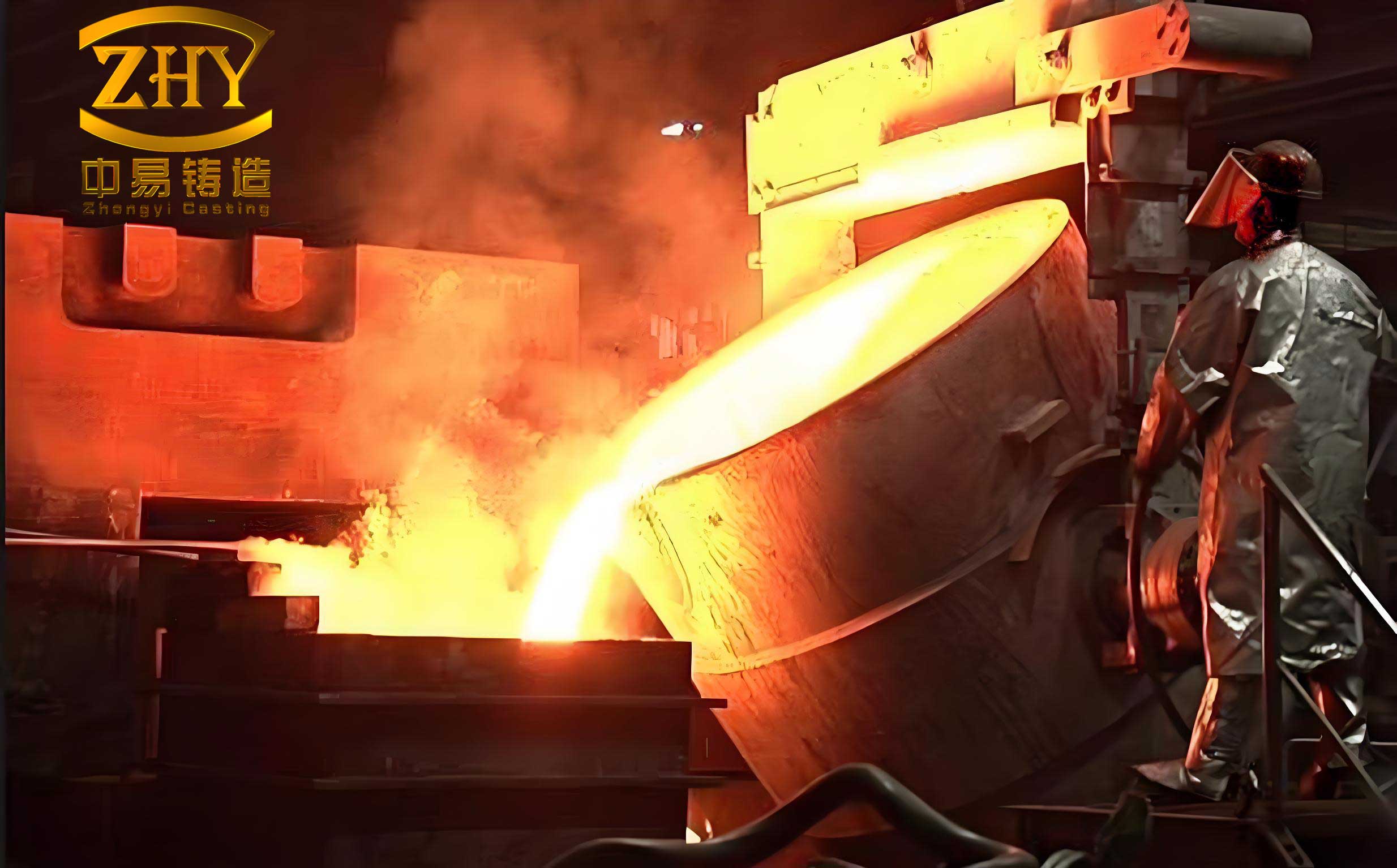
The experimental framework for optimizing the modified binder system involved systematic variation of composition and process parameters. Key materials included sodium silicate (modulus 2.3, solid content 48%), alkaline phenolic resin (density 1.24 g/cm³), borax, active alkali, crosslinkers, and triacetin as the hardening agent. The modification procedure entailed dissolving specified amounts of alkaline phenolic resin in sodium silicate under heat (95–105°C) with active alkali and borax, followed by cooling and addition of crosslinkers. Sand mixtures were prepared using 1000 g of silica sand, 3 g triacetin, and 25 g modified binder, mixed for 2 minutes, and compacted into standard “8”-shaped specimens for tensile testing. The effects of active alkali concentration, crosslinker type and dosage, and resin content were evaluated through measurements of usable time, tensile strength at intervals (2 h, 4 h, 24 h), and residual compressive strength after firing at 1000°C for 30 minutes.
Active alkali plays a crucial role in enhancing the solubility of phenolic resin in sodium silicate, which is otherwise immiscible. The solubility relationship as a function of active alkali addition is summarized in Table 1, demonstrating that resin dissolution plateaus at approximately 30% when alkali content exceeds 10%. This behavior can be modeled using a saturation equation:
$$ S = S_{\text{max}} \left(1 – e^{-k \cdot C}\right) $$
where \( S \) is solubility, \( S_{\text{max}} \) is maximum solubility (30%), \( k \) is a constant, and \( C \) is active alkali concentration. The improved solubility facilitates uniform distribution of organic components, contributing to better coating of sand grains and enhanced bonding in high manganese steel casting molds.
| Active Alkali Addition (%) | Phenolic Resin Solubility (%) |
|---|---|
| 2 | 8.5 |
| 4 | 15.2 |
| 6 | 22.7 |
| 8 | 28.3 |
| 10 | 30.1 |
| 12 | 30.5 |
Crosslinkers are essential for bridging the inorganic sodium silicate and organic phenolic resin networks, enabling synergistic strength development. We evaluated two water-based silane coupling agents (Type A and B) and a standard alkaline phenolic resin coupling agent (Type C), comparing their impact on sand properties. As shown in Table 2, Type A crosslinker at 0.2% dosage yielded the highest tensile strengths across all intervals while maintaining a usable time of 40 minutes. The crosslinking mechanism involves silanol groups reacting with silicate and resin functionalities, forming covalent bonds that enhance cohesion. The optimal crosslinker addition range was determined to be 0.2–0.25%, beyond which strength gains diminished due to saturation of reactive sites. This optimization is vital for achieving the desired mold integrity in high manganese steel casting processes.
| Crosslinker Type | Addition (%) | Usable Time (min) | 2 h Tensile Strength (MPa) | 4 h Tensile Strength (MPa) | 24 h Tensile Strength (MPa) |
|---|---|---|---|---|---|
| A | 0.2 | 40 | 0.36 | 0.81 | 1.33 |
| B | 0.2 | 40 | 0.29 | 0.65 | 1.03 |
| C | 0.2 | 35 | 0.32 | 0.68 | 0.95 |
| None | 0 | 40 | 0.27 | 0.59 | 0.89 |
The incorporation of alkaline phenolic resin significantly alters the thermo-mechanical behavior of the binder system. By varying resin content from 0% to 30%, we observed a substantial reduction in residual strength after thermal exposure, as plotted in Figure 1. This is attributed to the decomposition of organic phases at high temperatures, which creates porosity and weakens the bond. The relationship between resin content (\( R \)) and residual compressive strength (\( \sigma_r \)) can be expressed as:
$$ \sigma_r = \sigma_0 \cdot e^{-\alpha R} $$
where \( \sigma_0 \) is the residual strength of unmodified sand and \( \alpha \) is a decay constant. At 20% resin addition, residual strength dropped below 0.3 MPa, facilitating easy shakeout without compromising room-temperature strength. Additionally, the resin contributes to a reducing atmosphere during pouring, minimizing oxide formation and improving surface quality in high manganese steel casting. The enhanced collapsibility reduces labor and energy costs in post-casting operations.
Further analysis of crosslinker dosage effects revealed a nonlinear strength response. As depicted in Table 3, increasing Type A crosslinker addition from 0.1% to 0.3% progressively improved 24-hour tensile strength, with diminishing returns beyond 0.25%. This trend aligns with percolation theory, where connectivity in the binder network reaches a threshold. The data underscore the importance of precise formulation control to maximize performance in high manganese steel casting applications.
| Crosslinker Addition (%) | Usable Time (min) | 2 h Tensile Strength (MPa) | 4 h Tensile Strength (MPa) | 24 h Tensile Strength (MPa) |
|---|---|---|---|---|
| 0.10 | 45 | 0.28 | 0.62 | 1.05 |
| 0.15 | 42 | 0.32 | 0.71 | 1.18 |
| 0.20 | 40 | 0.36 | 0.81 | 1.33 |
| 0.25 | 38 | 0.37 | 0.83 | 1.35 |
| 0.30 | 35 | 0.38 | 0.84 | 1.36 |
Industrial trials were conducted at a railway component manufacturing facility specializing in high manganese steel casting. The modified binder was applied in production of crossover components using continuous mixing and automated molding. Molds exhibited excellent handleability, with rapid strength development allowing quick pattern withdrawal. Coating adhesion and mold integrity during handling and closing were superior to conventional systems. Castings produced with the modified sand showed remarkable surface smoothness and minimal veining, reducing finishing efforts by over 50%. The low residual strength enabled efficient shakeout, with molds disintegrating readily under mechanical vibration. These outcomes validate the practical viability of the modified ester-cured sodium silicate sand for high-volume high manganese steel casting.
The thermodynamic aspects of binder degradation during high manganese steel casting were analyzed using differential scanning calorimetry. The modified binder displayed distinct endothermic peaks corresponding to dehydration of sodium silicate and decomposition of phenolic resin between 200°C and 600°C. The energy balance during heating can be described by:
$$ \Delta H = \int C_p \, dT + \sum \Delta H_{\text{decomp}} $$
where \( \Delta H \) is total enthalpy change, \( C_p \) is heat capacity, and \( \Delta H_{\text{decomp}} \) represents decomposition enthalpies. The synergistic decomposition pathways promote controlled binder breakdown, preventing explosive spalling and ensuring dimensional stability of molds during pouring of high manganese steel.
Economic considerations are paramount in adopting new binder systems for high manganese steel casting. The modified formulation reduces sodium silicate consumption by 15–20% due to higher specific strength, offsetting the cost of phenolic resin and additives. Lifecycle assessment indicates lower energy usage in shakeout and reduced waste disposal costs, making it environmentally and economically sustainable. The improved surface quality also diminishes machining requirements, which is particularly beneficial for high manganese steel casting due to the material’s extreme hardness and difficult machinability.
In conclusion, the integration of alkaline phenolic resin into ester-cured sodium silicate binder effectively addresses the limitations of traditional systems in high manganese steel casting. Through optimized active alkali, crosslinker, and resin additions, we achieved a balance of high strength, excellent collapsibility, and superior surface quality. The hybrid binder leverages the eco-friendly nature of inorganic components and the performance benefits of organic modifiers, providing a robust solution for challenging high manganese steel casting applications. Future work will focus on scaling up the technology and exploring applications in other alloy systems where similar issues persist.