
The pursuit of enhanced metallurgical quality and production reliability in heavy-section castings, particularly for critical applications like machine tool castings, is a perpetual focus in foundry engineering. The performance of these castings, which form the structural backbone of machine tools such as beds, columns, and saddles, is fundamentally governed by the microstructure developed during solidification. Inoculation, a pivotal late-stage treatment in molten iron processing, is employed to control this microstructure, primarily aiming to promote the formation of desirable Type A graphite, suppress cementite (chill), and reduce section sensitivity. While conventional ferrosilicon (FeSi) inoculants have been widely used, their effectiveness is often limited by a rapid fade characteristic, leading to inconsistent properties, especially in thick or complex castings with varying cooling rates.
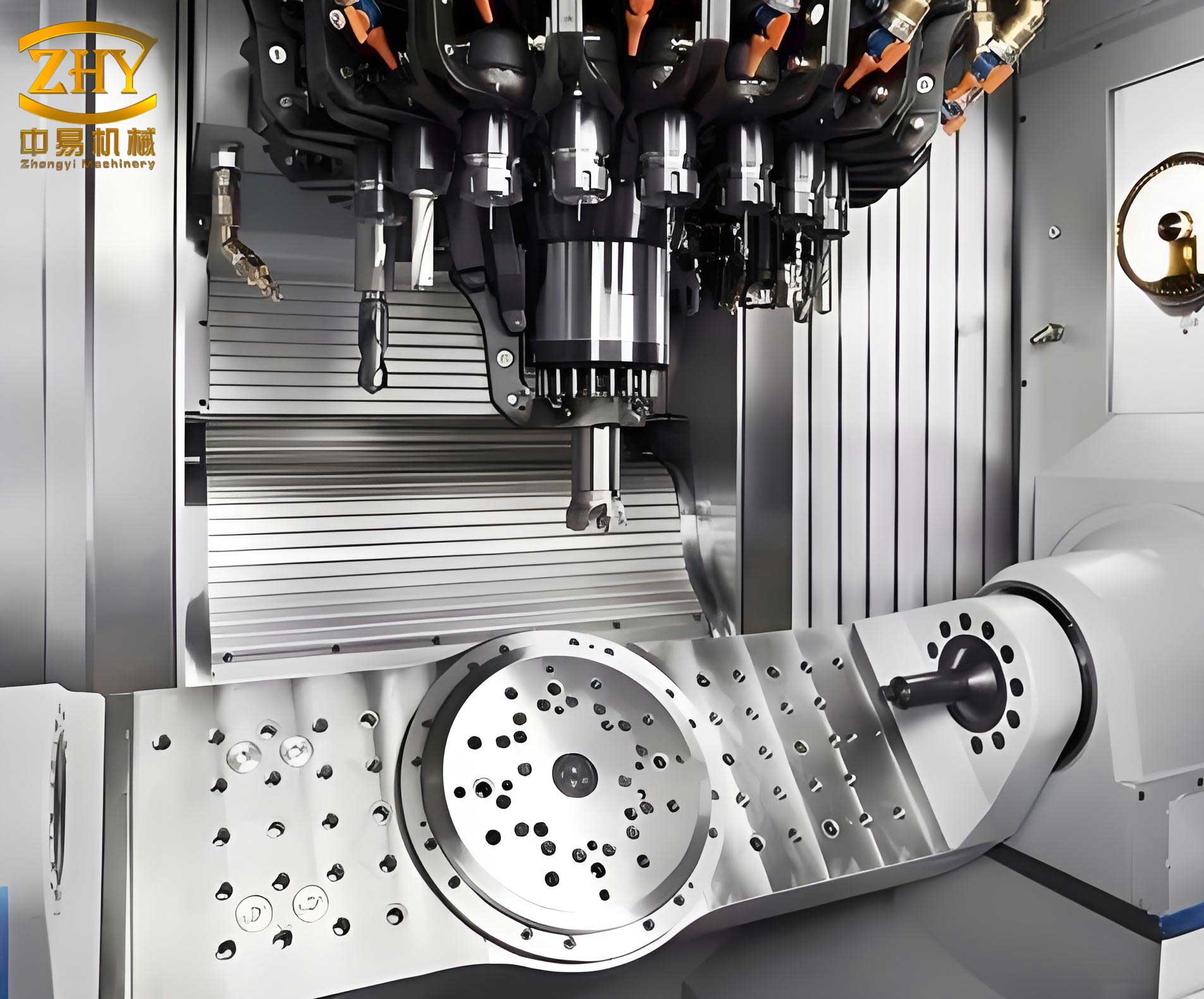
This investigation was driven by the need to develop and validate a more robust, long-fade inoculant specifically for high-grade machine tool castings. The primary objective was to systematically compare a newly formulated Carbon-Silicon (C-Si) based inoculant against the standard FeSi inoculant under controlled, industrial production conditions. The evaluation centered on key performance metrics critical for machine tool castings: chilling tendency, fade resistance, uniformity of hardness across sections, and the resulting graphite morphology and matrix structure.
1. Experimental Methodology
The entire experimental procedure was designed to ensure a direct and fair comparison between the two inoculants while replicating standard foundry practice for producing machine tool castings.
1.1 Base Iron and Inoculants
The base iron was sourced from a operational cupola furnace to maintain industrial relevance. To guarantee comparability, consecutive taps from the middle-to-late phase of the furnace campaign were used for the paired experiments. This practice minimizes variation in melt temperature and baseline composition. The target iron grade was a high-quality grey iron equivalent to GC250 (approx. 250 MPa tensile strength). Two inoculants were evaluated:
– Control: A standard 75% Ferrosilicon (FeSi) inoculant.
– Test Inoculant: A proprietary Carbon-Silicon based inoculant with a composition range containing effective graphitizing elements. The addition rate for both inoculants was fixed at 0.4% of the tap weight.
1.2 Casting and Test Specimen Production
The test vehicle was a major bed casting for a surface grinder, a representative and demanding machine tool casting. Key characteristics of this bed casting were:
– Weight: Approximately 1.8 tonnes.
<br- 40=""
– Critical Sections: A flat guideway with a local cross-section of 90 mm, and an electric panel door area with a wall thickness of 25 mm. This variation provided a perfect test for section sensitivity.
For consistent mechanical property evaluation, keel block test specimens were poured simultaneously from the inoculated iron. To assess inoculant fade, specimens were poured at two intervals: immediately after inoculation (0 min) and after a 15-minute holding period in the ladle.
1.3 Evaluation Techniques
A comprehensive suite of tests was conducted:
– Chemical Analysis: Spectroscopic analysis was performed on samples taken from the inoculated iron.
– Mechanical Testing: Tensile strength was measured on machined test bars. Brinell hardness (HB) was measured at multiple, predefined locations on the actual bed casting’s guideway, in both as-cast and machined conditions.
– Metallographic Analysis: Samples from test bars and critical sections of the casting were examined under an optical microscope to determine graphite morphology (type, size, distribution) and the matrix structure (percent pearlite, ferrite, presence of carbides).
2. Results and Detailed Discussion
The data collected from the paired heats provides a clear, quantitative comparison of the two inoculants’ performance in producing machine tool castings.
2.1 Chemical Composition and Carbon Equivalent
The final chemical compositions of the castings produced with both inoculants are presented in Table 1. The consistency in base composition confirms the validity of the comparative approach. The Carbon Equivalent (CE), a key parameter predicting freezing behavior and graphitization potential, can be calculated for each:
$$CE = C + \frac{1}{3}(Si + P)$$
Applying this formula to the data shows that both melts had a similar and appropriately high CE suitable for heavy-section machine tool castings, ensuring good castability and inherent resistance to chill. The minor differences lie within normal production fluctuations.
| Element | C-Si Inoculated Iron | FeSi Inoculated Iron |
|---|---|---|
| Carbon (C) | 3.20 – 3.40 | 3.15 – 3.35 |
| Silicon (Si) | 1.80 – 2.10 | 1.85 – 2.15 |
| Manganese (Mn) | 0.80 – 1.00 | 0.80 – 1.00 |
| Phosphorus (P) | < 0.15 | < 0.15 |
| Sulfur (S) | < 0.12 | < 0.12 |
| Carbon Equivalent (CE) | ~3.95 – 4.15 | ~3.90 – 4.10 |
2.2 Tensile Strength and Fade Resistance
The tensile strength results, as shown in Table 2, reveal the most significant advantage of the C-Si inoculant for machine tool castings: superior fade resistance. The data from the 15-minute hold test is particularly telling. The mechanical properties of machine tool castings must be consistent throughout a pouring cycle, which often involves extended holding times.
The fade phenomenon can be modeled approximately as an exponential decay of potency:
$$S_t = S_0 \cdot e^{-k \cdot t}$$
where $S_t$ is the tensile strength at time $t$, $S_0$ is the initial strength, and $k$ is the fade coefficient. The C-Si inoculant demonstrates a markedly lower $k$ value.
| Condition | C-Si Inoculated | FeSi Inoculated |
|---|---|---|
| Immediate Pour (0 min) | 268 – 275 | 260 – 270 |
| After 15-min Hold | 255 – 265 | 235 – 245 |
| Strength Retention | ~96% | ~90% |
The C-Si inoculant maintained over 95% of its initial strength after 15 minutes, whereas the FeSi inoculant showed a more pronounced drop, retaining only about 90%. This long-fade characteristic is crucial for ensuring that later-poured sections of a large, complex machine tool casting (like the far end of a long bed) possess mechanical properties equivalent to those poured first.
2.3 Hardness Distribution and Section Sensitivity
Uniform hardness is critical for the machinability and in-service wear performance of machine tool castings, especially on guideways. Excessive hardness variation leads to poor machining (tool chatter, rapid wear) and inconsistent wear resistance. Table 3 presents hardness data measured at different locations on the bed casting’s guideway, corresponding to different effective cooling rates (section thicknesses).
Section sensitivity can be quantified by the hardness differential ($\Delta HB$) between thin and thick sections:
$$\Delta HB = HB_{thin} – HB_{thick}$$
A lower $\Delta HB$ indicates better uniformity.
| Measurement Area (Section Thickness) | C-Si Inoculated (As-Cast/Machined) | FeSi Inoculated (As-Cast/Machined) |
|---|---|---|
| Thin Section (~25 mm) | 202 / 205 | 215 / 218 |
| Thick Section (~90 mm) | 198 / 200 | 195 / 198 |
| Hardness Differential ($\Delta HB$) | 4 / 5 | 20 / 20 |
The results are striking. The FeSi-inoculated casting showed a $\Delta HB$ of approximately 20 HB units between thin and thick sections, a high degree of sensitivity. In contrast, the C-Si-inoculated casting exhibited a remarkably uniform hardness profile, with a $\Delta HB$ of only 4-5 HB units. This dramatic reduction in section sensitivity is a major benefit for the manufacturing and performance of precision machine tool castings, as it ensures consistent machinability and service behavior across the entire component.
2.4 Metallographic Analysis: Graphite Morphology and Matrix
The superior mechanical and physical properties are directly attributable to the refined microstructure. Table 4 summarizes the key metallographic findings, which explain the performance advantages.
| Microstructural Feature | C-Si Inoculated Casting | FeSi Inoculated Casting |
|---|---|---|
| Predominant Graphite Morphology | Type A (Flake), Uniformly Distributed | Mixed Type A & Type D (Undercooled) |
| Graphite Length | Medium to Long (ISO 100-150 μm) | Medium with fine undercooled (ISO 50-120 μm) |
| Pearlite Content in Matrix | 95-98%, Finely Laminated | 90-95%, Medium Lamination |
| Chill/ Carbides at Edges & Fins | Absent (Fully Grey Iron) | Present at thin edges and fins |
The C-Si inoculant fundamentally improved the graphite structure. It promoted the formation of a higher proportion of well-formed, randomly oriented Type A graphite flakes while significantly suppressing the formation of undesirable Type D (undercooled) graphite. Type D graphite, common in FeSi-inoculated irons especially in thinner sections or after fade, is associated with reduced thermal conductivity, lower strength, and increased hardness. Its virtual elimination in the C-Si treated iron accounts for the lower and more uniform hardness and better thermal properties crucial for machine tool castings that undergo machining stresses and frictional heating.
Furthermore, the matrix of the C-Si inoculated iron consisted of a higher percentage of fine pearlite. The relationship between pearlite fraction ($f_p$), hardness, and tensile strength ($TS$) can be approximated by linear rules of mixtures, where pearlite, being harder and stronger than ferrite, raises both properties:
$$HB \approx f_p \cdot HB_{pearlite} + (1-f_p) \cdot HB_{ferrite}$$
$$TS \approx f_p \cdot TS_{pearlite} + (1-f_p) \cdot TS_{ferrite}$$
The combined effect of superior graphite morphology and a stronger, finer pearlitic matrix explains the excellent strength retention and hardness uniformity.
Perhaps the most tangible production benefit observed was the complete elimination of chill (white iron) at sharp corners, edges, and thin fins (e.g., flashing) on the complex bed casting. In FeSi-treated castings, these areas often required costly weld repair before machining. The powerful chill-suppressing ability of the C-Si inoculant, maintained even after a holding period, directly translates to improved machinability, reduced scrap, and lower finishing costs for precision machine tool castings.
3. Discussion on Mechanisms and Practical Implications
The enhanced performance of the Carbon-Silicon based inoculant can be attributed to its composite action and the stability of its nucleating particles. Unlike simple FeSi, which primarily introduces silicon gradients and short-lived silica-based nuclei, the C-Si inoculant provides a dual-phase inoculation effect. It supplies both active carbon (in a highly dispersible form) and silicon simultaneously, along with carefully selected trace elements that stabilize the nucleation sites. This creates a higher density of potent, longer-lasting substrates for graphite precipitation throughout the solidification process.
The fade resistance stems from the thermodynamic stability of these nucleation sites in the molten iron, which are less susceptible to dissolution or poisoning by trace elements like sulfur and oxygen over time. This stability ensures that even iron poured late in the ladle’s life retains a high nodule count, leading to consistent undercooling control. The result is a microstructure that is less sensitive to variations in cooling rate (section size), which is the root cause of reduced hardness differentials in machine tool castings with varying wall thicknesses.
The economic and quality implications for a foundry specializing in machine tool castings are substantial. The reduction in chilling eliminates weld repair operations. The improved machinability from uniform hardness lowers tooling costs and increases machining throughput. Most importantly, the consistent mechanical properties throughout a casting and across multiple castings in a pour enhance the reliability and performance of the final machine tool, reducing variability in guideway wear, vibration damping, and long-term dimensional stability.
4. Conclusion
This comprehensive industrial-scale evaluation demonstrates that the application of a specifically formulated Carbon-Silicon based inoculant offers significant advantages over conventional ferrosilicon for the production of high-quality, heavy-section machine tool castings. The key findings, substantiated by mechanical and microstructural data, are:
1. The C-Si inoculant possesses superior and longer-lasting chill-suppressing power, completely eliminating carbides at edges and thin sections, thereby dramatically improving cast surface integrity and machinability.
2. It exhibits excellent fade resistance, retaining over 95% of its initial strengthening effect after a 15-minute hold. This ensures consistent tensile properties throughout the pouring of large and complex machine tool castings.
3. It drastically reduces section sensitivity, producing a remarkably uniform hardness profile (ΔHB < 5) across varying wall thicknesses in a single casting. This uniformity is paramount for the precision machining and in-service performance of machine tool components like beds and columns.
4. It refines the microstructure by promoting a uniform distribution of Type A graphite and a high-content, fine pearlite matrix, while virtually eliminating deleterious undercooled (Type D) graphite.
Therefore, the adoption of this long-fade Carbon-Silicon inoculant technology represents a reliable and effective method to elevate the manufacturing process capability, enhance the metallurgical quality, and improve the performance consistency of critical machine tool castings, meeting the stringent demands of modern precision machinery manufacturing.