
As a researcher deeply involved in the field of computational modeling for manufacturing processes, I have witnessed firsthand the transformative impact of Casting Computer-Aided Engineering (CAE) technology on the production of high-integrity components. In the demanding realm of aerospace engineering, where components must withstand extreme stresses and environmental conditions while minimizing weight, the role of advanced simulation is paramount. The journey from traditional trial-and-error methods to a simulation-driven design paradigm represents a significant leap forward. In this article, I will elaborate on the mathematical foundations, practical implementations, and profound benefits of casting CAE, with a particular focus on its critical application in aerospace casting of aluminum alloys. The drive for lighter, stronger, and more reliable aircraft and spacecraft structures has made aluminum alloys the material of choice for numerous critical parts, and ensuring their quality through virtual prototyping is now an industry standard.
The core of casting CAE lies in its ability to virtually replicate the complex physical phenomena occurring during mold filling and solidification. For aerospace casting, this is not merely a convenience but a necessity. The consequences of a defect like a shrinkage cavity or a gas entrapment in a turbine housing or a structural bracket can be catastrophic. Therefore, the ability to predict and eliminate such defects before a single mold is poured saves immense costs, shortens development cycles dramatically, and, most importantly, enhances flight safety. My experience aligns with the broader industry trend where simulation software has evolved from a niche tool to an integral part of the design-for-manufacturing workflow. The following sections will delve into the technical details that make this possible.
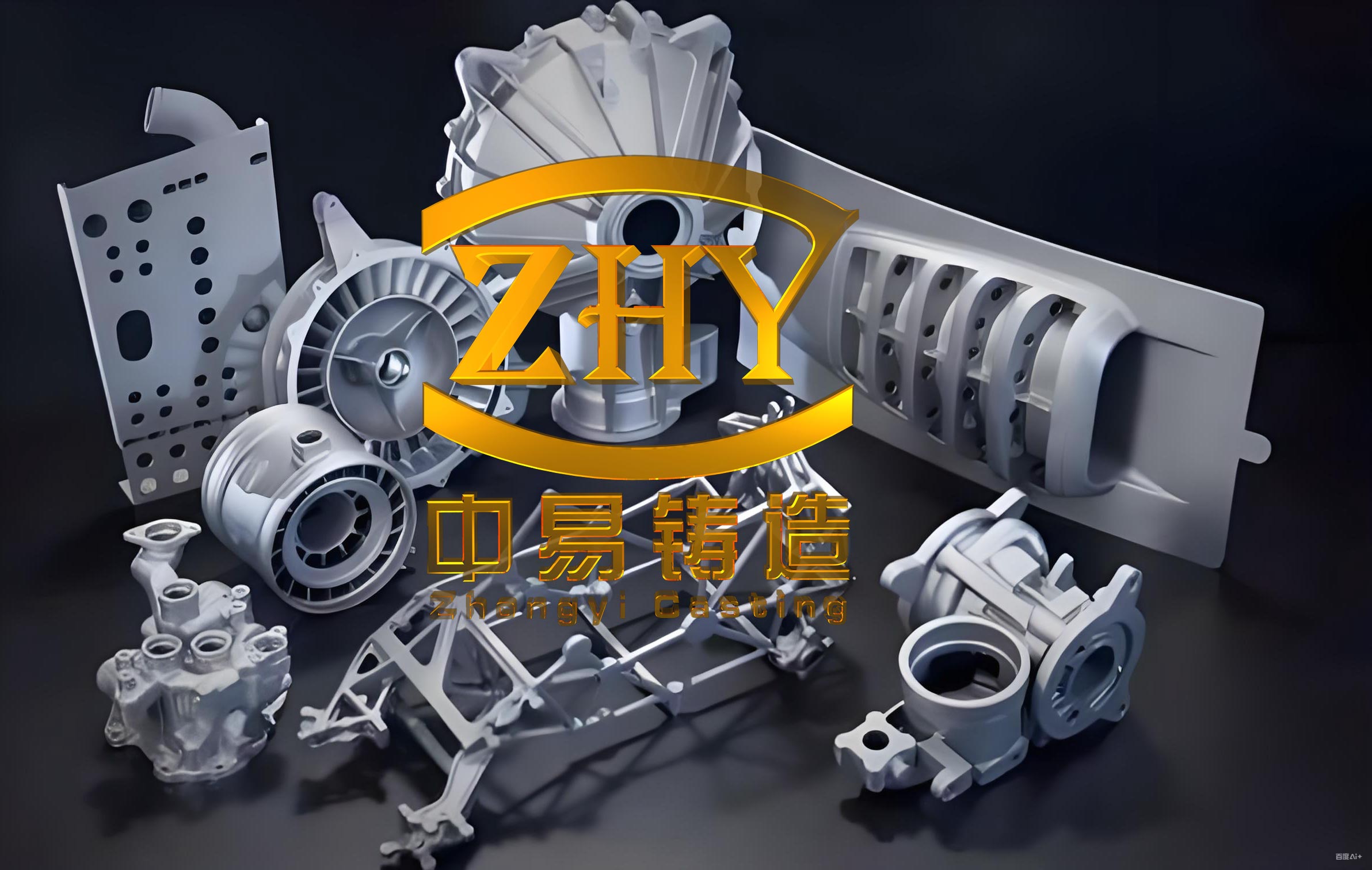
The mathematical modeling of the casting process is the bedrock upon which all accurate simulations are built. The flow of molten metal into a mold cavity and its subsequent solidification is a classic example of a transient, multi-phase problem involving fluid dynamics, heat transfer, and phase change. For aluminum alloys under pressure-assisted processes like low-pressure die casting and high-pressure die casting—common methods in aerospace casting—the governing equations must account for the effects of both gravity and externally applied pressure. The system can be described by a set of partial differential equations. The momentum conservation equation, often represented by a form of the Navier-Stokes equation, is fundamental:
$$
\rho \left( \frac{\partial \mathbf{v}}{\partial t} + \mathbf{v} \cdot \nabla \mathbf{v} \right) = -\nabla p + \mu \nabla^2 \mathbf{v} + \rho \mathbf{g} + \mathbf{S}_p
$$
Here, $\rho$ is the fluid density, $\mathbf{v}$ is the velocity vector, $t$ is time, $p$ is pressure, $\mu$ is the dynamic viscosity, $\mathbf{g}$ is the gravitational acceleration vector, and $\mathbf{S}_p$ represents a momentum source term that can model the effect of applied pressure during the intensification phase in pressure die casting. This term is crucial for accurately simulating aerospace casting processes where pressure is used to feed shrinkage.
The continuity equation, ensuring mass conservation for an incompressible flow, is given by:
$$
\nabla \cdot \mathbf{v} = 0
$$
The energy equation, which governs heat transfer and the release of latent heat during solidification, is equally critical:
$$
\rho c_p \left( \frac{\partial T}{\partial t} + \mathbf{v} \cdot \nabla T \right) = \nabla \cdot (k \nabla T) + Q_L
$$
where $c_p$ is the specific heat, $T$ is temperature, $k$ is the thermal conductivity, and $Q_L$ is the latent heat source term related to the phase change from liquid to solid. Modeling this phase change accurately is vital for predicting shrinkage defects in aerospace aluminum castings.
To track the interface between the molten metal and the air (or gas) in the mold, a volume-of-fluid (VOF) method is typically employed. This involves solving an additional transport equation for the volume fraction, $F$, of the fluid:
$$
\frac{\partial F}{\partial t} + \nabla \cdot (\mathbf{v} F) = 0
$$
Furthermore, to predict the formation of shrinkage porosity and cavities, a criterion based on the local thermal conditions and pressure is necessary. One common approach involves solving a supplementary equation for the local pressure in the mushy zone or using feeding potential models. A simplified representation of the pressure evolution in the two-phase region can be considered:
$$
\frac{\partial p}{\partial t} + \mathbf{v} \cdot \nabla p = -K \nabla \cdot \mathbf{v}
$$
where $K$ is a coefficient related to the compressibility of the mushy zone. The system of equations (1) through (5) forms a strongly coupled, non-linear set that requires robust numerical methods for solution.
The numerical approach we have extensively used and refined is based on the Finite Difference Method (FDM) for spatial discretization. For the fluid flow solution, the SOLA-VOF (Solution Algorithm – Volume of Fluid) method provides a stable framework. This method iteratively solves the momentum and continuity equations to correct the pressure and velocity fields. The treatment of the free surface using the VOF function is particularly adept at handling the complex surface topology changes during mold filling for intricate aerospace casting geometries. The thermal and solidification calculations are coupled with the flow solution, often using an explicit or semi-implicit time-marching scheme. The following table summarizes the key physical phenomena, their governing equations, and the primary numerical challenges specific to aerospace aluminum casting simulation.
| Physical Phenomenon | Governing Equation/Principle | Key Parameters for Aluminum Alloys | Numerical Challenge |
|---|---|---|---|
| Fluid Flow (Mold Filling) | Incompressible Navier-Stokes, Continuity | Density (~2380 kg/m³), Viscosity (temperature-dependent) | Free surface tracking, high Reynolds number flows in thin sections |
| Heat Transfer & Solidification | Energy Equation with Latent Heat | Liquidus/Solidus temperature, Latent Heat (~397 kJ/kg), Specific Heat | Non-linear phase change, interfacial heat transfer coefficient at mold-metal interface |
| Shrinkage & Porosity Formation | Feeding Flow, Pressure Drop in Mushy Zone | Solidification shrinkage (~6-7%), Permeability of dendritic network | Coupled thermo-fluid-solutal modeling, microporosity prediction |
| Gas Entrapment (Die Casting) | VOF Transport Equation | Initial gas pressure in cavity, Venting efficiency | Capturing small gas pockets, modeling gas compression |
| Applied Pressure Effects | Momentum Source Term $\mathbf{S}_p$ | Pressure profile (intensification pressure, holding time) | Coupling external machine parameters with fluid equations |
The practical application of this technology in the aerospace sector is where its value is fully realized. Let me discuss several extended examples that illustrate the power of CAE simulation. In high-pressure die casting (HPDC) for aerospace components, such as sensor housings or actuator bodies, one of the most persistent challenges is gas entrapment. The very high injection speeds necessary to fill the mold before the metal solidifies can lead to turbulent flow that traps air bubbles. These bubbles become critical defects under the high stresses experienced in service. Using our simulation system, we can visualize the filling sequence in extreme detail. For instance, in a simulated case of an aerospace casting for an avionics compartment, the initial gating design led to a jetting effect that folded air into the melt at a specific location. The simulation clearly showed a region of high gas concentration correlating with a potential defect site. The velocity field and pressure distribution during filling provided the insights needed to redesign the runner and gate system, resulting in a more laminar fill pattern and eliminating the air entrapment. This virtual optimization prevented what would have been a costly and time-consuming series of physical trials.
For low-pressure die casting (LPDC), which is often favored for larger, structurally demanding aerospace castings like brackets and frames, the primary concern shifts to shrinkage porosity. In LPDC, molten metal is pushed upwards into the mold by applied gas pressure, which is maintained during solidification to feed shrinkage. However, if the thermal conditions create isolated liquid pools that are cut off from the pressure feed path, shrinkage defects will form. Our simulation technology quantitatively predicts these defects by tracking the evolution of the solid fraction and the pressure field within the remaining liquid. Consider a complex aerospace casting for an engine mount component. The initial process design, while seemingly sound, resulted in simulated isolated liquid zones in thick junction areas. The software’s defect prediction module, which uses a criterion based on local solidification time and pressure, flagged these zones as high-risk for shrinkage porosity. By adjusting the cooling channel layout in the die and modifying the pressure profile, we were able to achieve a directional solidification pattern toward the feeder, ensuring all sections remained fed until solidification was complete. The table below contrasts typical defect types, their causes, and how CAE simulation aids in their mitigation for aerospace casting processes.
| Casting Process | Primary Defect Types | Root Causes | CAE Simulation Predictive Capability | Typical Corrective Actions Guided by CAE |
|---|---|---|---|---|
| High-Pressure Die Casting (HPDC) | Gas Porosity (Entrapment), Cold Shuts, Surface Defects | Turbulent filling, poor venting, low metal or die temperature | Visualization of fill pattern, identification of air pockets, temperature mapping | Optimize gate location/size, design overflow wells, adjust injection speed profile, improve venting |
| Low-Pressure Die Casting (LPDC) | Shrinkage Porosity/Cavities, Microporosity, Oxide Inclusions | Poor thermal gradient, inadequate feeding pressure, long fill times | Prediction of isolated liquid regions, solidification sequence, feeding efficiency analysis | Optimize riser/feeder design, modify cooling system, adjust pressure holding curve, change pouring temperature |
| Sand Casting (for aerospace applications) | Shrinkage, Inclusions, Dimensional Variation | Uncontrolled solidification, mold erosion, core shift | Simulation of solidification fronts, stress/distortion analysis, core gas evolution | Reposition chills and risers, redesign core geometries, optimize gating for minimal turbulence |
The mathematical models become even more insightful when we consider specific material properties of aerospace aluminum alloys, such as A356, A357, or the high-strength 2xx and 7xx series alloys used in casting. Their solidification ranges, hot tearing susceptibility, and thermal properties must be accurately represented in the simulation database. For instance, the relationship between fraction solid ($f_s$) and temperature ($T$) is often described by a microsegregation model like the Scheil equation or a more equilibrium-based lever rule. A simplified form can be expressed as:
$$
f_s = 1 – \left( \frac{T_M – T}{T_M – T_L} \right)^{\frac{1}{1-k_0}}
$$
where $T_M$ is the melting point of the pure solvent, $T_L$ is the liquidus temperature, and $k_0$ is the equilibrium partition coefficient. Integrating such material models allows the CAE system to predict not just the location of defects but also the potential for microstructural variations that affect mechanical properties—a critical consideration for aerospace casting.
Another advanced aspect is the coupling of macro-scale shrinkage prediction with microporosity models. The famous Niyama criterion, while originally developed for steel, has been adapted for aluminum alloys. It predicts porosity based on the local thermal gradient $G$ and solidification rate $R$:
$$
Niyama = \frac{G}{\sqrt{\dot{T}}} \quad \text{or} \quad \frac{G}{\sqrt{R}}
$$
where $\dot{T}$ is the cooling rate. Regions where this criterion falls below a critical value are prone to microporosity. In pressure-assisted casting for aerospace parts, this criterion is modified to account for the local applied pressure $p_a$:
$$
\frac{G}{\sqrt{\dot{T}}} \geq C \cdot \frac{1}{\sqrt{p_a}}
$$
where $C$ is a material-dependent constant. Implementing such advanced criteria within the CAE software enables a quantitative assessment of internal soundness, which is essential for qualifying an aerospace casting for flight.
The evolution of computing power has been a key enabler. What once required days of computation on a supercomputer for a single aerospace casting simulation can now be accomplished on a high-end workstation in hours. This speed allows for iterative optimization, where multiple design variants can be tested virtually. For example, in designing the gating system for a large structural aerospace casting, we can run simulations for 5-10 different concepts, comparing fill patterns, temperature distributions, and defect indices in a structured manner. This process dramatically compresses the design cycle. The table below illustrates a hypothetical but realistic optimization sequence for an aerospace bracket casting, showing how simulation metrics guide decisions.
| Design Iteration | Primary Change | Simulation Metric: Fill Time (s) | Simulation Metric: Max Temp Gradient (K/mm) | Predicted Shrinkage Index (0-10 scale, lower is better) | Decision & Rationale |
|---|---|---|---|---|---|
| Baseline (Iteration 0) | Original single feeder | 8.5 | 12.5 | 7.8 (High risk in hub) | Unacceptable. High defect risk in critical area. |
| Iteration 1 | Added a side chill near hub | 8.3 | 15.1 | 6.2 (Moderate risk) | Improved, but thermal gradient increased, may cause stress. |
| Iteration 2 | Modified to two smaller feeders, relocated | 9.1 | 13.8 | 4.5 (Low risk) | Much better. Solidification sequence now directional toward feeders. |
| Iteration 3 (Final) | Adjusted feeder neck dimensions, fine-tuned pressure curve | 9.0 | 14.0 | 2.1 (Very low risk) | Optimal. Defect risk minimized while maintaining controllable fill time. |
Looking forward, the integration of casting CAE with other digital tools is shaping the future of aerospace manufacturing. The concept of the “digital twin”—a virtual replica of the physical casting process that updates in real-time with sensor data—is on the horizon. Furthermore, coupling macro-scale casting simulation with micro-scale models for grain structure and precipitation hardening will enable true predictive engineering of mechanical properties. Additive manufacturing (3D printing) of complex sand molds and cores for aerospace castings also benefits immensely from simulation, as the design freedom it allows must be validated for manufacturability. The equation for progress in this field is multifaceted, involving continuous improvement in algorithms, material databases, and user experience.
In conclusion, my extensive involvement with casting CAE technology has solidified my belief in its indispensable role in modern aerospace foundries. The ability to peer into the future of a casting process, to foresee and rectify potential defects, and to optimize designs for both performance and manufacturability represents a cornerstone of advanced manufacturing. For aerospace casting, where the margin for error is virtually zero, the adoption and sophisticated application of these simulation tools are no longer optional but a fundamental requirement for competitiveness and reliability. As computational power grows and models become ever more refined, we can anticipate a future where first-time-right production of even the most complex aluminum aerospace castings becomes the standard, driven by the insightful power of virtual simulation.