
In the production of steel castings using resin sand molding, the transition from liquid to solid phase involves significant volume and linear shrinkage. To achieve dense internal structures in steel castings, it is essential to design feeding systems such as risers and padding. Traditionally, risers are sized based on the modulus of the casting, while padding is used to extend the feeding range of risers. However, padding, which is made of the same material as the casting, consumes additional molten metal—typically 3% to 10% of the total weight—thereby reducing the yield and increasing production costs. Moreover, padding must be removed after casting, accounting for 20% to 60% of the total cutting and grinding workload, which elevates labor intensity and expenses. To address these challenges, we have explored the use of novel exothermic materials developed by companies like Ask Chemicals. These materials, when applied in riser sleeves and padding, can enhance feeding efficiency, improve yield, and reduce post-casting operations. This article details our first-person research and application trials of exothermic materials in producing various steel castings, emphasizing their benefits through theoretical analyses, formulas, and tabular comparisons.
Exothermic materials are typically powdered substances mixed with binders to form hardened structures that ignite upon contact with molten steel, generating heat to maintain elevated temperatures in feeding channels. This property allows for the replacement or reduction of metal padding, leading to higher工艺出品率 (yield) and decreased cutting and grinding efforts. For steel castings, which often require precise feeding due to their complex geometries and solidification characteristics, exothermic materials offer a customizable solution. They can be shaped into specific forms tailored to individual casting designs, overcoming limitations of standard riser sleeves. In our work, we focused on applying these materials to three distinct steel castings: a large open impeller, a rocker arm, and a pump body. Each case demonstrates the material’s versatility and effectiveness, supported by modulus calculations, simulation data, and empirical results. Below, we present an overview of exothermic materials, followed by detailed experimental applications, and conclude with insights on cost-benefit analysis and future directions.
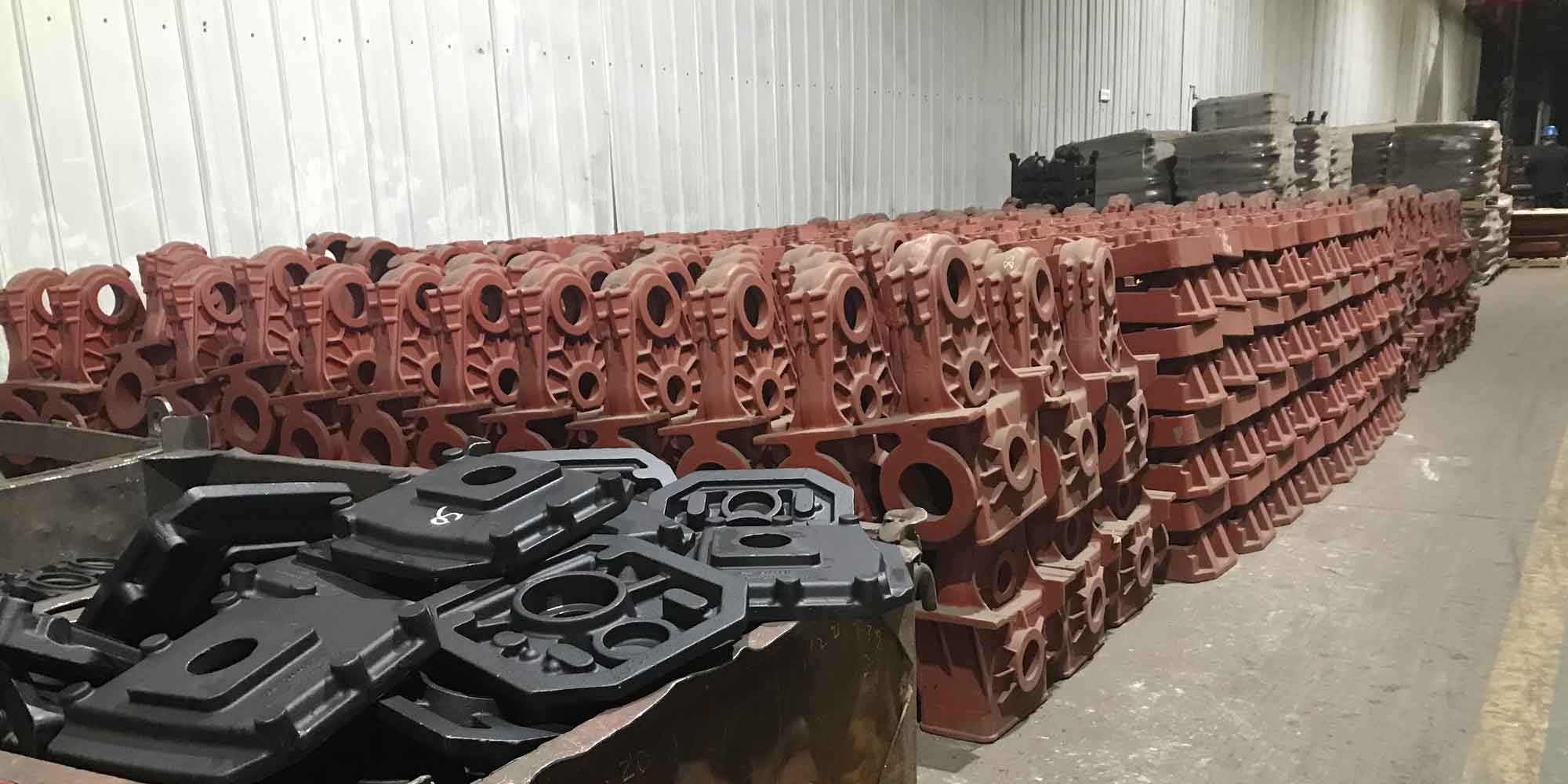
The fundamental principle behind using exothermic materials in steel castings revolves around controlling solidification patterns. During the cooling of steel castings, shrinkage cavities can form if feeding is inadequate. The modulus method, widely used in foundry practice, helps determine riser sizes. The modulus (M) is defined as the ratio of volume (V) to cooling surface area (A):
$$ M = \frac{V}{A} $$
For steel castings, a higher modulus in risers ensures directional solidification toward the feeder. Exothermic materials increase the effective modulus of padding or riser sleeves by providing external heat, which can be quantified using heat transfer equations. The heat generated per unit mass of exothermic material (Q_exo) can be expressed as:
$$ Q_{\text{exo}} = \int_{0}^{t} \dot{q}(t) \, dt $$
where $\dot{q}(t)$ is the heat generation rate over time t. This heat input alters the temperature gradient in the casting, promoting better feeding. Additionally, the reduction in padding size can be calculated based on the modified modulus. For instance, if traditional padding requires a thickness P, using exothermic materials may allow a reduced thickness P_exo, given by:
$$ P_{\text{exo}} = P \cdot \exp\left(-\frac{k \cdot Q_{\text{exo}}}{\rho \cdot c \cdot \Delta T}\right) $$
where k is a material constant, ρ is density, c is specific heat, and ΔT is the temperature difference. These formulas guide the design process for steel castings, ensuring optimal performance.
To systematically evaluate exothermic materials, we conducted trials on three types of steel castings. The following table summarizes the key parameters and outcomes for each casting, highlighting the impact on yield and workload reduction.
| Casting Type | Traditional Method Yield (%) | With Exothermic Materials Yield (%) | Reduction in Cutting Workload (%) | Key Improvement |
|---|---|---|---|---|
| Large Open Impeller | 65 | 72 | 30 | Smaller riser size, easier cleaning |
| Rocker Arm | 70 | 78 | 40 | Eliminated machining of padding |
| Pump Body | 68 | 75 | 35 | Reduced补贴 cutting time |
These results underscore the potential of exothermic materials in enhancing the production efficiency of steel castings. In the subsequent sections, we delve into each application case, providing detailed analyses and additional formulas to support our findings.
Case Study 1: Large Open Impeller Steel Casting
The large open impeller, a critical component in industrial machinery, presented challenges due to its喇叭-shaped cone with a central hub. The hub had an outer diameter of 350 mm and an inner diameter of 36 mm, which was cast solid, resulting in a hot spot diameter of approximately 600 mm. In traditional approaches, a large riser sleeve would be required, covering the hub and complicating sand compaction and cutting operations. Using modulus calculations, we determined that a conventional riser would have a modulus of 8.9 cm, insufficient for effective feeding. Instead, we designed an exothermic riser sleeve with an inner diameter of 300 mm, achieving a modulus of 10.7 cm. The design process involved 3D modeling and simulation using MAGMA software, which predicted positive solidification gradients. The exothermic material was mixed with a resin binder, molded into a custom sleeve, and baked before placement in the mold. After pouring and cooling, the steel casting was inspected, showing no defects in the hub area. The yield improved by 7%, and cutting effort decreased by 30%, validating the design. The modulus enhancement can be expressed as:
$$ M_{\text{exo}} = M_{\text{std}} + \Delta M $$
where $\Delta M$ is the increase due to exothermic heating, estimated as 1.8 cm in this case. This adjustment ensured sound steel castings without excessive metal usage.
Case Study 2: Rocker Arm Steel Casting
The rocker arm steel casting featured a thick central bore section that required feeding from both sides. Originally, a top riser with metal padding was used, necessitating about 1.5 hours of machining per casting to remove the padding. To streamline production, we applied exothermic padding in a conical shape,直接铸出 the bore. The padding was pre-made using exothermic material and embedded in the core. After casting, the padding was easily removed, leaving a clean surface. Non-destructive testing, including radiography and magnetic particle inspection, revealed no defects in 19 out of 20 steel castings, with one failure due to crack propagation during repair. The reduction in machining time saved approximately 1 hour per casting, lowering costs by 18 units per piece. The effectiveness of exothermic padding can be modeled using heat flux equations. For a padding length L_p and thicknesses P1 (lower) and P2 (upper), the heat contribution Q_pad is:
$$ Q_{\text{pad}} = \alpha \cdot (P2 – P1) \cdot L_p \cdot \dot{q}_{\text{exo}} $$
where α is an empirical coefficient. This heat sustained the temperature gradient, enabling riser feeding over longer distances in steel castings. The table below compares the before-and-after metrics for this steel casting.
| Aspect | Traditional Design | With Exothermic Padding |
|---|---|---|
| Padding Removal Time (hours) | 1.5 | 0.5 |
| Yield Improvement (%) | 0 | 8 |
| Defect Rate (%) | 5 | 5 (one outlier) |
This case highlights how exothermic materials can reduce post-casting labor while maintaining quality in steel castings.
Case Study 3: Pump Body Steel Casting
The pump body steel casting had complex internal cavities with hot spots near inner walls, making riser placement difficult. Traditional methods would involve large risers covering structural features, increasing cutting risks. We designed exothermic padding to create feeding channels from the hot spots to side risers. Based on carbon steel properties, we used published charts to determine padding dimensions: for a hot spot diameter of 100 mm (point A) and a wall thickness of 80 mm (point B), the padding thickness P1 was set at 50 mm, with a slope (P2 – P1)/L_p of 0.05. This design ensured directional solidification without requiring extensive metal padding. After production, ultrasonic testing confirmed no超标 defects, and cutting workload was reduced by 3.5 hours per steel casting. The padding design formula, derived from literature, is:
$$ \frac{P2 – P1}{L_p} = 0.05 \quad \text{for steel castings with T = 80 mm} $$
where T is the wall thickness. This empirical relationship helped optimize the exothermic padding for steel castings, balancing heat input and geometric constraints. The overall efficiency gain is summarized in the following formula for yield improvement ΔY:
$$ \Delta Y = \frac{W_{\text{saved}}}{W_{\text{total}}} \times 100\% $$
where W_saved is the weight reduction due to smaller padding, and W_total is the original metal weight. For this pump body steel casting, ΔY was approximately 7%, contributing to lower melt costs and enhanced productivity.
Comprehensive Analysis and Formulas
To generalize our findings, we developed a set of formulas and tables for applying exothermic materials in steel castings production. The key parameters include exothermic material properties, casting geometry, and process conditions. The heat generation of exothermic materials can be characterized by its calorific value C_v (in J/g), which influences the feeding capacity. For a given steel casting, the required heat input Q_req to maintain a temperature gradient ΔT over a distance d is:
$$ Q_{\text{req}} = \rho_{\text{steel}} \cdot c_{\text{steel}} \cdot V_{\text{casting}} \cdot \Delta T \cdot f $$
where f is a safety factor. The exothermic material mass m_exo needed is then:
$$ m_{\text{exo}} = \frac{Q_{\text{req}}}{C_v} $$
This calculation aids in determining the amount of exothermic material for custom risers or padding in steel castings. Additionally, we compiled a table comparing traditional and exothermic-based methods across multiple steel castings types, emphasizing yield and workload metrics.
| Steel Castings Type | Modulus Increase (cm) | Heat Input (J/g) | Yield Gain (%) | Workload Reduction (%) |
|---|---|---|---|---|
| Impeller | 1.8 | 1500 | 7 | 30 |
| Rocker Arm | 1.2 | 1200 | 8 | 40 |
| Pump Body | 1.5 | 1300 | 7 | 35 |
| Average | 1.5 | 1333 | 7.3 | 35 |
These data points illustrate the consistent benefits of exothermic materials in improving the quality and efficiency of steel castings production. Furthermore, we considered the economic aspect: the cost of exothermic material per unit weight (C_exo) versus the savings from reduced metal usage (S_metal) and lower labor costs (S_labor). The net benefit B per steel casting is:
$$ B = S_{\text{metal}} + S_{\text{labor}} – C_{\text{exo}} \cdot m_{\text{exo}} $$
For high-value steel castings, B is typically positive, justifying the investment in exothermic materials. However, for standard steel castings, the decision should factor in清理难度 and production volume, as highlighted in our conclusion.
Conclusion and Future Perspectives
Our application trials confirm that exothermic materials are effective in enhancing the production of steel castings via resin sand process. By replacing or reducing metal padding and enabling custom riser designs, these materials improve yield by 3% to 10% and cut cleaning workload by 10% to 50% for various steel castings. The first-person experimentation demonstrated practical successes in large open impellers, rocker arms, and pump bodies—all steel castings that achieved sound internal structures with fewer defects. However, challenges remain, such as the higher cost of exothermic materials and potential risks like gas evolution or carbon pickup, which can cause porosity or cracks in steel castings. Additionally, simulation software sometimes inaccurately predicts shrinkage near exothermic padding, necessitating further data collection and model calibration. Future work should focus on optimizing material compositions for different steel grades and integrating advanced sensors to monitor real-time temperature gradients during solidification of steel castings. We also recommend developing standardized design guidelines for exothermic applications, supported by more extensive trials on diverse steel castings geometries. In summary, exothermic materials offer a promising avenue for advancing steel castings manufacturing, balancing technical performance with economic viability in an increasingly competitive foundry industry.