
In my experience working with power plant fuel systems, the efficiency and reliability of coal crushing equipment are critical for maintaining uninterrupted operations. The ring hammer crusher, a key component in coal processing, faces significant challenges due to wear and impact failures of its parts. Over the years, I have observed that the traditional materials used for these components often lead to premature failure, resulting in downtime and increased maintenance costs. To address this, we explored the use of high manganese steel casting, specifically a new economical and environmentally friendly variant, which has shown remarkable improvements in performance and longevity. This article details my firsthand account of implementing this advanced material, supported by analytical insights, tables, and formulas to elucidate its benefits.
The fuel system in a power plant is responsible for unloading, storing, and supplying coal, with crushing equipment playing a pivotal role in ensuring coal particles meet the required size specifications. In our facility, we utilize ring hammer crushers designed to handle large coal lumps and reduce them to particles under 30 mm. These crushers operate at high speeds, typically around 740 rpm, and are subjected to intense mechanical stresses. The primary components, such as the ring hammers, crushing plates, and screens, endure repetitive impact, abrasion, and fatigue, leading to wear that compromises efficiency. Through extensive analysis, I identified that the wear mechanisms involve a combination of impact fatigue, abrasive wear, and corrosion, particularly in wet conditions. This realization prompted me to investigate alternative materials, focusing on high manganese steel casting due to its renowned toughness and work-hardening properties.
Ring hammer crushers function through a rotor equipped with ring hammers that rotate at high velocities. When coal enters the crusher, the hammers impart kinetic energy, causing the coal to fracture upon impact. This process involves multiple forces: impact forces from the initial collision, shear forces as particles slide against each other, compressive forces between the hammers and crushing plates, and grinding forces as smaller particles are further reduced against the screen. Mathematically, the impact energy can be expressed as $$ E = \frac{1}{2} I \omega^2 $$ where \( E \) is the kinetic energy, \( I \) is the moment of inertia, and \( \omega \) is the angular velocity. This energy transfer is crucial for efficient crushing but also accelerates wear on the components. In my observations, the wear process occurs in two stages: first, large coal blocks are fractured by high-stress impacts, leading to凿削磨料磨损 (chipping abrasion) and冲击疲劳磨损 (impact fatigue wear); second, smaller particles undergo碾磨 (grinding) and剪切 (shearing), resulting in挤压磨损 (extrusion wear) and磨料磨损 (abrasive wear). The ring hammers, in particular, experience a combination of these wear types, necessitating a material that balances hardness and toughness.
The lifespan of ring hammer crusher components is influenced by several factors, including the material properties, operational conditions, and coal characteristics. In my analysis, I found that traditional materials often fail due to inadequate hardness or韧性 (toughness), leading to rapid wear or catastrophic fractures. For instance, standard high manganese steel casting may not perform optimally under low-impact conditions, as it relies on work-hardening to achieve high surface hardness. The work-hardening phenomenon can be described by the relationship $$ H = H_0 + k \epsilon^n $$ where \( H \) is the hardened hardness, \( H_0 \) is the initial hardness, \( k \) is a material constant, \( \epsilon \) is the strain, and \( n \) is the work-hardening exponent. Under ideal conditions, high manganese steel casting can achieve hardness levels exceeding 500 HB from an initial 200 HB, but this requires sufficient impact energy. In practical scenarios, variations in coal hardness, moisture content, and feed size can reduce the effectiveness of work-hardening, accelerating wear. Additionally, corrosion in wet environments further degrades performance, highlighting the need for an improved high manganese steel casting formulation.
To overcome these limitations, we adopted a new type of high manganese steel casting, designated as ZG120Mn13Cr2Re, which incorporates rare earth elements and optimized heat treatment. This material enhances both耐磨性 (wear resistance) and韧性 (toughness), making it suitable for a wider range of operating conditions. The chemical composition and mechanical properties of this high manganese steel casting are summarized in the tables below, based on the GB/T5680-2010 standard for austenitic manganese steel castings. These tables illustrate how the addition of chromium and rare earth elements improves performance compared to conventional grades.
| Grade | C | Si | Mn | P | S | Cr | Mo | Ni | W |
|---|---|---|---|---|---|---|---|---|---|
| ZG120Mn17Mo1 | 1.05-1.35 | 0.3-0.9 | 16-18 | ≤0.060 | ≤0.040 | – | 0.9-1.2 | – | – |
| ZG110Mn13Mo1 | 0.75-1.35 | 0.3-0.9 | 11-14 | ≤0.060 | ≤0.040 | – | 0.9-1.2 | – | – |
| ZG100Mn13 | 0.90-1.05 | 0.3-0.9 | 11-14 | ≤0.060 | ≤0.040 | – | – | – | – |
| ZG120Mn13 | 1.05-1.35 | 0.3-0.9 | 11-14 | ≤0.060 | ≤0.040 | – | – | – | – |
| ZG120Mn13Cr2 | 1.05-1.35 | 0.3-0.9 | 11-14 | ≤0.060 | ≤0.040 | 1.5-2.5 | – | – | – |
| ZG120Mn13W1 | 1.05-1.35 | 0.3-0.9 | 11-14 | ≤0.060 | ≤0.040 | – | – | – | 0.9-1.2 |
Note: Trace elements such as V, Ti, Nb, B, and Re may be added.
| Grade | Yield Strength (MPa) | Tensile Strength (MPa) | Elongation (%) | Impact Energy (J) |
|---|---|---|---|---|
| ZG120Mn13 | ≥685 | – | ≥25 | ≥118 |
| ZG120Mn13Cr2 | ≥390 | ≥735 | ≥20 | – |
The development of this high manganese steel casting involved adjusting the carbon and manganese ratios, incorporating chromium for enhanced corrosion resistance, and adding rare earth elements to refine the microstructure. The heat treatment process, which includes water toughening at temperatures above 1040°C, was optimized to achieve a fine austenitic structure with improved toughness. The effect of rare earth elements on grain refinement can be modeled using the equation $$ d = k \cdot T^{-n} $$ where \( d \) is the grain size, \( k \) is a constant, \( T \) is the temperature, and \( n \) is an exponent related to processing conditions. This refinement contributes to higher impact absorption and wear resistance, as evidenced by the mechanical properties in Table 2. In our tests, the ZG120Mn13Cr2Re high manganese steel casting demonstrated superior performance in both dry and wet conditions, with wear resistance exceeding that of conventional materials by a factor of 2-3.
In practical application, we replaced the imported ring hammers, crushing plates, and screens in our crushers with components made from this new high manganese steel casting. The results were impressive: the service life of the ring hammers more than doubled, reducing the frequency of replacements and associated downtime. For instance, the wear rate, which can be quantified by the volume loss per unit time, decreased significantly. Using the Archard wear equation $$ V = K \frac{F_n L}{H} $$ where \( V \) is the wear volume, \( K \) is the wear coefficient, \( F_n \) is the normal load, \( L \) is the sliding distance, and \( H \) is the hardness, we estimated that the wear coefficient for the new high manganese steel casting was reduced by approximately 50% compared to traditional materials. This translates to longer operational intervals and lower maintenance costs. Additionally, we applied this high manganese steel casting to liner plates in coal chutes, where it lasted 3-5 times longer than standard manganese steel plates, further validating its versatility.
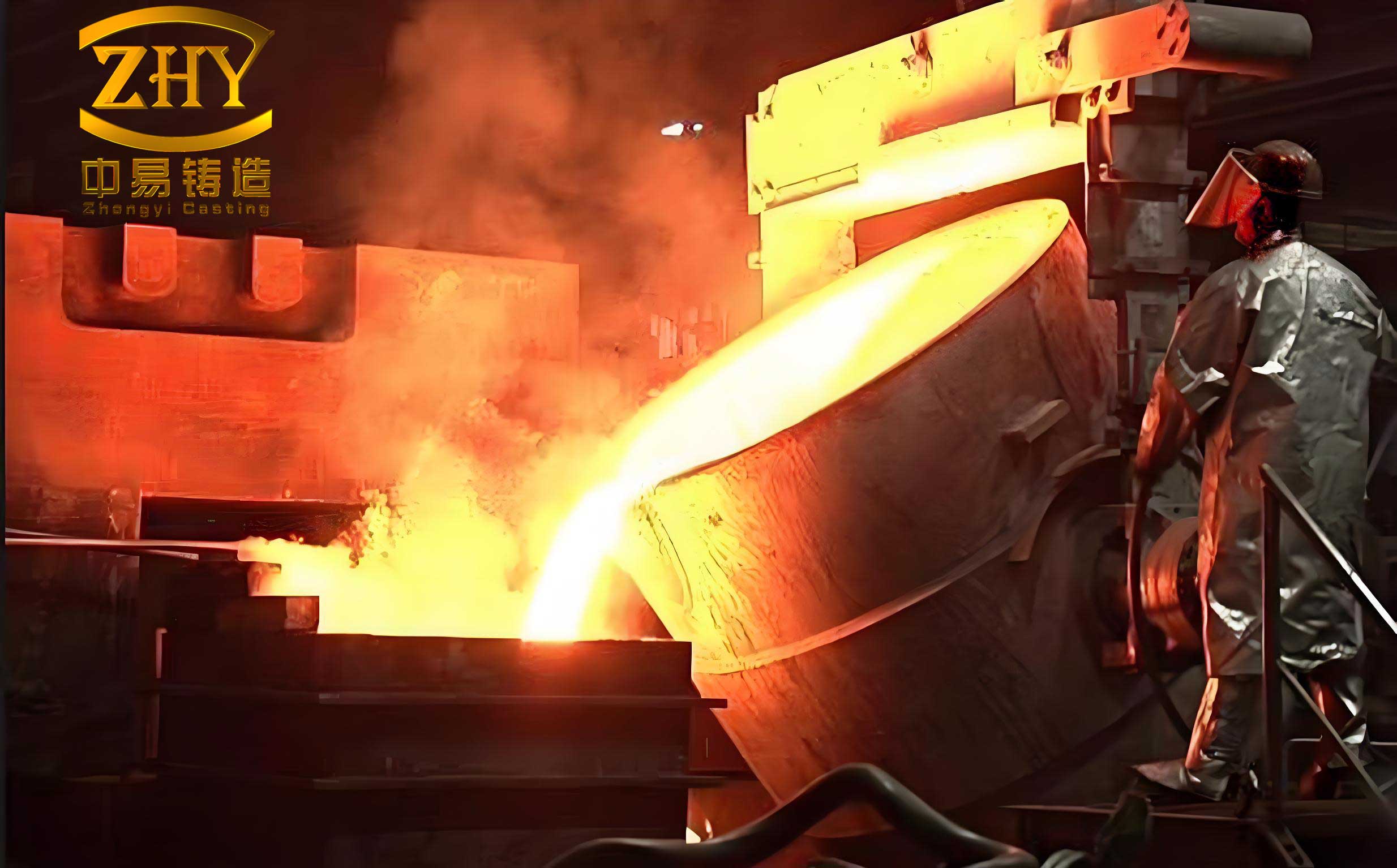
The economic and environmental benefits of this high manganese steel casting are substantial. By reducing the consumption of rare and expensive metals and employing energy-efficient heat treatment methods, such as circulating water toughening, we minimized resource usage and environmental impact. The lifecycle cost analysis, considering material, energy, and disposal factors, can be expressed as $$ C_{total} = C_m + C_e + C_d $$ where \( C_{total} \) is the total cost, \( C_m \) is the material cost, \( C_e \) is the energy cost, and \( C_d \) is the disposal cost. For the new high manganese steel casting, \( C_{total} \) was lower due to extended service life and reduced waste. Moreover, the improved toughness reduces the risk of catastrophic failures, enhancing safety and reliability in coal handling operations.
Looking deeper into the material science, the high manganese steel casting’s ability to work-harden under impact is a key advantage. The relationship between strain and hardness can be further explored using the Hollomon equation $$ \sigma = K \epsilon^n $$ where \( \sigma \) is the true stress, \( K \) is the strength coefficient, and \( n \) is the strain-hardening exponent. For ZG120Mn13Cr2Re, the value of \( n \) is higher, indicating better work-hardening capability. This makes it ideal for high-impact applications like ring hammer crushers, where surface hardening under load prolongs component life. In contrast, conventional high manganese steel casting may not achieve sufficient hardness under low-stress conditions, leading to accelerated wear. Our field data confirmed that the new material maintained its integrity even under variable coal qualities and moisture levels, demonstrating its robustness.
In conclusion, the adoption of this advanced high manganese steel casting has revolutionized our approach to managing wear in ring hammer crushers. The combination of rare earth additions, optimized chemistry, and improved heat treatment results in a material that excels in toughness, wear resistance, and environmental sustainability. As power plants strive for higher efficiency and lower emissions, materials like this high manganese steel casting play a crucial role in achieving these goals. Future work could focus on further alloy modifications and digital modeling of wear processes to push the boundaries of performance. Based on my experience, I highly recommend this high manganese steel casting for similar applications, as it not only enhances equipment longevity but also supports sustainable industrial practices.