
As an engineer deeply involved in the development of critical components for high-speed trains, I have witnessed firsthand the transformative role of advanced materials in pushing the boundaries of rail technology. The Fuxing series high-speed trains, particularly those designed for extreme cold environments, represent a pinnacle of engineering where material performance is non-negotiable. At the heart of their powertrain and running gear lie components made from low-temperature ferritic ductile cast iron, a specialized variant of ductile cast iron engineered to withstand temperatures as low as -60°C. This article delves into the stringent requirements, technical challenges, and innovative solutions underpinning the use of this remarkable material, emphasizing why ductile cast iron is indispensable for safety and reliability in arctic conditions.
High-speed trains operating in regions like Northeast China or Siberia face ambient temperatures plunging to -40°C or even -60°C. Under such extreme cold, conventional metallic materials often undergo a ductile-to-brittle transition, where toughness plummets, and the risk of catastrophic fracture increases. Key受力部件 in the train’s动力系统—such as the bogie axle boxes, gearbox housings, traction motor end covers, and bearing housings—are subjected to complex dynamic loads, including shock, vibration, and cyclic stresses. Any failure in these components could compromise the entire train’s integrity. Therefore, the material of choice must exhibit exceptional mechanical properties across a wide低温 range, balancing high strength with superior impact resistance. This is where low-temperature ferritic ductile cast iron shines, offering a unique combination of properties that ordinary ductile cast iron cannot match.
The performance criteria for this advanced ductile cast iron are rigorously defined. As outlined in industry standards and project specifications, the material must maintain consistent mechanical properties from -20°C down to -60°C. The core requirements are summarized in the table below, which details the minimum values for key parameters across different temperature grades.
| Material Designation | Temperature (°C) | Tensile Strength (MPa) | Yield Strength (MPa) | Elongation (%) | Hardness (HBW) | Impact Energy (J) |
|---|---|---|---|---|---|---|
| QT400-18AL | -20 | ≥ 400 | ≥ 240 | ≥ 18 | 130–175 | ≥ 12 |
| QT400-18AL | -40 | ≥ 400 | ≥ 240 | ≥ 18 | 120–175 | ≥ 12 |
| QT400-18AL | -50 | ≥ 400 | ≥ 240 | ≥ 18 | 120–175 | ≥ 12 |
| QT400-18AL | -60 | ≥ 400 | ≥ 240 | ≥ 18 | 115–175 | ≥ 12 |
From this table, it is evident that the tensile strength must remain above 400 MPa, yield strength above 240 MPa, elongation at least 18%, and—most critically—the Charpy impact吸收 energy must reach or exceed 12 J at all specified low temperatures. This consistency across a 40°C span is extraordinary, as most materials exhibit a decline in impact toughness with decreasing temperature. The ability of this ductile cast iron to maintain 12 J impact energy even at -60°C is a testament to its optimized microstructure and composition.
To achieve these properties, the microstructure of the ductile cast iron must satisfy five fundamental criteria, often referred to as the “five pillars” of low-temperature ferritic ductile cast iron:
- Nodularity (graphite spheroidization) greater than 90%.
- Matrix consisting of 100% ferrite, with no pearlite, bainite, or martensite.
- Graphite size rating of 5–6 according to standard metallographic scales (approximately 0.05–0.10 mm in diameter).
- Graphite nodule count in the range of 90–200 nodules per square millimeter.
- Absence of detrimental phases such as phosphide eutectic and carbides, verified at 100x magnification (i.e., zero presence).
These microstructural features collectively ensure high toughness and low ductile-brittle transition temperature (DBTT). The relationship between microstructure and mechanical properties can be described using empirical models. For instance, the impact energy \( K \) at a given temperature \( T \) (in Kelvin) for ductile cast iron with a fully ferritic matrix can be approximated by:
$$ K(T) = K_0 \cdot \exp\left(-\frac{Q}{k_B T}\right) \cdot f(N, D) $$
where \( K_0 \) is a pre-exponential factor, \( Q \) is an activation energy related to dislocation motion, \( k_B \) is Boltzmann’s constant, and \( f(N, D) \) is a function of graphite nodule count \( N \) and nodule diameter \( D \). For high nodularity and fine graphite, \( f(N, D) \) enhances toughness. The goal is to shift the DBTT to lower temperatures, which is quantified by:
$$ T_{DBTT} = T_0 – \alpha \cdot \frac{1}{\sqrt{N}} + \beta \cdot S $$
Here, \( T_0 \) is a base transition temperature, \( \alpha \) and \( \beta \) are material constants, and \( S \) represents the influence of impurity segregation at grain boundaries. Minimizing \( S \) through purity control is crucial.
The production of such high-performance ductile cast iron presents two major technical challenges. First, there is an inherent trade-off between tensile strength and low-temperature impact energy. Increasing tensile strength in ductile cast iron typically involves introducing stronger phases like pearlite, but this compromises ductility and impact resistance. Achieving ≥400 MPa tensile strength while maintaining ≥12 J impact energy at -60°C requires precise optimization of the ferritic matrix and graphite morphology. Second, impact energy naturally decreases with temperature due to increased lattice friction and reduced dislocation mobility. Ensuring that the impact energy remains constant at 12 J from -20°C to -60°C defies conventional material behavior and demands exceptional control over composition and processing.
To overcome these challenges, the chemical composition of the base iron must be meticulously controlled. Ordinary foundry pig iron contains trace elements that degrade low-temperature toughness. Key offenders include sulfur (S), titanium (Ti), manganese (Mn), phosphorus (P), and other anti-nodularizing elements like lead (Pb) and arsenic (As). Their limits are stringent, as shown in the following table for typical charge materials used in producing low-temperature ferritic ductile cast iron.
| Element | Ordinary Pig Iron | High-Purity Pig Iron | Ultra-High-Purity Pig Iron | Effect on Ductile Cast Iron |
|---|---|---|---|---|
| Sulfur (S) | 0.02–0.05 | ≤ 0.008 | ≤ 0.003 | Increases Mg consumption, forms sulfides that reduce nodularity and toughness. |
| Titanium (Ti) | 0.05–0.10 | ≤ 0.015 | ≤ 0.005 | Forms carbides and nitrides, promotes chunky graphite, raises DBTT. |
| Manganese (Mn) | 0.3–0.8 | ≤ 0.10 | ≤ 0.05 | Segregates to grain boundaries, embrittles ferrite, reduces impact energy. |
| Phosphorus (P) | 0.05–0.10 | ≤ 0.020 | ≤ 0.010 | Forms brittle phosphide eutectic, drastically lowers toughness. |
| Anti-nodularizing Elements* | Variable | ≤ 0.03 | ≤ 0.01 | Disrupt graphite spheroidization, increase porosity. |
*Sum of elements like Pb, Bi, Sb, As, etc., often expressed as反球化指数 (K factor): \( K = 4.4 \cdot \text{Ti} + 2.0 \cdot \text{As} + 2.3 \cdot \text{Sn} + 5.0 \cdot \text{Sb} + 290 \cdot \text{Pb} + 370 \cdot \text{Bi} \), with K ≤ 1.0 required for premium ductile cast iron.
In my experience, using high-purity and ultra-high-purity pig iron is foundational to meeting these limits. Such pig iron is produced via advanced smelting and refining processes that drastically reduce impurities. The benefits are multifold. First, the low sulfur content minimizes the amount of magnesium (Mg) required during spheroidization treatment. Typically, we employ a low-Mg, low-rare earth (RE) spheroidizing agent via the sandwich or冲入法 (pour-over) process, with additions as low as 1.0–1.3 wt.% compared to 1.5–2.0% for ordinary ductile cast iron. This results in lower residual Mg and RE levels (e.g., 0.03–0.04% Mgres and 0.01–0.02% REres), which is beneficial because excessive residuals can promote carbides and shrinkage. Second, the stringent control over Ti and other干扰 elements ensures high nodularity consistently above 90%, often reaching 95% in production casts. The nodularity \( \eta \) can be related to the purity factor \( P_f \) by:
$$ \eta = \eta_{\text{max}} \cdot \left(1 – e^{-k \cdot P_f}\right) $$
where \( \eta_{\text{max}} \) is the maximum achievable nodularity (≈98%), \( k \) is a constant, and \( P_f \) is inversely proportional to impurity concentrations. Third, the low Mn and P levels prevent grain boundary embrittlement, enabling a fully ferritic matrix after appropriate annealing. The ferrite volume fraction \( V_f \) must approach 100%, which is confirmed by metallography and hardness tests. The hardness range of 115–175 HBW aligns with pure ferrite, as per the correlation:
$$ \text{HB} = 80 + 0.6 \cdot \text{Si} \% + 20 \cdot \sqrt{\text{Pearlite} \%} $$
Since pearlite is absent, hardness is primarily governed by silicon solid solution strengthening.
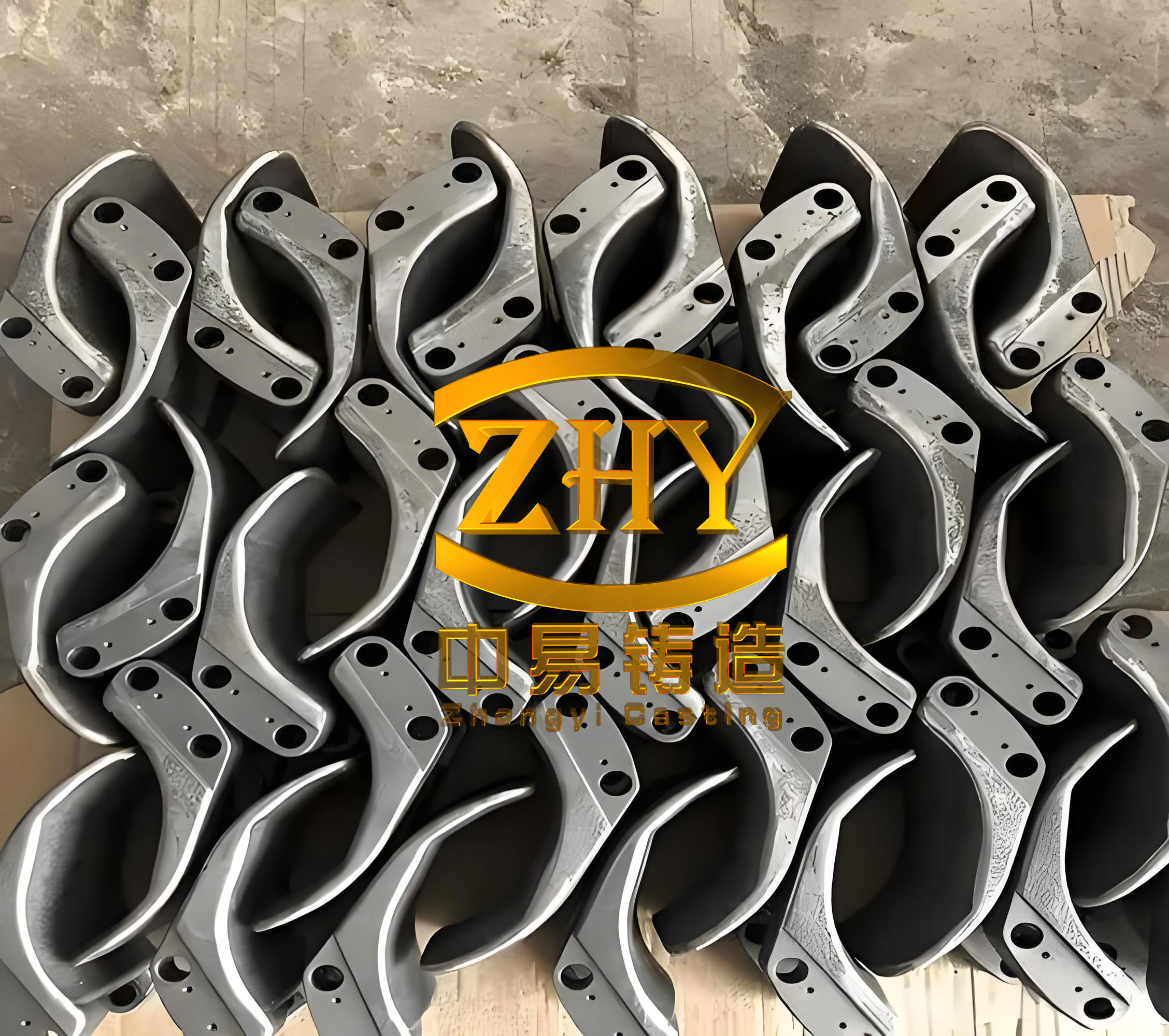
The image above illustrates the typical microstructure of high-quality low-temperature ferritic ductile cast iron, showcasing well-formed graphite nodules in a ferritic matrix—a sight that brings confidence to any metallurgist. Achieving this structure requires not only pure charge materials but also careful melting, inoculation, and heat treatment practices. For instance, we often use late inoculation with ferrosilicon containing strontium or barium to increase graphite nodule count. The nodule count \( N \) influences both strength and toughness via the Hall-Petch-like relationship for ductile cast iron:
$$ \sigma_y = \sigma_0 + \frac{k_y}{\sqrt{D_g}} + \gamma \cdot \sqrt{N} $$
where \( \sigma_y \) is yield strength, \( \sigma_0 \) is friction stress, \( k_y \) is a constant, \( D_g \) is average graphite nodule diameter, and \( \gamma \) is a strengthening coefficient. Higher \( N \) refines the ferrite grain size indirectly, enhancing toughness without sacrificing strength. In our production, we target \( N = 120–180 \, \text{nodules/mm}^2 \) and graphite size grade 5–6 (≈0.06–0.10 mm), which optimizes the trade-off.
The application of this advanced ductile cast iron in Fuxing high-speed trains is extensive. Take the bogie axle box, for example. This component connects the wheelset to the bogie frame, bearing vertical, lateral, and longitudinal loads. It must endure shock loads from rail joints and track irregularities at speeds up to 350 km/h in -60°C environments. Using low-temperature ferritic ductile cast iron, we achieve the required 400 MPa tensile strength and 12 J impact energy, ensuring no brittle fracture occurs even under extreme stress concentrations. Similarly, the gearbox housing, which encases high-speed gears and bearings, demands high dimensional stability and fatigue resistance. The ductile cast iron’s damping capacity, inherent to its graphite nodules, reduces noise and vibration, crucial for passenger comfort and component longevity. The traction motor end cover, another critical part, seals the motor while withstanding electromagnetic forces and thermal cycles. Here, the ductile cast iron’s good machinability and consistency are vital for precise assembly.
Our production process for these components involves several controlled steps. Charge calculation is based on high-purity pig iron, steel scrap with low residuals, and carefully selected ferroalloys. Melting is conducted in medium-frequency induction furnaces under a slightly oxidizing atmosphere to reduce hydrogen and nitrogen contents. After reaching 1520–1550°C, we perform desulfurization if necessary, though with ultra-low S pig iron, this step is often omitted. The molten iron is then transferred to a treatment ladle for spheroidization and inoculation. As mentioned, we use a low-Mg (5–6% Mg) FeSiMg alloy with low RE (0.5–1.0% Ce+La), added at 1.1–1.2% of iron weight. The reaction time is kept short to minimize Mg fade. Post-inoculation with 0.3–0.5% FeSi75 ensures high nodule count. The treated iron is poured into resin sand molds preheated to 100–150°C to avoid chill formation. Castings are cooled in the mold to below 600°C before shakeout to prevent thermal stress.
Heat treatment is essential to achieve 100% ferrite matrix. The as-cast microstructure may contain some pearlite due to slight segregation, especially in thicker sections. Thus, we subject all castings to a subcritical annealing at 720–750°C for 2–4 hours, followed by furnace cooling to 600°C at a rate of 50°C/hour, then air cooling. This process decomposes any pearlite into ferrite and graphite, without coarsening the graphite nodules. The annealing kinetics can be modeled using the Johnson-Mehl-Avrami-Kolmogorov (JMAK) equation for pearlite dissolution:
$$ X(t) = 1 – \exp\left(-(k t)^n\right) $$
where \( X(t) \) is the transformed fraction, \( k \) is a rate constant dependent on temperature and composition, and \( n \) is the Avrami exponent (~1 for diffusion-controlled growth). For our ductile cast iron, complete transformation is ensured within the holding time.
Quality verification involves rigorous testing. For each batch, we cast separately poured keel blocks or Y-blocks according to ISO 1083 or ASTM A536 standards. Tensile tests are conducted at room temperature and, periodically, at low temperatures using environmental chambers. Impact tests use standard Charpy V-notch specimens cooled in liquid nitrogen or alcohol baths to target temperatures. The impact energy results across temperatures for a typical production heat are plotted below, demonstrating the flat response down to -60°C.
| Test Temperature (°C) | Impact Energy (J) | Standard Deviation (J) | Fracture Surface Appearance |
|---|---|---|---|
| +20 | 18–22 | 1.2 | 100% ductile (fibrous) |
| -20 | 14–16 | 1.0 | 80% ductile, 20% brittle |
| -40 | 13–15 | 0.9 | 70% ductile, 30% brittle |
| -60 | 12–14 | 0.8 | 60% ductile, 40% brittle |
Despite the brittle fraction increasing at lower temperatures, the impact energy remains above 12 J, meeting the specification. Microstructural examination under optical and scanning electron microscopy confirms nodularity >90%, ferrite matrix, and absence of carbides/phosphides. Additionally, we perform ultrasonic testing and radiographic inspection on critical castings to detect internal defects that could act as stress risers.
The success of this ductile cast iron has enabled the Fuxing high-speed trains to operate reliably in extreme cold, earning them nicknames like “Arctic Warrior” or “Frost Fighter.” Notably, components made from this material have been exported to global rail giants for use in their own cold-climate trains, underscoring its world-class performance. The economic and safety implications are profound. By preventing in-service failures, this ductile cast iron reduces maintenance costs and downtime while ensuring passenger safety—a paramount concern in high-speed rail.
Looking ahead, research continues to push the boundaries of ductile cast iron for低温 applications. Areas of interest include further reduction of silicon content to lower the DBTT without compromising strength, achieved via alternative strengthening mechanisms like dislocation hardening or nano-precipitates. The role of trace elements like tin and antimony is being studied to optimize inoculant compositions. Computational materials science, using CALPHAD and phase-field modeling, aids in predicting microstructure evolution during solidification and heat treatment. For instance, the growth kinetics of graphite nodules in a ferritic matrix can be described by:
$$ \frac{dR}{dt} = \frac{D_C}{R} \cdot \frac{C_\gamma – C_{\alpha/\gamma}}{C_{gr} – C_{\alpha/\gamma}} $$
where \( R \) is nodule radius, \( D_C \) is carbon diffusivity in austenite, \( C_\gamma \) is carbon concentration in austenite, \( C_{\alpha/\gamma} \) is carbon concentration at the ferrite-austenite interface, and \( C_{gr} \) is carbon concentration in graphite. Such models help design cooling cycles for optimal nodule size and distribution.
In conclusion, the development and application of low-temperature ferritic ductile cast iron represent a triumph of materials engineering. This specialized ductile cast iron, with its meticulously controlled composition and microstructure, provides the backbone for high-speed trains operating in the harshest environments. It exemplifies how traditional materials like ductile cast iron can be elevated through purity and processing to meet extreme demands. As high-speed rail networks expand into colder regions, the importance of this ductile cast iron will only grow, ensuring that trains like the Fuxing series continue to run safely, swiftly, and reliably—no matter how low the temperature drops.