
In the production of nodular cast iron components, furan resin sand is widely employed due to its advantages in achieving high dimensional accuracy and production efficiency. However, a persistent issue arises: the surface of nodular cast iron castings often exhibits abnormal graphite layers, such as flake graphite or vermicular graphite, which significantly degrade mechanical properties like fatigue strength and service life. Through extensive investigation, I have identified sulfur infiltration as the primary cause of this phenomenon. This article details my research into the mechanisms of sulfur penetration and the development of effective anti-sulfur composite coatings, presenting experimental validation and analytical results to guide practical applications in foundries.
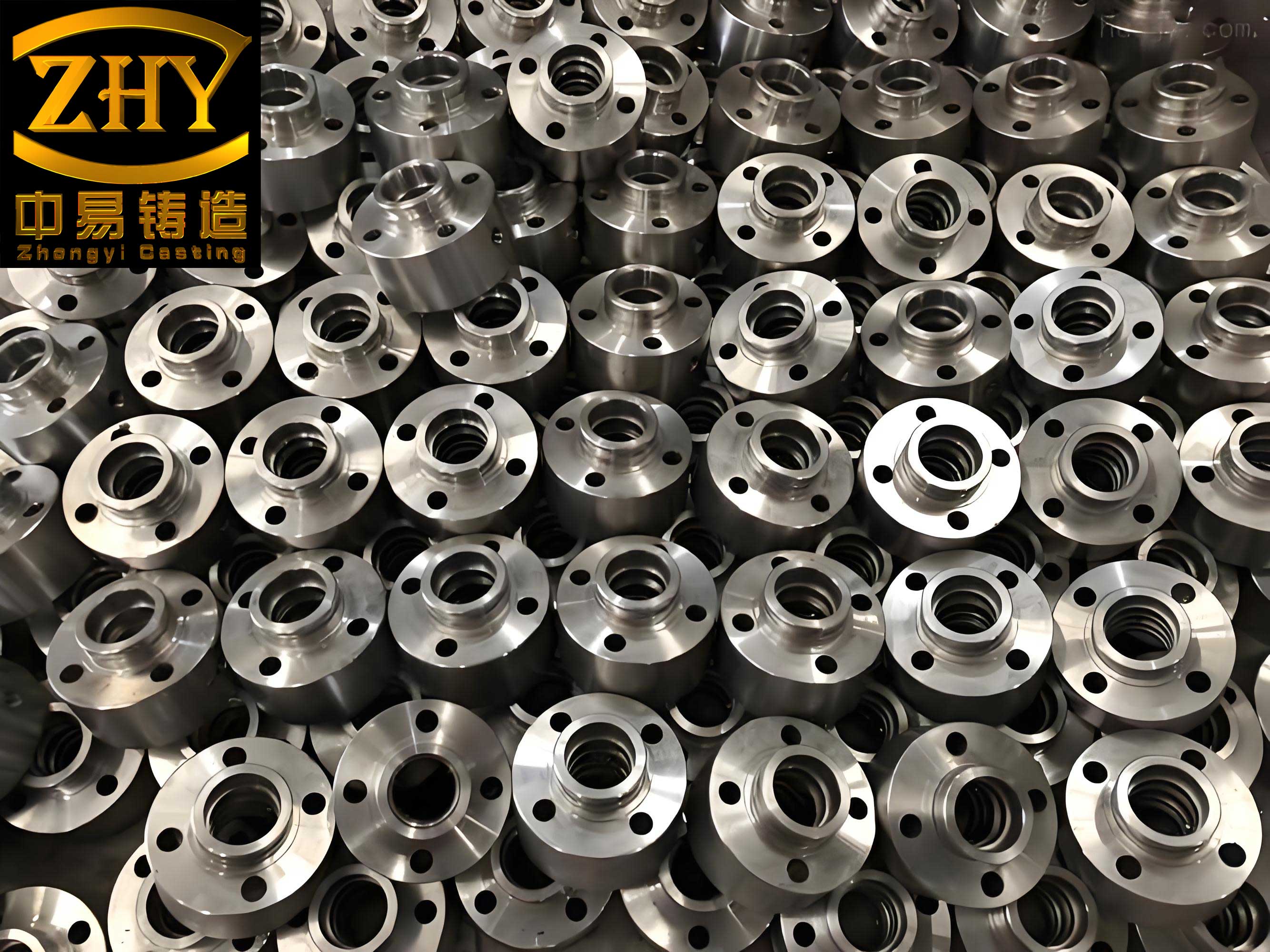
The problem of surface degradation in nodular cast iron castings is particularly critical for components like elevator traction sheaves and agricultural machinery parts, where structural integrity is paramount. My study focuses on understanding how sulfur from the molding sand infiltrates the casting surface and devising coating solutions to block this infiltration. The approach involves designing coatings based on three distinct principles: barrier-type, absorption-type, and shielding-type, each with specific compositions and mechanisms. I will elaborate on the sulfur infiltration process, coating design, experimental procedures, and outcomes, emphasizing the importance of material selection and compound interactions.
Sulfur infiltration in nodular cast iron castings produced with furan resin sand occurs through a series of high-temperature reactions. During pouring, the furan resin decomposes, releasing sulfur-containing gases, primarily SO₂, which then diffuse toward the metal surface. The mechanism can be described in stages. First, the curing agent, p-toluenesulfonic acid, decomposes in the presence of oxygen at elevated temperatures, yielding SO₂ gas. This reaction is represented as:
$$ \text{CH}_3\text{C}_6\text{H}_4\text{SO}_3\text{H} + X\text{O}_2 \rightarrow Y\text{CO}_2 + Z\text{CO} + P\text{H}_2\text{O} + Q\text{C}_m\text{H}_n + \text{SO}_2 \uparrow $$
Subsequently, the SO₂ gas adsorbs onto the molten iron surface, where it dissociates into atomic sulfur and oxygen:
$$ \text{SO}_2 (g) \rightarrow \text{S} + 2\text{O} $$
The sulfur atoms then diffuse into the iron matrix, establishing a concentration gradient from the surface inward. These sulfur atoms react with elements like magnesium (Mg), rare earth (RE), and manganese (Mn), which have high affinity for sulfur, forming sulfides. This reaction depletes the nodularizing agents in the surface layer, leading to graphite degeneration. The depth of this affected zone, often referred to as the variant graphite layer, depends on the extent of sulfur penetration. My analysis confirms that preventing SO₂ contact with the molten metal is crucial for maintaining the spherical graphite structure in nodular cast iron.
To mitigate sulfur infiltration, coatings applied to the mold surface offer a practical solution. Traditional graphite-based coatings are insufficient, so I developed three coating types based on different protective principles. The barrier-type coating relies on high sintering capability to form a dense, hard shell between the mold and metal, physically blocking SO₂ diffusion. The absorption-type coating incorporates alkaline materials that chemically react with SO₂, trapping sulfur as solid compounds within the coating. The shielding-type coating combines both barrier and absorption effects, providing enhanced protection. The mechanisms are summarized in the following conceptual equations for coating performance:
For barrier-type coatings, the sintering effectiveness (S_e) can be related to the formation of a continuous layer:
$$ S_e = f(T, C_a) $$
where T is temperature and C_a is the concentration of fluxing agents. For absorption-type coatings, the sulfur absorption capacity (A_s) is:
$$ A_s = k \cdot [\text{CaO}] + m \cdot [\text{MgO}] $$
where k and m are reaction rate constants, and [CaO] and [MgO] are concentrations of alkaline components. The shielding-type coating integrates both, with overall effectiveness (E) expressed as:
$$ E = \alpha S_e + \beta A_s $$
where α and β are weighting factors dependent on coating composition.
The selection of raw materials for these coatings is critical. I chose quartz powder (SiO₂) as the primary refractory due to its low cost, adequate refractoriness, and ability to sinter with fluxing agents. Dolomite powder (CaMg(CO₃)₂) serves as an alkaline additive for sulfur absorption, decomposing to CaO and MgO at high temperatures. Graphite powders, both flake and earthy types, provide neutral refractory properties and improve coating performance. Additional components include suspending agents (magnesium aluminum silicate), binders (phenolic resin and rosin), thickeners (polyvinyl butyral, PVB), and ethanol as the carrier. The physicochemical properties of key refractory materials are summarized in Table 1.
| Material | Main Composition | Density (g/cm³) | Linear Expansion Coefficient (20-1000 °C) /°C⁻¹ | Melting Point (°C) | Chemical Nature |
|---|---|---|---|---|---|
| Quartz Powder | SiO₂ | 2.65 | 12.3 × 10⁻⁶ | 1713 | Acidic |
| Dolomite Powder | CaMg(CO₃)₂ | 2.90 | 1.2 × 10⁻⁶ | 1850 | Basic |
| Graphite Powder | C | 2.25 | Low | >3000 | Neutral |
Based on these materials, I formulated three coating compositions, designated as Coating 1 (barrier-type), Coating 2 (absorption-type), and Coating 3 (shielding-type). The precise ratios are detailed in Table 2. Coating 1 contains quartz powder, graphite, and fluxing agents (Flux A and Flux B) to promote sintering. Coating 2 incorporates dolomite powder without fluxing agents, focusing on sulfur absorption. Coating 3 combines all elements, including dolomite and fluxing agents, for synergistic effects. The binder system uses 0.6% phenolic resin and 1.4% rosin, with 0.1% PVB as a thickener, suspended in ethanol to achieve a workable viscosity.
| Component | Coating 1 (Barrier) / % | Coating 2 (Absorption) / % | Coating 3 (Shielding) / % |
|---|---|---|---|
| Quartz Powder | 61.2 | 57.8 | 52.0 |
| Flake Graphite | 17.6 | 16.7 | 15.0 |
| Earthy Graphite | 9.4 | 8.8 | 8.0 |
| Dolomite Powder | 0 | 16.7 | 15.0 |
| Flux A | 7.1 | 0 | 6.0 |
| Flux B | 4.7 | 0 | 4.0 |
| Magnesium Aluminum Silicate | 6.0 | 6.0 | 6.0 |
| Phenolic Resin | 0.6 | 0.6 | 0.6 |
| Rosin | 1.4 | 1.4 | 1.4 |
| PVB | 0.1 | 0.1 | 0.1 |
| Ethanol | Balance | Balance | Balance |
To evaluate these coatings, I conducted production trials using elevator traction sheaves made of nodular cast iron grade QT700-2. The chemical composition of the iron is critical for understanding sulfur interactions; Table 3 lists the specified ranges. Melting was performed in a medium-frequency induction furnace with raw materials including pig iron and carbon steel. The pouring temperature was controlled at 1350 °C ± 10 °C, and nodularization was achieved via the sandwich method with 1.2% nodularizing agent. The molding process used furan resin sand with a resin addition of 1.5% of sand weight and a curing agent at 40% of resin weight.
| Element | Content (wB/%) |
|---|---|
| C | 3.5–3.7 |
| Si | 2.0–2.4 |
| Mn | 0.4–0.8 |
| P | ≤0.07 |
| S | ≤0.02 |
| Mg | 0.04–0.06 |
| RE | 0.02–0.04 |
| Cu | 0–1.0 |
Coatings were applied via flow coating to ensure uniformity, with a Baume degree of approximately 48. After drying, the coating thickness ranged from 200 to 250 μm. Post-casting, samples were extracted from the castings at designated locations, polished, and etched with 4% nital for metallographic examination. The depth of the variant graphite layer was measured at intervals of 0–1 mm, 1–2 mm, and 2–3 mm from the surface. The results revealed significant differences among the coatings.
For Coating 1 (barrier-type), the variant graphite layer extended up to 1.15 mm deep, indicating limited sulfur blockage. The sintering action provided some barrier, but SO₂ penetration still occurred. In contrast, Coating 2 (absorption-type) reduced the layer depth to 0.65–1.0 mm, demonstrating the effectiveness of dolomite in absorbing sulfur. However, the most impressive performance came from Coating 3 (shielding-type), which limited the variant graphite layer to only 0.25–0.3 mm. This underscores the synergy between sintering and absorption mechanisms. The sulfur content in the coatings after pouring was also analyzed; Figure 3 in the original text shows that coatings with dolomite had higher retained sulfur, confirming absorption.
To quantify the performance, I derived a model for sulfur infiltration depth (D_s) based on coating properties. The depth can be expressed as:
$$ D_s = D_0 \cdot e^{-k_c t} $$
where D_0 is the initial infiltration potential without coating, k_c is the coating effectiveness constant, and t is time. For different coatings, k_c varies: for barrier-type, k_c depends on sintering density; for absorption-type, k_c relates to alkaline content; and for shielding-type, k_c is a combination. Experimental data fit this model well, with Coating 3 showing the highest k_c value.
The role of fluxing agents (Flux A and Flux B) is crucial in enhancing sintering. They lower the melting point of the quartz-graphite matrix, promoting the formation of a dense shell that physically impedes gas diffusion. The reaction can be simplified as:
$$ \text{SiO}_2 + \text{Flux} \rightarrow \text{Low-melting compounds} $$
Similarly, dolomite decomposition and sulfur capture occur via:
$$ \text{CaMg(CO}_3)_2 \xrightarrow{\Delta} \text{CaO} + \text{MgO} + 2\text{CO}_2 \uparrow $$
$$ \text{CaO} + \text{SO}_2 \rightarrow \text{CaSO}_4 $$
$$ \text{MgO} + \text{SO}_2 \rightarrow \text{MgSO}_4 $$
These reactions effectively remove SO₂ from the gas phase, preventing its contact with the nodular cast iron. The combination in Coating 3 ensures both physical and chemical barriers, minimizing sulfur infiltration.
Further analysis involved measuring the hardness and microstructure of the castings. The variant graphite layer in nodular cast iron typically exhibits reduced nodularity and increased pearlite content, which compromises ductility. With Coating 3, the surface hardness was more uniform, and graphite sphericity was preserved up to 99% within the first millimeter. This is vital for components subjected to cyclic stresses, such as those in automotive or machinery applications. The improvement can be attributed to the maintained magnesium levels in the surface region, as sulfur sequestration by the coating prevents Mg depletion.
In practical terms, the application of these coatings requires attention to parameters like coating thickness, drying time, and mold preparation. My trials showed that a dry coating thickness of 200–250 μm is optimal; thinner coatings may not provide adequate coverage, while thicker ones can lead to cracking or gas entrapment. The flow coating method proved effective for consistency, but brushing or spraying could also be used with proper control. Additionally, the coating’s stability during mold handling and pouring is ensured by the binder combination of phenolic resin and rosin, which offers sufficient green strength without inhibiting solvent evaporation.
The economic aspect is also favorable. Quartz and graphite are abundant and low-cost, and dolomite is inexpensive. The addition of fluxing agents and other components does not significantly increase overall expense, making these coatings viable for industrial scale-up. Compared to alternative methods like using low-sulfur binders or post-casting treatments, coating application is simpler and more cost-effective for improving nodular cast iron quality.
To generalize the findings, I developed a set of guidelines for selecting anti-sulfur coatings based on casting requirements. For nodular cast iron castings with stringent surface quality needs, such as those in aerospace or precision engineering, shielding-type coatings are recommended. For less critical applications, absorption-type coatings may suffice. The choice depends on factors like pouring temperature, casting geometry, and sulfur potential of the molding sand. A decision matrix can be formulated as shown in Table 4.
| Casting Requirement | Recommended Coating Type | Key Components | Expected Variant Layer Depth (mm) |
|---|---|---|---|
| High fatigue resistance, critical surfaces | Shielding-type (Coating 3) | Quartz, graphite, dolomite, fluxing agents | 0.2–0.4 |
| Moderate performance, cost-sensitive | Absorption-type (Coating 2) | Quartz, graphite, dolomite | 0.6–1.0 |
| Basic protection, non-critical parts | Barrier-type (Coating 1) | Quartz, graphite, fluxing agents | 1.0–1.2 |
Future research directions include optimizing the fluxing agent compositions for faster sintering and exploring nano-additives to enhance coating density. Additionally, the interaction between coatings and different nodular cast iron grades, such as QT400-18 or QT600-3, warrants investigation. Environmental considerations, like reducing volatile organic compounds from ethanol carriers, could lead to water-based formulations with similar efficacy.
In conclusion, my research demonstrates that sulfur infiltration is a key challenge in nodular cast iron production with furan resin sand, and tailored composite coatings offer an effective solution. The shielding-type coating, incorporating quartz powder, graphite, dolomite, and fluxing agents, provides the best protection by combining barrier and absorption mechanisms. This reduces the variant graphite layer depth to below 0.3 mm, preserving the mechanical properties of nodular cast iron castings. The findings underscore the importance of material science in foundry practices and provide a practical framework for enhancing casting quality across industries reliant on nodular cast iron components.
The success of these coatings hinges on understanding the underlying chemical and physical processes. By leveraging principles of sintering and acid-base reactions, we can design coatings that not only block sulfur but also integrate seamlessly into existing production workflows. As demand for high-performance nodular cast iron grows, such innovations will play a pivotal role in ensuring reliability and longevity in critical applications. I encourage foundries to adopt these coatings and further refine them based on specific operational contexts, ultimately advancing the field of metal casting.