
This study focuses on leveraging ProCAST simulation technology to predict and mitigate internal defects in steel castings, specifically addressing leakage issues in tracked vehicle wheel hubs. By integrating numerical simulations with physical validations, we optimized the casting process to enhance product quality and production efficiency.
1. Defect Analysis and Simulation Setup
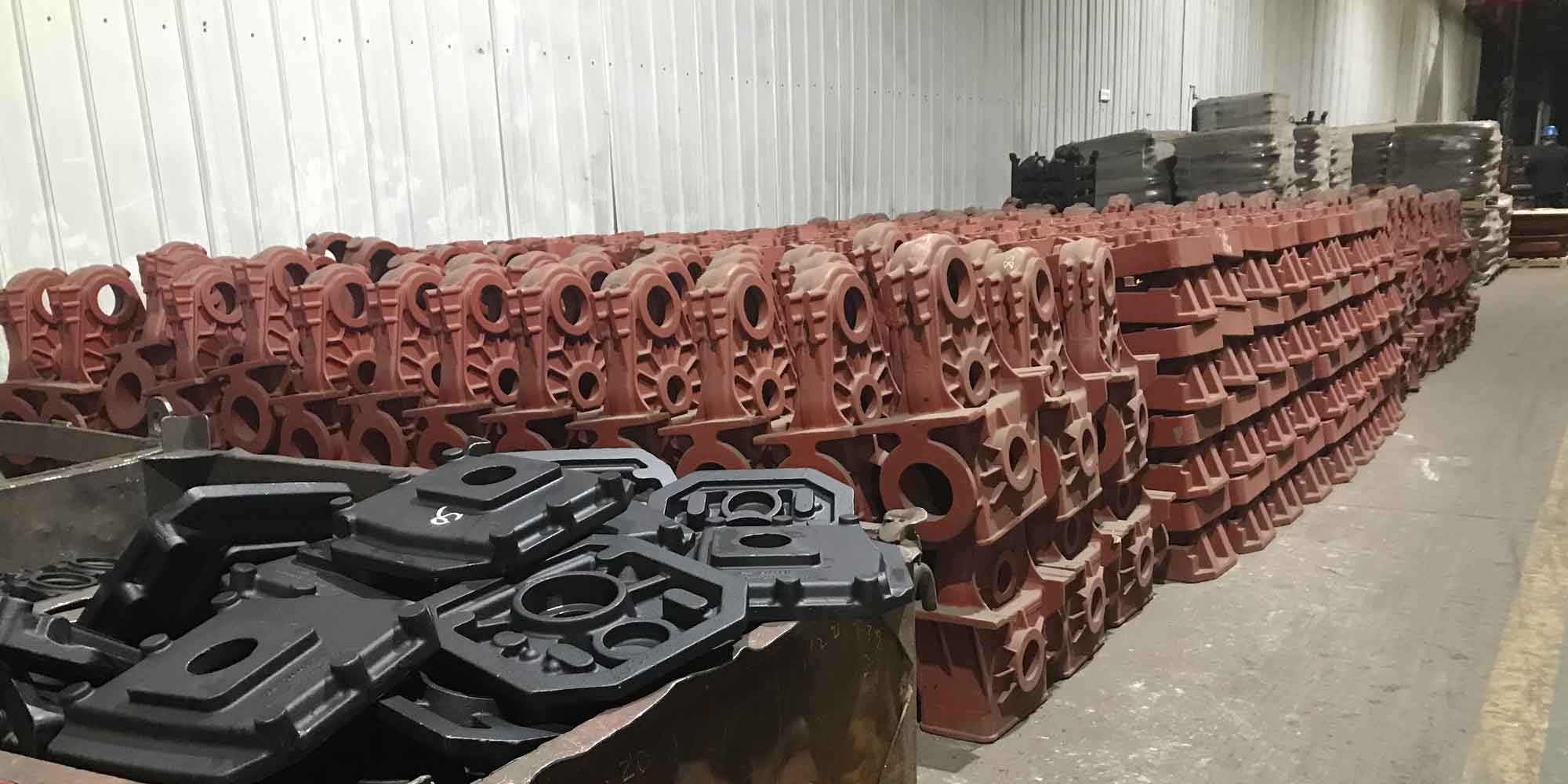
Leakage defects in steel castings were primarily concentrated in the 77 mm-wide mid-section of the wheel hub (Figure 1). Metallographic analysis revealed shrinkage porosity and cavities (Figure 2), attributed to insufficient feeding during solidification.
The thermal-physical properties of the casting material were critical for accurate simulation. Key parameters include:
$$ \rho = 7.8\ \text{g/cm}^3,\ T_{\text{solidus}} = 1,446^\circ\text{C},\ T_{\text{liquidus}} = 1,503^\circ\text{C} $$
| Property | Value |
|---|---|
| Thermal Conductivity (W/m·K) | 28.5 – 32.1 |
| Specific Heat (J/kg·K) | 680 – 720 |
| Latent Heat (kJ/kg) | 272 |
2. Numerical Simulation Methodology
Using ProCAST, we established a 3D model with 216,326 tetrahedral elements. The governing equations for solidification analysis include:
$$ \frac{\partial}{\partial t}(\rho h) + \nabla \cdot (\rho \mathbf{u} h) = \nabla \cdot (k \nabla T) + S_h $$
where \( h \) represents enthalpy, \( k \) thermal conductivity, and \( S_h \) source term for latent heat.
| Parameter | Value |
|---|---|
| Pouring Temperature | 1,560°C |
| Filling Rate | 16 kg/s |
| Ambient Temperature | 25°C |
3. Defect Prediction and Process Optimization
Initial simulations accurately predicted shrinkage defects in high-risk zones (Figure 5). The defect formation mechanism follows:
$$ f_{\text{shrinkage}} = 1 – \frac{\rho_{\text{cast}}}{\rho_{\text{ideal}}} $$
where \( \rho_{\text{cast}} \) and \( \rho_{\text{ideal}} \) represent actual and theoretical densities.
| Optimization Measure | Implementation |
|---|---|
| Chill Design | 14 external chills (65×50×30 mm) |
| Riser Modification | Exothermic sleeves + 30% larger feeding channels |
| Gating System | 15° taper for directional solidification |
4. Validation and Production Results
Post-optimization simulations showed defect-free zones in critical sections (Figure 6). Physical validation confirmed:
| Quality Metric | Pre-Optimization | Post-Optimization |
|---|---|---|
| Leakage Rate | 29% | <2% |
| Yield Strength | 410 MPa | 450 MPa |
| UT Defect Density | 3.2/cm² | 0.4/cm² |
The integration of ProCAST simulation in steel casting production enabled:
$$ \text{Cost Savings} = (C_{\text{rework}} – C_{\text{simulation}}) \times N_{\text{production}} $$
where \( C_{\text{rework}} = \$1,200/\text{unit} \) and \( C_{\text{simulation}} = \$150/\text{unit} \).
5. Conclusion
ProCAST simulation proves indispensable for defect prediction in steel castings, particularly for complex geometries requiring high pressure integrity. The methodology reduced defect rates by 93% while improving mechanical properties, demonstrating significant potential for industrial adoption in steel casting manufacturing.