
In modern foundry technology, gravity casting remains a prevalent method for producing aluminum alloy components, particularly those requiring high mechanical performance under severe operating conditions. However, this approach faces limitations when manufacturing thin-walled, complex structures due to defects like porosity, shrinkage, and misruns. This study explores the integration of semi-solid slurry foundry technology into gravity casting processes, focusing on A356.0 aluminum alloy. By comparing conventional liquid casting with semi-solid slurry methods, we aim to enhance product quality and efficiency in industrial applications. The semi-solid slurry foundry technology involves preparing a slurry with a specific solid fraction near the liquidus temperature, which improves fluidity and reduces defects. Throughout this research, the term “foundry technology” is emphasized to highlight its pivotal role in advancing casting processes.
The experimentation centered on a thin-walled valve body with an average wall thickness of 4.37 mm, representing a challenging component for traditional gravity casting. Two distinct foundry technology approaches were employed: conventional liquid pouring and semi-solid slurry pouring using a gas-induced semi-solid (GISS) system. Both methods utilized the same mold and equipment to ensure consistency. Key parameters, such as pouring temperature, solidification time, and mold conditions, were systematically varied across multiple test groups. Data on fluidity, microstructure, mechanical properties, and defect rates were collected and analyzed. The integration of semi-solid slurry foundry technology demonstrated significant improvements in casting integrity and performance, underscoring its potential for widespread adoption in the industry.
Foundry technology innovations, like semi-solid processing, rely on precise control of thermal and rheological properties. The semi-solid slurry’s behavior can be modeled using equations that describe its flow and solidification. For instance, the fluidity of the slurry in foundry technology applications is influenced by its viscosity and solid fraction, which can be expressed as: $$ f = C \cdot \frac{\Delta T}{\eta} $$ where \( f \) is the fluidity index, \( C \) is a material constant, \( \Delta T \) is the superheat, and \( \eta \) is the apparent viscosity. In semi-solid foundry technology, the solid fraction \( f_s \) is critical and can be estimated as: $$ f_s = \frac{T_l – T}{T_l – T_s} $$ where \( T_l \) is the liquidus temperature, \( T_s \) is the solidus temperature, and \( T \) is the current temperature. These formulas help optimize the foundry technology parameters for better outcomes.
| Parameter | Conventional Liquid Casting | Semi-Solid Slurry Casting |
|---|---|---|
| Pouring Temperature (°C) | 700-725 | 620-640 |
| Solidification Time (s) | 150 | 120 |
| Mold Temperature (°C) | 350-370 | 370-390 |
| Fluidity Index | Moderate | High |
The mechanical properties of cast components are a key metric in evaluating foundry technology efficacy. Tensile tests revealed that semi-solid slurry castings exhibited superior strength and ductility compared to conventional methods. This enhancement is attributed to the finer grain structure and reduced shrinkage in semi-solid foundry technology. The relationship between grain size and mechanical properties can be described by the Hall-Petch equation: $$ \sigma_y = \sigma_0 + \frac{k}{\sqrt{d}} $$ where \( \sigma_y \) is the yield strength, \( \sigma_0 \) is the friction stress, \( k \) is a constant, and \( d \) is the average grain diameter. In semi-solid foundry technology, the reduced grain size leads to higher strength, as confirmed by experimental data.
| Property | Conventional Casting | Semi-Solid Slurry Casting |
|---|---|---|
| Tensile Strength (MPa) | 262.33 | 293.67 |
| Yield Strength (MPa) | 184.66 | 192.00 |
| Elongation (%) | 4.94 | 6.02 |
| Hardness (HB) | 91.67 | 102.00 |
Defect analysis is crucial in foundry technology to ensure product reliability. Conventional gravity casting often results in issues like gas entrapment and misruns due to turbulent flow and high pouring temperatures. In contrast, semi-solid slurry foundry technology minimizes these defects through improved viscosity control and lower temperature pouring. The probability of defect formation can be modeled using statistical approaches in foundry technology, such as: $$ P_d = 1 – e^{-\lambda t} $$ where \( P_d \) is the probability of a defect, \( \lambda \) is the defect rate constant, and \( t \) is the solidification time. Semi-solid foundry technology reduces \( \lambda \) by promoting laminar flow and uniform solidification.
Microstructural examination further validates the advantages of semi-solid foundry technology. The slurry process produces a globular, non-dendritic structure that enhances mechanical properties and reduces hot tearing. The grain refinement in semi-solid foundry technology can be quantified using the cooling rate equation: $$ G = \frac{dT}{dt} $$ where \( G \) is the temperature gradient and \( \frac{dT}{dt} \) is the cooling rate. Higher cooling rates in semi-solid foundry technology lead to finer grains, as observed in metallographic analysis.
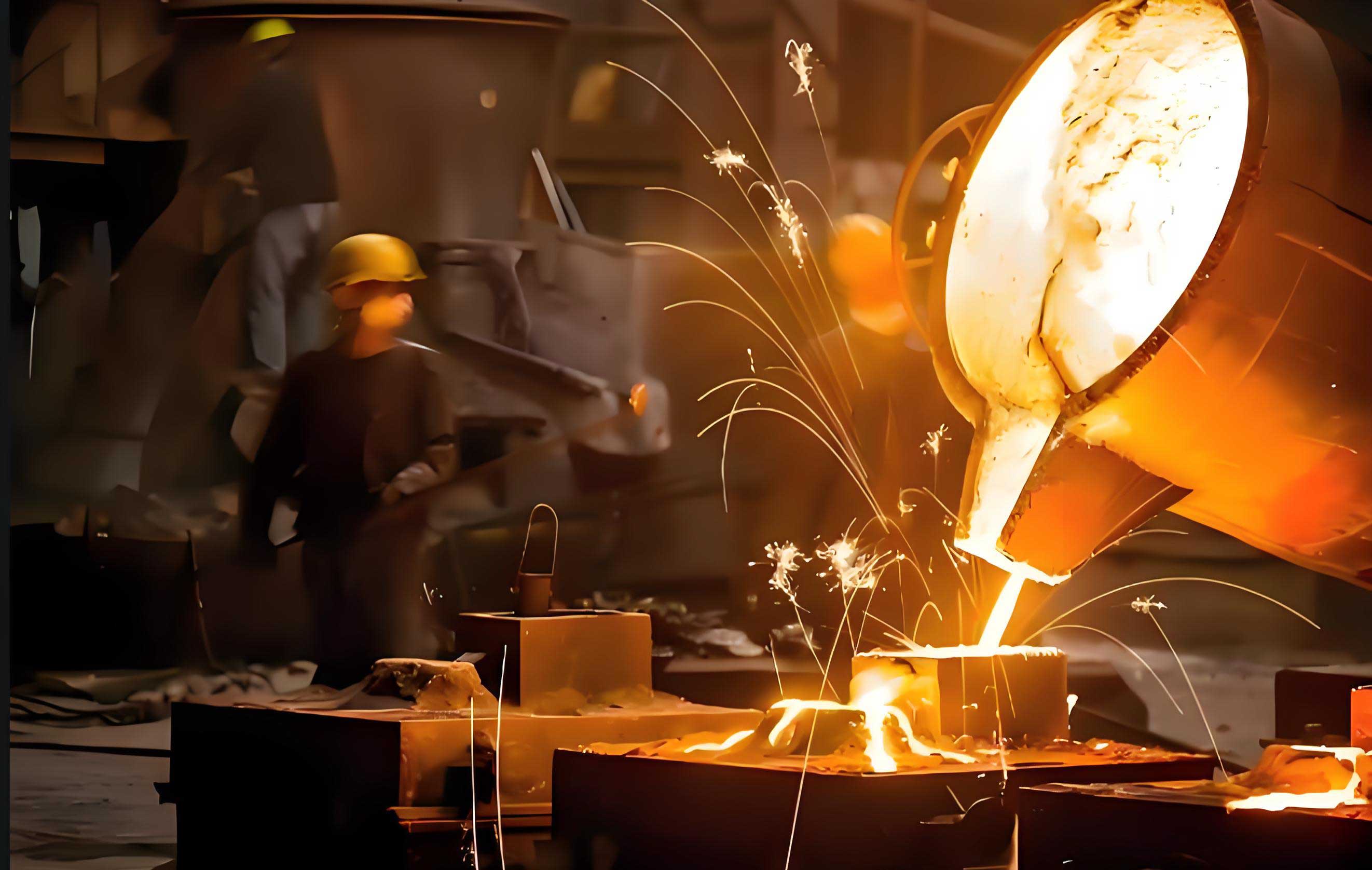
The economic and environmental impacts of foundry technology cannot be overlooked. Semi-solid slurry methods lower energy consumption by reducing melting and holding temperatures, aligning with sustainable foundry technology practices. The energy savings can be calculated as: $$ E_{saved} = m \cdot c_p \cdot (T_{conv} – T_{semi}) $$ where \( E_{saved} \) is the saved energy, \( m \) is the mass of aluminum, \( c_p \) is the specific heat capacity, \( T_{conv} \) is the conventional pouring temperature, and \( T_{semi} \) is the semi-solid pouring temperature. This equation highlights how semi-solid foundry technology contributes to cost reduction and efficiency.
In summary, the adoption of semi-solid slurry foundry technology in gravity casting offers substantial benefits, including enhanced fluidity, reduced defects, and improved mechanical properties. The iterative optimization of foundry technology parameters, such as pouring temperature and solidification time, is essential for maximizing these advantages. Future work in foundry technology should focus on scaling up this process for high-volume production and exploring its application to other aluminum alloys. By continuously refining foundry technology, the casting industry can achieve higher quality standards and operational sustainability.
The theoretical foundations of foundry technology involve complex interactions between thermodynamics and fluid dynamics. For semi-solid slurries, the rheological behavior is described by the Herschel-Bulkley model: $$ \tau = \tau_0 + K \cdot \dot{\gamma}^n $$ where \( \tau \) is the shear stress, \( \tau_0 \) is the yield stress, \( K \) is the consistency index, \( \dot{\gamma} \) is the shear rate, and \( n \) is the flow behavior index. This model is instrumental in foundry technology for predicting slurry flow during mold filling. Additionally, the heat transfer during solidification in foundry technology can be modeled using Fourier’s law: $$ q = -k \cdot \nabla T $$ where \( q \) is the heat flux, \( k \) is the thermal conductivity, and \( \nabla T \) is the temperature gradient. These equations provide a framework for optimizing foundry technology processes.
| Defect Type | Conventional Casting (%) | Semi-Solid Slurry Casting (%) |
|---|---|---|
| Misruns | 15 | 5 |
| Gas Porosity | 20 | 8 |
| Shrinkage | 25 | 10 |
| Surface Defects | 10 | 3 |
Practical implementation of foundry technology requires careful consideration of mold design and material properties. In semi-solid slurry foundry technology, the mold coating thickness and temperature are optimized to facilitate heat dissipation and reduce thermal shock. The optimal coating thickness \( \delta \) can be derived from: $$ \delta = \frac{k_m}{h} $$ where \( k_m \) is the mold thermal conductivity and \( h \) is the heat transfer coefficient. This parameter is critical in foundry technology to prevent defects like cold shuts and improve surface finish.
Looking ahead, the evolution of foundry technology will likely incorporate digital twins and real-time monitoring for process control. Semi-solid slurry foundry technology can benefit from these advancements by enabling precise adjustment of solid fraction and pouring rates. The integration of Industry 4.0 principles into foundry technology promises to revolutionize quality assurance and productivity. As foundry technology continues to advance, it will play a pivotal role in meeting the growing demand for high-performance aluminum components in sectors such as automotive and aerospace.
In conclusion, this study demonstrates that semi-solid slurry foundry technology significantly enhances gravity casting outcomes by addressing common defects and improving material properties. The repeated emphasis on foundry technology throughout this research underscores its importance in modern manufacturing. By leveraging mathematical models and empirical data, foundry technology can be fine-tuned for optimal performance, paving the way for more efficient and reliable production methods. The future of foundry technology lies in continuous innovation and cross-disciplinary applications, ensuring its relevance in an increasingly competitive industrial landscape.