
In the investment casting process, the quality of the ceramic shell directly influences the surface finish, dimensional accuracy, and defect rate of final metal components. A critical challenge in this process is the stability of the face coat slurry, which is typically prepared using silica sol as a binder mixed with refractory materials like zircon flour. Traditional silica sols, such as the conventional 830 type, often exhibit rapid aging, poor coating properties, and sensitivity to drying conditions, leading to issues like gelation shrinkage, shell cracking, and increased casting defects. These limitations result in higher rework costs, reduced production efficiency, and compromised product quality. To address these problems, we have developed and evaluated a novel modified silica sol, designated as SKP27-3, which incorporates organic polymers to enhance its performance. This article presents a comprehensive analysis of SKP27-3’s properties, its application in the investment casting process, and a comparative assessment against conventional and imported silica sols, emphasizing its superior stability, coating ability, and economic benefits.
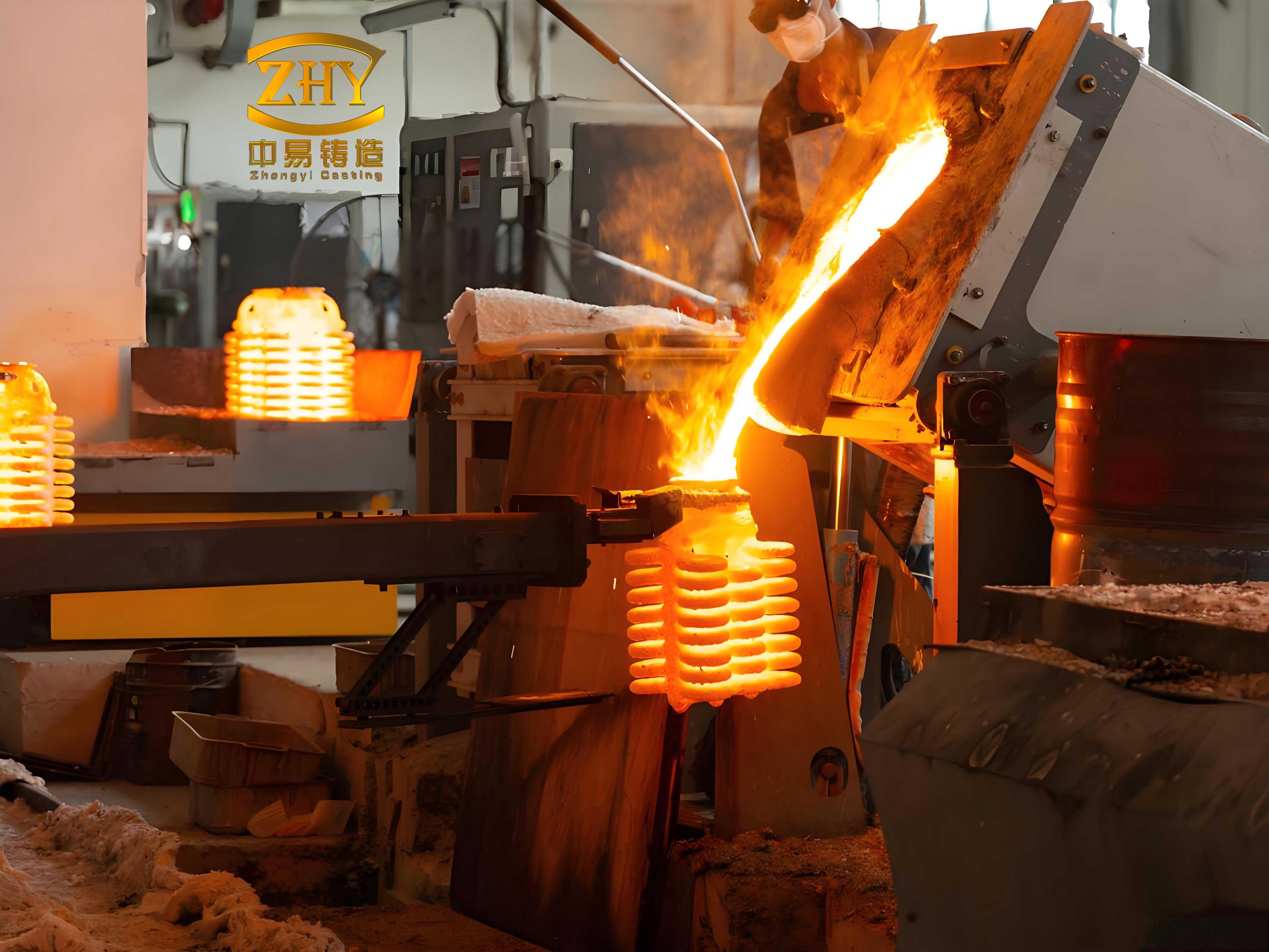
The investment casting process, also known as lost-wax casting, involves creating a ceramic shell around a wax pattern, followed by dewaxing, firing, and metal pouring. The face coat of the shell is crucial as it contacts the molten metal, determining the surface texture and detail replication. Silica sol, a colloidal suspension of silicon dioxide nanoparticles in water, serves as a common inorganic binder due to its ability to form strong silicate networks upon drying and firing. However, the acidic impurities in refractory materials, such as zircon flour, can destabilize the slurry, reducing its usable life and causing defects like veining, inclusions, or rough surfaces. This necessitates frequent slurry replacement, increasing material waste and operational downtime. Our research focuses on optimizing the silica sol chemistry to mitigate these issues, with SKP27-3 representing a significant advancement. By integrating amino-containing polymers, we have modified the colloidal structure to improve hydrogen bonding and surface adsorption, thereby enhancing slurry stability and coating uniformity. This modification not only extends the slurry life but also allows for more flexible drying conditions, such as tolerance to higher wind speeds and humidity variations, which are often constraints in the investment casting process.
To understand the enhancements in SKP27-3, we first examine its physicochemical parameters compared to conventional 830 silica sol. The key properties include silica content, sodium oxide content, pH, density, viscosity, and average particle size, as summarized in Table 1. These parameters are fundamental in the investment casting process, as they influence slurry rheology, gelation behavior, and shell strength. The higher pH and larger particle size of SKP27-3 contribute to its improved stability by reducing the susceptibility to acid-induced flocculation from refractory materials. Moreover, the organic modification involves polymer chains that partially or fully encapsulate the silica nanoparticles, forming intermolecular hydrogen bonds between amino groups and surface silanol groups (Si-OH). This can be represented by the interaction: $$\text{Si-OH} + \text{N-H} \rightarrow \text{Si-O} \cdots \text{H-N}$$ where the dotted line indicates hydrogen bonding. Such interactions prevent nanoparticle aggregation, maintaining colloidal dispersion over extended periods. Additionally, the polymer layer enhances adhesion to wax patterns, improving the slurry’s wettability and flow characteristics during coating in the investment casting process.
| Parameter | SKP27-3 Silica Sol | Conventional 830 Silica Sol |
|---|---|---|
| SiO2 Content (wt%) | 26–29 | 30 ± 1 |
| Na2O Content (wt%) | ≤ 0.6 | ≤ 0.6 |
| pH at 25°C | 10–11 | 9–10 |
| Density (g/cm3) | 1.17–1.19 | 1.19–1.21 |
| Viscosity (mPa·s) | ≤ 8 | ≤ 8 |
| Average Particle Size (nm) | 10–13 | 7–10 |
In the investment casting process, slurry performance is evaluated through parameters like pH, viscosity, density, and coating thickness. We prepared face coat slurries using SKP27-3 and conventional 830 silica sols with identical zircon flour, maintaining a powder-to-liquid ratio of 4.4:1 by weight. After 24 hours of continuous stirring under controlled conditions (temperature: 25 ± 1°C, humidity: 60 ± 5%), we measured these properties, as shown in Table 2. The higher pH of SKP27-3 slurry indicates better resistance to acidification, a common issue in the investment casting process due to impurities in refractories. The viscosity and density are comparable, but the coating thickness is slightly higher for SKP27-3, suggesting improved suspension and flowability. This enhances the formation of a uniform shell layer, critical for achieving smooth casting surfaces in the investment casting process.
| Property | SKP27-3 Slurry | Conventional 830 Slurry |
|---|---|---|
| pH at 25°C | 9.98 | 8.92 |
| Density (g/cm3) | 2.94 | 2.96 |
| Coating Thickness (mm) | 0.11 | 0.10 |
| Flow Cup Viscosity (s) | 31 | 35 |
Slurry stability is a paramount concern in the investment casting process, as it dictates the frequency of slurry preparation and material waste. We conducted accelerated aging tests by continuously stirring the slurries at 25°C and monitoring pH changes over time. The degradation can be modeled using a first-order kinetic equation: $$\frac{dC}{dt} = -k C$$ where \(C\) represents the slurry stability indicator (e.g., pH or viscosity), \(t\) is time, and \(k\) is the degradation rate constant. Integrating this gives: $$C(t) = C_0 e^{-kt}$$ where \(C_0\) is the initial value. For SKP27-3, the degradation rate \(k\) is significantly lower, leading to an extended shelf life. As depicted in Figure 1 (numerical data in Table 3), the pH of conventional 830 slurry drops below 8.0 within 5 days, indicating rapid aging, while SKP27-3 maintains a pH above 9.5 for over 60 days. This extended stability reduces downtime and material costs in the investment casting process.
| Time (days) | SKP27-3 Slurry pH | Conventional 830 Slurry pH | Imported A Slurry pH | Imported B Slurry pH |
|---|---|---|---|---|
| 0 | 9.98 | 8.86 | 9.95 | 9.93 |
| 5 | 9.90 | 8.02 | 9.50 | 9.70 |
| 10 | 9.85 | – | 8.80 | 9.40 |
| 20 | 9.75 | – | – | 8.90 |
| 40 | 9.60 | – | – | – |
| 62 | 9.40 | – | – | – |
Coating performance, or paintability, is another critical factor in the investment casting process, affecting shell uniformity and defect formation. We evaluated this by dipping standard wax plates into slurries and observing surface coverage. SKP27-3 slurry exhibited excellent wetting and leveling, even after 40 days of continuous stirring, with minimal graininess. In contrast, conventional 830 slurry showed poor coating with visible particles after only 5 days. The enhancement can be attributed to the polymer modification, which increases the adhesion energy between the slurry and wax substrate. The work of adhesion \(W_a\) can be expressed as: $$W_a = \gamma_{sv} + \gamma_{lv} – \gamma_{sl}$$ where \(\gamma_{sv}\), \(\gamma_{lv}\), and \(\gamma_{sl}\) are the solid-vapor, liquid-vapor, and solid-liquid interfacial tensions, respectively. SKP27-3’s polymer layer reduces \(\gamma_{sl}\), promoting better spreadability. This results in smoother shell cavities, reducing surface defects like fins or bumps in the investment casting process.
Drying conditions in the investment casting process often require precise control of temperature, humidity, and airflow to prevent shell cracking or deformation. SKP27-3 offers greater flexibility, tolerating a wider range of conditions. For instance, with conventional 830 silica sol, the recommended drying environment is 24 ± 2°C, 55–70% relative humidity, and no wind. SKP27-3, however, performs well at 22–28°C, 40–70% humidity, and even under strong wind (5–6 m/s). This insensitivity can be explained by the modified gelation kinetics. The drying rate \(R_d\) is governed by: $$R_d = \frac{k_g A (P_s – P_a)}{h}$$ where \(k_g\) is the mass transfer coefficient, \(A\) is surface area, \(P_s\) is saturated vapor pressure, \(P_a\) is ambient vapor pressure, and \(h\) is boundary layer thickness. SKP27-3’s organic components moderate water release, reducing stress buildup during gelation, which is beneficial for the investment casting process where rapid drying is often needed to accelerate production cycles.
To assess the impact on casting quality, we conducted large-scale production trials using SKP27-3 and conventional 830 silica sols in the investment casting process. Castings were produced from stainless steel alloys, and surface defects such as protrusions, fins, and roughness were quantified post-dewaxing and shot blasting. The results, summarized in Table 4, show that SKP27-3 reduces the defect rate from 11.72% to 3.92% for a specific part (Model 4408), representing a 66% improvement. This translates to higher first-pass yield and lower rework costs. The enhanced surface quality is due to the denser and smoother shell cavity achieved with SKP27-3, which minimizes metal penetration and improves detail reproduction in the investment casting process.
| Silica Sol Type | Part Model | Total Inspected | Protrusions | Fins | Total Defects | Defect Rate (%) |
|---|---|---|---|---|---|---|
| SKP27-3 | 4408 | 23,524 | 514 | 407 | 921 | 3.92 |
| Conventional 830 | 4408 | 24,140 | 1,021 | 1,808 | 2,829 | 11.72 |
Economic analysis is crucial for adopting new materials in the investment casting process. We compared the total costs associated with SKP27-3 and conventional 830 silica sols, including raw material consumption, slurry replacement frequency, and rework expenses. As shown in Table 5, SKP27-3’s extended slurry life reduces material waste, while its lower defect rate cuts rework labor and scrap costs. For an annual production of 100,000 castings, the savings can exceed $50,000, highlighting its cost-effectiveness. The return on investment (ROI) can be calculated as: $$\text{ROI} = \frac{\text{Net Savings}}{\text{Additional Cost}} \times 100\%$$ where net savings derive from reduced defects and material usage. Given SKP27-3’s comparable price to conventional sols, the ROI is positive, making it an attractive option for the investment casting process.
| Cost Factor | SKP27-3 | Conventional 830 |
|---|---|---|
| Silica Sol Cost per kg ($) | 2.50 | 2.45 |
| Slurry Life (days) | 62 | 5 |
| Annual Slurry Preparation Events | 6 | 73 |
| Refractory Material Waste (kg/year) | 150 | 1,800 |
| Defect Rate (%) | 3.92 | 11.72 |
| Rework Cost per Casting ($) | 0.20 | 0.75 |
| Total Annual Cost ($) | 15,000 | 65,000 |
| Net Annual Savings with SKP27-3 ($) | 50,000 | |
We further benchmarked SKP27-3 against imported silica sols (designated A and B) used in the investment casting process. Table 6 summarizes their physicochemical properties, showing similarities in SiO2 content and pH, but SKP27-3 offers advantages in stability and coating performance. In slurry aging tests, imported A sol maintained stability for about 10 days, imported B for 20 days, while SKP27-3 lasted 62 days. This superiority is linked to the unique polymer modification, which enhances colloidal protection against acidic impurities common in the investment casting process. Additionally, casting defect rates were lower with SKP27-3 (3.51–4.45%) compared to imported A (11.82%) and imported B (8.92%), as detailed in Table 7. These results underscore SKP27-3’s competitiveness in global markets for the investment casting process.
| Parameter | SKP27-3 | Imported A | Imported B |
|---|---|---|---|
| SiO2 Content (wt%) | 26–29 | 26–29 | 26–29 |
| Na2O Content (wt%) | ≤ 0.6 | ≤ 0.6 | ≤ 0.6 |
| pH at 25°C | 10–11 | 10–11 | 10–11 |
| Density (g/cm3) | 1.17–1.19 | 1.17–1.19 | 1.17–1.19 |
| Viscosity (mPa·s) | ≤ 8 | ≤ 8 | ≤ 8 |
| Average Particle Size (nm) | 10–13 | 10–20 | 10–20 |
| Silica Sol Type | Part Model | Total Inspected | Defect Rate (%) |
|---|---|---|---|
| SKP27-3 | 6958 | 2,450 | 3.51 |
| SKP27-3 | 5743 | 1,550 | 4.45 |
| Imported A | 6958 | 1,100 | 11.82 |
| Imported B | 6958 | 1,930 | 8.92 |
The mechanism behind SKP27-3’s performance can be elucidated through colloidal science principles. In the investment casting process, slurry stability is governed by the DLVO theory, which balances van der Waals attraction and electrostatic repulsion. The potential energy \(V_T\) between particles is: $$V_T = V_A + V_R$$ where \(V_A = -\frac{A}{12\pi D^2}\) is the attractive term (with Hamaker constant \(A\) and separation \(D\)), and \(V_R = 2\pi \epsilon_r \epsilon_0 \psi^2 e^{-\kappa D}\) is the repulsive term (with dielectric constant \(\epsilon_r\), permittivity of vacuum \(\epsilon_0\), surface potential \(\psi\), and Debye length \(\kappa^{-1}\)). SKP27-3’s polymer layer introduces steric stabilization, adding a repulsive term \(V_S\) that decays exponentially with distance: $$V_S = \frac{4\pi k_B T \phi^2}{3} e^{-D/L}$$ where \(k_B\) is Boltzmann’s constant, \(T\) is temperature, \(\phi\) is polymer volume fraction, and \(L\) is layer thickness. This combined stabilization extends slurry life and improves coating, key for the investment casting process.
Moreover, the drying kinetics in the investment casting process involve moisture diffusion through the shell. The diffusion coefficient \(D_m\) can be modeled as: $$D_m = D_0 \exp\left(-\frac{E_a}{RT}\right)$$ where \(D_0\) is a pre-exponential factor, \(E_a\) is activation energy, \(R\) is gas constant, and \(T\) is temperature. SKP27-3’s modified structure reduces \(E_a\), allowing faster drying without cracking, which is advantageous for high-throughput investment casting process lines. Experimental data show that shells made with SKP27-3 achieve adequate strength in 2–3 hours under forced air, compared to 4–6 hours for conventional sols, increasing production capacity by up to 30%.
Quality control in the investment casting process often involves statistical process control (SPC) charts to monitor defect rates. With SKP27-3, the lower and more consistent defect rate reduces variability, as seen in the control chart parameters: the upper control limit (UCL) and lower control limit (LCL) are calculated as: $$\text{UCL} = \bar{p} + 3\sqrt{\frac{\bar{p}(1-\bar{p})}{n}}, \quad \text{LCL} = \bar{p} – 3\sqrt{\frac{\bar{p}(1-\bar{p})}{n}}$$ where \(\bar{p}\) is the average defect proportion and \(n\) is sample size. For SKP27-3, \(\bar{p} = 0.04\), yielding tighter control limits than conventional sols (\(\bar{p} = 0.12\)), indicating improved process capability in the investment casting process.
Environmental considerations are increasingly important in the investment casting process. SKP27-3’s extended slurry life reduces waste generation, aligning with sustainable manufacturing goals. The organic modifiers are non-toxic and biodegradable, minimizing ecological impact. Additionally, the reduced rework lowers energy consumption associated with remelting and reprocessing scrap castings, contributing to a smaller carbon footprint in the investment casting process.
Future developments could focus on further optimizing SKP27-3 for specific alloys or complex geometries in the investment casting process. For example, tailoring the polymer chemistry for high-temperature applications, such as nickel-based superalloys, could enhance shell integrity during pouring. Research into nanoparticle additives or hybrid sol-gel systems may also push the boundaries of shell performance. Computational modeling, using finite element analysis (FEA) to simulate stress distributions during drying, could guide formula adjustments, making the investment casting process more efficient and reliable.
In conclusion, SKP27-3 surface layer reinforced silica sol represents a significant advancement in the investment casting process. Its organic modification imparts superior stability, coating ability, and drying flexibility, leading to reduced defect rates and lower production costs. Through rigorous testing and economic analysis, we have demonstrated that SKP27-3 outperforms conventional and imported silica sols, offering a compelling solution for foundries seeking to enhance quality and profitability. As the investment casting process evolves towards higher precision and sustainability, materials like SKP27-3 will play a pivotal role in driving innovation and competitiveness in the manufacturing industry.