
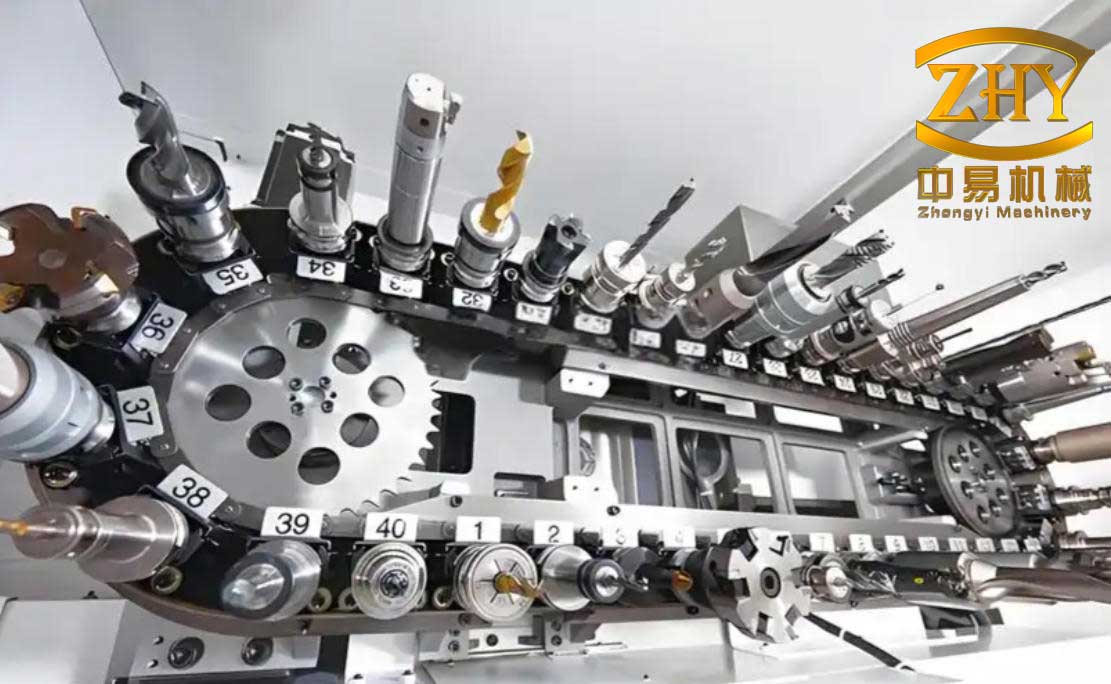
The production of high-quality machine tool castings presents a significant challenge due to their inherent structural complexity and stringent performance requirements. These castings form the foundational beds, columns, housings, and slides of precision machine tools, where dimensional stability, rigidity, and freedom from internal defects are paramount. Common issues such as shrinkage porosity, gas holes, slag inclusions, and sand burns frequently plague traditional casting processes, leading to high scrap rates and elevated production costs. For years, our foundry faced these persistent challenges, particularly with complex machine tool castings like headstocks, saddles, columns, and tables. Through extensive research and application, we have systematically implemented Equilibrium Solidification Technology alongside the Large Orifice Outflow Theory for gating system design. This integrated approach has revolutionized our process design methodology, leading to a dramatic improvement in casting quality, consistency, and yield.
The core challenge with machine tool castings lies in their irregular geometry, which combines thick sections (like guide rails and mounting faces) with thin-walled ribs and housing structures. This creates severe thermal gradients and isolated hot spots. Traditional feeding methods, which rely on risers with a modulus greater than that of the casting to remain liquid longest, are often inefficient for gray and ductile iron. This is because they fail to account for the unique solidification behavior of cast iron, where the expansion from graphite precipitation can counteract the initial liquid and solidification shrinkage.
Principles of Equilibrium Solidification Technology
Equilibrium Solidification Technology provides a fundamental reinterpretation of the feeding requirements for cast iron. It posits that the solidification process of cast iron is a dynamic balance between shrinkage and expansion, and effective feeding must synchronize with this inherent rhythm. The key principles are:
- Limited and Timely Feeding: Riser feeding is only required during the initial and middle stages of solidification when the net volumetric change is contraction. Once the graphite expansion phase begins in a specific section, feeding from the riser must cease to avoid “back-sucking” liquid metal from the casting, which can create shrinkage defects.
- Modulus Requirement: Contrary to Chvorinov’s rule-based methods, the modulus of the riser \( M_r \) does not need to be greater than the modulus of the casting \( M_c \). It only needs to be sufficient to provide liquid metal during the critical contraction period. Typically, \( M_r = (0.6 \sim 0.8) M_c \) is adequate for many machine tool castings.
$$ M = \frac{V}{A} $$
Where \( M \) is the modulus (cm), \( V \) is the volume (cm³), and \( A \) is the cooling surface area (cm²). - The Equilibrium Point (\( t_E \)): This is the critical moment when the cumulative graphite expansion volume equals the cumulative shrinkage volume for a specific part of the casting. Riser necks are designed to freeze shortly before this point in their adjacent casting section.
$$ t_E = f(C_{eq}, Cooling Rate) $$
Where \( C_{eq} \) is the carbon equivalent. - Self-Feeding via Graphite Expansion: The expansion force generated by graphite precipitation within the casting itself is utilized to compensate for shrinkage in isolated hot spots, a phenomenon known as “self-feeding.” This is maximized by controlling metallurgical quality and using chills to regulate cooling rates.
The total volumetric change \( \Delta V_{total} \) during solidification can be expressed as:
$$ \Delta V_{total} = \Delta V_{liquid\ shrinkage} + \Delta V_{solidification\ shrinkage} + \Delta V_{graphite\ expansion} $$
The goal of Equilibrium Solidification is to have \( \Delta V_{total} \approx 0 \) through process control, minimizing the demand on external risers.
Gating System Design: Large Orifice Outflow Theory
Traditional gating calculations (e.g., the Aachen formula) treat the ingate as a small orifice, using the full hydrostatic head from the top of the sprue to the ingate. This often leads to undersized systems, resulting in prolonged fill times and related defects like cold shuts and mistruns. For machine tool castings requiring rapid, uniform filling, this is inadequate.
The Large Orifice Outflow Theory provides a more accurate model. It recognizes that when the ingate cross-section is significant relative to the sprue or runner, the effective pressure head \( H_m \) driving the flow is not the full height but a reduced value influenced by the gating ratio. This theory incorporates the gating ratio \( (A_{sprue} : A_{runner} : A_{ingate}) \) directly into the calculation of flow rate and fill time.
The basic outflow formula is:
$$ Q = \mu \cdot A \cdot \sqrt{2gH_m} $$
Where:
\( Q \) = Flow rate (cm³/s)
\( \mu \) = Flow coefficient (empirically determined, typically 0.5-0.7 for iron in sand molds)
\( A \) = Minimum choke area (cm²), often the ingate total area
\( g \) = Gravitational acceleration (981 cm/s²)
\( H_m \) = Effective pressure head at the ingate (cm)
The critical advancement is the calculation of \( H_m \). For a horizontal gating system with multiple ingates:
$$ H_m = H_0 – \frac{h_p^2}{2H_0} – \frac{P^2}{2g} \left( \frac{1}{A_{ingate}^2} – \frac{1}{A_{runner}^2} \right) $$
A simplified practical formula for a typical horizontal system is:
$$ H_m = H_0 – \frac{h_p^2}{2H_0} $$
Where:
\( H_0 \) = Static head from the top of the sprue to the ingate (cm).
\( h_p \) = Height of the casting cavity above the ingate (cm).
The required total choke area \( A_{choke} \) is then calculated based on the desired pour time \( t \):
$$ A_{choke} = \frac{W}{\rho \cdot \mu \cdot t \cdot \sqrt{2gH_m}} $$
Where:
\( W \) = Total weight of metal through the choke (kg).
\( \rho \) = Density of liquid metal (kg/cm³).
The selection of an appropriate gating ratio is crucial for controlling flow characteristics. For machine tool castings, we often use a pressurized system but with a less severe choke to ensure rapid filling. A common ratio is:
$$ A_{sprue} : A_{runner} : A_{ingate} = 1.0 : 1.2 : 1.4 $$
This ratio, combined with a properly calculated \( H_m \), yields ingate areas significantly larger than those from traditional small-orifice calculations, resulting in faster, more controlled filling.
| Parameter | Traditional (Aachen) Method | Large Orifice Outflow Method |
|---|---|---|
| Assumed Flow Coefficient (\( \mu \)) | 0.4 – 0.5 | 0.55 – 0.65 |
| Effective Head (\( H_m \)) Used | Full static head \( H_0 \) (e.g., 30 cm) | Calculated reduced head (e.g., 22 cm) |
| Calculated Total Ingate Area (\( cm^2 \)) | ~28 | ~42 |
| Projected Pour Time (\( s \)) | 35 | 22 |
| Actual Observed Pour Time (\( s \)) | Often >45 (system is undersized) | ~22 (matches design) |
Application to Critical Machine Tool Castings
The synergy of Equilibrium Solidification Technology and Large Orifice Outflow Theory guides our entire process design. The following table summarizes the targeted defects and key design strategies for major categories of machine tool castings.
| Casting Type | Key Features & Defect Challenges | Equilibrium Solidification Strategy | Gating & Riser Design Highlights |
|---|---|---|---|
| Headstock / Gearbox Housings | Combination of thin-wall box sections and thick vertical guide rails. Defects: Shrinkage, gas, slag at top of rails and on bore surfaces. | Use of Duck-Bill or Ear risers on guide rails. Riser neck designed to freeze early, preventing back-suck. High pour temperature (1360-1400°C). | Multi-step gating for balanced fill. Riser size: \( D_r = (1.5 \sim 2.0)T_{rail} \). Neck: thin and wide (\( \approx 0.7T_{rail} \)). |
| Saddles / Lower Work Tables | Guide rails on both top and bottom faces. One rail set is inevitably in the top cope. Defects: Shrinkage, scabs, slag on top rails. | Intentionally placing major rails in the cope to simplify molding and utilize risers effectively. Use of high-efficiency side risers. | Fast pour. “H”-shaped runner. Ingates distributed along rail length. Gating ratio: \( A_{sprue} : A_{runner} : A_{ingate} = 1 : 1.1 : 1.3 \). |
| Columns / Vertical Slides | Tall, intersecting vertical guide rails with internal ribs and bores. Defects: Severe shrinkage on side rails, gas in bores, slag inclusion. | Ear risers placed at the top of vertical rails. Riser acts as an overflow for slag. Tilting the mold during pour to prevent slag adhesion. | Gating on side opposite rails. Pouring basin elevated on one side. Riser dimensions: \( D_r = (1.6 \sim 2.2)T_{rail} \), neck thickness \( = (0.6 \sim 0.8)T_{rail} \). |
| Work Tables / Plates | Massive thick table surface with thinner guide rails on one side. Large thermal mass difference. Defects: Shrinkage depression, porosity under rails. | Maximizing self-feeding by controlling cooling. Rails placed down in drag. Use of chills under rail junctions to balance solidification. | Often riserless design possible. High pouring temperature. Gating into the thick section to establish favorable temperature gradient. |
Detailed Process Analysis: Headstock Castings
For a typical headstock casting weighing approximately 300 kg in Grade HT250, the vertical guide rails are the primary concern. A traditional approach might use large top risers, creating severe contact hot spots and inefficient feeding. Our design based on Equilibrium Solidification uses Duck-Bill risers attached to the side of the rail. The riser neck is designed with a short, thin, and wide geometry (e.g., neck thickness = 0.7 x rail thickness, neck width = 3 x neck thickness). This geometry allows feeding during the liquid contraction phase but promotes rapid freezing at the neck to isolate the riser before the onset of significant graphite expansion in the rail. The gating system is designed using the Large Orifice Outflow Theory for a fast pour time of about 20 seconds, calculated with an effective head \( H_m \) and a flow coefficient \( \mu \) of 0.6. This rapid fill minimizes temperature loss in the thin sections and reduces slag inclusion. The result is a casting with sound guide rails and bore surfaces, reducing the historical scrap rate from over 15% to below 3%.
Detailed Process Analysis: Saddle Castings
A saddle casting for a machining center, weighing 400 kg in HT300, has guide rails on both faces. The radical but effective strategy is to orient the casting with the long, major rails in the cope. This allows direct placement of efficient Ear risers along these rails. The riser neck follows the equilibrium principle. The gating system is critical. A “gate” shaped runner is employed with multiple ingates along the rail length. The ingate thickness is typically \( \approx 0.6T_{rail} \), and the ratio of ingate thickness to runner height is kept between 0.6 and 0.8. The gating ratio is carefully selected, for example, 1.0 (sprue) : 1.15 (runner) : 1.3 (total ingate). Calculated using the large orifice method, this system delivers a fast, uniform fill. The high pour temperature (1380-1420°C) further prevents gas defects on the rail surfaces. This integrated approach stabilizes quality, maintaining scrap rates under 5%.
Quantitative Guidelines and Formulas
The successful application of this technology relies on specific quantitative relationships derived from practice. Below are key formulas and a design parameter table.
1. Pour Time Estimation:
For medium-sized machine tool castings, a modified empirical formula is used:
$$ t = S \cdot \sqrt[3]{\delta \cdot W} $$
Where:
\( t \) = Pour time (s)
\( W \) = Casting weight (kg)
\( \delta \) = Average wall thickness (mm)
\( S \) = Empirical coefficient, typically 1.8 to 2.2 for iron castings with complex shapes.
2. Riser Dimensioning for Guide Rails:
For side risers (Ear or Duck-Bill type) on guide rails of machine tool castings:
$$ D_r = k \cdot T_{rail} $$
$$ h_{neck} = (0.6 \sim 0.8) \cdot T_{rail} $$
$$ w_{neck} = (2.5 \sim 3.5) \cdot h_{neck} $$
Where:
\( D_r \) = Riser diameter (mm)
\( T_{rail} \) = Rail thickness (mm)
\( k \) = Coefficient: 1.5~2.0 for Duck-Bill, 1.6~2.2 for Ear risers.
\( h_{neck} \) = Riser neck thickness (mm)
\( w_{neck} \) = Riser neck width (mm)
3. Gating Ratio Selection:
The choice depends on the casting geometry and quality focus.
$$
\text{For maximum slag trapping: } A_{sprue} < A_{runner} < A_{ingate\;total} \quad (e.g., 1 : 1.2 : 1.4)
$$
$$
\text{For balanced, moderate fill: } A_{sprue} \approx A_{runner} \approx A_{ingate\;total} \quad (e.g., 1 : 1.1 : 1.1)
$$
For machine tool castings where both fast fill and slag control are needed, the first pattern with a slightly pressurized sprue is often optimal.
| Casting Feature | Recommended Riser Type | Key Dimension Relationships | Purpose / Principle |
|---|---|---|---|
| Vertical Guide Rail (in cope) | Duck-Bill or Ear Riser | \( D_r = (1.5 \sim 2.2)T_{rail} \), Neck: thin & wide | Timely feeding, early neck freeze to prevent back-suck. |
| Hot Spot at Junction | Side Riser with “Killed” Neck | \( M_r \approx (0.6 \sim 0.8)M_c \), Neck length > neck thickness | Limited feeding, relies on self-feeding after neck freeze. |
| Thick Plate/Table | Riserless or Small Top Riser | Use of chilling pads. Control pouring temperature. | Promote directional solidification and maximize graphite expansion self-feeding. |
| Long Horizontal Surface | Distributed Ear Risers or Overflow Risers | Spaced at 5-8 times rail thickness. Act as slag traps. | Feed thermal end zones, collect first cold/slaggy metal. |
Results and Benefits
The systematic implementation of this dual-theory framework has yielded transformative results in the production of machine tool castings.
- Dramatic Reduction in Scrap Rate: Historically problematic castings like columns and headstocks saw scrap rates plummet from 15-20% down to 3-5% consistently. This represents a direct and substantial cost saving.
- Improved Internal Soundness: Radiographic and destructive testing confirm the elimination of gross shrinkage porosity in guide rails and critical junction areas. The mechanical properties of the castings are more uniform and reliable.
- Enhanced Surface Quality: The rapid, controlled filling from the Large Orifice Outflow design, coupled with proper slag-trapping gating ratios, has drastically reduced defects like slag inclusions, sand burns, and gas holes on critical machining surfaces.
- Increased Yield and Material Efficiency: Equilibrium Solidification enables the use of smaller, more efficient risers. In some cases, such as certain table castings, risers can be eliminated entirely. This raises the casting yield (weight of casting / weight of total metal poured) from often below 65% to regularly over 75-80%. For high-volume production, this translates into thousands of tons of saved iron and reduced energy for melting.
- Process Stability and Predictability: The theories provide a rational, calculable basis for design rather than reliance on trial-and-error. This reduces setup time for new castings and ensures consistent quality across batches.
In conclusion, the marriage of Equilibrium Solidification Technology and Large Orifice Outflow Theory provides a powerful, scientifically grounded methodology for tackling the unique challenges of producing high-integrity machine tool castings. It shifts the paradigm from merely “feeding shrinkage” to “managing the solidification contraction-expansion cycle,” and from “restricting flow” to “engineering controlled, rapid filling.” This holistic approach is essential for any foundry aiming to achieve world-class quality and efficiency in the production of these critical industrial components. The principles, formulas, and application guidelines detailed here serve as a robust framework for continual improvement in casting process design.