
In my extensive research on precision manufacturing, I have dedicated significant effort to understanding the factors that influence the dimensional stability of machine tool castings. As modern technology advances, the demand for high precision in machine tools has escalated, making the stability of cast components like beds, worktables, columns, and saddles critical. These machine tool castings serve as the foundation for installation and require precise fits; any deformation can directly compromise machining accuracy, leading to difficulties in production, transportation, and assembly. Through years of experimentation and analysis, I have identified several key factors affecting precision retention, which I will elaborate on using empirical data, formulas, and tables. My goal is to share insights that enhance the performance of machine tool castings through effective artificial aging processes.
The dimensional stability of machine tool castings is paramount for maintaining long-term accuracy in industrial applications. I have observed that even minor distortions can result in significant errors, prompting a deep dive into the root causes. Based on my investigations, the primary factors include structural rigidity, thermal gradients and deformation, foundation deformation, resistance to micro-plastic deformation, and residual stress stability. Each of these elements interacts complexly, but residual stress—particularly its elimination and stabilization through artificial aging—stands out as a crucial, often overlooked aspect. In this article, I will detail my findings on artificial aging techniques, focusing on thermal aging, and demonstrate how they improve the dimensional stability of machine tool castings. I will incorporate formulas to model material behavior and tables to summarize experimental results, ensuring a comprehensive perspective.
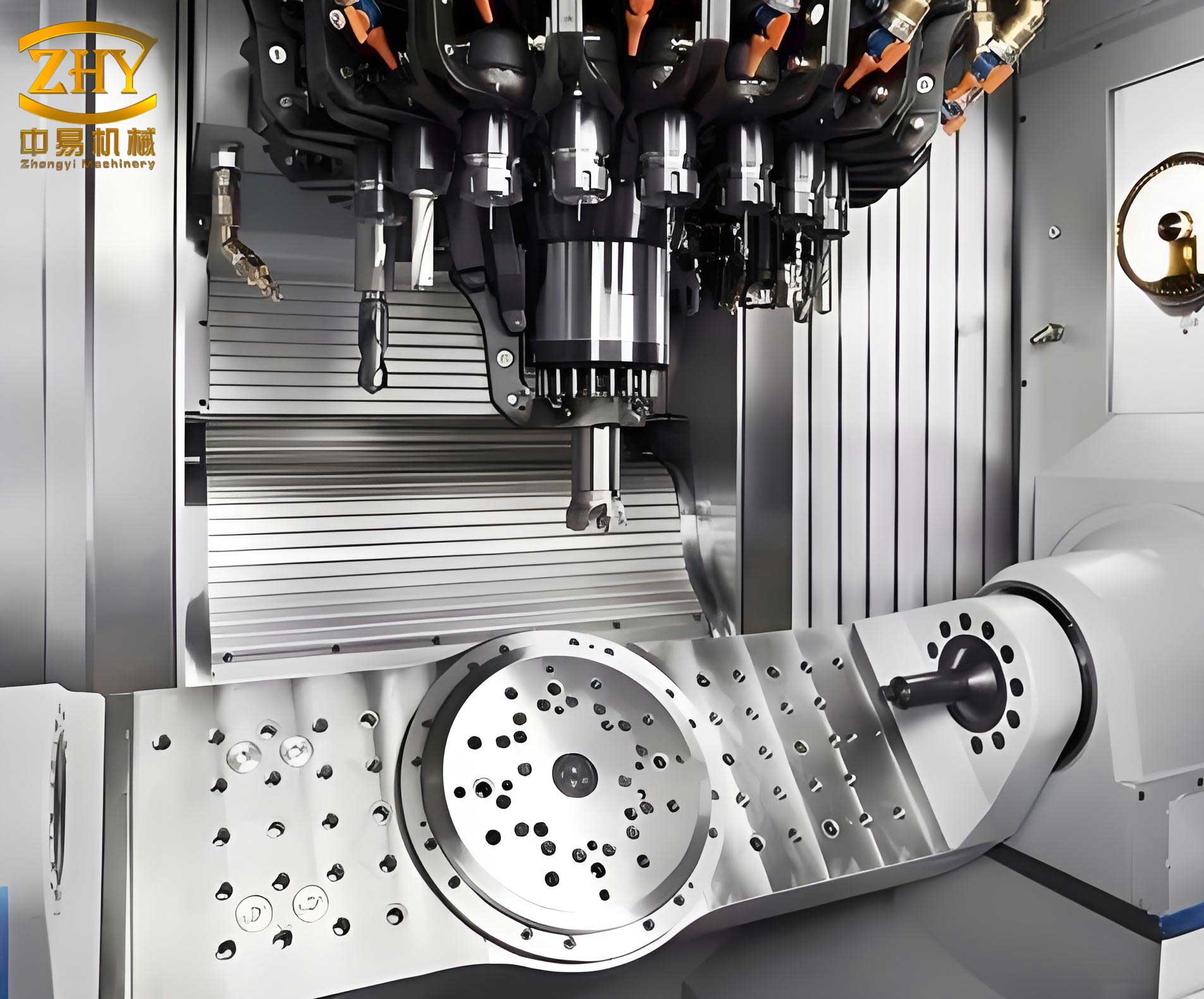
First, let’s explore the factors affecting dimensional stability. I have categorized them into five main areas, supported by data from various machine tool casting studies. Structural rigidity is a fundamental factor; for instance, in a lathe bed measuring 3400 mm, I found that adding a central support leg reduced deflection from 23.5 µm to 0.7 µm under load. This highlights how design modifications can enhance the stiffness of machine tool castings. Thermal effects are equally critical: differential expansion due to microstructural inhomogeneities causes deformation. The thermal expansion coefficients vary by phase—for pearlite, $\alpha = 10 \sim 11 \times 10^{-6}$ m/m·°C; for ferrite, $\alpha = 12 \sim 12.5 \times 10^{-6}$ m/m·°C; and for cementite, $\alpha = 6 \sim 8.3 \times 10^{-6}$ m/m·°C. A temperature gradient of 0.1°C across a 12 m long bed can induce a sag of 25 µm, emphasizing the sensitivity of machine tool castings to thermal changes. Foundation deformation, though often underestimated, can cause installation level variations of 0.01–0.14 mm due to concrete settling over years. Resistance to micro-plastic deformation relates to material properties; in cast iron, graphite inclusions (with strength around 2 kg/mm²) promote stress concentrations and dislocation slip, leading to creep. The resistance can be enhanced by impeding dislocation motion. Lastly, residual stress—comprising casting stress, machining-induced stress, and secondary stress from aging—plays a pivotal role in the long-term distortion of machine tool castings.
To summarize these factors, I have compiled Table 1, which outlines their mechanisms and impacts on machine tool castings. This table synthesizes data from multiple experiments, providing a quick reference for engineers.
| Factor | Mechanism | Impact on Machine Tool Castings | Typical Data |
|---|---|---|---|
| Structural Rigidity | Insufficient support leads to deflection under load. | Increased deformation; precision loss. | Deflection reduced from 23.5 µm to 0.7 µm with added support. |
| Thermal Gradients | Differential expansion due to phase inhomogeneity and external temperature differences. | Sag or lift in components; accuracy drift. | 0.1°C gradient causes 25 µm sag in a 12 m bed. |
| Foundation Deformation | Concrete settling and external vibrations alter alignment. | Installation level changes; long-term instability. | Level variation of 0.01–0.14 mm over 18 years. |
| Micro-Plastic Deformation | Dislocation slip under low stress, exacerbated by graphite inclusions. | Creep and dimensional drift over time. | Graphite strength ~2 kg/mm²; stress concentrations at tips. |
| Residual Stress | Stresses from casting, machining, and aging processes that relax over time. | Distortion during storage or use; precision degradation. | Can be eliminated by 50–90% with proper aging. |
Among these, residual stress is a dominant factor in the dimensional instability of machine tool castings. In my work, I have focused on artificial aging, particularly thermal aging, to address this. Residual stress in machine tool castings arises from three sources: casting stress due to uneven cooling in the elastic-plastic range, machining stress from cutting operations, and secondary stress from cooling during aging. The relaxation of these stresses over time causes deformation, which is why effective aging is essential. I have developed a thermal aging protocol based on the elastic-plastic behavior of cast iron, such as HT 20-40. From creep tests, I determined the elastic-plastic temperature range for this material. The relationship between temperature and deformation can be expressed by a simplified model: $$\epsilon(T) = \alpha \Delta T + \beta \sigma \exp\left(-\frac{Q}{RT}\right)$$ where $\epsilon$ is strain, $\alpha$ is thermal expansion coefficient, $\Delta T$ is temperature change, $\beta$ is a material constant, $\sigma$ is stress, $Q$ is activation energy, $R$ is gas constant, and $T$ is temperature. This formula helps predict how machine tool castings behave during heating and cooling.
Based on my experiments, I established a thermal aging specification for precision machine tool castings, as shown in Figure 2 (described textually here). The key parameters include loading temperature below 200°C, heating rate not exceeding 80°C/hour for castings under 250 kg, holding temperature at 530–550°C for 4–6 hours, and controlled cooling—slow above 350°C to avoid secondary stresses. The cooling rate is critical; I found that faster cooling reduces stress elimination efficacy. For example, in tests on milling machine beds, cooling at 48°C/hour eliminated 52% of residual stress, while 130°C/hour only eliminated 50%. This underscores the importance of precise control in aging machine tool castings. Additionally, furnace temperature uniformity is vital: a温差 (temperature difference) greater than ±25°C can severely impair stress relief, as shown in Table 2, which summarizes data from my milling machine bed experiments.
| Furnace Temperature Difference (°C) | Residual Stress Elimination (%) | Remarks on Machine Tool Castings |
|---|---|---|
| 160–190 | 14, 65, Increase | Poor uniformity leads to stress increase or minimal relief. |
| 30–70 | 66, 87 | Moderate difference allows better stress elimination. |
| ≤ ±25 | ≥ 90 | Optimal for precision machine tool castings. |
The arrangement of aging in the production sequence is another aspect I have investigated. By measuring residual stress at various stages—after casting, rough machining, and aging—I observed significant stress fluctuations. For instance, in a coordinate boring machine bed made of HT 20-40, early shakeout (above 200°C) increased residual stress by 84%, while rough machining added over twice the original stress. This led me to recommend placing thermal aging after rough machining, as it effectively eliminates both casting and machining stresses. The stress changes can be quantified using the formula: $$\sigma_{\text{final}} = \sigma_{\text{initial}} – \Delta \sigma_{\text{aging}} + \Delta \sigma_{\text{machining}}$$ where $\Delta \sigma_{\text{aging}}$ is stress relieved during aging and $\Delta \sigma_{\text{machining}}$ is stress induced by machining. In my trials, this approach reduced residual stress by 50% or more, enhancing the dimensional stability of machine tool castings.
To illustrate, Table 3 presents data from my studies on coordinate boring machine beds and imitation lathe beds, showing stress variations across processes. This reinforces the benefit of post-machining aging for machine tool castings.
| Process Stage | Stress Change (%) | Material: HT 20-40 Cast Iron | Material: Phosphor-Copper-Titanium Wear-Resistant Cast Iron |
|---|---|---|---|
| Casting (Early Shakeout) | +84 | High stress due to rapid cooling. | +241 (extreme case) |
| Casting (Shakeout >200°C) | +250 | Even higher stress accumulation. | N/A |
| Rough Machining | +100 to +200 | Additional stress from cutting. | Similar trends observed |
| First Aging | -54 to -87 | Significant stress relief. | -5 to -86 |
| Second Aging | Further reduction | Stabilizes residual stress. | Improved stability |
A key question in my research has been the optimal number of aging cycles for machine tool castings. I conducted comparative tests on coordinate boring machine beds and imitation lathe beds, using single thermal aging, double thermal aging, and combined thermal-natural aging. The results, summarized in Tables 4 and 5, clearly show that double thermal aging yields superior dimensional stability. For coordinate boring machine beds, double aging reduced residual stress below 2 kg/mm² and limited geometric accuracy drift to within 4 µm over 10–15 months, rivaling high-end Swiss models. For imitation lathe beds, double aging cut maximum deformation to 3 µm/year, half that of single aging. This improvement stems not only from lower residual stress but also from enhanced resistance to micro-plastic deformation, as evidenced by load and temperature tests (Table 6). The ability of machine tool castings to withstand external forces and thermal fluctuations is crucial for precision retention.
| Material | Aging Process | Residual Stress (kg/mm²) | Maximum Deformation | Remarks on Machine Tool Castings |
|---|---|---|---|---|
| Phosphor-Copper-Titanium Cast Iron | Double Thermal Aging | 1.7–2.0 | < 3 µm/year | High stability,接近瑞士水平. |
| HT 20-40 Cast Iron | Double Thermal Aging | 1.3–1.5 | 3–4 µm/15 months | Good for precision machine tool castings. |
| HT 20-40 Cast Iron | Composite Aging* | 2.4 | 4 µm/year | Moderate stability. |
| HT 20-40 Cast Iron | Loose Double Aging** | 5.5 | 7 µm/year, 6 µm/8 months | Poor due to non-standard process. |
*Composite aging: first thermal aging, then natural aging for six months.
**Loose double aging: furnace温差 >50°C, lower holding temperature, uneven cooling.
| Material | Aging Process | Residual Stress (kg/mm²) | Maximum Deformation |
|---|---|---|---|
| HT 20-40 Cast Iron | Single Thermal Aging | 5.0–7.5 | 6 µm/year |
| HT 20-40 Cast Iron | Double Thermal Aging | 1.8–3.0 | 3 µm/year |
| Aging Method | Residual Stress (kg/mm²) | Deformation under 200 kg Load (µm) | Deformation under 5°C Temperature Change (µm) | Notes on Machine Tool Castings |
|---|---|---|---|---|
| Single Thermal Aging | > 1.9 | 6.7 (flat guide), 2.0 (V-guide) | 1.59 (flat), 1.53 (V) | Higher stress leads to greater drift. |
| Double Thermal Aging | 1.04 | 0.8 (flat guide), 1.0 (V-guide) | 0.81 (flat), 1.0 (V) | Enhanced stability and resistance. |
The data consistently indicate that double thermal aging significantly benefits precision machine tool castings by reducing residual stress to below 2 kg/mm² and improving抗微小塑性变形能力 (resistance to micro-plastic deformation). This can be modeled using a stability index $S$ for machine tool castings: $$S = \frac{1}{\sigma_r} \int_{0}^{t} \exp\left(-\frac{t}{\tau}\right) dt$$ where $\sigma_r$ is residual stress, $t$ is time, and $\tau$ is a relaxation time constant. Lower $\sigma_r$ from double aging increases $S$, implying better dimensional hold. For general machine tool castings, a single aging after rough machining may suffice, eliminating over 50% of stress, but for critical applications, double aging is advisable. I have also explored alternative aging methods, such as vibration aging, which offers advantages like shorter cycles (10–45 minutes), lower energy use, and applicability to non-metallic machine tool castings. However, thermal aging remains widely used due to its proven efficacy.
In conclusion, my research underscores that artificial aging, particularly thermal aging, is vital for enhancing the dimensional stability of machine tool castings. Key recommendations include: avoiding early shakeout to minimize initial stress; adhering to a controlled aging规范 with slow cooling above 350°C; ensuring furnace temperature uniformity within ±25°C; placing aging after rough machining to address machining stresses; and employing double thermal aging for precision machine tool castings to achieve residual stress below 2 kg/mm² and superior accuracy retention. These practices, derived from rigorous experimentation, can help manufacturers produce more reliable and precise machine tool castings. As technology evolves, methods like vibration aging may gain traction, but the principles of stress relief and stabilization will remain central to the performance of machine tool castings in high-precision industries.