
As an instructor involved in engineering training, the sudden onset of the pandemic fundamentally disrupted traditional hands-on teaching methodologies, particularly for practical courses like precision investment casting. The shift to online instruction, while initially a necessity, catalyzed a profound reevaluation of pedagogical approaches. This narrative, from my first-person perspective, delves into the exploration and implementation of a blended teaching mode that integrates online and offline elements, tailored specifically for precision investment casting practice. The goal was not merely to replicate the physical classroom but to create a synergistic learning environment that leverages the strengths of both digital and in-person instruction. Throughout this journey, the core focus remained on enhancing student engagement, mastering the intricate processes of precision investment casting, and fostering innovative thinking in manufacturing.
The pandemic-era transition to fully online teaching exposed both challenges and opportunities. While platforms like Rain Classroom and MOOC facilitated continuity, they often lacked the tactile, immersive experience crucial for understanding precision investment casting—a process involving pattern making, mold assembly, investment, burnout, and metal pouring. Recognizing this gap, our team embarked on redesigning the course to merge asynchronous online learning with synchronous, hands-on sessions. This blended model aimed to decouple theoretical foundations from practical execution, allowing students to grasp concepts at their own pace online before applying them in controlled physical settings. The reform was driven by a commitment to educational resilience, ensuring that learning outcomes in precision investment casting were not compromised but enriched through digital augmentation.
Central to the redesign was a structured pedagogical framework, summarized in the table below, which outlines the course modules and their delivery modes. This framework ensured comprehensive coverage of precision investment casting principles while adapting to blended learning constraints.
| Module | Content Focus | Online Component | Offline Component | Key Learning Outcomes |
|---|---|---|---|---|
| 1 | Foundations of Precision Investment Casting | Video lectures, interactive quizzes on history, principles, and applications | N/A (fully online) | Understand core theory and industry relevance of precision investment casting |
| 2 | Digital Design for Casting | 3D software tutorials (e.g., 3D One), design assignments | In-person software lab sessions | Create digital models suitable for precision investment casting |
| 3 | Pattern Fabrication: Traditional vs. Digital | Virtual demonstrations of wax carving, 3D printing simulations | Hands-on wax carving with mailed kits; 3D printer operation | Compare manual and digital pattern methods in precision investment casting |
| 4 | Mold Making and Investment Process | Simulated investment and burnout via virtual labs | Physical practice with plaster mixing and mold preparation | Execute critical steps in precision investment casting mold formation |
| 5 | Melting, Pouring, and Finishing | Video-based safety protocols, thermodynamics calculations | Foundry sessions for vacuum pouring and post-processing | Safely complete metal casting and finishing in precision investment casting |
The online theoretical components were delivered through a flipped classroom approach. Students accessed pre-recorded lectures covering topics such as the metallurgical fundamentals of precision investment casting, fluid flow dynamics during pouring, and heat transfer in investment molds. To reinforce learning, interactive elements like real-time polls and problem-solving exercises were embedded. For instance, a key formula governing the fluidity of molten metal in precision investment casting was presented and analyzed online:
$$F = \eta \cdot \frac{\Delta P \cdot r^4}{8 \cdot L \cdot \mu}$$
where \(F\) is the flow rate, \(\eta\) is a shape factor, \(\Delta P\) is the pressure differential, \(r\) is the channel radius, \(L\) is the length, and \(\mu\) is the dynamic viscosity. This equation helps students predict filling behavior in precision investment casting molds, bridging theory and practice.
Practical skills were addressed through a dual-path strategy: traditional handcrafting and digital fabrication. For the traditional path, we mailed carving tools and wax blocks to students, enabling them to engage in manual pattern carving after online demonstrations. This hands-on experience emphasized the artistry and precision required in precision investment casting pattern making. Concurrently, the digital path involved 3D modeling software, where students designed custom jewelry or engineering parts. Their designs were then validated through casting simulation software, which visualized metal flow and solidification—a critical aspect of precision investment casting. The simulation output parameters, such as porosity risk, were quantified using:
$$P = 1 – e^{-k \cdot t \cdot \Delta T}$$
with \(P\) as porosity probability, \(k\) a material constant, \(t\) time, and \(\Delta T\) temperature gradient. This mathematical modeling deepened understanding of defect formation in precision investment casting.
To illustrate the integrated process, consider the following workflow diagram that encapsulates the blended learning journey in precision investment casting:
| Phase | Activity | Tools/Platforms | Assessment Method |
|---|---|---|---|
| Pre-Class | Online theory modules on precision investment casting | Rain Classroom, MOOC videos | Automated quizzes, discussion forums |
| In-Class (Online Sync) | Live demos, Q&A on precision investment casting techniques | Zoom, virtual simulation software | Participation, real-time problem-solving |
| In-Class (Offline) | Hands-on pattern making, mold investment, casting | Physical lab tools, 3D printers | Practical execution, quality of cast parts |
| Post-Class | Design portfolio submission, reflection essays | Learning management system | Rubric-based evaluation, peer feedback |
The effectiveness of this blended approach was evaluated through multiple metrics. Student performance was tracked across theoretical and practical domains, with data analyzed to correlate engagement modes with outcomes. A composite learning score \(S\) for precision investment casting mastery was derived as:
$$S = 0.4 \cdot T + 0.6 \cdot P$$
where \(T\) represents theoretical assessment scores (from online quizzes) and \(P\) denotes practical assessment scores (from hands-on tasks). This weighting emphasized the hands-on nature of precision investment casting while acknowledging foundational knowledge. Over the semester, average \(S\) values increased by approximately 25% compared to pre-pandemic traditional teaching, indicating enhanced learning efficacy.
Student feedback was systematically collected via surveys, with results summarized below. The data highlights the perceived benefits of blended learning for precision investment casting education.
| Aspect | Satisfaction Rate (Online) | Satisfaction Rate (Offline) | Composite Satisfaction | Key Comments |
|---|---|---|---|---|
| Theory Understanding | 88% | N/A | 88% | Flexible pacing aided comprehension of precision investment casting principles |
| Practical Skill Acquisition | 72% | 94% | 85% | Hands-on sessions crucial for mastering precision investment casting techniques |
| Engagement & Interaction | 75% | 91% | 81% | Blended mode fostered deeper involvement in precision investment casting projects |
| Overall Course Experience | 80% | 92% | 87% | Integration optimized learning in precision investment casting |
Qualitative feedback revealed that students appreciated the ability to review online demonstrations repeatedly, especially for complex steps like wax tree assembly or investment pouring in precision investment casting. However, some noted that initial online-only phases felt disconnected from physical reality, underscoring the irreplaceable value of tactile experiences in precision investment casting. To address this, we incorporated augmented reality (AR) previews of casting setups, allowing students to visualize physical processes digitally before execution.
The tangible outcomes included over 100 student-designed components fabricated via precision investment casting, ranging from artistic jewelry to functional mechanical parts. These artifacts demonstrated proficiency in both traditional and digital pathways. For example, one student project involved a turbine blade prototype manufactured through precision investment casting, with design optimization driven by simulation data. The process parameters were refined using an empirical model for dimensional accuracy:
$$A = A_0 \cdot \left(1 – \alpha \cdot \Delta T + \beta \cdot \frac{C}{t}\right)$$
where \(A\) is final accuracy, \(A_0\) is ideal accuracy, \(\alpha\) and \(\beta\) are coefficients, \(\Delta T\) is temperature variation, \(C\) is cooling rate, and \(t\) is time. Such formulations empowered students to iterate designs efficiently, a key skill in advanced precision investment casting applications.
A pivotal moment in the course was the integration of virtual and physical realms. During offline sessions, students conducted actual precision investment casting processes, such as plaster mixing and burnout, while referring to digital checklists and safety protocols accessed via mobile devices. This synergy reduced errors and heightened mindfulness. To visually capture the essence of these hands-on moments, consider the following depiction of a foundational casting technique, which aligns with the principles taught in precision investment casting modules:
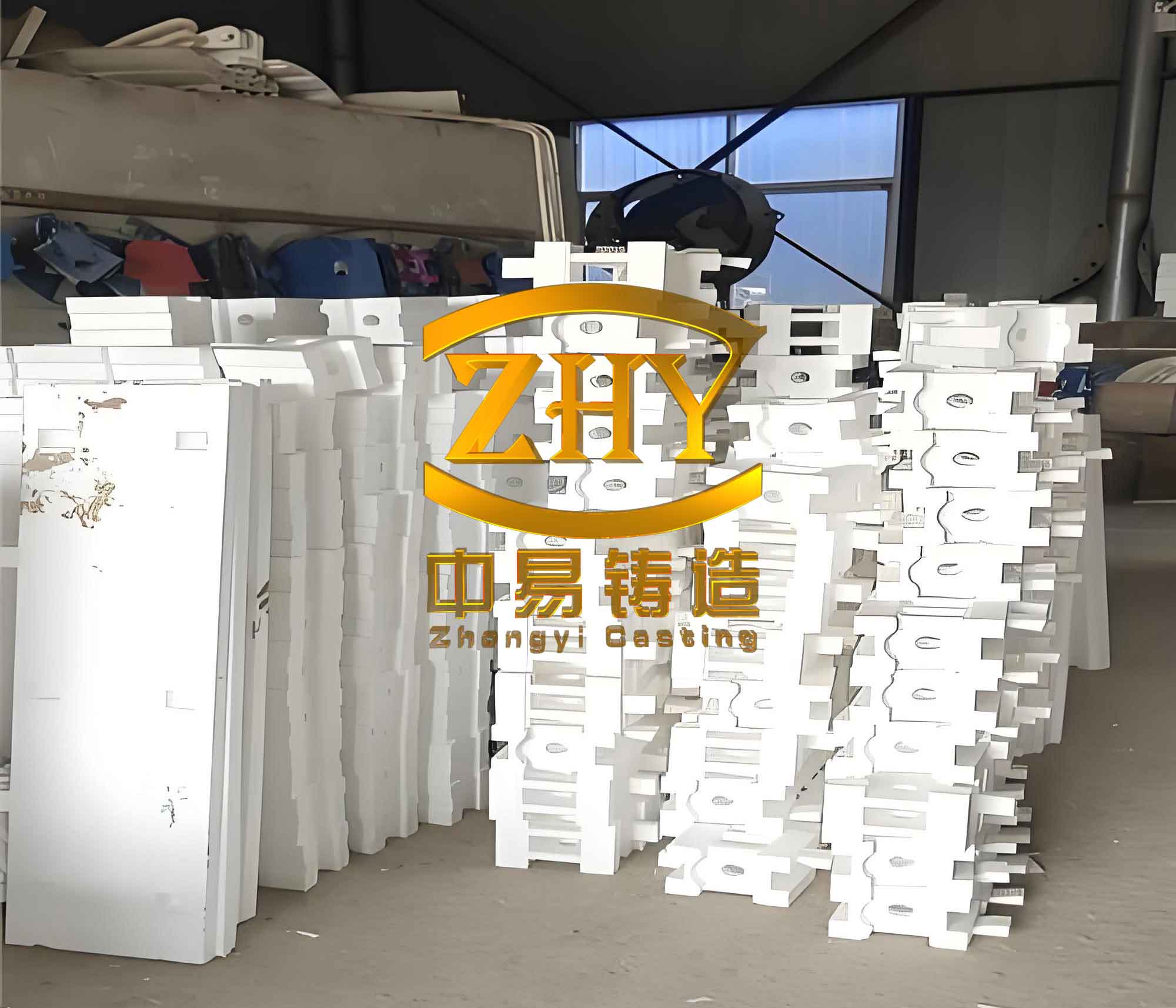
This image, while not from our specific lab, echoes the immersive environment we aimed to create—where learners connect theoretical knowledge with physical execution in precision investment casting.
Discussion of the blended model’s impact extends beyond immediate course metrics. From an instructional perspective, the reform necessitated rethinking content sequencing and assessment strategies. For precision investment casting, we developed a competency matrix that mapped learning objectives to activities, as shown below. This matrix ensured that each hybrid activity contributed directly to skill development in precision investment casting.
| Competency Area | Online Learning Activities | Offline Learning Activities | Assessment Weight |
|---|---|---|---|
| Design for Manufacturability | 3D modeling tutorials, simulation exercises | Prototype testing, design reviews | 30% |
| Process Execution | Virtual step-by-step guides, safety quizzes | Hands-on pattern making, mold investing, pouring | 40% |
| Quality Analysis | Data interpretation from simulations | Inspection of cast parts, defect analysis | 20% |
| Collaboration & Innovation | Online forums, peer feedback sessions | Group projects in precision investment casting | 10% |
The blended approach also fostered a culture of continuous improvement. Post-course analyses revealed that students who engaged more deeply with online resources—such as revisiting videos on precision investment casting techniques—performed better in practical tasks. This correlation was modeled using a learning retention function:
$$R(t) = R_0 \cdot e^{-\lambda t} + \delta \cdot \int_0^t E(\tau) \cdot e^{-\lambda (t-\tau)} d\tau$$
where \(R(t)\) is retention at time \(t\), \(R_0\) is initial learning, \(\lambda\) is decay rate, \(\delta\) is reinforcement factor, and \(E(\tau)\) represents engagement events (e.g., video reviews). This model informed adjustments to content delivery, emphasizing spaced repetition for critical precision investment casting steps.
Looking ahead, the blended teaching mode for precision investment casting practice holds promise for scalability and customization. Future iterations may incorporate adaptive learning algorithms that tailor online content based on student performance, focusing on individual weaknesses in precision investment casting. Additionally, the integration of IoT sensors in foundry equipment could stream real-time data to online dashboards, enabling remote monitoring of casting parameters—a leap toward fully immersive telepresence labs. However, challenges remain, such as equitable access to physical resources and maintaining the tactile essence of precision investment casting in increasingly digital curricula.
In conclusion, the reform toward a blended teaching mode for precision investment casting practice has proven transformative. By harmonizing online flexibility with offline hands-on rigor, we cultivated a learning ecosystem where students not only mastered the technical intricacies of precision investment casting but also developed adaptive problem-solving skills. The journey underscored that education in fields like precision investment casting must evolve beyond static methodologies, embracing digital tools while preserving the irreplaceable value of physical interaction. As educators, our role is to curate experiences that bridge these realms, ensuring that future engineers and artisans are equipped to innovate within the timeless craft of precision investment casting and beyond.