
In recent years, the demand for advanced materials in industries such as mining, transportation, and civil engineering has intensified, driven by global initiatives for energy-efficient structures and environmental sustainability. High manganese steel casting has emerged as a pivotal material due to its exceptional toughness and wear resistance, yet it faces limitations under extreme loads and friction conditions. To address these challenges, carbide particle reinforced high manganese steel matrix composites have been developed, combining the benefits of carbides like TiC, WC, and SiC with the ductility of high manganese steel. This article explores these composites and their fabrication processes from a first-person perspective, emphasizing practical insights and technical evaluations. We will delve into various preparation methods, incorporating tables and equations to summarize key aspects, and highlight the recurring theme of high manganese steel casting in enhancing material performance.
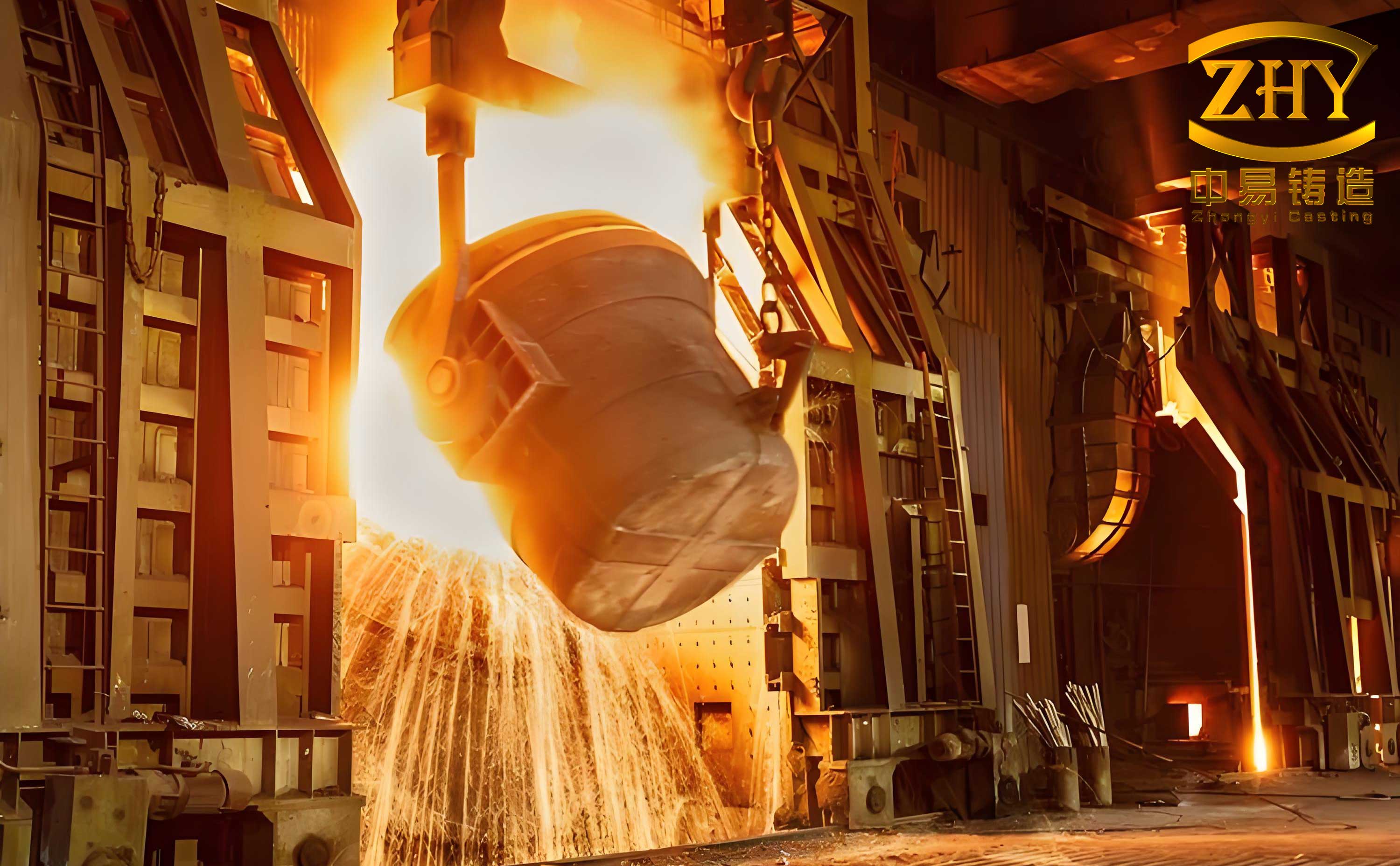
Carbide particle reinforced high manganese steel matrix composites represent a significant advancement in material science, offering superior strength, hardness, and durability. These composites integrate carbides such as TiC, NbC, MoC, SiC, B4C, and WC into a high manganese steel base, resulting in improved mechanical properties ideal for applications in aerospace, automotive, and machinery manufacturing. The core advantage lies in the synergy between the hard carbide particles and the tough steel matrix, which enhances resistance to abrasion and impact. For instance, in high manganese steel casting processes, the addition of WC particles can lead to a composite with a hardness increase of up to 30% compared to conventional steels, as described by the Hall-Petch relationship for strength: $$ \sigma_y = \sigma_0 + k_y \cdot d^{-1/2} $$ where $\sigma_y$ is the yield strength, $\sigma_0$ is the friction stress, $k_y$ is the strengthening coefficient, and $d$ is the grain size. This equation underscores how finer microstructures in high manganese steel casting contribute to enhanced performance. Moreover, the wear resistance can be modeled using Archard’s equation: $$ W = k \frac{P \cdot v}{H} $$ where $W$ is the wear volume, $k$ is the wear coefficient, $P$ is the load, $v$ is the sliding velocity, and $H$ is the hardness. By optimizing these parameters in high manganese steel casting, composites achieve longer service life in demanding environments.
| Carbide Type | Hardness (GPa) | Density (g/cm³) | Thermal Stability (°C) | Key Applications in High Manganese Steel Casting |
|---|---|---|---|---|
| TiC (Titanium Carbide) | 28-35 | 4.93 | Up to 3100 | Enhances wear resistance in mining equipment |
| WC (Tungsten Carbide) | 22-30 | 15.63 | Up to 2800 | Improves impact toughness in crusher parts |
| SiC (Silicon Carbide) | 25-30 | 3.21 | Up to 2700 | Used in automotive brake systems |
| B4C (Boron Carbide) | 30-40 | 2.52 | Up to 2500 | Applied in armor and cutting tools |
| NbC (Niobium Carbide) | 20-25 | 7.82 | Up to 3500 | Increases high-temperature strength in engines |
The fabrication of carbide particle reinforced high manganese steel matrix composites can be broadly classified into methods involving external addition or in-situ reaction of reinforcement particles. External addition techniques, such as mechanical stirring, often face issues like particle agglomeration and poor wettability between the carbide and steel matrix, leading to inhomogeneous distribution. This is particularly critical in high manganese steel casting, where the large wetting angle between ceramics and molten metal can cause defects. In contrast, in-situ methods generate reinforcement particles within the matrix during processing, resulting in cleaner interfaces and better bonding. The general classification includes liquid-state, solid-state, liquid-solid, and solid-semi-solid processes, each with distinct mechanisms. For example, the efficiency of particle distribution can be quantified using the homogeneity index $H_i$, defined as: $$ H_i = 1 – \frac{\sum |x_i – \bar{x}|}{N \cdot \bar{x}} $$ where $x_i$ is the local particle concentration, $\bar{x}$ is the average concentration, and $N$ is the number of measurements. A higher $H_i$ value indicates more uniform dispersion, which is crucial for optimizing high manganese steel casting processes. Below, we summarize the primary categories in a table to illustrate their characteristics and relevance to high manganese steel casting.
| Process Type | Key Methods | Advantages | Disadvantages | Suitability for High Manganese Steel Casting |
|---|---|---|---|---|
| Liquid-State | Mechanical Stirring, Cast Infiltration, Squeeze Casting | Simple equipment, low cost | Risk of oxidation and segregation | Moderate, due to high melting points |
| Solid-State | Powder Metallurgy, In-Situ Synthesis, Self-Propagating High-Temperature Synthesis | Uniform distribution, high volume fractions | High cost, porosity issues | High, enables precise control |
| Liquid-Solid | Stir Casting, Composite Casting | Combines liquid and solid benefits | Particle clustering in viscous melts | Limited, but useful for specific alloys |
| Solid-Semi-Solid | Semi-Solid Cast Rolling, Semi-Solid Pressing | Reduced shrinkage, improved density | Complex parameter control | Emerging, with potential for high manganese steel |
Stir casting, a liquid-solid process, involves mechanically mixing reinforcement particles into molten high manganese steel before cooling and solidification. This method is favored for its simplicity and cost-effectiveness in high manganese steel casting, but it struggles with particle oxidation and agglomeration, especially for ceramics with high wetting angles. The viscosity of the melt plays a critical role, as described by the Einstein-Roscoe equation for suspensions: $$ \eta_r = \eta_m (1 + 2.5\phi + k_1\phi^2) $$ where $\eta_r$ is the relative viscosity, $\eta_m$ is the matrix viscosity, $\phi$ is the volume fraction of particles, and $k_1$ is a constant. In high manganese steel casting, high $\phi$ values can lead to inhomogeneities, reducing composite quality. For instance, if the density difference between carbide particles and steel is significant, macroscopic segregation occurs, compromising the integrity of cast components. Therefore, stir casting is less common for high manganese steel applications, where precise control is essential.
Powder metallurgy, one of the earliest methods for metal matrix composites, involves blending high manganese steel powder with carbide particles, compacting the mixture below the liquidus temperature, and sintering in a vacuum to achieve atomic diffusion and bonding. This technique excels in producing uniform microstructures and high volume fraction composites, making it highly suitable for high manganese steel casting processes that require enhanced mechanical properties. However, drawbacks include high porosity and the formation of brittle interfacial phases during sintering, which can be mitigated through secondary processing like hot isostatic pressing. The densification during sintering can be modeled using the Master Sintering Curve concept: $$ \Theta = \int_0^t \frac{1}{T} \exp\left(-\frac{Q}{RT}\right) dt $$ where $\Theta$ is the sintering work, $Q$ is the activation energy, $R$ is the gas constant, $T$ is temperature, and $t$ is time. By optimizing these parameters, high manganese steel casting via powder metallurgy achieves superior density and performance, though it remains cost-intensive for large-scale production.
Centrifugal casting utilizes centrifugal force to position reinforcement particles against mold walls before injecting molten high manganese steel, forming surface composites with improved properties. This method is effective for creating gradient structures, as demonstrated in studies on Al-Si alloys with SiC particles, where surface defects were minimized and mechanical strength increased. In high manganese steel casting, centrifugal forces enhance particle distribution, but parameters like rotation speed and pouring temperature must be controlled to avoid microporosity. The centrifugal pressure $P_c$ can be expressed as: $$ P_c = \frac{1}{2} \rho \omega^2 (r_o^2 – r_i^2) $$ where $\rho$ is the melt density, $\omega$ is the angular velocity, and $r_o$ and $r_i$ are the outer and inner radii, respectively. For high manganese steel casting, optimal speeds around 100-200 rpm have been reported to refine grains and enhance tensile strength, making it a viable option for components requiring hard, wear-resistant surfaces.
Casting methods, including gravity infiltration, centrifugal infiltration, and vacuum suction casting, involve infiltrating a preform of reinforcement particles with molten high manganese steel to form composite layers. Gravity infiltration relies on gravitational force, while centrifugal infiltration uses high centrifugal force for rapid penetration, and vacuum suction employs negative pressure to draw particles into specific locations. These techniques are particularly advantageous for high manganese steel casting, as they enable the production of composites with external hardness and internal toughness. For example, in WC-reinforced high manganese steel, vacuum suction casting has yielded materials with excellent corrosion and wear resistance. The infiltration velocity $v_i$ in such processes can be described by Darcy’s law: $$ v_i = \frac{K}{\mu} \frac{\Delta P}{L} $$ where $K$ is the permeability, $\mu$ is the dynamic viscosity, $\Delta P$ is the pressure difference, and $L$ is the infiltration length. By adjusting these factors, high manganese steel casting achieves optimal composite formation, though challenges like binder selection and cooling rates require careful management.
In-situ composite methods, such as self-propagating high-temperature synthesis (SHS) and reaction casting, generate reinforcement particles within the high manganese steel matrix during fabrication, leading to clean interfaces and uniform distribution. This approach avoids external contamination and improves wettability, making it highly efficient for high manganese steel casting. For instance, in-situ generated Ti(C,N) particles have shown superior wear resistance compared to the base steel, and additions like PTFE further reduce mass loss. The kinetics of in-situ reactions can be analyzed using the Johnson-Mehl-Avrami-Kolmogorov equation: $$ X = 1 – \exp(-k t^n) $$ where $X$ is the transformed fraction, $k$ is the rate constant, $t$ is time, and $n$ is the Avrami exponent. In high manganese steel casting, this allows for tailored microstructures, such as M6C3 carbides at grain boundaries, which enhance hardness and impact toughness. Moreover, the introduction of electric fields in in-situ processes promotes micro-fiber formation, enabling self-reinforced composites with scalable production potential.
| Process | Key Parameters | Typical Volume Fraction of Carbides (%) | Impact on Hardness (HV) | Cost Efficiency | Remarks on High Manganese Steel Casting |
|---|---|---|---|---|---|
| Stir Casting | Stirring speed, melt temperature | 10-20 | Increase of 50-100 HV | High | Limited by oxidation risks |
| Powder Metallurgy | Sintering temperature, pressure | 20-40 | Increase of 100-200 HV | Moderate to Low | Ideal for complex shapes |
| Centrifugal Casting | Rotation speed, pouring rate | 15-30 | Increase of 80-150 HV | Moderate | Excellent for surface composites |
| In-Situ Methods | Reaction time, temperature gradient | 25-50 | Increase of 150-300 HV | High for mass production | Superior interface quality |
In conclusion, carbide particle reinforced high manganese steel matrix composites offer immense potential for advancing material performance in rigorous applications. Through continuous optimization of fabrication processes like stir casting, powder metallurgy, centrifugal casting, and in-situ methods, high manganese steel casting can achieve higher efficiency, lower costs, and broader applicability. The integration of equations and comparative tables in this analysis underscores the importance of precise parameter control to enhance mechanical properties and durability. As research progresses, these composites are poised to play a pivotal role in sustainable engineering, driven by innovations in high manganese steel casting that balance strength, toughness, and environmental considerations.