
As a researcher specializing in intermetallic compounds, I have extensively studied the casting defects associated with alloys, particularly Fe₃Al-based systems. These alloys, characterized by their high elastic modulus, high melting point, low density, and excellent corrosion and wear resistance, have emerged as a focal point in new material research globally. However, their casting process is fraught with challenges due to inherent properties like narrow solidification ranges and poor fluidity, leading to various casting defects. In this article, I will delve into the common casting defects encountered during the melting and casting of binary and multicomponent Fe₃Al alloys, analyze their root causes, and propose effective control strategies. The term “casting defects” will be frequently emphasized, as understanding and mitigating these imperfections is crucial for advancing industrial applications.
The melting of Fe₃Al alloys can be performed using methods such as air induction melting, vacuum induction melting, vacuum arc remelting (VAR), and electroslag remelting (ESR). Each technique offers unique advantages but inevitably introduces specific casting defects. My focus here is on defects like macrosegregation, microsegregation, shrinkage porosity, and casting cracks, which significantly impact the mechanical properties and service life of cast components. Controlling these casting defects requires a deep understanding of solidification dynamics and alloy chemistry.
Macrosegregation is one of the most pervasive casting defects in Fe₃Al alloys. From the Fe-Al phase diagram, Fe₃Al falls within a narrow solidification range, leading to a layer-by-layer solidification mode. This results in distinct zones across the casting cross-section: a thin chill zone of fine equiaxed grains, a columnar grain zone, a coarse equiaxed grain zone at the center, and a segregation-rich zone between the columnar and coarse equiaxed regions. This pattern is a classic manifestation of positive macrosegregation, where solute elements like Al, Cr, Mo, and Zr accumulate in the last-to-freeze areas due to solute redistribution during solidification.
To quantify this, the partition coefficient (k) and segregation coefficient (ξ) for various elements in Fe₃Al are critical. The segregation coefficient is defined as ξ = 1 – k, where k is the equilibrium partition coefficient. A table summarizing these values for key alloying elements is essential:
| Element | Typical Content (wt%) | Partition Coefficient (k) | Segregation Coefficient (ξ = 1 – k) |
|---|---|---|---|
| Al | 13-18 | 0.8 | 0.2 |
| Cr | 2-6 | 0.7 | 0.3 |
| Mo | 1-3 | 0.6 | 0.4 |
| Zr | 0.1-0.5 | 0.5 | 0.5 |
| Nb | 0.5-2 | 0.9 | 0.1 |
Elements with lower k values, such as Zr and Mo, exhibit higher segregation tendencies, exacerbating macrosegregation. The solidification process can be modeled using the Scheil equation for non-equilibrium solidification:
$$C_s = k C_0 (1 – f_s)^{k-1}$$
where \(C_s\) is the solute concentration in the solid, \(C_0\) is the initial liquid concentration, and \(f_s\) is the solid fraction. This equation highlights how solute enrichment in the liquid leads to macrosegregation. To control this casting defect, I have employed insulated steel mold casting with preheated molds at 300°C, which promotes a more uniform cooling rate and reduces thermal gradients. This approach minimizes columnar growth and fosters a mixed microstructure of fine and coarse equiaxed grains, effectively mitigating macrosegregation. Optimizing mold design and cooling rates is paramount in managing these casting defects.
Microsegregation, another critical category of casting defects, encompasses both intragranular (within grains) and intergranular (at grain boundaries) segregation. Intragranular segregation arises from differential solute diffusion during solidification, influenced by cooling rate (\(\dot{T}\)), diffusion coefficient (\(D\)), and partition coefficient (\(k\)). The extent of segregation can be expressed as:
$$\Delta C = C_0 \frac{1-k}{k} \left(1 – \exp\left(-\frac{k \dot{T} \lambda^2}{D}\right)\right)$$
where \(\Delta C\) is the concentration difference and \(\lambda\) is the dendrite arm spacing. Faster cooling and lower k values intensify this casting defect. For Fe₃Al, elements like Zr and Mo have low k values, making them prone to microsegregation. To alleviate intragranular segregation, homogenization annealing at temperatures 50-100°C below the solidus for extended periods is effective. This process facilitates solute diffusion, restoring chemical uniformity. Alternatively, hot deformation refines grain structure, reducing segregation severity.
Intergranular segregation occurs when solute-rich liquid or low-melting-point compounds are trapped at grain boundaries during solidification. Two mechanisms dominate: first, when growing grains impinge, solute is expelled to the boundaries; second, in columnar growth, boundaries parallel to the growth direction accumulate solutes. This casting defect is particularly detrimental if stable compounds like oxides or sulfides form at boundaries, as they resist homogenization. To prevent such casting defects, I focus on reducing oxygen and sulfur content through vacuum melting and using high-purity raw materials, such as DT4 and Armco iron. Adding elements like Ce can modify sulfide morphology, lessening their harm. For large-scale production, slag refining under atmospheric pressure followed by vacuum degassing proves beneficial. The control of microsegregation is vital for enhancing ductility and corrosion resistance, directly impacting the performance of cast components.
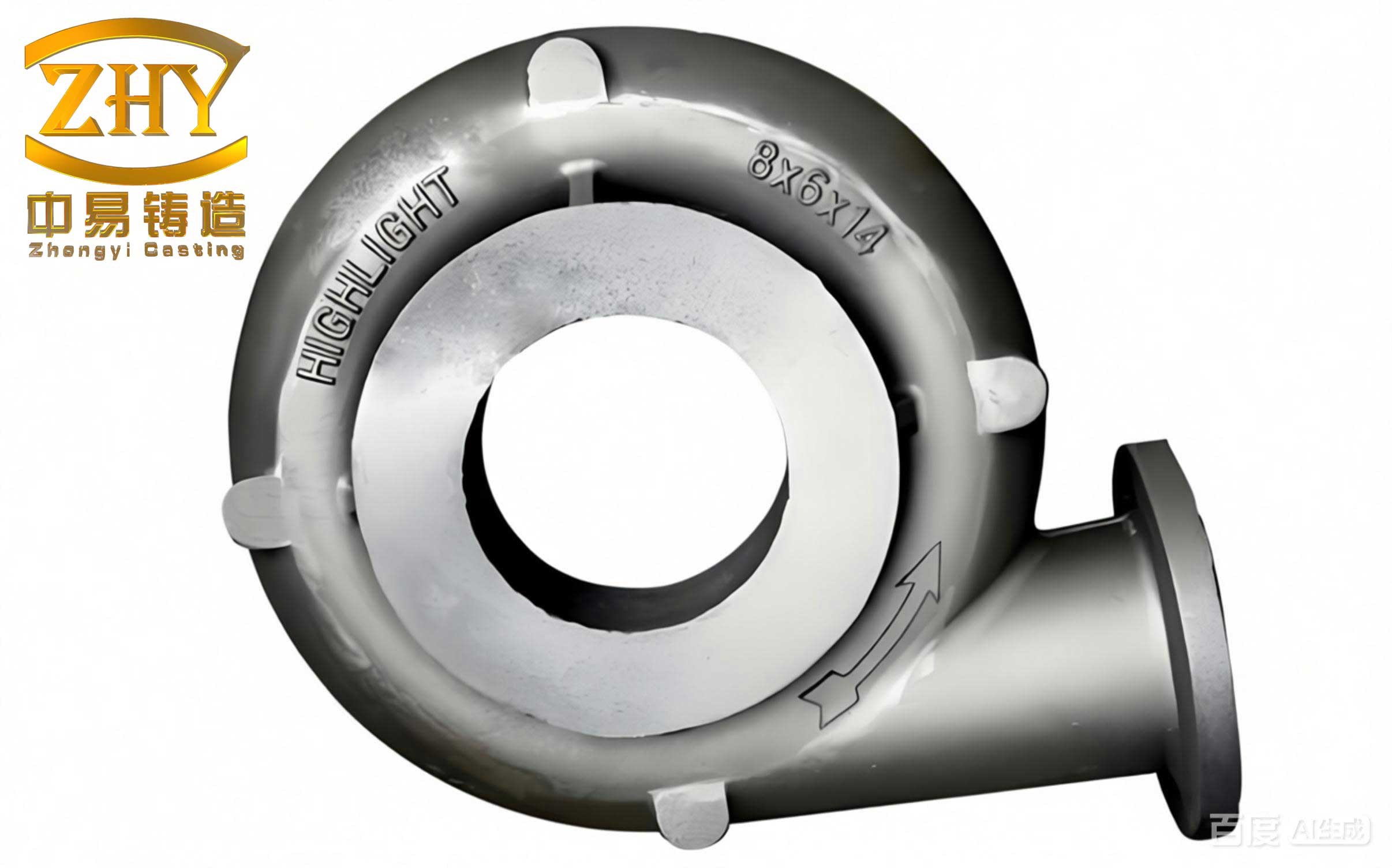
Shrinkage porosity is a prevalent casting defect in Fe₃Al alloys due to their high aluminum content (13-18 wt%), which forms a dense Al₂O₃ film on the melt surface, impairing fluidity and feeding during solidification. This often leads to significant shrinkage cavities, reducing yield rates to 30-40% in early casting trials. The shrinkage volume (\(V_s\)) can be estimated using the Chvorinov’s rule and feeding requirements:
$$V_s = \beta V_c \left( \frac{\Delta T}{\rho L} \right)$$
where \(\beta\) is the shrinkage coefficient, \(V_c\) is the casting volume, \(\Delta T\) is the temperature drop, \(\rho\) is density, and \(L\) is latent heat. Vacuum casting and solidification under reduced pressure help diminish shrinkage depth by improving gas escape and melt feeding. Moreover, the design of risers (feeders) is crucial. My experiments show that the ratio of riser height (\(H\)) to casting diameter (\(D\)) must satisfy \(H/D \geq 1.5\) to eliminate shrinkage porosity. The table below summarizes findings on riser dimensions and shrinkage occurrence:
| Heat No. | Riser Height \(H\) (mm) | Casting Diameter \(D\) (mm) | Ratio \(H/D\) | Shrinkage Porosity |
|---|---|---|---|---|
| 1 | 150 | 100 | 1.5 | None |
| 2 | 120 | 100 | 1.2 | Minor pores |
| 3 | 100 | 100 | 1.0 | Significant cavity |
| 4 | 180 | 120 | 1.5 | None |
| 5 | 90 | 120 | 0.75 | Severe shrinkage |
Thus, maintaining \(H/D \geq 1.5\) is a key strategy to control this casting defect, ensuring adequate compensatory feeding during solidification. Implementing chill zones and controlled cooling further aids in reducing shrinkage-related casting defects.
Casting cracks, particularly ring cracks, are another serious concern in Fe₃Al alloys. These cracks often appear at the interface between columnar and equiaxed grains, as illustrated in the linked image. They result from thermal stresses during solidification and weakened grain boundaries due to precipitate formation, such as rich-Al or carbide phases. The low thermal conductivity of Fe₃Al exacerbates thermal gradients, promoting crack initiation. The stress (\(\sigma\)) generated can be approximated by:
$$\sigma = E \alpha \Delta T$$
where \(E\) is Young’s modulus, \(\alpha\) is the thermal expansion coefficient, and \(\Delta T\) is the temperature difference across the casting. Ring cracks form when contraction stresses exceed the cohesive strength of grain boundaries, often aided by solute segregation that fosters brittle intermetallics.
To mitigate these casting defects, I recommend using sand molds or investment casting instead of metal molds, as they provide slower cooling and reduce columnar growth. Lowering pouring temperature and increasing mold preheat temperature also help minimize thermal stresses. For instance, mold temperatures above 200°C and pouring temperatures below 1550°C have shown reduced crack incidence. Additionally, post-casting slow cooling in pits until temperatures fall below 200°C prevents stress buildup. The table below outlines parameters influencing crack formation:
| Factor | Effect on Casting Defects | Recommended Control Measure |
|---|---|---|
| Mold Type | Metal molds promote ring cracks; sand molds reduce them | Use sand or ceramic molds |
| Pouring Temperature | High temperature increases thermal stress | Keep below 1550°C |
| Cooling Rate | Rapid cooling induces cracks | Employ slow cooling (pit cooling) |
| Grain Refinement | Fine equiaxed grains resist cracking | Add grain refiners or optimize solidification |
By addressing these factors, casting defects like cracks can be substantially minimized, improving the integrity of cast components.
In conclusion, the control of casting defects in Fe₃Al alloys is a multifaceted endeavor requiring precise manipulation of melting, solidification, and post-processing parameters. Macrosegregation, microsegregation, shrinkage porosity, and casting cracks are interlinked defects that stem from the alloy’s intermetallic nature and solidification characteristics. Through strategies such as optimized mold design, vacuum processing, homogenization annealing, and careful thermal management, these casting defects can be effectively mitigated. The repeated emphasis on “casting defects” throughout this discussion underscores their significance in determining the final quality of alloys. Future work should focus on integrating computational modeling to predict defect formation and developing advanced processing techniques for large-scale production. Ultimately, mastering the control of casting defects will unlock the full potential of Fe₃Al alloys in high-temperature and wear-resistant applications, paving the way for broader industrial adoption.