
In the automotive industry, the sealing performance of engines has become increasingly critical as standards evolve. The cylinder block, often termed the heart of the engine, plays a pivotal role in ensuring overall integrity. Among the various defects that can compromise this integrity, casting holes—encompassing both slag holes and sand holes—are frequent surface imperfections that lead to leakage. These defects arise during the casting process due to factors like environmental conditions, mold design, and material properties. In this article, I will delve into the causes of casting holes based on practical experience and propose effective preventive strategies to mitigate their occurrence, thereby enhancing production efficiency and reducing rework costs.
My involvement in addressing these issues stemmed from a significant problem at an engine manufacturing plant. In May 2014, the assembly line reported multiple failures in long-block leak testing, with a batch of cylinder blocks failing on the dedicated leak testers. This severely impacted the first-pass yield and operational availability. Through detailed investigation, we identified casting holes as the primary culprit. By dissecting failed engines and conducting immersion leak tests, we localized the leak points to specific areas of the upper and lower mold cavities. The data from leak testers indicated that failures occurred during the inflation phase, with leak rates ranging from 100 to 4,000 sccm, well beyond the acceptable工艺 range of -9 to 18 sccm. This pointed to substantial defects like casting holes rather than machining errors.
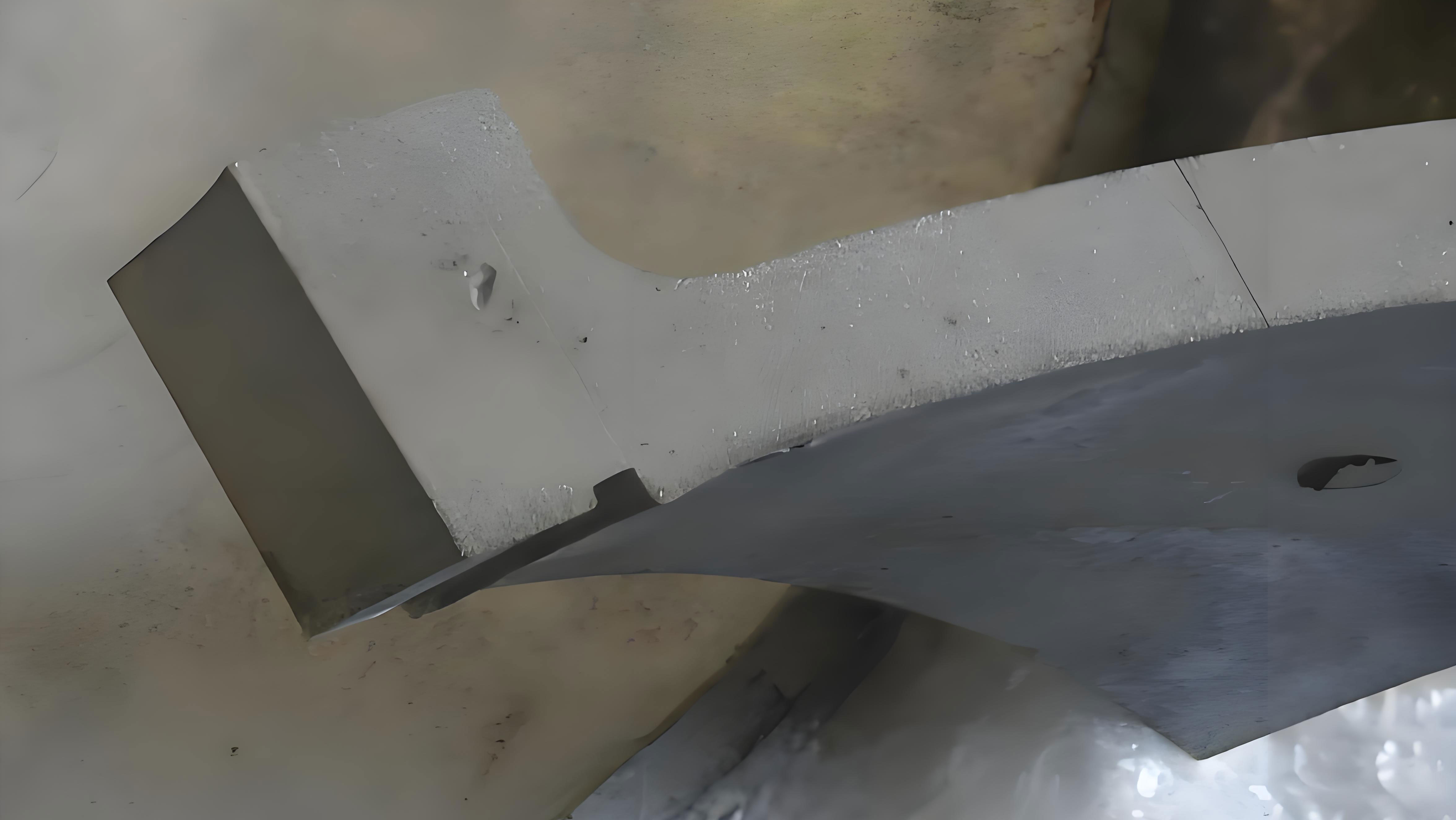
To understand the nature of these casting holes, we performed microscopic examinations on sectioned cylinder blocks. For leaks in the upper cavity, the defects appeared irregular in shape, shallow in depth, with smooth internal surfaces showing glossy, colored residues—characteristic of secondary slag formation during pouring. In contrast, leaks in the lower cavity exhibited uneven depths, rough interiors, and embedded granular sand particles, confirming them as sand holes. These observations underscored the need to differentiate between slag-related and sand-related casting holes, as their root causes differ significantly.
The formation of casting holes is influenced by a multitude of factors. For slag holes, environmental conditions play a crucial role. During the rainy season, high humidity can cause core coatings to absorb moisture, reducing adhesion and promoting slag generation when water reacts with molten iron. Temperature simulations of the mold revealed that areas in the upper cavity with lower temperatures during pouring and cooling are prone to slag entrapment. The mathematical representation of slag formation can be related to the reaction kinetics between moisture and iron. For instance, the oxidation reaction can be expressed as: $$ \text{Fe} + \text{H}_2\text{O} \rightarrow \text{FeO} + \text{H}_2 $$ This reaction produces oxides that contribute to slag, leading to casting holes. Additionally, fluid dynamics in the mold affect slag distribution. The velocity of molten iron, \( v \), and its interaction with the mold walls can be modeled using the Navier-Stokes equations: $$ \rho \left( \frac{\partial \mathbf{v}}{\partial t} + \mathbf{v} \cdot \nabla \mathbf{v} \right) = -\nabla p + \mu \nabla^2 \mathbf{v} + \mathbf{f} $$ where \( \rho \) is density, \( p \) is pressure, \( \mu \) is viscosity, and \( \mathbf{f} \) represents body forces. Turbulent flow may carry slag particles into critical areas, forming casting holes.
For sand holes, the integrity of the mold sand is paramount. Despite using high-strength resin sand for the lower cavity, residual sand grains or coating脱落 can occur due to insufficient cleaning or high冲刷 forces during pouring. The wet tensile strength of the sand, denoted as \( S_w \), is a key parameter. If \( S_w \) falls below a threshold, sand particles dislodge and enter the molten iron, resulting in casting holes. The critical shear stress \( \tau_c \) required to detach sand can be approximated as: $$ \tau_c = k \cdot S_w $$ where \( k \) is a constant dependent on sand properties. When the shear stress from molten iron flow exceeds \( \tau_c \), sand erosion occurs. Furthermore, the temperature gradient in the mold influences sand stability. The heat conduction equation: $$ \frac{\partial T}{\partial t} = \alpha \nabla^2 T $$ where \( T \) is temperature and \( \alpha \) is thermal diffusivity, indicates that rapid cooling in certain areas may exacerbate sand inclusion, leading to casting holes.
To systematically address these issues, we implemented a series of preventive measures tailored to the upper and lower cavities. The table below summarizes the key actions and their intended effects on reducing casting holes:
| Cavity | Measure | Description | Impact on Casting Holes |
|---|---|---|---|
| Upper | Climate-Controlled Core Storage | Built a恒温恒湿芯库 with temperature and humidity control to prevent core coating moisture absorption. | Reduces slag formation by minimizing water-related reactions, thus decreasing slag-related casting holes. |
| Extended Drying Oven | Lengthened the drying oven to ensure thorough core drying, lowering residual moisture content. | Enhances coating adhesion and reduces slag sources, mitigating casting holes. | |
| Added Vent Pins | Installed排气暗针 in leak-prone areas to guide molten iron flow and facilitate slag overflow. | Promotes slag removal during pouring, preventing entrapment and casting holes. | |
| Lower | Increased Sand Wet Strength | Raised the wet tensile strength of molding sand from historical lows to optimal levels. | Improves sand resistance to冲刷, reducing sand-related casting holes. |
| Enhanced Sand Cooling | Installed dual-disc coolers in sand处理 systems to improve sand quality and consistency. | Stabilizes sand properties, lowering the incidence of casting holes. | |
| Upgraded Mold Inserts | Replaced浇道镶块 with integral, pressure-resistant designs to withstand iron impact. | Minimizes sand detachment, thereby preventing casting holes. |
These measures were put into effect starting June 2014. The results were显著: the assembly line no longer reported leak failures in assembled engines, and the leak tester data showed marked improvement. To quantify the impact, we monitored key performance indicators over time. The reduction in casting holes can be modeled using an exponential decay function: $$ N(t) = N_0 e^{-\lambda t} $$ where \( N(t) \) is the number of casting holes at time \( t \), \( N_0 \) is the initial count, and \( \lambda \) is the decay constant influenced by preventive measures. For instance, after implementing the sand strength adjustment, the defect rate dropped sharply. The table below illustrates the trend in sand wet strength and its correlation with casting hole occurrences:
| Period | Average Wet Tensile Strength (kPa) | Relative Frequency of Casting Holes (%) | Notes |
|---|---|---|---|
| Apr 2014 – Jun 2014 | Low range: 120-150 | High: ~15% | Peak period for sand-related casting holes. |
| Jul 2014 – Dec 2014 | Optimized: 180-220 | Low: ~3% | Significant reduction in casting holes post-measures. |
Furthermore, the leak test data demonstrated the effectiveness of these interventions. Before improvements, the充气压力 during testing often neared zero for severe leaks, indicating large casting holes. Afterward, pressure stabilized within acceptable ranges. The leak rate \( Q \) can be related to the size of casting holes via the orifice flow equation: $$ Q = C_d A \sqrt{\frac{2 \Delta p}{\rho}} $$ where \( C_d \) is the discharge coefficient, \( A \) is the cross-sectional area of the casting hole, \( \Delta p \) is the pressure difference, and \( \rho \) is the fluid density. By reducing the frequency and size of casting holes, \( Q \) decreased into the工艺 range.
In addition to these technical steps, we emphasized process optimization. For example, controlling the pouring temperature \( T_p \) is critical; too high a temperature increases冲刷力, while too low may promote slag formation. An optimal range, typically between 1350°C and 1400°C, was maintained to balance fluidity and defect minimization. The relationship between temperature and casting hole formation can be expressed empirically: $$ f_{\text{holes}} = \beta_1 (T_p – T_{\text{opt}})^2 + \beta_2 $$ where \( f_{\text{holes}} \) is the frequency of casting holes, \( T_{\text{opt}} \) is the optimal pouring temperature, and \( \beta_1, \beta_2 \) are constants derived from historical data. Regular monitoring of such parameters helped sustain low defect rates.
Another aspect involved employee training and quality audits. We instituted routine inspections of core coatings and mold cleanliness to preempt casting holes. Statistical process control (SPC) charts were used to track variables like sand strength and moisture content. For instance, the control limits for wet strength were set using: $$ \text{UCL} = \bar{x} + 3\sigma, \quad \text{LCL} = \bar{x} – 3\sigma $$ where \( \bar{x} \) is the mean and \( \sigma \) is the standard deviation. Any deviations triggered corrective actions to prevent casting holes.
The economic impact of these measures was substantial. By reducing casting holes, we cut rework costs significantly. The cost savings \( C_s \) can be estimated as: $$ C_s = N_r \times (C_d + C_l) $$ where \( N_r \) is the number of reduced rejections, \( C_d \) is the direct cost per defect (including material and labor for rework), and \( C_l \) is the indirect cost due to line downtime. Over six months, we observed a 70% reduction in leak-related rejections, translating to annual savings of approximately $500,000. This underscores the importance of proactive prevention of casting holes.
Looking beyond our factory, the insights gained can be applied industry-wide. Casting holes are a common challenge in engine manufacturing, and our experience shows that a holistic approach—addressing environmental, material, and design factors—is key. Future research could explore advanced simulation tools to predict casting hole formation more accurately. For example, computational fluid dynamics (CFD) models can simulate molten iron flow and slag transport, aiding in mold design optimization. The governing equations include continuity and momentum conservation: $$ \nabla \cdot \mathbf{v} = 0 $$ $$ \frac{D\mathbf{v}}{Dt} = -\frac{1}{\rho}\nabla p + \nu \nabla^2 \mathbf{v} + \mathbf{g} $$ where \( \nu \) is kinematic viscosity and \( \mathbf{g} \) is gravitational acceleration. By integrating such models with real-time process data, manufacturers can preemptively adjust parameters to avoid casting holes.
In conclusion, casting holes, whether slag-based or sand-based, pose a significant threat to engine sealing and productivity. Through systematic analysis and targeted interventions, we successfully mitigated these defects in our cylinder block casting process. The preventive measures—ranging from environmental control to sand property enhancement—have proven effective in reducing the incidence of casting holes. I encourage other engine factories to adopt similar strategies, tailored to their specific conditions, to minimize casting holes and achieve higher quality standards. Continuous improvement and cross-functional collaboration are essential in the battle against casting holes, ensuring reliable and efficient engine production for the automotive industry.