
In my years of experience in the investment casting industry, I have observed that casting holes are one of the most prevalent defects encountered, accounting for a significant proportion of rejections in cast components. These casting holes, if located on the surface, are easily detected after cleaning. However, when these casting holes reside just beneath the surface, they may only be revealed during machining operations. The most insidious are the deep internal casting holes, which remain hidden within the cast structure. These hidden casting holes drastically reduce the effective load-bearing cross-section, compromising mechanical properties, shortening service life, and potentially leading to catastrophic failures in critical applications. Therefore, a deep understanding and systematic prevention of these casting holes is paramount for any foundry aiming for high-quality output.
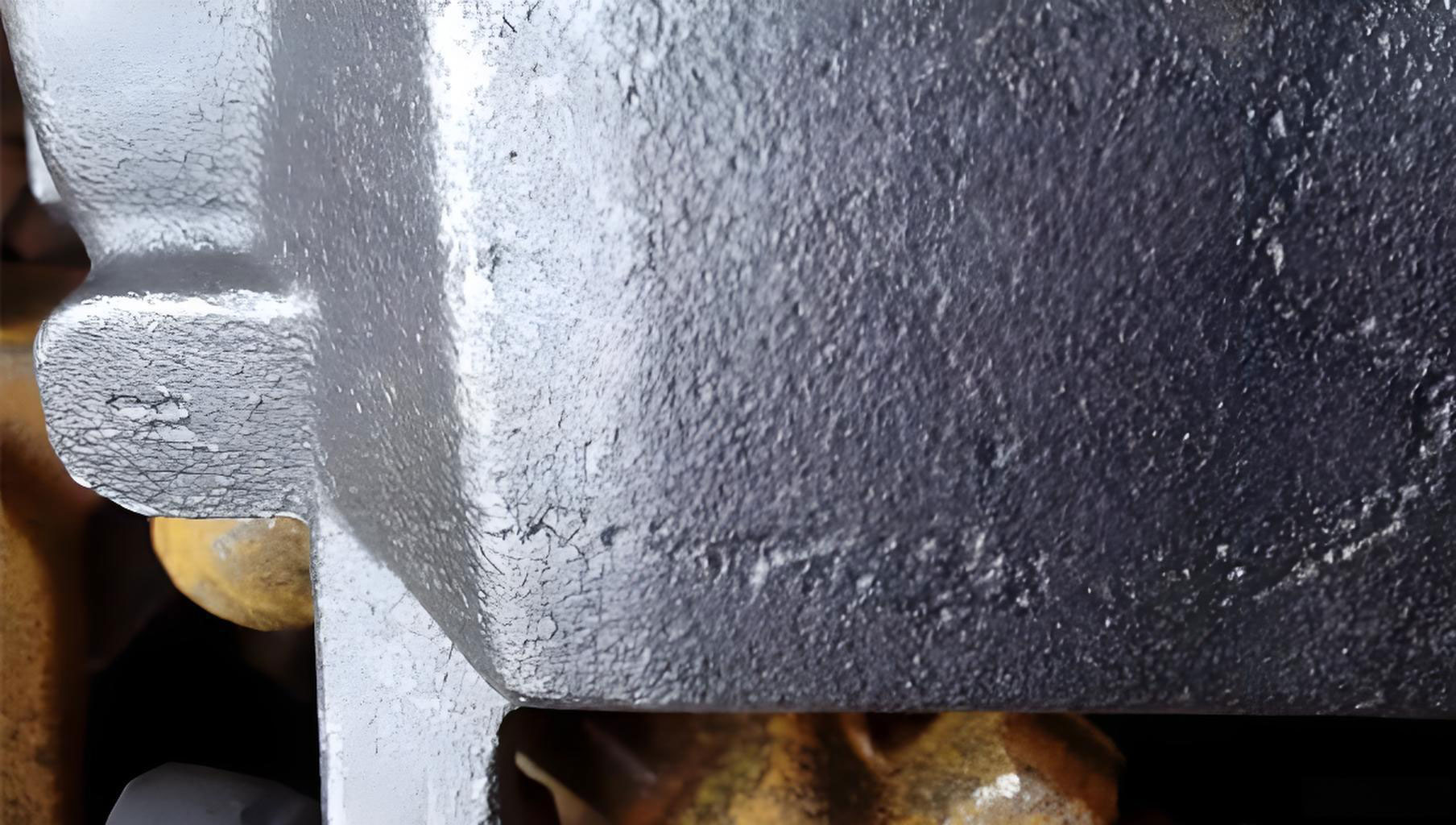
The characteristic of these defects is the presence of cavities on or within the casting, filled with sand or refractory particles—hence the term casting holes. These casting holes typically form in specific areas. Often, sand or refractory material present within the mold cavity is pushed by the flowing metal to the bottom of the shell or to areas far from the gating system, where it cannot float upward, resulting in casting holes. In other cases, turbulent metal flow entraps these materials inside the casting body, creating internal casting holes. The formation mechanism underscores the importance of controlling both the mold cavity environment and the shell integrity itself.
The root causes of casting holes can be systematically categorized into two primary sources: external to the mold cavity and internal to the ceramic shell.
External Sources Contributing to Casting Holes
Casting holes often originate from contaminants entering the cavity from outside. Firstly, unclean gating system components, such as pour cups or sprues, can have adhered sand or refractory dust. During dewaxing, this material can detach and remain within the cavity. Secondly, the dewaxing medium itself, if not kept clean, can carry suspended particles back into the mold, leading to potential casting holes. Thirdly, loose sand or refractory material from the top of the pour cup can fall directly into the cavity during handling or pouring. Finally, accidental introduction of foreign materials during shell storage, handling, or pre-heating is a common culprit. If not thoroughly removed by vacuuming or blowing before pouring, these particles are engulfed by the metal, forming classic casting holes. In many instances, the composition of the material found within the casting holes provides a clue; if it is purely sand, an external source is likely.
Internal Sources: Shell-Related Causes of Casting Holes
The majority of casting holes stem from inherent weaknesses or defects within the ceramic shell. These internal failures create particles that are then washed away by the metal stream. Key issues include delamination, swelling, spalling, and general degeneration of the shell. For silicate-bonded shells, incorrect slurry composition is a frequent cause. A high powder-to-binder ratio increases viscosity, leading to thick, inadequately hardened coats with poor surface strength. Insufficient hardening time or residual liquid on the surface weakens the interlayer bond. For silica sol systems, factors like low SiO2 content, improper slurry formulation, insufficient aging time, mismatched stucco, high moisture or dust content in stucco, and incorrect drying parameters (temperature, humidity, air flow, time) can all lead to shell cracking, peeling, delamination, swelling, and softening. These defective areas are easily eroded by molten metal, resulting in casting holes.
Another internal source is the presence of “fins” or “flash” inside the cavity. These can form from residual cracks in the wax pattern, which are then penetrated by slurry during coating, or from imperfect sealing at wax assembly joints. These thin, fragile protrusions break off during pouring and become embedded as casting holes. Furthermore, an improperly designed gating system that causes excessive turbulence or direct impingement can mechanically erode the shell surface, contributing to casting holes. Poor pouring practices that generate violent metal flow exacerbate this problem.
To effectively combat these casting holes, a multi-pronged strategy focusing on external contamination control, shell quality enhancement, and design optimization is essential.
Preventive Measure 1: Blocking External Contaminant Ingress
The first line of defense is to prevent foreign materials from ever entering the mold cavity. Regular filtration and cleaning of the dewaxing medium is crucial to keep it free of particles that could cause casting holes. Before dewaxing, all loose sand should be cleaned from the pour cup area. Extreme care must be taken during shell transport and handling. A mandatory, meticulous inspection and cleaning of the cavity using suction or compressed air immediately before pouring is perhaps the most effective single step to prevent externally-sourced casting holes. The design of the gating system, particularly the pour cup, can be modified to include features like splash guards or filters to trap falling debris. Strategic orientation of the wax assembly during treeing, placing critical surfaces downward, can also help prevent casting holes from settling on important functional areas.
Preventive Measure 2: Elevating Shell Quality Through Process Control
Since most casting holes originate from the shell, optimizing the shell-making process is critical. This involves the careful selection of materials, precise slurry formulation, and strict control of coating, stuccoing, drying, and hardening steps.
| Shell Process | Silica Sol Shell | Sodium Silicate Shell |
|---|---|---|
| Binder | Silica Sol: SiO2 ~30%, Density 1.20-1.22 g/cm³, pH 9.0-10.0 | Sodium Silicate: Primary coat density 1.25-1.28 g/cm³, Backup coats 1.30-1.32 g/cm³, Modulus M=3.0-3.4 |
| Primary Refractory | Zircon Flour/Sand: ZrO2 ≥65%, 300-325 mesh flour, 80-100 mesh sand | Quartz Flour/Sand: SiO2 ≥98% |
| Backup Refractory | Mullite Flour/Sand: Al2O3 44-48%, 16-30 & 30-60 mesh sand | Alumina Flour/Sand: Al2O3 >80% |
Slurry preparation is a science. For silica sol, the binder is first mixed with wetting agents, then refractory flour is added slowly under agitation to prevent clumping, followed by defoamers. The slurry must age adequately to achieve stability and proper rheology. The critical parameters are viscosity and density, which control the slurry’s thickness and solids loading. The relationship between viscosity (η), density (ρ), and the volume fraction of solids (φ) can be conceptually represented for quality control:
$$ \eta = \eta_0 (1 – k \phi)^{-n} $$
where $\eta_0$ is the binder viscosity, and $k$ and $n$ are constants related to particle packing. Maintaining the pH within 9-10 is vital for sol stability. The effective life of the slurry is limited; for instance, a primary slurry may last less than 14 days.
For silicate slurries, the sequence involves adding the silicate, then wetting agents, followed by gradual addition of flour. The slurry requires a maturation or “aging” period of several hours to improve coating properties and final shell strength, which directly impacts resistance to erosion and the formation of casting holes.
The shell-building process parameters are equally vital. The table below summarizes key parameters for both processes.
| Process Step / Parameter | Silica Sol Shell | Sodium Silicate Shell |
|---|---|---|
| Primary Coat Stucco | 100-120 mesh | Quartz sand, 50-100 mesh |
| Drying Temperature | 22-26 °C | Ambient (20-25 °C) |
| Drying Humidity | 60-70% (Primary), 40-60% (Backup) | N/A (Hardening followed) |
| Drying Time | 4-6 hrs (Primary), >8-14 hrs (Backup) | N/A |
| Hardening Agent | N/A (Gelation via drying) | Aluminum Chloride Solution |
| Hardening Time | N/A | 10-25 minutes per coat |
| Drying after Hardening | N/A | 15-40 minutes (air dry) |
In silica sol processing, each layer must be thoroughly dried before applying the next. Inadequate drying is a primary cause of shell weakness leading to casting holes. The drying rate must be controlled to avoid excessive gelation shrinkage stress, which can cause micro-cracks. The degree of drying can be monitored by methods like color change or electrical resistance. For silicate shells, the hardening reaction is critical:
$$ \text{Na}_2\text{O} \cdot n\text{SiO}_2 + \text{AlCl}_3 + \text{H}_2\text{O} \rightarrow \text{SiO}_2 \cdot \text{凝胶} + \text{Al(OH)}_3 + \text{NaCl} $$
Proper concentration, temperature, and time during hardening ensure complete reaction and a strong, integral shell layer. Insufficient hardening or inadequate drying afterward leaves the coat weak and prone to generating particles that cause casting holes.
Preventive Measure 3: Product and Gating System Design Improvements
Design modifications can significantly reduce the risk of casting holes. Sharp internal corners on wax patterns should be replaced with generous radii to prevent stress concentrations in the shell coating that might lead to cracking and spalling. The gating system must be designed to minimize direct冲刷 of the cavity walls and to prevent loose material from the pour cup from entering the cavity. Techniques include using tapered sprues, multiple gates to distribute flow, or incorporating ceramic filters within the gating system. The pouring practice itself should be optimized—starting slowly to fill the gating system quietly, then increasing pour rate to avoid turbulence, all of which reduces the hydraulic force that can dislodge shell material and create casting holes. The filling velocity $v$ and the resulting dynamic pressure $P_d$ on the shell wall are related by:
$$ P_d = \frac{1}{2} \rho v^2 $$
where $\rho$ is the metal density. Minimizing $v$ in sensitive areas reduces $P_d$ and the risk of eroding the shell and forming casting holes.
In conclusion, the battle against casting holes in investment casting is won through diligent attention to detail across the entire process. It requires a holistic approach that combines rigorous housekeeping to prevent external contamination, scientific control over the shell manufacturing process to build robust, integral molds, and intelligent design of both the component and its feeding system to promote benign filling conditions. As I have implemented these principles, the incidence of costly casting holes has been dramatically reduced. Ultimately, sustaining high quality requires not just robust procedures but also continuous training and a quality-focused culture among all personnel involved in the production chain. Every step, from wax injection to final pouring, holds the potential to introduce or prevent those detrimental casting holes.
To further encapsulate the relationship between shell strength and the propensity for forming casting holes, we can consider a simplified model. The erosion rate $E$ of the shell surface may be related to the shear stress $\tau$ exerted by the flowing metal and the shell’s cohesive strength $S_c$:
$$ E \propto \frac{\tau}{S_c} $$
Preventing casting holes involves minimizing $\tau$ through design and pouring practice, while maximizing $S_c$ through optimal shell fabrication. The cohesive strength $S_c$ itself is a complex function of multiple factors:
$$ S_c = f(\phi_b, \rho_p, \psi_d, t_d, \eta_h) $$
where $\phi_b$ is the binder content, $\rho_p$ is the packing density of the refractory flour, $\psi_d$ represents drying parameters, $t_d$ is drying time, and $\eta_h$ represents hardening efficiency for silicate systems. By systematically optimizing these variables, we can produce shells highly resistant to the erosion that leads to casting holes.
The journey to eliminate casting holes is continuous. New materials, such as advanced binders and refractories, and process innovations like rapid drying technologies for silica sol, offer further avenues for improvement. However, the fundamental principles remain: vigilance against contamination, precision in shell building, and thoughtful engineering design. By adhering to these, the persistent challenge of casting holes can be effectively managed, leading to more reliable, high-performance investment castings free from these defects.