
The integral axle housing is a critical safety component in heavy-duty and special-purpose vehicles, forming the backbone of the drive axle system. These steel castings are subjected to extreme service conditions, including high-impact loading under full payload, and must maintain structural integrity across diverse terrains such as plateaus, deserts, and saline-alkali environments. The primary challenge in manufacturing these robust steel castings lies in achieving sound, defect-free internal microstructure, particularly in isolated hot spot regions like mounting lugs and support bosses, which are prone to shrinkage porosity and cavities. This article details a comprehensive engineering journey to optimize the casting process for a specific ZG40Mn integral axle housing, moving from initial failure analysis through numerical simulation to successful production validation.
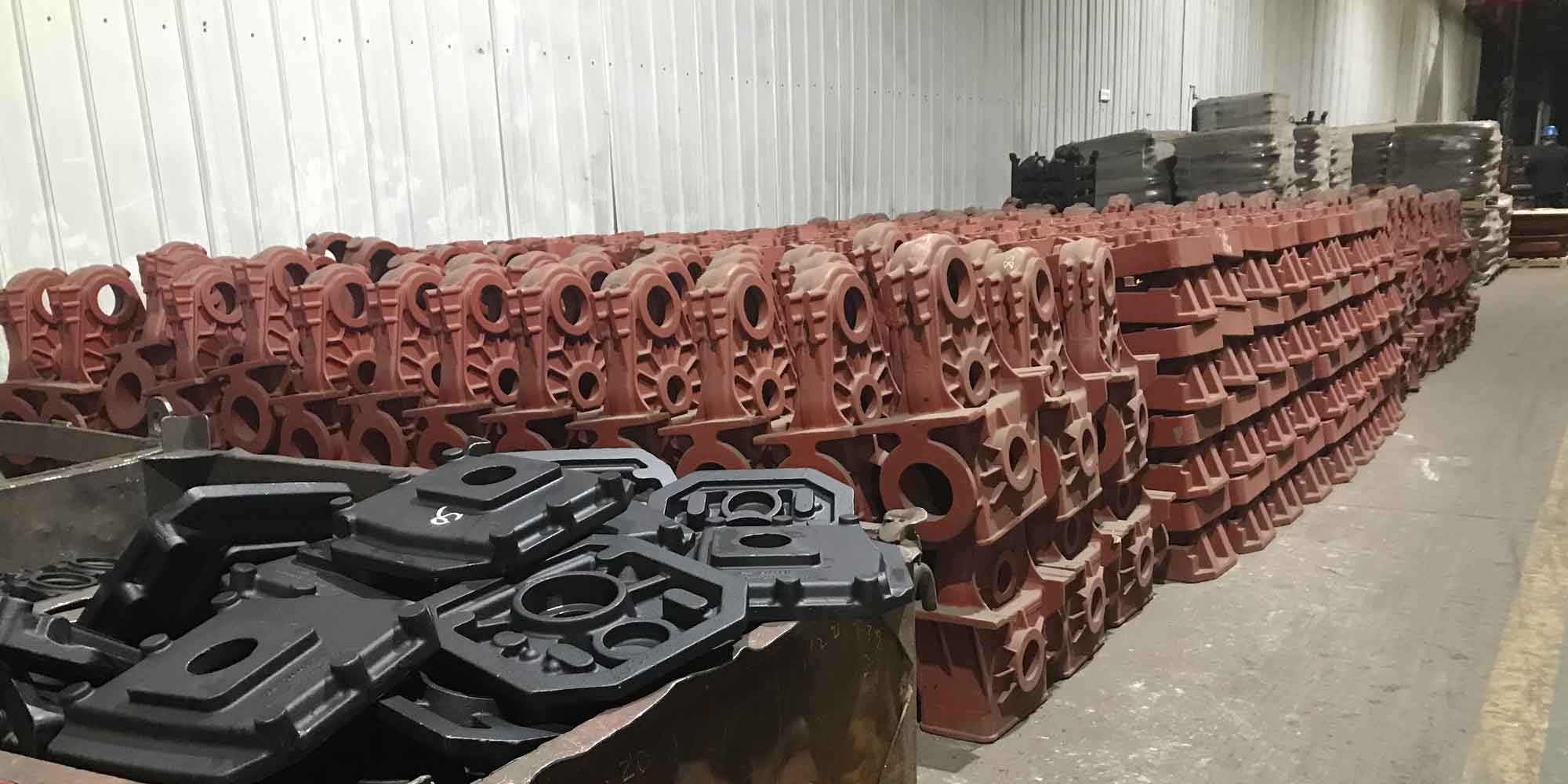
The component in question is a substantial steel casting, with approximate envelope dimensions of 2160 mm in length, 400 mm in width, and 314 mm in height. The wall thickness ranges from 15 mm to 25 mm, resulting in a finished casting weight of approximately 300 kg. The geometry features a central differential housing (bridge bowl) and several protruding sections, including side tube walls, mounting lugs for suspension components, and flanged ends. The inherent design creates significant thermal mass variations, making feeding and directional solidification complex to achieve.
Initial Process Design and Foundational Analysis
The original manufacturing strategy employed a conventional two-part mold created with sodium silicate-bonded sand, coated with two layers of alcohol-based refractory paint. The gating and risering system was designed based on established principles for steel castings. The system was a top-pouring type with gates located along the parting line. The feeding system comprised one open cylindrical riser (ø120 mm x 200 mm) at each end of the axle tube and a combination of one open riser (ø70 mm) on the bridge bowl and one oblong blind riser (230 mm x 75 mm x 150 mm) on a primary support lug. The gating ratio was set to ∑Asprue : ∑Arunner : ∑Agate = 1.0 : 2.0 : 1.4, intended to promote a non-turbulent fill and support riser feeding.
| Element | Type | Dimensions (mm) | Quantity | Purpose |
|---|---|---|---|---|
| Riser 1 (Bridge Bowl) | Open Cylindrical | ø70 | 1 | Feed central hot spot |
| Riser 2 (Support Lug) | Blind Oblong | 230x75x150 | 1 | Feed lug section |
| Riser 3 & 4 (Ends) | Open Cylindrical | ø120×200 | 2 | Feed end flanges/tubes |
| Runner | Rectangular | 60×40 | – | Distribute metal |
| Gates | Rectangular | 40×30 | 2 | Control fill rate |
| Pouring Temperature | – | ~1580°C | – | ZG40Mn |
Problem Identification via Numerical Simulation
Initial production runs revealed two critical issues: shrinkage cavities detected after machining in the side lug bosses and thrust rod mounting points, and dimensional distortion in the long axle tube sections leading to machining allowances being exceeded. To diagnose the root causes, a full three-dimensional model of the axle housing was created and subjected to rigorous filling and solidification simulation using finite element analysis software. The simulation of the original process provided clear visualization of the thermal history and potential defect formation.
The solidification sequence analysis was pivotal. The simulation tracked the fraction solid (FS) development. At FS = 75%, the thin-walled bridge bowl solidified first, isolating the side tubes and lugs. By FS = 80-85%, distinct isolated liquid pockets formed within the massive sections of the side lugs and the root of the thrust rod mount. These regions, disconnected from the liquid feed paths provided by the risers, were predicted to solidify last, inevitably leading to macro- or micro-shrinkage. The final stage at FS = 90% confirmed these pockets as the last liquid zones in the entire casting.
The defect prediction was quantified using industry-standard shrinkage criteria, such as the Niyama criterion (G/√T), where G is the temperature gradient and T is the cooling rate. Low values of this criterion indicate a high risk of microporosity. The simulation clearly highlighted high-risk zones corresponding exactly to the locations where defects were found in practice. Furthermore, the linear, straight-runner gating system was identified as a contributor to distortion. The constrained thermal contraction along the 2.16-meter length, coupled with the rigid geometry of the runner bar, induced uneven stresses leading to bowing and twisting beyond acceptable tolerances for these high-precision steel castings.
| Defect Location | Defect Type | Root Cause (Simulation) | Solidification Sequence |
|---|---|---|---|
| Side Tube Lug Bosses | Shrinkage Cavity/Porosity | Isolated hot spot, insufficient feeding distance from end risers. | Last to solidify (FS >85%) |
| Thrust Rod Mount Root | Shrinkage Porosity | Poor feeding from oblong riser; thermal junction created isolated liquid. | Last to solidify (FS >85%) |
| Axle Tube Length | Dimensional Distortion (Bowing) | Restrained shrinkage due to straight, rigid runner attached along parting line. | Non-uniform cooling stress |
The governing equations for heat transfer during solidification are central to the simulation’s accuracy. The transient heat conduction equation with the latent heat release source term is solved:
$$ \rho c_p \frac{\partial T}{\partial t} = \nabla \cdot (k \nabla T) + \rho L \frac{\partial f_s}{\partial t} $$
where $\rho$ is density, $c_p$ is specific heat, $k$ is thermal conductivity, $T$ is temperature, $t$ is time, $L$ is latent heat, and $f_s$ is the solid fraction. The feeding flow in the mushy zone is often modeled using Darcy’s law, and the pressure drop is critical for predicting shrinkage:
$$ \vec{u} = -\frac{K}{\mu g_l} (\nabla P – \rho_l \vec{g}) $$
Here, $\vec{u}$ is the interdendritic fluid velocity, $K$ is the permeability, $\mu$ is the dynamic viscosity, $g_l$ is the liquid fraction, $P$ is the pressure, $\rho_l$ is the liquid density, and $\vec{g}$ is gravity. The Niyama criterion, a reliable predictor for steel castings, is derived from these local conditions:
$$ N_y = \frac{G}{\sqrt{\dot{T}}} $$
Regions where $N_y$ falls below a critical threshold (e.g., ~1 °C1/2 mm-1 for many steels) are flagged as potential shrinkage porosity sites.
Comprehensive Process Optimization Strategy
Based on the diagnostic simulation, a multi-faceted optimization strategy was devised to promote directional solidification toward the risers and minimize distortion. The goal was to transform the solidification pattern from one with multiple isolated hot spots to a controlled, progressive sequence ending at strategically placed, adequately sized risers.
1. Riser System Enhancement: The primary change involved augmenting the feeding capacity and coverage.
- The oblong blind riser on the main support lug was enlarged from 230×75 mm to 230×90 mm in cross-section, increasing its volumetric feeding capacity and modulus.
- Two new open cylindrical risers (ø100 mm x 250 mm) were added on the side lugs. These were positioned directly over the problematic bosses and connected via feeder necks to create direct thermal and feeding pathways.
The modulus (Volume/Surface Area) is a key design parameter for risers in steel castings. For a cylindrical riser, the modulus $M_r$ is:
$$ M_r = \frac{\pi r^2 h}{2\pi r^2 + 2\pi r h} = \frac{rh}{2(r+h)} $$
where $r$ is the radius and $h$ is the height. To be effective, $M_r$ must be greater than the modulus of the casting section it feeds $M_c$, typically by a factor of 1.1 to 1.2. The enlargement and addition of risers were calculated to satisfy this condition for the specific hot spots.
2. Gating System Modification: To address distortion, the geometry of the runner was fundamentally altered. The straight runner was redesigned into a sinuous, serpentine path. This change increased the flexibility of the gating system, allowing it to yield and absorb a significant portion of the contraction stresses during cooling, rather than transmitting them rigidly into the casting. Additionally, the number of ingates was increased from two to four, promoting a more uniform temperature distribution during filling and a more balanced thermal field at the start of solidification, which is crucial for large steel castings.
3. Application of External Chills: To actively control the local solidification rate at the heaviest sections, multiple external steel chills were placed against the sand mold at the locations of the side lug bosses. Chills act as heat sinks, rapidly extracting heat and increasing the local temperature gradient (G). This promotes directional solidification toward the riser and reduces the local solidification time, effectively eliminating the conditions that lead to isolated liquid pools. The effect of a chill can be modeled as a sudden change in the boundary condition, significantly increasing the effective heat transfer coefficient (h) at the casting-chill interface in the heat conduction equation.
4. Pattern Allowance Adjustment: Compensating for the predictable distortion, the pattern dimensions were strategically modified. An additional 1 mm of machining allowance was added to the outer surface of the bridge bowl. Furthermore, a global positive allowance of +2 mm was applied to the side faces of the main mounting flange ends. This proactive measure ensured that even if minor residual distortion occurred, sufficient material would remain for final machining to the precise dimensional specifications required for these steel castings.
| Parameter | Initial Process | Optimized Process | Purpose of Change |
|---|---|---|---|
| Total Riser Count | 4 | 6 | Increase feeding coverage |
| Riser 2 Cross-Section | 230×75 mm (17,250 mm²) | 230×90 mm (20,700 mm²) | Increase feeding capacity/modulus |
| Side Lug Feeding | None (fed from distant end risers) | 2 dedicated risers (ø100 mm) | Direct feeding of isolated hot spot |
| Number of Ingates | 2 | 4 | Improve fill balance & thermal distribution |
| Runner Geometry | Straight | Sinuous/Serpentine | Reduce restraint, minimize distortion |
| Auxiliary Cooling | None | External chills on lug bosses | Increase local solidification rate & gradient |
| Pattern Allowance | Standard | +1mm (bowl), +2mm (flange sides) | Compensate for predicted distortion |
Simulation Validation of the Optimized Process
The effectiveness of the proposed modifications was rigorously tested through a new simulation cycle. The results demonstrated a dramatic improvement in the solidification behavior. The revised thermal analysis showed a clear, progressive solidification front moving from the thin-walled sections and chilled areas toward the augmented riser locations. Most importantly, the isolated liquid pockets observed in the initial simulation were completely eliminated. The liquid feed paths remained open until the final stages of solidification, with the risers themselves becoming the last regions to freeze. The shrinkage criteria plot showed a significant reduction in high-risk areas, with the remaining potential defects being successfully relocated into the riser bodies, which are subsequently removed during machining.
The new solidification time contour map confirmed the directional solidification. The side lug bosses, now under the influence of both chills and dedicated risers, solidified in a controlled sequence with the riser. The calculated Niyama values in the casting body were now predominantly above the critical threshold, indicating a sound internal structure. The simulation of cooling stresses also suggested a more uniform stress distribution and a reduction in peak residual stresses, aligning with the goal of minimizing distortion for these high-integrity steel castings.
Production Verification and Results
The optimized process was implemented in the foundry for a trial production batch. The molds were prepared using the updated patterns, incorporating the sinuous runners, additional riser placements, and strategic chill positioning. The alloy, ZG40Mn, was melted and poured at a controlled temperature of approximately 1580°C. The total poured weight for a single casting was about 450 kg, yielding a casting weight of 280 kg and a calculated casting yield (or process efficiency) of approximately 62%.
A batch of six axle housings was produced using the optimized parameters. After standard foundry operations—shakeout, riser removal, shot blasting, and grinding—the castings underwent a full quality inspection protocol. This included visual inspection, dimensional checks, and non-destructive testing (NDT) by magnetic particle inspection. Furthermore, all castings successfully passed a hydrostatic pressure leakage test, confirming the integrity of the pressure-containing sections. To definitively validate the internal soundness predicted by the simulation, one casting was sectioned through the previously problematic lug and thrust mount areas. Macroscopic examination revealed no visible shrinkage cavities or porosity, and subsequent NDT of the cut surfaces confirmed the results, meeting all acceptance criteria for the steel castings.
| Metric | Result |
|---|---|
| Trial Batch Size | 6 castings |
| Poured Weight per Casting | ~450 kg |
| Casting Weight (finished) | ~280 kg |
| Casting Yield | ~62% |
| Visual & Dimensional Inspection | All 6 compliant |
| Non-Destructive Testing (MPI) | All 6 passed |
| Hydrostatic Pressure Test | All 6 passed |
| Cut-up Validation (Internal Soundness) | No shrinkage defects found |
Conclusion
The systematic optimization of the casting process for a heavy-duty integral axle housing demonstrates the powerful synergy between numerical simulation and practical foundry engineering. The initial process, while designed on conventional principles, failed to account for the complex thermal interactions in the intricate geometry of these steel castings, leading to shrinkage defects and distortion. Through detailed simulation analysis, the exact mechanisms of defect formation—isolated liquid pools and restrained thermal contraction—were identified.
The implemented solutions were direct and effective: enhancing the riser system with increased size and additional units to provide adequate feed metal, modifying the gating system to reduce stress, applying chills to control local solidification, and adjusting patterns to compensate for distortion. The success of these measures was first predicted by simulation and then conclusively proven in production. The internal shrinkage defects were eliminated, and dimensional consistency was improved, leading to a higher product qualification rate and reduced scrap and rework costs.
This case underscores that for critical, high-value components like integral axle housings, the use of casting simulation software is not merely a diagnostic tool but an essential platform for proactive process design and optimization. It enables foundry engineers to visualize solidification, predict defects with high accuracy, and test improvements virtually before committing to expensive production trials. This approach significantly de-risks the development of new steel castings, ensures robust manufacturing processes, and ultimately delivers components that meet the demanding performance requirements of modern heavy-duty vehicles.