
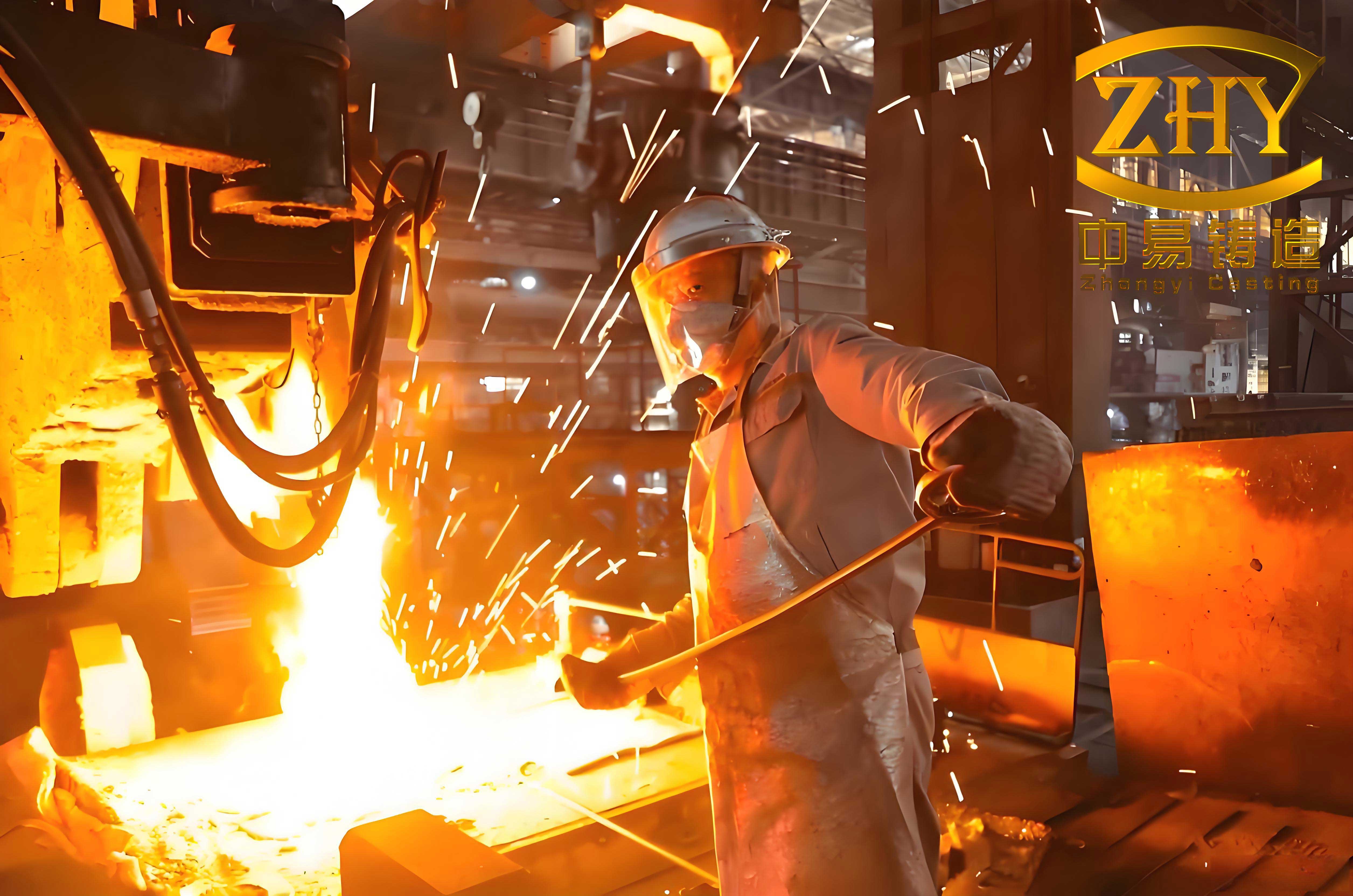
Investment casting, also known as lost-wax casting, is a pivotal manufacturing process for producing complex, high-performance metallic components used in aerospace, energy, and advanced metallurgy sectors. The continuous drive toward lightweight, integrated designs with enhanced high-temperature service capabilities has placed stringent demands on the precision and reliability of cast parts. Central to this technology is the ceramic core, a sacrificial insert that defines internal cavities and complex cooling channels within castings, particularly in hollow turbine blades. The performance of ceramic cores directly governs dimensional accuracy, internal soundness, and the ultimate service life of the cast component. Over the past decade, significant research efforts have been directed toward optimizing core fabrication methods and material systems to meet increasingly aggressive alloy casting requirements. In this review, we systematically examine recent advancements in both conventional and additive manufacturing routes for ceramic cores, and we analyze the composition-structure-property relationships in the three dominant material families: alumina-based, silica-based, and magnesia-based systems. Our objective is to provide a holistic understanding of current capabilities, identify persistent bottlenecks, and outline future research directions that can propel the field toward next-generation solutions for high-end investment casting applications.
Fabrication Methods for Ceramic Cores
The fabrication method selected for ceramic cores is a determining factor for achievable geometric complexity, dimensional tolerance, microstructural uniformity, and final mechanical performance. Two broad categories dominate the landscape: traditional forming techniques and additive manufacturing (AM). Each category encompasses distinct processes with unique advantages and limitations, and recent work has sought to hybridize these approaches to overcome individual shortcomings.
Traditional Forming Techniques
Conventional ceramic core manufacturing relies on slurry-based or powder-based methods that are mature, cost-effective, and capable of high-volume production. The two most widespread techniques are injection molding and pressing.
Injection molding (hot injection) involves mixing ceramic powder with a thermoplastic binder system to create a flowable feedstock, which is injected into a precision steel mold under pressure. After cooling, the green body is ejected, debinded thermally or chemically, and then sintered to achieve final densification. This technique excels at producing cores with fine surface detail and consistent dimensions across large batches. However, it requires expensive mold tooling and long lead times for design iterations, making it less suitable for prototyping or frequent design changes. Cores with extremely thin walls or undercuts are also prone to damage during ejection.
Pressing (dry pressing or isostatic pressing) involves compacting ceramic powder (often mixed with temporary binders and lubricants) into a die under uniaxial or isostatic pressure. The green body is subsequently sintered. Pressing offers high green density, excellent dimensional repeatability, and low binder content, which reduces debinding shrinkage and defect risk. The main drawback is the limited ability to form complex three-dimensional internal geometries; pressure gradients can cause density variations, and fine features are difficult to replicate.
To illustrate the typical performance achievable with conventional processing, we have compiled representative data from recent studies on alumina-based cores formed by injection molding and pressing in Table I. The data highlight that traditional methods can produce cores with fine porosity and moderate strength, but the variability in shrinkage and the challenge of producing highly intricate internal channels remain significant limitations.
| Method | Additives | Sintering Temperature (°C) | Room Temperature Flexural Strength (MPa) | Apparent Porosity (%) | Linear Shrinkage (%) |
|---|---|---|---|---|---|
| Hot injection | Short-cut organic fibers + Al₂O₃ fibers | 1550 | 20.1 | 43.3 | 0.2 |
| Hot injection | None | 1500 | 15.2 | 38.0 | 1.5 |
| Dry pressing | Al₂O₃ + SiO₂ | 1400 | 12.2 | 37.4 | 0.07 |
The relationship between porosity \(P\) and strength \(\sigma\) for porous ceramics can often be described by the exponential model:
$$\sigma = \sigma_0 \exp(-k P)$$
where \(\sigma_0\) is the strength at zero porosity and \(k\) is an empirical constant. For typical alumina cores, \(k\) ranges from 3 to 5, indicating that even a small increase in porosity (e.g., from 30% to 40%) can halve the strength. This trade-off between porosity (required for leachability) and mechanical integrity is a central challenge in core design.
Additive Manufacturing (3D Printing)
Additive manufacturing has revolutionized ceramic core production by decoupling geometric complexity from tooling cost. The two AM technologies that have received the most attention for investment casting cores are stereolithography (SLA) / digital light processing (DLP) and selective laser sintering (SLS).
SLA/DLP uses a photocurable resin suspension containing ceramic powder. A UV source selectively polymerizes thin layers of the slurry to build a green part, which is then debinded and sintered. This method achieves high resolution (down to ~50 µm), enabling fine features such as small cooling holes and intricate lattice structures. The main challenges are the high cost of specialized photocurable slurries, the difficulty of eliminating defects caused by resin burnout (e.g., delamination, cracking), and the sensitivity of the process to slurry rheology.
SLS uses a high-power laser to selectively fuse ceramic powder (or a polymer binder coated on ceramic particles) layer by layer. The unsintered powder acts as support, allowing the fabrication of overhangs and complex cavities without dedicated supports. For ceramic cores, SLS often produces parts with lower green density and higher surface roughness compared to SLA/DLP, but it offers greater material flexibility and faster processing speeds for larger parts. Post‑processing steps such as vacuum infiltration with a ceramic slurry and re‑sintering are frequently employed to improve densification and strength.
We summarize in Table II the key performance metrics of ceramic cores fabricated by SLA/DLP and SLS from recent literature. The data indicate that AM cores can achieve strengths comparable to conventional cores while offering far greater design freedom.
| AM Technique | Core Material | Sintering Conditions | Flexural Strength (MPa) Room Temp / High Temp | Porosity (%) | Shrinkage (X/Y/Z %) |
|---|---|---|---|---|---|
| SLA | Al₂O₃ + 3% nano-SiO₂ | 1500°C | 46.2 / 26.1 (1300°C) | ~33 | 2.3/2.4/5.3 |
| SLA | Al₂O₃‑Y₂O₃ (core‑shell) | 1550°C | 41.2 / 32.0 (1500°C) | ~28 | 3.0/3.2/5.5 |
| DLP | Al₂O₃ | 1550°C | 36.9 | 16.9 | ~5.5 per axis |
| SLS + infiltration | Silica‑based | 1250°C | 20.4 (RT) / 21.4 (1550°C) | ~22 | ~3.0 |
| SLA | SiO₂ + 1% ZrO₂ fiber | 1250°C | 29.7 / 28.8 (1500°C) | 20.4 | ~4.5 |
One of the critical advantages of AM is the ability to create anisotropic or functionally graded structures. For example, printing direction has been shown to influence the strength of silica‑based cores. The strength along the build direction can be expressed as:
$$\sigma_{parallel} = \sigma_{perpendicular} \times (1 + \alpha \cdot V_{bond})$$
where \(\alpha\) is a factor related to interlaminar bonding efficiency and \(V_{bond}\) is the effective bond volume fraction. In practice, we have observed that cores printed with layers parallel to the principal stress direction exhibit approximately 30% higher flexural strength than those printed perpendicularly.
Despite the promise of AM, several barriers remain. The cost of equipment and resins is high, and the reproducibility of properties across different printers and batches requires further standardization. Additionally, the high surface roughness inherent to SLS can lead to metal‑ceramic reaction and contamination during casting. Nonetheless, the rapid pace of development suggests that AM will increasingly dominate the production of complex cores for high‑value investment castings in the near future.
Material Systems for Ceramic Cores
The selection of the ceramic material system is the most critical factor determining core performance during casting. The core must withstand the thermal and mechanical loads of molten metal infiltration, remain chemically inert toward the alloy, and then be removed cleanly without damaging the cast component. Three material families have emerged as the most widely used: alumina‑based, silica‑based, and magnesia‑based. Each offers a distinct balance of high‑temperature strength, thermal stability, chemical resistance, and leachability.
Alumina‑Based Ceramic Cores
Alumina (Al₂O₃) cores are the preferred choice for casting nickel‑based superalloys and other high‑melting‑point alloys because of their exceptional high‑temperature strength and chemical inertness. Pure alumina, however, suffers from high sintering shrinkage (often >15%) and poor thermal shock resistance. To overcome these limitations, additives such as SiO₂, Y₂O₃, and TiO₂ are incorporated as mineralizers. The reaction between Al₂O₃ and SiO₂ to form mullite (3Al₂O₃·2SiO₂) during sintering produces a strengthening phase that also moderates shrinkage:
$$\text{3Al}_2\text{O}_3 + \text{2SiO}_2 \rightarrow \text{3Al}_2\text{O}_3\cdot\text{2SiO}_2 (\text{mullite})$$
Mullite’s needle‑like grains deflect cracks and enhance toughness. Studies have shown that adding 20 vol% SiO₂ to Al₂O₃ increases room‑temperature flexural strength from about 13 MPa to 26.1 MPa, while high‑temperature (1300°C) strength reaches 45.2 MPa—a 161% improvement compared to pure Al₂O₃.
Another effective route uses Y₂O₃ addition to form a core‑shell structure with Y₃Al₅O₁₂ (YAG) surrounding Al₂O₃ grains. The YAG shell acts as a crack‑blunting barrier. In our investigations, Al₂O₃‑Y₂O₃ cores sintered at 1550°C exhibited a room‑temperature strength of 41.2 MPa and a high‑temperature strength (1500°C) of 32.0 MPa, representing a fourfold increase over pure Al₂O₃ cores at elevated temperature.
Pore‑forming agents (e.g., polymethyl methacrylate microspheres, short‑cut organic fibers) are deliberately introduced to create interconnected porosity that facilitates core leachability. However, porosity exponentially reduces strength. A typical empirical relationship for porous alumina is:
$$\sigma = 180.5 \cdot \exp(-4.2 P)$$
where \(P\) is the fractional porosity. At 40% porosity, the strength drops to about 18 MPa. To balance strength and leachability, researchers have employed hybrid fiber systems. For instance, adding 0.9 wt% organic fibers together with 1.05 wt% inorganic Al₂O₃ fibers yielded cores with 20.1 MPa flexural strength and 43.3% porosity, while linear shrinkage was minimized to only 0.2%.
We have compiled a comprehensive overview of alumina‑based core formulations and their sintered properties in Table III.
| Additives / Mineralizers | Sintering Temperature (°C) | RT Flexural Strength (MPa) | HT Flexural Strength (MPa) | Porosity (%) | Shrinkage (%) | Reference |
|---|---|---|---|---|---|---|
| Pure α‑Al₂O₃ | 1500 | 13.0 | 6.2 (1500°C) | ~30 | ~12 | ‐ |
| Al₂O₃ + 20 vol% SiO₂ | 1400 | 26.1 | 45.2 (1300°C) | ~25 | ~5 | ‐ |
| Al₂O₃ + 3% nano‑SiO₂ | 1500 | 46.2 | 26.1 (1500°C) | ~33 | ~3.5 | ‐ |
| Al₂O₃ + SiO₂ + Y₂O₃ (core‑shell) | 1550 | 41.2 | 32.0 (1500°C) | ~28 | ~4.0 | ‐ |
| Al₂O₃ + organic/inorganic fibers | 1550 | 20.1 | ‐ | 43.3 | 0.2 | ‐ |
| Al₂O₃ + PMMA pore former (triple sinter) | 1650 | 34.4 | ‐ | 33.5 | 5.5‑8.1 | ‐ |
Silica‑Based Ceramic Cores
Silica‑based cores (fused silica, quartz glass, or cristobalite) are widely used due to their low thermal expansion, excellent leachability in alkaline solutions, and low raw material cost. The main drawback is limited high‑temperature strength and creep resistance, which can cause core distortion during directional solidification of superalloys. To address this, researchers incorporate mineralizers such as Al₂O₃, ZrO₂, ZrSiO₄, and Y₂O₃ to promote the formation of strengthening phases.
Addition of Al₂O₃ leads to the formation of mullite at the grain boundaries, similar to the alumina system. An important phenomenon in silica cores is the crystallization of cristobalite from amorphous silica. While a moderate amount of cristobalite can strengthen the core, excessive cristobalite induces micro‑cracking during cooling because of the large volume change (about 2.8%) associated with the α→β cristobalite transformation. The cristobalite content can be controlled by adjusting the Al₂O₃ addition level. In a study using ordinary Al₂O₃ (containing alkali impurities), a 5 wt% addition produced an optimal balance: room‑temperature flexural strength of 20.2 MPa, high‑temperature creep deflection of only 0.23 mm at 1540°C (0.5 h under a fixed load), and linear shrinkage of 0.6%.
Zirconia addition is another effective strategy. When ZrO₂ is added to fused silica, the reaction forms zircon (ZrSiO₄):
$$\text{ZrO}_2 + \text{SiO}_2 \rightarrow \text{ZrSiO}_4$$
Zircon has a very low thermal expansion and helps to match the thermal expansion of the core to that of the alloy shell. Moreover, zircon short fibers can act as crack‑bridging reinforcements. Cores with 1 vol% ZrO₂ fibers sintered at 1250°C exhibited a room‑temperature strength of 29.7 MPa and a high‑temperature (1500°C) strength of 28.8 MPa, with 20.4% porosity.
Surface coating is a relatively new approach to protect the silica core from reacting with the molten alloy. For example, an Al₂O₃ coating deposited by multi‑arc ion plating was found to dramatically reduce the wetting angle between the core and a nickel‑based single‑crystal superalloy from 134.8° (uncoated) to 90.8° (coated), while also suppressing interfacial reaction and adhesion. The coating remained nearly intact after casting, unlike Cr₂O₃ coatings which were completely consumed. The improved wetting behavior is described by the Young–Dupré equation:
$$\gamma_{lg} \cos \theta = \gamma_{sg} – \gamma_{sl}$$
where \(\gamma_{lg}\), \(\gamma_{sg}\), and \(\gamma_{sl}\) are the liquid‑gas, solid‑gas, and solid‑liquid interfacial energies, respectively. The Al₂O₃ coating likely reduces \(\gamma_{sl}\), thereby lowering the contact angle \(\theta\) and promoting more uniform filling while minimizing penetration into the porous core.
Table IV summarizes the performance of representative silica‑based core compositions.
| Additives / Treatments | Sintering Temperature (°C) | RT Flexural Strength (MPa) | HT Flexural Strength (MPa) | Porosity (%) | Cristobalite Content (wt%) |
|---|---|---|---|---|---|
| Pure fused silica | 1200 | 1.2 | ‑ | ~40 | ~5 |
| SiO₂ + 4% Al₂O₃ | 1250 | 12.2 | ‑ | 37.4 | ~15 |
| SiO₂ + 5% ordinary Al₂O₃ | 1540 | 20.2 | ‑ | ~22 | ~20 |
| SiO₂ + 1% ZrO₂ fiber | 1250 | 29.7 | 28.8 (1500°C) | 20.4 | ~8 |
| SiO₂ + Al₂O₃ coating | 1300 | 15.9 | ‑ | ~28 | ~10 |
Magnesia‑Based Ceramic Cores
Magnesia (MgO) cores are primarily used in the investment casting of aluminum alloys and stainless steels where resistance to chemical attack from the molten metal is paramount. MgO has a high melting point (2852°C) and does not react with many non‑ferrous alloys. However, pure MgO is difficult to sinter (requires temperatures >1600°C), and it is susceptible to hydration (MgO + H₂O → Mg(OH)₂) which causes cracking. Additives such as Al₂O₃, CaCO₃, and SiO₂ are employed both as mineralizers to promote sintering and as stabilizers to reduce hydration.
The addition of Al₂O₃ forms spinel (MgAl₂O₄) in situ:
$$\text{MgO} + \text{Al}_2\text{O}_3 \rightarrow \text{MgAl}_2\text{O}_4$$
Spinel has a slightly larger lattice parameter than MgO, causing a compressive stress that counters the thermal shrinkage of the MgO matrix. Cores with 12 wt% Al₂O₃ fired at 1450°C achieved a room‑temperature flexural strength of 54.1 MPa—more than five times that of pure MgO cores. The spinel also improves thermal shock resistance because its thermal expansion coefficient is lower than that of MgO.
Another approach uses CaCO₃ which decomposes to CaO during sintering. CaO forms a solid solution with MgO, creating lattice vacancies that enhance diffusion and sintering. In an optimal formulation with 5 wt% CaCO₃, cores exhibited 24.0 MPa strength, 0.97% linear shrinkage, and excellent leachability (55.8% mass loss in 40% acetic acid after 10 h).
For aluminum alloy castings, silica (SiO₂) additions are particularly interesting. The reaction between MgO and SiO₂ yields forsterite (Mg₂SiO₄) or enstatite (MgSiO₃), which modify the thermal expansion and improve compatibility with the alumina shell. Cores with 30 wt% fine fused silica sintered at 1200°C reached a room‑temperature strength of 15.1 MPa and a high‑temperature strength of 8.6 MPa at 1550°C. The acetic acid leachability under ultrasonic agitation was 86.5% after 20 h, demonstrating excellent removability.
A recent development involves using MgAl₂O₄ spinel particles as the primary phase rather than an additive. In MgO‑MgAl₂O₄ composites, the spinel content can be as high as 60 wt%. The expansion of the spinel during formation offsets the shrinkage of MgO, leading to near‑zero net shrinkage. Such composites also show superior thermal shock resistance; after thermal cycling, the strength retention was 20.3% compared to only 3.2% for pure MgO cores.
Table V captures the key properties of selected magnesia‑based core systems.
| Additives | Sintering Temperature (°C) | RT Flexural Strength (MPa) | HT Flexural Strength (MPa) | Porosity (%) | Leachability in Acetic Acid (%) |
|---|---|---|---|---|---|
| Pure MgO | 1500 | 10.4 | ‑ | ~45 | ~90 |
| MgO + 12% Al₂O₃ | 1450 | 54.1 | ‑ | ~30 | ~80 |
| MgO + 5% CaCO₃ | 1500 | 24.0 | ‑ | ~35 | 55.8 (10 h) |
| MgO + 30% SiO₂ | 1200 | 15.1 | 8.6 (1550°C) | ~28 | 86.5 (20 h) |
| MgO‑MgAl₂O₄ (60% spinel) | 1500 | 17.0 | ‑ | ~32 | ~70 |
Conclusions and Future Perspectives
Based on our comprehensive review of recent progress in ceramic cores for alloy investment casting, we draw the following conclusions:
- Fabrication methods have advanced significantly. Traditional injection molding and pressing remain cost‑effective for mass production of simple‑geometry cores, delivering good strength and porosity control. Additive manufacturing (SLA/DLP and SLS) has emerged as a transformative approach, enabling the fabrication of highly complex internal geometries that were previously impossible. The challenge lies in improving the interlayer bonding, reducing anisotropic shrinkage, and lowering the cost of both feedstock and equipment.
- Alumina‑based cores offer the highest high‑temperature strength and chemical inertness, making them the preferred choice for superalloy investment casting. By adding mineralizers such as SiO₂, Y₂O₃, or forming core‑shell structures, we can achieve flexural strengths exceeding 40 MPa at room temperature and 30 MPa at 1500°C, while controlling porosity in the 20‑40% range. The use of pore formers and hybrid fibers allows a favorable balance between strength and leachability.
- Silica‑based cores benefit from low cost, low thermal expansion, and excellent leachability, but require careful management of cristobalite crystallization and high‑temperature creep. Additions of Al₂O₃, ZrO₂, and surface coatings of Al₂O₃ have been shown to dramatically improve high‑temperature performance. The optimum cristobalite content for strength is typically around 15‑20 wt%, above which micro‑cracking becomes detrimental.
- Magnesia‑based cores are uniquely suited for aluminum and stainless steel investment casting due to their resistance to molten metal attack. The sintering and hydration issues of pure MgO can be overcome through addition of Al₂O₃ (forming spinel), CaCO₃, or SiO₂. Spinel‑MgO composites exhibit near‑zero shrinkage and excellent thermal shock resistance, while cores with SiO₂ additions show good leachability in acetic acid.
Looking ahead, we identify several priority areas for future research:
- Multi‑material composite printing: Development of 3D printing techniques that can deposit different ceramic compositions (e.g., an Al₂O₃‑rich outer layer and a SiO₂‑rich inner core) in a single build would allow graded properties tailored to specific thermal and chemical gradients experienced during casting.
- Advanced coating strategies: Thin, dense coatings (e.g., Al₂O₃, Y₂O₃, or rare‑earth aluminates) deposited by atomic layer deposition (ALD) or chemical vapor deposition (CVD) could provide more effective diffusion barriers than current ion‑plated coatings, simultaneously reducing interfacial reaction and improving wetting.
- Green manufacturing: Binder systems that are water‑soluble or biodegradable should be prioritized to reduce environmental impact. Development of water‑based ceramic suspensions for DLP printing and the use of aqueous leaching solutions (instead of aggressive acids or alkalis) would align with sustainability goals.
- Standardization and database development: Establish a unified testing protocol and open‑access database of core properties (strength vs. temperature, creep, leachability, thermal expansion) across different material systems and processing routes. This would accelerate the selection and optimization of cores for specific alloy‑casting combinations.
In summary, the synergy between innovative fabrication methods and refined material compositions is driving ceramic core technology toward new frontiers. The ability to produce ever more intricate internal cooling passages, withstand higher casting temperatures, and be removed cleanly will directly enable the next generation of high‑performance alloy components for aerospace, power generation, and advanced manufacturing. We anticipate that continued efforts in the directions outlined above will yield ceramic cores that are not only stronger and more reliable, but also more cost‑effective and environmentally responsible, thereby securing their pivotal role in the future of investment casting.