
As an engineer specializing in heavy machinery components, I have extensively analyzed the production methods for column sockets in mining hydraulic supports. These sockets are critical force-bearing elements, directly transferring roof pressure through hydraulic cylinders in demanding underground environments. Their failure can lead to catastrophic equipment downtime and safety hazards, making superior comprehensive performance essential. This article compares casting and forging processes, evaluates material properties, and explores forging billet selection to enhance reliability in high-stress applications. Throughout, the casting process remains a focal point due to its widespread use and inherent challenges.
Column sockets, typically integrated into hydraulic support structures like top beams and bases, feature complex geometries with protruding ear plates. Figure 1 illustrates a standard top beam socket, where asymmetrical ear plates complicate monolithic forging. To address this, we recommend a split forging approach: fabricating the socket body and ear plates separately before welding. This reduces mold wear and deformation resistance. Optimizing transitions with larger radii ensures better metal flow during forging, minimizing stress concentrations. Such structural adaptations are vital, as poor design amplifies defects from suboptimal processes like casting.
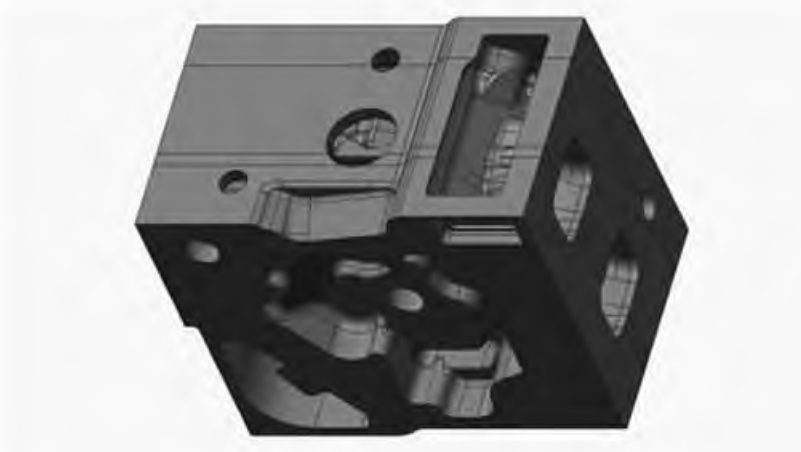
In evaluating production methods, I contrast casting and forging. The casting process offers rapid production cycles, high dimensional accuracy, and minimal post-processing, making it the industry standard. However, inherent flaws such as gas pores, slag inclusions, and compositional segregation arise during solidification. These defects act as stress concentrators, initiating cracks under cyclic loading and reducing fatigue life. For instance, ZG30Cr06A cast sockets often fail prematurely in high-load mines due to internal voids. The casting process also struggles with developing high-strength alloys, as brittle phases form easily, compromising toughness. Conversely, forging subjects metal to compressive forces, refining grain structure and eliminating defects. Key advantages include superior impact resistance and uniform mechanical properties. Yet, forging demands higher-capacity equipment, incurs greater costs, and requires significant machining for complex shapes. A quantitative comparison highlights these trade-offs:
| Process | Advantages | Disadvantages |
|---|---|---|
| Casting | Short cycle time, low machining needs | Defects (e.g., pores, segregation), limited high-strength alloys |
| Forging | Enhanced toughness, refined grains | High equipment costs, longer production time |
Material selection profoundly impacts performance and weldability. Common socket materials include 27SiMn, 30CrMo, 42CrMo, ZG30Cr06A (cast-specific), and 27CrNiMo. Their weldability, assessed via carbon equivalent (CEV) calculations, predicts cold cracking risks. The formula is:
$$ CEV = C + \frac{Mn}{6} + \frac{Cr + Mo + V}{5} + \frac{Ni + Cu}{15} $$
Higher CEV values indicate poorer weldability, necessitating preheating. As shown in Table 1, all materials exceed 0.42 CEV, requiring 150–200°C preheat to avoid cracks. Mechanical properties after quenching and tempering reveal 27CrNiMo’s superiority in toughness, crucial for impact resistance in harsh mines. This contrasts with the casting process, where ZG30Cr06A exhibits lower elongation and impact energy.
| Material | C (%) | Mn (%) | Cr (%) | Mo (%) | Ni (%) | CEV | Tensile Strength (MPa) | Yield Strength (MPa) | Elongation (%) | Impact Energy (J) |
|---|---|---|---|---|---|---|---|---|---|---|
| 27SiMn | 0.24–0.32 | 1.10–1.40 | — | — | — | 0.42–0.68 | 870 | 750 | 13 | 31 |
| 27CrNiMo | 0.24–0.30 | 0.60–0.95 | 0.35–0.65 | 0.35–0.75 | 0.15–0.25 | 0.49–0.76 | 910 | 764 | 14 | 63 |
| 30CrMo | 0.26–0.33 | 0.40–0.70 | 0.80–1.10 | 0.15–0.25 | — | 0.52–0.72 | — | — | — | — |
| ZG30Cr06A | 0.24–0.32 | 0.50–0.80 | 0.50–0.80 | — | — | 0.42–0.61 | 790 | 675 | 8 | 46 |
| 42CrMo | 0.38–0.45 | 0.50–0.80 | 0.90–1.20 | 0.15–0.25 | — | 0.67–0.87 | 1080 | 945 | 12.5 | 51 |
Forging billet choice significantly influences final properties. Using ZG30Cr06A cast billets for forging trials resulted in inconsistent mechanical performance, as residual casting defects like shrinkage pores persisted. Table 2 shows impact energy as low as 13.9 J in low-deformation zones, inferior to cast equivalents. This underscores the need for adequate forging ratios (e.g., >3:1) to ensure complete recrystallization. I recommend hot-rolled or forged round steel billets, which provide homogeneous microstructures and higher deformation uniformity. The relationship between forging ratio (FR) and toughness can be approximated as:
$$ \text{Impact Energy} \propto \ln(\text{FR}) $$
For example, FR ≥ 4 enhances grain refinement, boosting impact energy by 30–50% compared to cast billets.
| Sampling Position | Tensile Strength (MPa) | Yield Strength (MPa) | Elongation (%) | Impact Energy (J) |
|---|---|---|---|---|
| A | 816 | 621 | 11 | 13.9 |
| B | 814 | 622 | 12 | 14.5 |
| C | 799 | 605 | 8 | 25.1 |
| D | 870 | 675 | 13 | 18.3 |
| E | 871 | 645 | 12 | 16.3 |
In conclusion, forging outperforms the casting process for high-load column sockets, offering superior toughness and fatigue resistance in severe mining conditions. Split forging with optimized geometries mitigates production challenges, while 27CrNiMo steel provides exceptional impact absorption. Always use wrought steel billets to achieve sufficient forging ratios, ensuring defect-free microstructures. This approach elevates hydraulic support reliability, reducing failure rates in critical applications. Future work should explore hybrid processes, where initial casting is refined via forging to balance cost and performance, addressing limitations of the standalone casting process.