
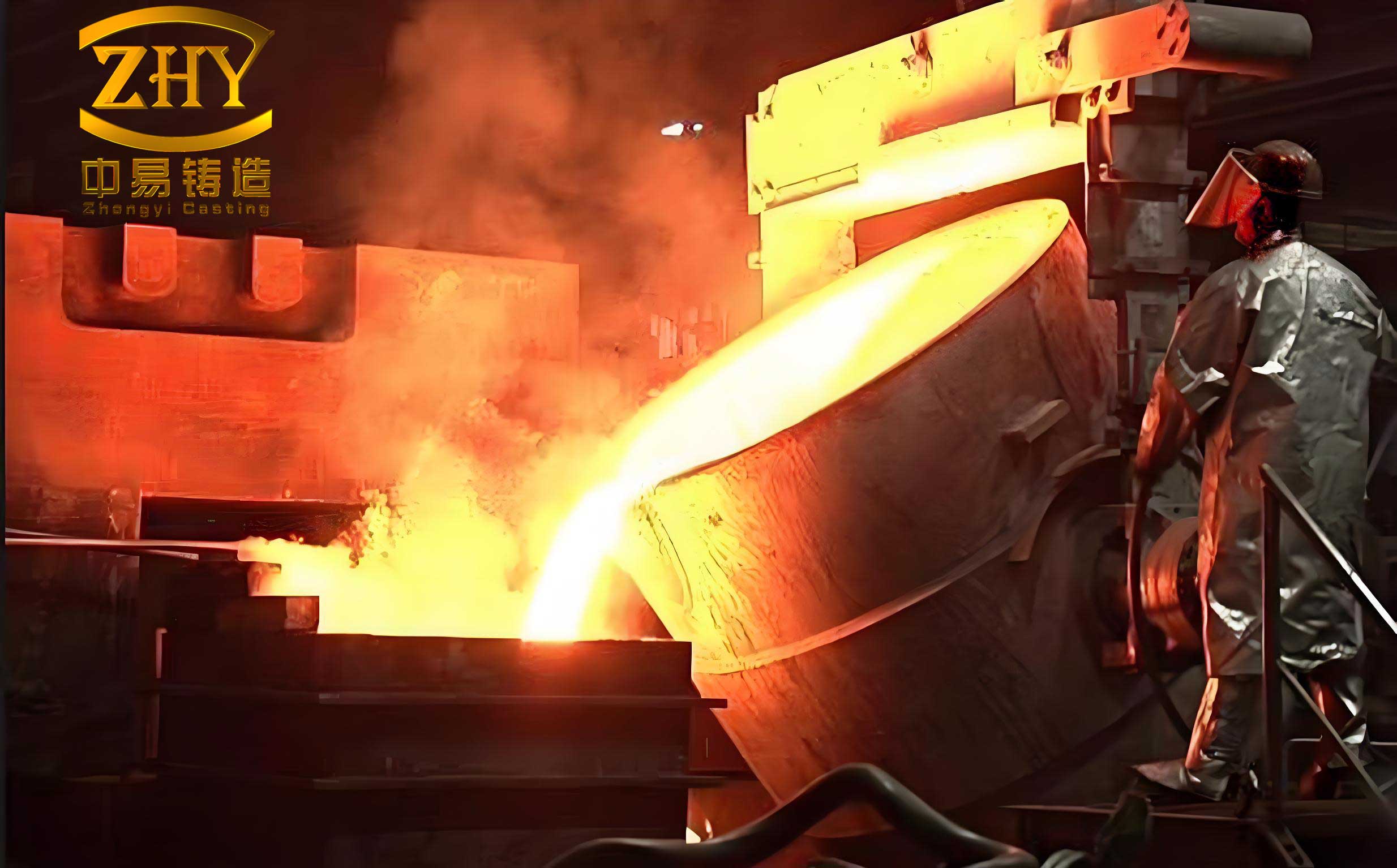
In the specialized field of manganese steel casting foundry operations, the propensity for crack formation remains one of the most persistent and challenging quality issues. Through years of direct involvement in production and problem-solving, I have developed a holistic understanding of this phenomenon. Cracking is not an isolated event but the culmination of interactions across the entire manufacturing chain—from melt chemistry and casting design to heat treatment and post-casting operations. This article synthesizes my practical experience and technical investigations into a detailed guide for controlling crack defects in austenitic manganese steel (commonly known as Hadfield steel) castings. The insights presented are born from the floor of a working manganese steel casting foundry, where theory meets the uncompromising reality of production.
1. The Foundational Influence of Chemistry and Microstructure
The inherent crack sensitivity of manganese steel is deeply rooted in its chemical composition and the resulting microstructure. The classic Hadfield composition (C: 1.0-1.4%, Mn: 10-14%) aims for a single-phase austenitic structure after water quenching. However, deviations within this range and the presence of residual elements profoundly affect mechanical properties and casting integrity.
Crack formation is often a battle against embrittlement, primarily caused by the precipitation of carbides. The carbon content is the most critical lever. While higher carbon increases yield strength, it severely reduces ductility and elongation, creating a brittle matrix susceptible to cracking under thermal stress. The relationship between carbon content and crack susceptibility in a typical manganese steel casting foundry mix can be conceptually described by its impact on ductility. We can model a “crack susceptibility index” (CSI) that inversely correlates with elongation (δ%):
$$
\text{CSI} \propto \frac{1}{\delta\%} \quad \text{and} \quad \delta\% \approx f(C_{\%}, \text{Carbide}_{vol})
$$
where $C_{\%}$ is the carbon percentage and $\text{Carbide}_{vol}$ is the volume fraction of carbides, which itself is a strong function of carbon and heat treatment. Therefore, for crack control, carbon should be maintained at the middle to lower end of the specification.
Manganese’s role is to stabilize austenite. A high Mn/C ratio is desirable. Insufficient manganese, especially with low carbon, can lead to the formation of martensite and ε-phase (hexagonal close-packed) upon cooling, both of which are brittle. Maintaining manganese at the upper end of the range ensures full austenitization. Silicon, typically limited to <1.0%, has a moderate strengthening effect but significantly reduces ductility and thermal conductivity above 1.0%, increasing hot tearing risk. Phosphorus is a notorious troublemaker in the manganese steel casting foundry. It segregates strongly to grain boundaries, drastically reducing elevated-temperature strength and promoting hot tears. The effect is non-linear; beyond approximately 0.04%, the risk escalates dramatically. Sulfur, forming MnS inclusions, is less critical but should still be minimized.
Alloying elements like Cr, Mo, Ni, V, Ti, and B are sometimes added to enhance yield strength, wear resistance, or grain refinement for specific applications like track shoes and idlers. However, their influence on cracking is secondary and can be negative if not carefully balanced. They often complicate the phase transformation kinetics and can promote other types of brittle phases.
The following table summarizes the targeted composition for optimal crack resistance in a standard manganese steel casting foundry practice, balancing mechanical property requirements with castability:
| Element | Target Range (wt.%) | Primary Influence on Cracking | Control Rationale |
|---|---|---|---|
| Carbon (C) | 1.10 – 1.20 | Dominant. Controls carbide volume and matrix ductility. | Keep at mid-lower range. Maximizes ductility while meeting strength specs. |
| Manganese (Mn) | 12.0 – 13.0 | Stabilizes austenite. Precludes martensite formation. | Keep at mid-upper range. Ensure high Mn/C ratio (>10). |
| Silicon (Si) | 0.40 – 0.70 | Reduces ductility and thermal conductivity if high. | Keep strictly below 0.80%. Acts mainly as a deoxidizer. |
| Phosphorus (P) | ≤ 0.040 | Severe hot tear promoter via grain boundary segregation. | Absolute maximum 0.045%. Source control of charge materials is key. |
| Sulfur (S) | ≤ 0.025 | Forms MnS inclusions; minor indirect effect. | Standard de-sulfurization practice suffices. |
2. Casting Process Design: The Primary Defense Line
The manganese steel casting foundry process is the first and most critical line of defense against cracks. Manganese steel has high solidification shrinkage (~2.5-3.0%), low thermal conductivity (approximately 1/4 that of carbon steel), and a high coefficient of thermal expansion. This combination makes it exceptionally prone to generating high thermal stresses during cooling. The key is to design a process that minimizes restraint and thermal gradients.
2.1. Casting Design & Rigging: Where possible, collaborative design reviews with the end-user to minimize drastic section changes, sharp corners, and massive isolated hot spots are invaluable. When heavy sections are unavoidable, chills (external or internal) must be used strategically to promote directional solidification and prevent isolated hot spots that lead to shrinkage porosity and micro-cracking. Risering is an art. Oversized risers are a common mistake. They remain liquid too long, creating a severe thermal gradient between the hot riser neck and the already solidified casting body, leading to “hot tear” cracks at the junction. A safer approach is to use risers with a modulus 1.2 to 1.3 times that of the casting section it feeds, ensuring adequate feed metal without excessive thermal mass.
2.2. Gating System & Pouring: The gating system should be designed to fill the mold smoothly and rapidly to avoid temperature stratification. Bottom gating or stepped gates are often preferred for tall castings to reduce turbulence and splashing. The critical parameter is pouring temperature. The liquidus is ~1400°C and solidus ~1350°C, giving a narrow freezing range. Pouring too high (e.g., >1480°C) increases total liquid contraction, grain growth, and gas dissolution, all elevating crack risk. Pouring too low (<1440°C) risks mistuns and cold shuts. The optimal range is tight. The following table provides practical guidelines:
| Casting Characteristic | Recommended Pouring Temperature | Rationale |
|---|---|---|
| Thin-walled, intricate geometry | 1465°C – 1480°C | Ensures complete filling before premature freezing. |
| Medium section thickness (20-50 mm) | 1450°C – 1465°C | Balances fluidity with reduced shrinkage stress. |
| Heavy section (>50 mm), simple shape | 1440°C – 1450°C | Minimizes total heat content, grain size, and segregation. |
2.3. Mold & Core Engineering: This is paramount for a successful manganese steel casting foundry. The mold and core must yield readily during the casting’s solidification and cooling contraction. Hard, unyielding molds are a guaranteed source of cracking, especially in box-like structures with internal cores. Cores should be formulated with additives that burn out or collapse at elevated temperatures, such as cellulose (wood flour), polystyrene beads, or hollow ceramic microspheres. The binder system (often organic) should break down quickly. A rule of thumb is to ensure the core’s hot compressive strength drops rapidly above 600°C. Furthermore, ample mold wall thickness (generous “shake-out” space) around the casting allows the sand to compress, reducing mechanical restraint.
3. The Critical Role of Heat Treatment: Solutionizing and Quenching
Heat treatment transforms the brittle as-cast structure, full of grain boundary carbides, into the tough, single-phase austenite. Incorrect practices here not only fail to achieve properties but can introduce severe quench cracks. The standard cycle involves heating to the solutionizing temperature (1050-1100°C), holding to dissolve carbides, then rapidly quenching in water.
3.1. Heating Cycle – Debunking the “Hold” Myth: A traditional but flawed practice is to heat slowly and hold at 600-700°C to equalize temperature and avoid thermal shock. My experience and metallurgical analysis show this is detrimental. In this temperature range, metastable austenite from the as-cast state is highly susceptible to rapid carbide precipitation along grain boundaries and within grains. This precipitation, described by the Johnson-Mehl-Avrami-Kolmogorov (JMAK) equation for nucleation and growth:
$$
X(t) = 1 – \exp(-k t^n)
$$
where $X(t)$ is the transformed fraction, $k$ is a rate constant dependent on temperature and composition, $t$ is time, and $n$ is the Avrami exponent, can occur quickly. These fine, intergranular carbides embrittle the steel before it reaches the solutionizing temperature, increasing the risk of cracking during subsequent heating or quenching due to reduced ductility and increased stress concentration at brittle boundaries. The preferred method is to heat as rapidly as possible (consistent with avoiding thermal shock from uneven heating in complex castings) through this critical 500-750°C range. Modern furnaces with good circulation can achieve this safely.
3.2. Solutionizing and Quenching: The solutionizing temperature must be high enough to dissolve all carbides but below the solidus to avoid burning. A range of 1060-1080°C is typically safe and effective. Soaking time is critical: approximately 1 hour per inch (25 mm) of maximum section thickness is a standard, but heavy sections may require adjustment. The goal is homogenization without excessive grain growth. Quenching must be immediate and violent. A large volume of agitated water at ambient temperature (20-30°C) is essential. The quench extracts heat so quickly that carbon atoms are “frozen” in the austenitic lattice, preventing carbide re-precipitation. Any delay or use of inadequate water volume/flow can result in pearlite or carbide formation in the mid-sections of heavy castings, creating soft spots and potential crack initiation sites.
4. Post-Casting Operations: Shakeout, Cleaning, and Cutting
Handling the casting after pouring but before heat treatment is a delicate phase. The casting is in its most brittle state, with a network of grain boundary carbides.
4.1. Shakeout Time: Premature shakeout is a major cause of “cold cracking.” The high thermal stress from rapid, uneven cooling in air can easily exceed the low strength of the brittle as-cast structure. Castings should be allowed to cool slowly in the mold until below 200°C, and ideally below 150°C. For massive castings in a manganese steel casting foundry, this may require 24-72 hours or more. Patience here prevents countless failures.
4.2. Cutting of Gates and Riser: Removing feeders and flash via oxy-fuel or arc cutting generates intense localized heat. Due to the low thermal conductivity, this creates a steep temperature gradient and a zone of high tensile stress surrounding the cut, often leading to propagating cracks. The solution is underwater cutting. The casting section to be cut is submerged, and cutting proceeds with the torch or electrode below the water surface. The water swiftly removes heat, keeping the main body of the casting cool (< 100°C). The water temperature must be monitored and kept below 40°C to ensure effective heat extraction. This practice is non-negotiable for critical or crack-prone castings.
5. Repair Welding: A Controlled Intervention
Defects happen, and repair by welding is often necessary. However, welding on manganese steel is fraught with risk for reheat cracking and HAZ embrittlement. A strict procedure must be followed:
- Pre-Weld Condition: Welding should only be performed on castings that have undergone final solution heat treatment and quenching. Welding on as-cast material is futile and damaging.
- Defect Preparation: Avoid using heat-based methods (arc-air gouging, oxygen lancing) for defect removal, as they can heat-affected and embrittle the base metal. Use mechanical methods: grinding, milling, or pneumatic chiseling.
- No Preheat: Do not preheat. Preheat holds the weld zone in the carbide precipitation temperature range for extended periods.
- Welding Consumable: Use a low-carbon (< 0.8%) austenitic manganese steel electrode or an austenitic stainless steel electrode (e.g., 309L). Both have high ductility to accommodate strain and resist solidification cracking.
- Welding Technique: Use small-diameter electrodes, low heat input, stringer beads, and intermittent welding to minimize heat buildup. The interpass temperature should be kept low, ideally by touch (< 60°C).
- Peening: This is crucial. After depositing each bead and while it is still warm (above ~200°C but not red hot), peen it thoroughly with a needle scaler or ball-peen hammer. Peening induces compressive surface stresses that counteract the tensile thermal contraction stresses from cooling, effectively preventing crack initiation. The effectiveness of peening can be related to the induced compressive stress ($\sigma_c$) countering the thermal stress ($\sigma_t$). Cracking is avoided if:
$$
\sigma_t – \sigma_c < S
$$
where $S$ is the local fracture strength of the weld metal/HAZ. - Post-Weld Treatment: No stress relieving is possible. The final step is often to reheat-treat the entire casting if the repair was extensive or in a critical location, to re-dissolve any carbides precipitated in the HAZ.
The table below summarizes the key parameters for a successful repair weld in a manganese steel casting foundry:
| Parameter | Requirement / Specification |
|---|---|
| Base Metal Condition | Fully solutionized & water-quenched (T4 condition). |
| Defect Removal Method | Mechanical only (grinder, mill, chisel). |
| Preheat Temperature | None. Ambient temperature start. |
| Electrode Type | Austenitic Mn-steel (low-C) or E309L stainless. |
| Heat Input Control | Low. Use small electrodes (≤3.25mm), stringer beads. |
| Interpass Temperature | Keep below 60°C (cool to touch). |
| Peening | Mandatory after each bead, while warm (200-400°C). |
| Post-Weld Heat Treatment | Consider full re-solutionizing for major repairs. |
6. An Integrated Control Methodology
Controlling cracks in a manganese steel casting foundry is not about a single silver bullet but the rigorous implementation of a linked system. The approach is analogous to a chain where every link must be strong:
Stage 1: Prevention by Design. This involves chemistry control (low C, high Mn, minimal P), casting design optimization (uniform sections, generous fillets), and robust process design (yielding molds, correctly sized risers, optimal pouring temperature).
Stage 2: Process Stability. Maintaining consistent practices in melting, molding, and pouring is vital. Statistical process control (SPC) charts for key parameters like chemistry and pour temperature are essential tools.
Stage 3: Controlled Transformation. Executing the correct heat treatment cycle—rapid heating through the carbide precipitation range, proper solutionizing, and violent quenching—transforms the microstructure to a ductile state.
Stage 4: Careful Handling. Enforcing adequate mold cooling times and using underwater cutting preserve the casting’s integrity in its vulnerable states.
Stage 5: Qualified Repair. Having a strict, qualified welding procedure allows for the salvage of castings with minor defects without introducing new failure modes.
In conclusion, the battle against cracks in manganese steel casting foundry production is waged on multiple fronts. It requires a deep understanding of the material’s metallurgical quirks—its poor conductivity, high expansion, and relentless drive to precipitate embrittling carbides. By systematically addressing each contributing factor from chemistry to final weld repair, and by replacing outdated practices like slow heating holds with metallurgically sound alternatives, crack rates can be reduced to minimal levels. The journey is one of constant vigilance and adaptation, but the result—sound, reliable, high-performance manganese steel castings—is the ultimate reward for any foundry professional.