
In my extensive experience as an engineering professional specializing in pressure equipment inspection and maintenance, I have repeatedly encountered critical failures in high-pressure valve shell castings within power generation units. These shell castings, typically manufactured from alloy steel, are fundamental components in boiler systems, yet they are prone to developing cracks that compromise operational safety and integrity. This article delves into a detailed first-person analysis of the root causes behind these cracks, presents systematic treatment methodologies, and proposes preventive strategies, with a particular focus on the inherent vulnerabilities of shell castings. The discussion is enriched with technical tables, mathematical formulations, and practical insights to provide a thorough understanding of the phenomenon.
The operational context involves large-capacity, supercritical power units where shell castings for valves—such as those in attemperation water and main feedwater systems—are subjected to extreme pressures and thermal cycles. During a major overhaul of a 660MW unit, non-destructive testing revealed multiple cracks in several high-pressure casting valves. This prompted a rigorous investigation from which I derived the following conclusions and procedures. The core issue invariably traces back to the manufacturing and post-processing of the shell castings themselves.
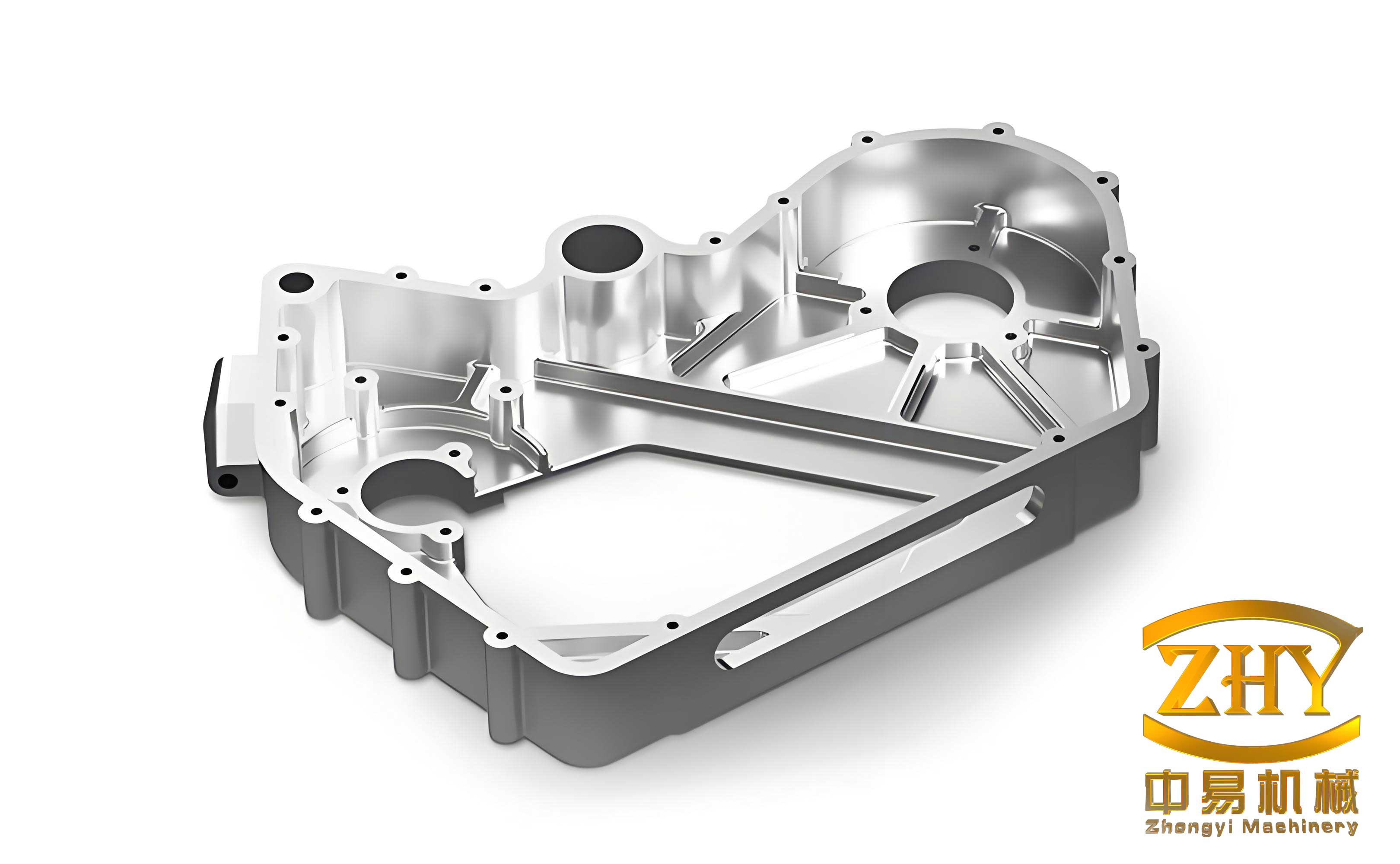
The formation of cracks in shell castings is a multifactorial problem, primarily governed by residual stresses, thermal processing deficiencies, and material property mismatches. Shell castings, by virtue of their manufacturing process, possess an intrinsic complexity. Casting involves the solidification of molten metal, and for alloy steels used in high-pressure applications, this process is fraught with challenges due to high melting points, poor fluidity, and significant shrinkage rates. The fundamental equation governing thermal stress during solidification can be expressed as:
$$\sigma_{thermal} = E \cdot \alpha \cdot \Delta T$$
where $\sigma_{thermal}$ is the thermal stress, $E$ is Young’s modulus, $\alpha$ is the coefficient of thermal expansion, and $\Delta T$ is the temperature gradient within the casting. In shell castings, large $\Delta T$ values are common due to uneven cooling, leading to substantial residual stress $\sigma_{residual}$ locked into the structure after solidification.
To mitigate shrinkage defects, foundries employ a “directional solidification” technique, using risers (feeders) to ensure molten metal feeds the thickening sections last. While this reduces porosity, it exacerbates thermal gradients and stress. The total stress in a shell casting after cooling can be modeled as a superposition:
$$\sigma_{total} = \sigma_{residual} + \sigma_{applied}$$
where $\sigma_{applied}$ includes operational pressure stresses and thermal cycling stresses. When $\sigma_{total}$ exceeds the material’s yield strength $\sigma_y$, plastic deformation occurs; if it surpasses the ultimate tensile strength $\sigma_u$, crack initiation and propagation are inevitable. For shell castings, stress concentrations at geometric discontinuities (like valve body transitions) act as multipliers, described by the stress concentration factor $K_t$:
$$\sigma_{local} = K_t \cdot \sigma_{nominal}$$
These localized high-stress regions are prime sites for crack formation in shell castings.
Post-casting heat treatment, such as quenching and tempering, is essential to relieve these residual stresses and achieve desired mechanical properties. However, improper control during heat treatment—such as non-uniform heating, incorrect soaking times, or inadequate cooling rates—can leave behind significant residual stresses or create undesirable microstructures. Furthermore, excessive surface hardness in shell castings reduces toughness and increases susceptibility to brittle fracture. The relationship between hardness (HB) and ultimate tensile strength can be approximated for steels as:
$$\sigma_u (MPa) \approx 3.45 \times HB$$
If the specified hardness for pressure-containing shell castings is 160-200 HB but actual values exceed 340 HB (as found in some cases), the material’s fracture toughness $K_{IC}$ drops dramatically, making it prone to cracking under cyclic loads.
The following table summarizes typical crack data observed in various valve shell castings, illustrating the prevalence and severity of the issue. These defects were all located on or near the surface, often at stress concentration zones.
| Valve Function (Material Spec) | Number of Flaws | Typical Crack Dimensions (L×W×D mm) | Wall Thickness (mm) | Remarks on Shell Castings |
|---|---|---|---|---|
| Primary Attemperation Valve (WC9) | 7 | Up to 130×20×31 | 66-68 | Cracks often associated with sand inclusions; stress concentration at body transitions. |
| Secondary Attemperation Master Valve (WC9) | 2 | 120×23×22 | 56 | Major crack originating from inner radius; residual stress from casting. |
| Reheater Emergency Valve (WCB) | 1 cluster | Covering ~30% surface area | 27/23 | Extensive crack network due to excessive hardness (HB 340-368). |
| Main Feedwater Valve (WCC) | 3 | Up to 120×110×46 | 112-128 | Deep cracks at flange-to-body junctions; combined stress overload. |
Chemical analysis of the defective shell castings confirmed that base material composition (including S and P levels) met standard requirements, ruling out gross material impurity as a direct cause. Therefore, the flaw mechanism is inherently linked to the processing history of the shell castings. The presence of internal stress, combined with operational stresses, creates a cumulative effect. During service, pressure fluctuations and thermal transients (start-ups/shut-downs) impose cyclic stresses that can propagate pre-existing micro-cracks or discontinuities inherent in the cast structure. The fatigue crack growth rate can be described by Paris’ law:
$$\frac{da}{dN} = C (\Delta K)^m$$
where $da/dN$ is the crack growth per cycle, $\Delta K$ is the stress intensity factor range, and $C$ and $m$ are material constants. For shell castings with high residual stress, the effective $\Delta K$ is elevated, accelerating crack propagation to a critical size.
Based on the analysis, I developed and implemented a detailed repair protocol for salvageable shell castings, while recommending replacement with forged alternatives for severely compromised components. The cornerstone of repair is a controlled welding and heat treatment procedure designed to restore integrity without introducing new stresses. The key steps are outlined below, emphasizing the unique considerations for shell castings.
Repair Welding Procedure for Cracked Shell Castings:
1. Defect Removal: Mechanically grind out all cracks until complete elimination, verified by magnetic particle or dye penetrant testing. The excavation profile should be a smooth U-groove to minimize stress concentration. The remaining wall thickness must satisfy the minimum design thickness $t_{min}$ calculated from pressure design codes:
$$t_{min} = \frac{P \cdot D}{2SE + 2Py} + CA$$
where $P$ is design pressure, $D$ is internal diameter, $S$ is allowable stress, $E$ is weld joint efficiency, $y$ is a coefficient, and $CA$ is corrosion allowance. If the defect depth exceeds 20% of wall thickness or 25 mm, the repair is classified as “major” per standards like ASTM A217, requiring a qualified procedure.
2. Pre-weld Preparation: Clean the area and preheat locally to 70-80°C using a torch, ensuring uniform heating within a 50 mm radius. Preheat reduces the cooling rate and mitigates hydrogen-induced cracking. The temperature gradient should be controlled so the cooling rate post-weld is between 2-3°C/min.
3. Welding Process: Use gas tungsten arc welding (GTAW) for root passes and shielded metal arc welding (SMAW) for filling. Welding consumables must be compatible; for alloy steel shell castings, nickel-base filler metals (e.g., ERNiCrFe-3) are often used to accommodate dissimilar composition and reduce residual stress. The heat input $Q$ must be strictly limited to prevent excessive microstructural changes:
$$Q = \frac{60 \cdot V \cdot I}{1000 \cdot S} \quad (kJ/mm)$$
where $V$ is voltage, $I$ is current, and $S$ is travel speed (mm/min). For shell castings, I maintain $Q < 1.5 kJ/mm$. Employ short bead lengths (<30 mm), staggered sequencing, and interpass temperature control below 70°C. Each bead is immediately peened using a round-nose tool to induce compressive stress and counteract shrinkage.
4. Post-weld Heat Treatment (PWHT): For major repairs, a full PWHT is mandatory to relieve welding stresses. The temperature-time profile must be carefully programmed. Typically, heat to 600-650°C for alloy steel shell castings, hold for 1 hour per inch of thickness, then furnace cool. The stress relief efficiency $\eta$ can be approximated by:
$$\eta = 1 – \exp\left(-\frac{t}{\tau}\right)$$
where $t$ is hold time and $\tau$ is a time constant dependent on temperature and material. After PWHT, the hardness of the repaired zone in the shell casting must be verified to be within the specified range (e.g., HB 160-200).
5. Inspection: After cooling to ambient temperature, perform non-destructive testing (NDT) again. A follow-up inspection after 7 days is advisable to detect any delayed cracking. Finally, a hydrostatic test at 1.5 times design pressure validates the repair integrity.
The table below summarizes the critical parameters for successful repair of shell castings, contrasting improper versus recommended practices.
| Parameter | Inadequate Practice (Leads to Re-cracking) | Recommended Practice for Shell Castings | Technical Rationale |
|---|---|---|---|
| Preheat Temperature | None or non-uniform | 70-80°C uniform zone | Reduces thermal gradient, minimizes quench effect. |
| Interpass Temperature | Uncontrolled, >100°C | Maintain <70°C | Prevents grain coarsening and excessive stress buildup. |
| Bead Size | Long, continuous beads | Short beads (<30 mm), skip welding | Localizes heat input, allows stress redistribution. |
| Peening | Omitted or excessive | Moderate peening after each bead | Induces beneficial compressive stress, counteracts tensile shrinkage. |
| PWHT Cycle | Omitted or too rapid cooling | Controlled ramp, soak, furnace cool | Relieves residual stresses without causing new thermal stresses. |
| Final Hardness | HB > 250 | HB 160-200 | Ensures adequate toughness; high hardness promotes brittle fracture in shell castings. |
Beyond repair, a proactive strategy is essential to prevent recurrence. I advocate for a comprehensive monitoring program specifically for high-pressure valve shell castings in critical service. This includes:
1. Enhanced NDT Scheduling: Based on risk assessment, shell castings should undergo periodic ultrasonic testing (UT) and magnetic particle inspection (MPI) during outages. The interval can be derived from fracture mechanics principles, estimating the time for a detectable crack to grow to critical size $a_c$:
$$N_f = \int_{a_0}^{a_c} \frac{da}{C (\Delta K)^m}$$
where $a_0$ is initial flaw size (assumed from casting quality).
2. Material and Design Upgrade: Where economically feasible, replacing critical shell castings with forged components is recommended. Forging produces a finer, more homogeneous grain structure with superior mechanical properties and lower inherent stress. The yield strength of forged vs. cast steel can be compared using the Hall-Petch relationship:
$$\sigma_y = \sigma_0 + \frac{k_y}{\sqrt{d}}$$
where $d$ is grain diameter; forging typically results in smaller $d$, hence higher $\sigma_y$ and better fatigue resistance.
3. Supplier Quality Assurance: Specifications for new shell castings must mandate stringent controls on heat treatment and hardness. Procurement documents should require certification of residual stress levels, possibly verified by hole-drilling strain gauge methods. The allowable residual stress $\sigma_{res,allow}$ should be a fraction of the yield strength:
$$\sigma_{res,allow} \leq 0.2 \cdot \sigma_y$$
for critical shell castings.
4. Operational Modifications: Implementing smoother start-up and load-change procedures reduces thermal cycling severity, thereby lowering the $\Delta K$ driving crack growth in shell castings.
In conclusion, the integrity of high-pressure valve shell castings is paramount for the safe operation of power plants. Through my hands-on involvement in diagnosing and rectifying cracking incidents, I have established that the root causes are deeply embedded in the casting process and subsequent heat treatment. Residual stresses, improper thermal management, and excessive hardness are the primary culprits that undermine the performance of shell castings. A methodical approach combining advanced NDT, precision welding repairs with strict thermal controls, and ultimately a shift towards forged alternatives where possible, forms the backbone of an effective mitigation strategy. Continuous vigilance and a science-based understanding of stress behavior in shell castings are essential to preempt failures and ensure long-term reliability. The lessons drawn underscore the critical need to treat shell castings not as commodity items but as engineered components whose manufacturing history directly dictates their service life.