
In my extensive experience within foundry operations, achieving consistent quality in the investment casting process hinges on the integrity of the ceramic shell. This intricate structure, built layer by layer around a sacrificial pattern, must withstand various thermal and mechanical stresses to precisely mold molten metal. Shell defects are primary contributors to casting scrap, leading to significant financial and resource waste. Therefore, a systematic, first-principles understanding of common shell imperfections—their characteristics, root causes, and proven countermeasures—is paramount for any practitioner aiming to optimize this sophisticated manufacturing route. The journey from pattern to shell is delicate, and each step presents opportunities for deviation that must be meticulously controlled.
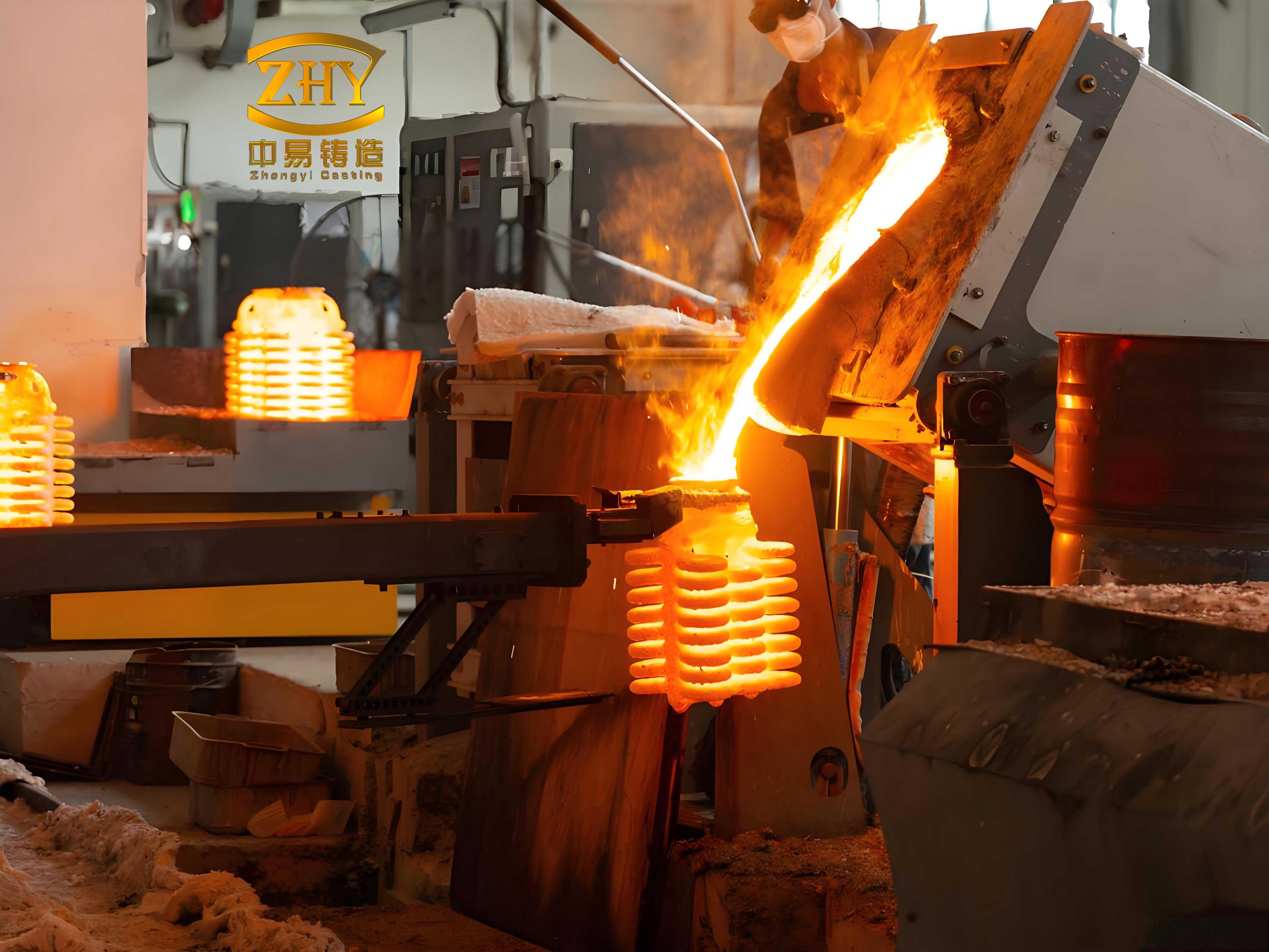
The essence of the investment casting process involves creating a precise wax pattern, assembling it into a cluster, building a ceramic shell via repeated dipping and stuccoing, dewaxing, firing the shell, and finally pouring molten metal. Each phase interacts complexly with the others. A flaw introduced in an early stage, such as pattern assembly or primary coating, often manifests catastrophically only during or after metal pouring. This analysis will delve deep into several pervasive shell defects, moving beyond mere description to explore the underlying physicochemical mechanisms and presenting actionable, quantified solutions. Our goal is to transform defect rectification from a reactive troubleshooting exercise into a proactive, controlled element of the investment casting process.
A Framework for Shell Defect Analysis
Before examining individual defects, it is useful to categorize them based on their primary origin within the shell-making sequence. This systemic view helps in diagnosing problems efficiently. The following table provides a high-level overview of the defects we will explore in detail.
| Defect Name | Primary Phase of Origin | Key Manifestation on Shell/Casting |
|---|---|---|
| Scab (Orange Peel) | Primary Coating & Gelling | Uneven, pitted interior shell surface |
| Residual Saponified Sludge & Salts | Dewaxing, Drying, & Firing | Black deposits or white crystals in cavity |
| Residual Refractory Sand in Cavity | Dewaxing & Handling | Loose sand or shell material in mold cavity |
| Internal Fins (Flash) | Pattern Assembly | Thin, unwanted projections on cavity wall |
| Black Shell (Inadequate Firing) | Shell Firing (Burn-out) | Dark, sooty interior shell surface |
| Premature Shell Bridging | Secondary Coating Build-up | Shell material bridges narrow gaps between patterns |
1. Scab or “Orange Peel” Defect
This defect is a classic challenge in the waterglass-based investment casting process. It appears as a rough, bumpy, pitted texture on the shell’s interior surface, directly replicating onto the casting and ruining its finish and dimensional accuracy.
Root Cause Analysis
The formation mechanism is tied to stress development within the primary coating during gelling and hardening. Two primary causes exist:
- Excessive Primary Slurry Viscosity and Poor Drying: A slurry with high viscosity does not flow evenly, leading to local accumulations on the pattern. If the subsequent “green” drying time before hardening is insufficient, the surface layer gels and shrinks rapidly upon contact with the hardening agent. However, the inner, still-soft layer cannot support this stress, causing the surface to buckle and crack, forming pits. The stress from differential shrinkage can be conceptualized. The shrinkage strain $\epsilon_s$ in the surface gel layer is a function of the rate of moisture loss and gel network density. When the underlying layer has a lower modulus $E_{inner}$, it deforms plastically, leading to buckling.
- Poor Wettability and Incomplete Hardening: The presence of hydrophobic contaminants (mold release agents, wax oils) on the pattern surface creates a barrier. The slurry does not wet the surface uniformly, leading to poor adhesion and potentially entrapping air or moisture at the interface. During hardening, the coagulant (e.g., ammonium chloride) penetration is non-uniform, leaving unhardened silica gel pockets. During dewaxing, these weak areas disintegrate, leaving a pitted surface.
Comprehensive Prevention Strategies
Mitigating this defect requires a multi-parameter approach focusing on slurry rheology, interfacial chemistry, and process timing.
| Control Parameter | Target Value / Action | Scientific Principle |
|---|---|---|
| Primary Slurry Rheology | Adjust binder (e.g., M=3.2, ρ=1.27 g/cm³) to achieve a powder-to-liquid ratio of 1:1.2. Incorporate wetting agent (JFC, 0.2%) and defoamer (0.08%). | Reduces viscous flow resistance, improves surface coverage, and eliminates air entrapment for uniform gelling. |
| Pattern Pre-treatment | Degrease assembly with a neutral soap or surfactant solution (0.3% wt.) before first dip. | Removes hydrophobic contaminants, ensuring a high-energy surface for optimal slurry adhesion and wetting. |
| Green Drying Time | 15-40 min, judged by “neither wet nor chalky white” appearance. | Allows controlled solvent evaporation to initiate gelation at the surface without creating a thick, brittle skin. |
| Primary Hardening Cycle | NH₄Cl: 23%, 22°C, 5-8 min immersion. Post-hardening drying: 40 min. | Ensures complete and uniform coagulation through the coating thickness via diffusion-controlled reaction: $$ \text{Na}_2\text{O}·m\text{SiO}_2 + 2\text{NH}_4\text{Cl} \rightarrow 2\text{NaCl} + 2\text{NH}_3↑ + m\text{SiO}_2·\text{H}_2\text{O} $$ |
| Dewaxing Supplement | Add 1% HCl or 4% NH₄Cl to dewaxing water at 97°C. | Provides a secondary hardening environment, strengthening the shell as the wax expands and melts. |
2. Residual Saponified Sludge and Salts
These contaminants appear post-firing as black, tarry deposits (saponified sludge) or white, crystalline powders (salts) within the mold cavity, leading to surface inclusions and gas defects in the final casting.
Root Cause Analysis
- Saponification Reaction: Stearic acid, a common component in wax patterns, reacts with metallic ions (e.g., from hard water, equipment) or alkaline compounds to form metallic stearates (soaps). These reaction products are sticky, non-volatile, and adhere tenaciously to the shell surface.
$$ \text{C}_{17}\text{H}_{35}\text{COOH} + \text{Na}^+ \rightarrow \text{C}_{17}\text{H}_{35}\text{COONa} + \text{H}^+ $$ - Incomplete Drying & Salt Entrapment: Insufficient drying after hardening leaves a high concentration of salts (e.g., NaCl, unreacted NH₄Cl) within the shell’s micro-porosity.
- Inadequate Firing (Burn-out): The shell firing stage is designed to remove all volatiles and organic residues. If the temperature profile is too low, too short, or non-uniform, the saponified sludge carbonizes instead of fully oxidizing, and salts do not decompose or volatilize.
Comprehensive Prevention Strategies
| Control Parameter | Target Value / Action | Scientific Principle |
|---|---|---|
| Wax Management | Maintain wax acidity. Replenish stearic acid in reclaimed wax. Use deionized water for dewaxing. | Minimizes the source of ions for saponification, preserving wax composition and reducing soap formation. |
| Post-Hardening Drying | Extend drying time to achieve constant shell weight. Use controlled humidity and air flow. | Ensures maximum removal of liquid water and by-product salts via evaporation and diffusion before firing. |
| Shell Washing Post-Dewax | Rinse shell interior with hot water containing 0.5% HCl, then invert to drain. | Dissolves and flushes away water-soluble salts and some皂化物 before they can bake onto the surface. |
| Firing (Burn-out) Cycle | For NH₄Cl-hardened shells: Ramp to 880°C, hold for 90 minutes. Ensure adequate oxidizing atmosphere and airflow. | Provides sufficient thermal energy and time for complete oxidation of carbonaceous residues: $$ \text{C}_{x}\text{H}_{y} + (x+\frac{y}{4})\text{O}_2 \rightarrow x\text{CO}_2↑ + \frac{y}{2}\text{H}_2\text{O}↑ $$ and for thermal decomposition of residual salts. |
| Quality Check | Acceptable fired shell color is white or light pink. Dark grey indicates residual carbon. Do not re-fire shells more than once. | Visual indicator of the completeness of the organic burn-out process within the investment casting process. |
3. Residual Refractory Sand in Cavity
Loose stucco sand or shell fragments found inside the mold cavity after firing lead to obvious sand inclusions in the casting, often causing immediate scrapping of the part.
Root Cause Analysis
This is primarily a contamination issue stemming from process handling:
- Poor Pre-Dewax Clean-up: Loose sand on the top of the sprue or shell exterior is not removed and falls in during dewaxing.
- Violent Dewaxing: Boiling of the dewaxing medium (water/steam) agitates settled debris from the tank bottom, carrying it into the suspended shells.
- Dirty Handling Environment: Shells stored upright in areas with falling sand or debris will collect contaminants in the sprue cup, which then falls into the cavity.
Comprehensive Prevention Strategies
| Control Parameter | Target Value / Action |
|---|---|
| Pre-Dewax Cleaning | Thoroughly air-blow or brush loose sand from the sprue cup and shell exterior. |
| Dewax Process Control | Maintain dewax medium at 97°C (sub-boiling). Limit cycle time to 20 min to minimize agitation. |
| Tank & Area Hygiene | Regularly clean sludge and sand from dewax tank bottom. Implement 5S in shell handling areas. |
| Shell Storage | Always store fired shells inverted. Cover sprue cups with foil or caps before storage and transportation. |
| Final Cavity Prep | Immediately before pouring, use industrial vacuum or dry compressed air to clean each shell cavity. |
| Shell Design | For fragile shells, omit stucco on the final coat (“seal coat”) to prevent outer layer spalling. |
4. Internal Fins (Flash) on the Shell Cavity
This defect manifests as thin, unwanted ridges of shell material protruding into the mold cavity, creating corresponding fins on the casting that require removal.
Root Cause Analysis
The cause is singular and originates in the pattern assembly stage of the investment casting process: an imperfect seal at the joint between the wax pattern and the runner system. When a low-voltage heated tool is used for welding:
- The tool temperature is too low, resulting in a “cold weld” that does not fully fuse the surfaces, leaving a micro-gap.
- Alternatively, the tool temperature is too high, causing excessive local melting and depression, which upon solidification also leaves a void or crevice.
During shell building, the ceramic slurry infiltrates these gaps. After dewaxing and firing, the cured ceramic in the gap forms a permanent fin on the cavity wall.
Comprehensive Prevention Strategies
Prevention is centered on robust process control in the wax room.
| Control Parameter | Target Value / Action |
|---|---|
| Welding Tool Calibration | Monitor and maintain optimal tool tip temperature (specific to wax composition, e.g., 70-80°C). |
| Welding Technique | Apply sufficient pressure and hold time to ensure complete fusion across the entire joint interface. |
| Post-Weld Inspection | Visually and tactily inspect every joint. Use a magnification lens if necessary. Repair any gap immediately with a small amount of liquid wax. |
| Fixture Design | Use jigs or fixtures that hold patterns in correct alignment during welding to minimize joint mismatch. |
5. Black Shell (Inadequate Firing)
As the name implies, the interior surface of the shell remains dark, gray, or black after the firing cycle, indicating the presence of significant unburned carbonaceous material.
Root Cause Analysis
This defect is a direct consequence of an incomplete thermal oxidation cycle:
- Insufficient Dewaxing: Excessive wax residue left in the shell provides more organic material than the subsequent firing cycle can remove under its set parameters.
- Firing Cycle Deficiencies: This is the most common cause. The firing temperature is too low, the hold time is too short, or the furnace atmosphere is reducing (oxygen-deficient), preventing complete combustion of wax, polymers, and saponification products. The oxidation kinetics are governed by an Arrhenius-type equation where the rate constant $k$ is:
$$ k = A e^{-E_a/(RT)} $$
where $E_a$ is the activation energy for oxidation, $R$ is the gas constant, and $T$ is the absolute temperature. A low $T$ drastically reduces $k$, leaving carbon behind. - Furnace Issues: Poor air circulation, cold spots, or overloading the furnace basket create zones where shells do not reach the required temperature.
Comprehensive Prevention Strategies
| Control Parameter | Target Value / Action |
|---|---|
| Complete Dewaxing | Ensure effective dewaxing per parameters in Section 1. Perform post-dewax shell wash. |
| Optimized Firing Cycle | For standard shells: Heat to 900-950°C. For NH₄Cl shells: 870-900°C. Hold time: 60-120 min, depending on shell mass and furnace load. |
| Furnace Atmosphere & Load | Ensure adequate air ingress/oxygen supply. Do not overload furnace; ensure free air flow around all shells. Use furnace trays with high open area. |
| Furnace Maintenance & Profiling | Regularly perform thermal surveys to identify and correct cold zones. Calibrate controllers and thermocouples. |
| Quality Standard | Establish “shell color after firing” as a critical quality check. Reject or (once only) re-fire black shells. |
6. Premature Shell Bridging
This occurs when ceramic shell material unintentionally fills the narrow gaps between adjacent patterns in a cluster during the dipping process, effectively welding them together and making it impossible to create separate castings.
Root Cause Analysis
- Insufficient Pattern Spacing: The most fundamental error. If the wax patterns are assembled too close together (less than ~6-10 mm), there is inadequate clearance for slurry drainage and for the stucco particles to be effectively embedded without forming a bridge.
- High Viscosity Backup Slurries: While primary slurries are designed for good flow, backup (secondary) slurries are often thicker to build coat thickness rapidly. If too viscous, they have poor drainage characteristics and can sag to form bridges in narrow channels.
- Improper Dipping Technique: Quickly removing the cluster from the slurry can create a liquid film that is too thick in interstices, which then acts as a glue for the stucco sand.
- Complex Pattern Geometry: Deep recesses, blind holes, or internal corners create natural pockets where slurry can pool and bridge.
Comprehensive Prevention Strategies
| Control Parameter | Target Value / Action |
|---|---|
| Cluster Design Rule | Maintain a minimum spacing of 10 mm between all pattern surfaces. Use spacing jigs during assembly. |
| Backup Slurry Rheology | Control viscosity via binder density and P:L ratio. For critical clusters, add a small amount (0.1%) of wetting agent to improve drainage. |
| Draining & Rotation Technique | After dipping, rotate and hold the cluster at various angles to allow excess slurry to drain evenly from cavities before stuccoing. |
| Manual Intervention | For deep cavities or holes, use an air spray or brush to apply slurry and prevent pooling. Manually remove bridging material before it hardens. |
| Pattern & Gating Design | Collaborate with design to modify problematic pattern geometries (e.g., adding drainage holes in wax cores) where possible for shell-building ease. |
Conclusion: A Systems Approach to Shell Quality
In the intricate investment casting process, shell defects are seldom the result of a single, isolated error. More often, they are the consequence of a cascade of minor deviations from optimal parameters across multiple stages—from wax formulation and pattern assembly through slurry chemistry, process timing, thermal cycles, and handling hygiene. As detailed in this analysis, each major defect family—from Scab formation to Bridging—has distinct yet sometimes interrelated causes rooted in fundamental principles of chemistry, fluid dynamics, and heat transfer.
The path to zero defects lies in adopting a systems-based, quantified control strategy. This involves:
- Establishing and Monitoring Critical Process Parameters (CPPs): For each step, define the measurable parameter (viscosity, temperature, time, concentration) and its acceptable range. Implement Statistical Process Control (SPC) charts to track these variables.
- Understanding Interactions: Recognize that changing one parameter (e.g., reducing slurry viscosity to prevent Scab) may affect another (e.g., coat thickness, requiring an additional dip). Process optimization is multivariate.
- Rigorous Training and Standardization: Human factors in dipping, draining, and assembly are critical. Standardized work instructions and regular training are essential to minimize variation.
- Preventive Maintenance: Regular calibration of equipment (thermocouples, viscosity cups, furnaces) is non-negotiable for process stability.
By internalizing the mechanisms outlined here and translating them into controlled actions, the foundry engineer can transform the shell-making phase from a potential source of failure into a pillar of reliability and quality in the precision investment casting process. The goal is not merely to fix defects as they appear, but to engineer the process to make them impossible to occur, thereby ensuring the consistent production of high-integrity shells that yield flawless castings.