
In my extensive career specializing in precision metal casting, I have dedicated countless hours to studying and resolving the myriad defects that can arise during the manufacturing process. Among these, veining defects in lost wax casting stand out as particularly pervasive and challenging. This intricate process, also known as investment casting, involves creating a ceramic shell around a wax pattern, melting out the wax, and pouring molten metal into the resulting cavity. While it yields high-precision components, the formation of fine, vein-like patterns on the cast surface—known as veining—can significantly compromise the aesthetic and functional integrity of the final product. Through this first-person account, I will delve deeply into the nature, causes, and solutions for both positive and negative veining, leveraging my hands-on experience to provide a thorough guide. The principles discussed are foundational to mastering lost wax casting and ensuring superior cast quality.
Veining defects manifest as delicate, fibrous networks or slightly coarser脉络-like streaks on the cast surface. They are categorically split into two distinct types: positive veins (or raised veins) and negative veins (or recessed veins). Understanding this dichotomy is the first critical step in defect analysis within lost wax casting. Positive veins appear as凸出 projections, while negative veins manifest as凹陷 depressions. These defects most frequently plague large planar surfaces or broad curved areas of a casting, where the ceramic shell is most susceptible to stress. The root causes are intrinsically tied to the condition of the shell’s inner surface layer—whether it harbors minute cracks or suffers from delamination and subsequent swelling. In the following sections, I will dissect each type, employing scientific principles, practical data, and preventive strategies that I have validated over years of practice in lost wax casting operations.
The phenomenon of positive veining in lost wax casting is a direct consequence of metal penetration into pre-existing microfissures within the ceramic shell. From my observation, two primary factors converge to create this defect: the inherent weakness of the shell and the dynamic forces exerted during metal pour. Let’s first examine the shell’s integrity. The green strength (or room-temperature strength) of the shell is paramount. This strength is determined by the drying process for silica-sol bonded shells or the hardening process for water-glass bonded shells. Insufficient strength at this stage predisposes the shell to crack formation during handling, dewaxing, or subsequent thermal cycles.
Several sub-factors undermine shell strength. The choice of raw materials is crucial. Refractory powders and stucco sands with high impurity content, moisture levels, or dust content exceeding 3% can initiate crack formation. The particle size distribution across shell layers is equally critical. A sudden transition from very fine face-coat materials to much coarser backup layers creates a mismatch in shrinkage forces. The finer layers contract more but are restrained by the coarser, less contracting backup layers, leading to tensile stress and crack generation at the interface. This is a common oversight I’ve noted in many lost wax casting setups.
For silica-sol systems, the drying parameters are the heartbeat of shell integrity. The process is essentially water evaporation, and if not controlled, uneven drying induces shrinkage stresses. The four key parameters must be meticulously managed:
| Shell Layer | Ambient Temperature (°C) | Relative Humidity (%) | Air Velocity (m/s) | Drying Time (hours) |
|---|---|---|---|---|
| Face Coat | 22-25 | 60-70 | 0-1.0 | 4-6 |
| Intermediate Coat | 22-25 | 40-60 | 6-8 | >8 |
| Backup Coats | 22-25 | 40-60 | >6 | >12 |
In water-glass systems, strength depends on binder modulus and density, hardener type and parameters, and refractory selection. For ammonium chloride hardening, the three要素 of hardener concentration (22-25%), temperature (20-25°C), and time are non-negotiable. The “air drying” period before hardening, especially for the face coat, is vital. It must be neither too wet nor too dry—often described as the “not wet, not white” stage—typically lasting 15 to 40 minutes. Ignoring this leads to poor interlayer adhesion and latent cracks.
Dewaxing is another critical juncture where shells are often damaged. The thermal expansion coefficient of wax or polymer pattern materials is significantly higher than that of the ceramic shell. If dewaxing is not “rapid and at high temperature,” the expanding pattern material can exert pressure exceeding the shell’s green strength, causing cracks. The recommended parameters I always adhere to are summarized below:
| Dewaxing Method | Key Process Parameters |
|---|---|
| Steam Autoclave | Pressure: ≥0.7 MPa (ideal 1.0 MPa); Temperature: ~170°C; Time to reach pressure: ≤14 sec; Total dewax time: ≤10 min. |
| Hot Water Bath | Bath Temperature: 95-98°C (non-boiling); Bath Additive: 3-5% NH₄Cl or 1% HCl; Dewax Time: 15-20 min (max 30 min). |
Hot water dewaxing, in my experience, poses a higher risk of crack induction compared to steam autoclaving, especially for large shells where internal wax can melt and expand before the gate is fully clear.
Even with a sound green shell, high-temperature strength during pre-heat and pouring is essential. Inadequate sintering during firing can leave the shell weak. Firing temperatures and rates must be controlled: 950-1100°C for silica-sol shells and 850-950°C for water-glass shells, with heating rates managed to avoid thermal shock. However, the presence of cracks is the necessary condition; the sufficient condition for positive veining is the kinetic and static pressure of the molten metal during pouring. This is where physics takes center stage in lost wax casting analysis.
The kinetic energy (and thus dynamic pressure) of the molten stream is given by:
$$E_k = \frac{1}{2} m v^2$$
where \(E_k\) is kinetic energy, \(m\) is the mass of the flowing metal, and \(v\) is the pouring velocity. This quadratic relationship means that doubling the pour velocity quadruples the dynamic pressure, dramatically increasing the metal’s ability to force itself into microscopic shell cracks.
Simultaneously, the static pressure head (\(P = \rho g h\)), where \(\rho\) is metal density, \(g\) is gravity, and \(h\) is the height of the metal column above the point of penetration, adds a steady forcing function. The metal must overcome the capillary resistance pressure of the crack itself to penetrate. Therefore, high heads and fast pours are primary drivers of positive veins in lost wax casting.
To combat positive veining, a multi-pronged approach focusing on shell integrity and pour dynamics is essential. Beyond optimizing the standard parameters I’ve listed, several advanced techniques have proven invaluable. “Air-blowing” after each stucco application removes loose sand and densifies the coating, reportedly doubling shell strength. Using fast-drying silica sol or adding organic polymers (like latex or fibers) to the slurry enhances crack resistance and allows for faster drying in lower humidity. A composite shell system—using silica-sol for face and intermediate coats and water-glass for backups—harnesses the strengths of both binders. Furthermore, shell firing must be uniform, and shells should be supported in the furnace to avoid distortion.
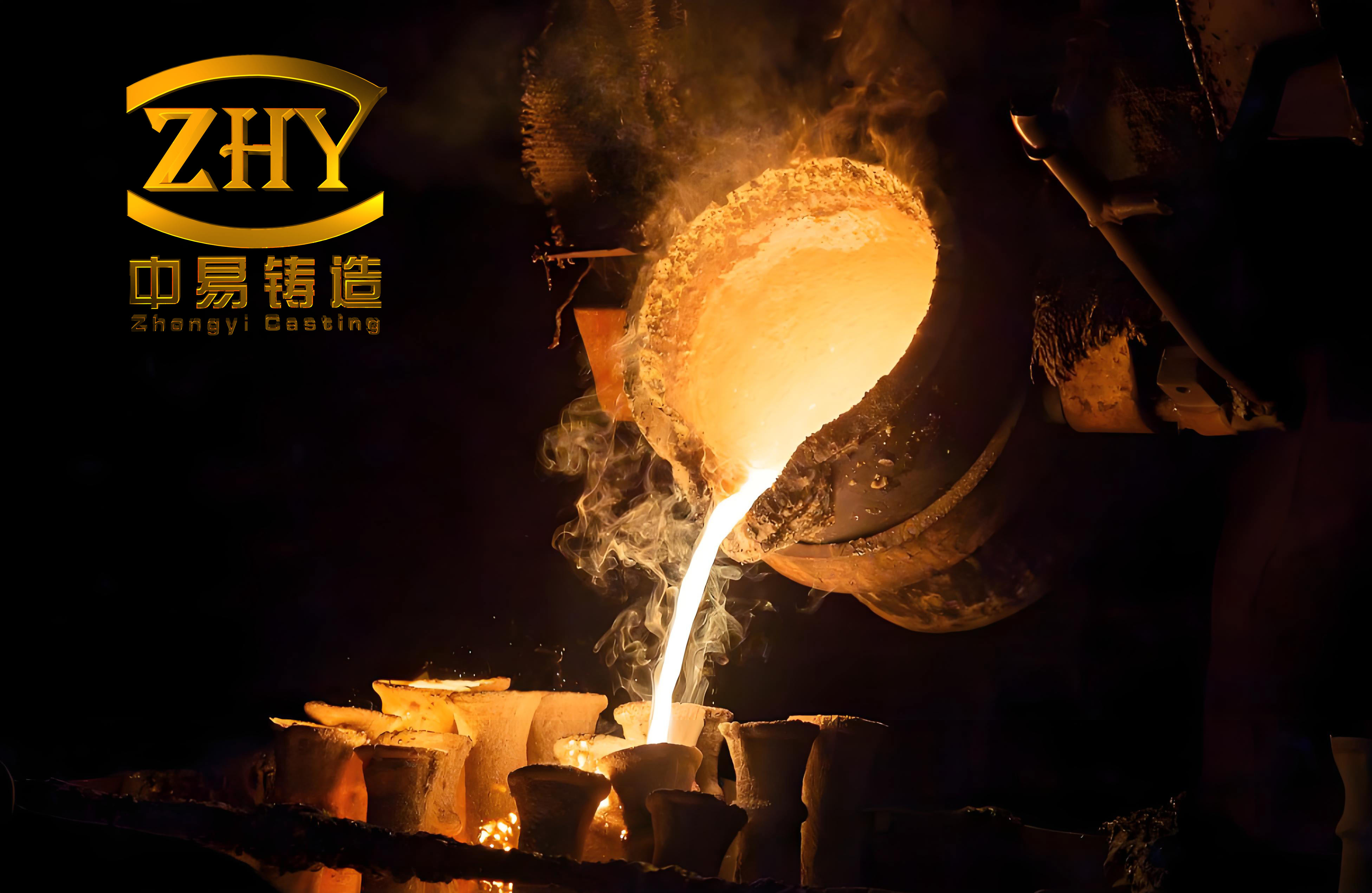
Pouring practice is the final gatekeeper. While metal temperature must be sufficient for fluidity (e.g., 1570-1580°C for stainless steels), excessive superheat increases shrinkage problems. The pour speed should be modulated—”fast then slow” for large castings to minimize initial impingement, and “slow then fast” for small ones. Crucially, the metallostatic head should be minimized by design. This often involves revisiting the gating and risering system geometry. Additionally, part design should avoid large, flat areas; incorporating ribs or breaking up planes can prevent the shell conditions that lead to cracking. In lost wax casting, every aspect of the process chain is interconnected.
It is instructive to compare positive veining with a more severe defect: finning or “hairy wings.” While both stem from metal penetration into shell discontinuities, they differ in severity and morphology. Positive veins are fine, raised networks with rounded tops because the trapped air in the fine crack expands but cannot escape easily. Hairy wings are larger, sharper, irregular fins resulting from metal penetration into wider cracks or gaps where air can be expelled, allowing the metal to form a thin, sharp edge. The preventive measures for positive veining directly apply to preventing hairy wings; the latter is essentially an escalated form of the former. This progression underscores the importance of early intervention in the lost wax casting process.
Shifting focus to negative veining, or “sunken veins,” we encounter a different mechanism rooted in shell delamination. Here, the inner surface layer of the shell separates from the subsequent backup layers. During pour, the hot metal’s radiation and conduction cause this delaminated layer to bulge inward in a网状 pattern. The metal then replicates this sunken network onto the casting surface. The primary cause is poor interlayer bonding within the shell, a frequent issue in high-volume lost wax casting production.
Delamination can occur due to several reasons I’ve frequently diagnosed. A significant mismatch in the thermal expansion coefficients between face coat material (e.g., zircon) and backup material (e.g., fused silica) creates stress upon heating. If the interval between applying the face coat stucco and dipping the next coat is too long, or if the shop temperature is too high, the face coat becomes over-dried and loses its bonding capability. Excessive loose sand (flour) or dust on the stuccoed surface, or using damp stucco, acts as a parting agent. For water-glass shells, residual hardener on the surface; for silica-sol shells, excessively dry face coats before the next dip—both inhibit proper wetting and adhesion. Furthermore, an overly smooth backup surface caused by very fine face-coat stucco or excessively viscous backup slurry prevents mechanical keying.
Once delamination exists, the shell’s resistance to thermal deformation is lowered. The thermal load from the molten metal, especially in areas of high heat concentration like large flat sections, thick junctions, or near gates, causes the thin, separated face layer to expand and bulge plastically. This creates the characteristic sunken脉络 impression on the casting. Part design is a major contributor; designers unfamiliar with the nuances of lost wax casting often specify geometries that are inherently prone to creating these conditions.
Firing and pouring parameters can exacerbate the issue. Over-firing can weaken interlayer bonds, while a low shell temperature at pour increases the thermal shock to the face coat. A high pouring temperature or speed concentrates heat, promoting bulging of any delaminated area.
The mitigation strategy for negative veining centers on achieving perfect shell lamination. Selecting face and backup refractories with closely matched thermal expansion is ideal. All materials, especially mulite-based sands and flour, should be aged or conditioned to ensure consistent binder interaction. The time interval between coats must be tightly controlled, and the working environment’s temperature and humidity stabilized. After stuccoing, air blowing to remove浮砂 is highly recommended. The moisture and dust content of stucco must be kept below 0.3%. For water-glass shells, proper draining after hardening minimizes residual salts; for silica-sol, avoiding complete desiccation of the face coat is key. The viscosity of backup slurries and the粒度 of stucco should be chosen to promote a rough, interlocking interface.
Again, part design modification is a powerful tool. Breaking up large planes with non-functional ribs, adding drafts, or repositioning gates to avoid direct impingement on vulnerable areas can eliminate the problem at its source. In lost wax casting, close collaboration between the foundry engineer and the design engineer is invaluable.
Negative veining also has a more severe counterpart: the “rat tail” defect. A rat tail is a broader, smoother, shallow depression on the casting surface. The relationship is analogous to that between positive veins and hairy wings. Negative veins are the fine,网状 precursor, while rat tails are the expanded, more pronounced manifestation resulting from larger areas of shell delamination and bulging. The same principles of preventing delamination prevent both defects in lost wax casting operations. The distinction lies in scale and severity, with rat tails often requiring more extensive rework.
To synthesize the knowledge and provide a quick reference, I’ve compiled the core causes and countermeasures for both defect types into the following comprehensive table. This encapsulates the practical wisdom gained from troubleshooting countless lost wax casting projects.
| Defect Type | Root Cause Category | Specific Causes | Primary Corrective Actions |
|---|---|---|---|
| Positive Veining | Shell Weakness (Cracks) | Poor green strength from improper drying/hardening. | Optimize drying/hardening parameters (time, temp, humidity, concentration). |
| Material issues (high impurities, moisture, dust). | Use high-purity refractories; control material storage. | ||
| Abrupt change in stucco粒度 between layers. | Use a graduated stucco sizing sequence. | ||
| Process-Induced Cracks | Improper dewaxing (slow ramp, low pressure/temp). | Implement rapid, high-temperature dewaxing (steam preferred). | |
| Pouring Dynamics | High kinetic energy (\(E_k \propto v^2\)) and high static head (\(P=\rho g h\)). | Reduce pour speed; design for lower metallostatic head; modify gating. | |
| Negative Veining | Shell Delamination & Bulging | Mismatched thermal expansion of shell layers. | Select compatible face/backup refractories (similar CTE). |
| Poor interlayer bond (over-dried face coat, long intervals, dust). | Control intercoat timing & environment; remove浮砂; use air blow. | ||
| Part design with large flat/curved surfaces. | Incorporate design changes (ribs, breaks in plane) in consultation. | ||
| Localized overheating from gating or thick sections. | Optimize gate location/size; use chill techniques in模具 design. |
The science of lost wax casting is deeply interwoven with material science and fluid dynamics. To further quantify the pressure required for metal penetration into a crack, we can consider the capillary pressure equation for a non-wetting liquid (which molten metal often is to ceramics):
$$P_c = \frac{2\gamma \cos\theta}{r}$$
where \(P_c\) is the capillary pressure, \(\gamma\) is the surface tension of the metal, \(\theta\) is the contact angle (typically >90°, making \(\cos\theta\) negative, indicating pressure must be applied to enter), and \(r\) is the effective radius of the crack. The total pressure driving penetration is the sum of the metallostatic head and the dynamic pressure from flow. Only when this exceeds \(P_c\) does penetration occur. This explains why finer cracks (smaller \(r\)) require higher pressures, but also why they produce the characteristic fine脉纹. This principle is central to understanding defect formation in lost wax casting.
Furthermore, the thermal stress in the shell during firing can be approximated for simple cases. The stress (\(\sigma\)) generated due to differential thermal expansion between layers or due to a temperature gradient can be modeled as:
$$\sigma = E \cdot \alpha \cdot \Delta T$$
where \(E\) is the Young’s modulus of the ceramic, \(\alpha\) is the coefficient of thermal expansion, and \(\Delta T\) is the temperature difference. If this stress exceeds the tensile strength of the bonded interface or the ceramic itself, cracks or delamination occur. This formula underscores the need for controlled heating/cooling rates and material compatibility in lost wax casting shell systems.
In conclusion, my journey in perfecting lost wax casting has taught me that veining defects are not mere random occurrences but are predictable outcomes of specific process deviations. Positive veining is an invasion phenomenon, necessitating an impervious shell and gentle pouring. Negative veining is a displacement phenomenon, demanding impeccable shell lamination and intelligent design to resist thermal distortion. The progression of these defects to their more severe forms—hairy wings and rat tails—serves as a clear warning to address issues promptly. The solutions lie in a holistic approach: rigorous material control, precise process parameter management, continuous monitoring, and proactive design for manufacturability. Every step, from slurry formulation to final shakeout, holds significance. As the industry advances with new binder systems, refractory materials, and simulation software, the fundamental physics and principles outlined here remain the bedrock of quality in lost wax casting. By internalizing these cause-effect relationships and implementing the described corrective measures, foundries can dramatically reduce scrap rates, enhance product quality, and fully harness the precision capabilities of the lost wax casting process. The pursuit of perfection in lost wax casting is a continuous learning cycle, where each defect analyzed deepens our understanding and control over this ancient yet ever-evolving art form of metal shaping.