
In my years of experience as a casting engineer, I have consistently encountered the pervasive challenge of porosity in casting, which significantly impacts the integrity, mechanical properties, and aesthetic quality of cast components. Porosity in casting arises from entrapped gases, shrinkage during solidification, or improper process parameters, leading to defects that can compromise performance. This article delves into practical strategies I have employed to mitigate porosity in casting, drawing from real-world applications involving complex geometries, high-pressure die casting, and innovative mold technologies. I will elaborate on these methods through detailed explanations, tables summarizing key parameters, and mathematical models that underscore the underlying principles. Throughout, I emphasize the critical need to address porosity in casting through a holistic approach encompassing design, material selection, and process optimization.
My journey began with large-scale thin-walled aluminum alloy castings, where porosity in casting was a predominant issue due to uneven cooling and intricate structures. One notable project involved a reflector component with a parabolic surface and a box-like upper section, similar to examples in industry literature. To combat porosity in casting, I advocated for a composite mold system that combines metal molds for specific regions with furan resin sand molds for others, supplemented with localized chilling using graphite sand and insulating materials like expanded perlite for risers. This approach effectively controls the solidification sequence, preventing shrinkage porosity and cracks in thick sections. The success of this method hinges on understanding heat transfer dynamics, which can be modeled using Chvorinov’s rule for solidification time:
$$ t = B \left( \frac{V}{A} \right)^2 $$
Here, \( t \) represents the solidification time, \( V \) is the volume of the casting section, \( A \) is its surface area, and \( B \) is a constant dependent on mold material and casting conditions. By manipulating these factors in the composite mold, I reduced porosity in casting by ensuring directional solidification from thin to thick areas. The table below summarizes the components of this composite mold system and their roles in minimizing porosity in casting:
| Mold Component | Material | Function | Impact on Porosity in Casting |
|---|---|---|---|
| Parabolic Surface Mold | Metal (e.g., cast iron) | Provides rapid cooling for thin walls | Reduces gas entrapment by promoting quick solidification |
| Box Section Mold | Furan Resin Sand | Allows for complex shapes and gradual cooling | Minimizes shrinkage porosity through controlled thermal gradients |
| Localized Chills | Graphite Sand | Accelerates cooling in thick areas like bosses | Prevents isolated hot spots that lead to microporosity |
| Riser Insulation | Expanded Perlite | Maintains liquid metal feed to compensate for shrinkage | Decreases macroporosity by ensuring adequate feeding |
Furthermore, the use of pre-embedded bolts for core assembly ensured precise positioning, reducing misalignment-induced defects that could exacerbate porosity in casting. This composite method not only curtailed porosity in casting but also enhanced dimensional accuracy, proving viable for small-batch production of large, intricate parts. The economic benefits were substantial, as it minimized specialized equipment investments and mold costs. In my practice, I have found that such tailored solutions are essential for addressing porosity in casting, especially when dealing with alloys like ZL101A that are prone to gas absorption.
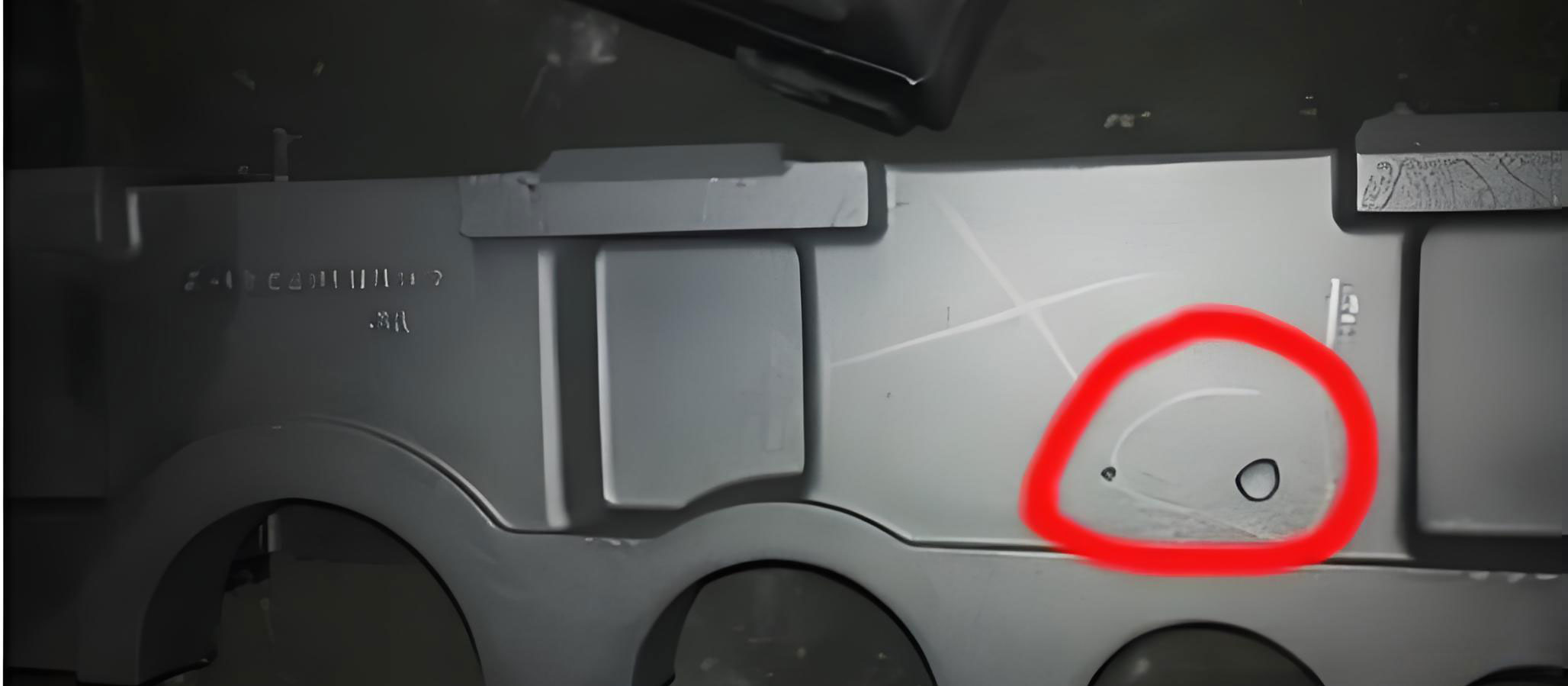
Transitioning to high-pressure die casting, porosity in casting remains a critical concern due to the high velocities involved, which can trap air and lubricant vapors. In my work, I focus on four key areas: melting, mold design, process parameters, and die lubricants. Among these, mold design and parameter settings are most dynamic and influential in controlling porosity in casting. For instance, I recall a case involving an aluminum alloy cover part, where initial production yielded high rejection rates due to porosity in casting, with leak-tightness failures exceeding 30%. Analysis revealed that the gating system led to turbulent flow, causing air entrapment, and the shot sleeve had low fullness, introducing excessive air into the cavity. To mitigate porosity in casting, I redesigned the gating to promote laminar flow and adjusted the shot sleeve diameter to increase fullness. The gating modifications involved reorienting ingates to ensure metal advances along mold walls, facilitating orderly filling and venting. This aligns with fluid dynamics principles, where the Reynolds number \( Re = \frac{\rho v D}{\mu} \) should be kept low to avoid turbulence; here, \( \rho \) is density, \( v \) is velocity, \( D \) is characteristic diameter, and \( \mu \) is viscosity. By optimizing these factors, I reduced porosity in casting significantly. The table below outlines critical mold design and parameter adjustments for minimizing porosity in casting in die casting:
| Factor | Optimal Setting | Rationale | Effect on Porosity in Casting |
|---|---|---|---|
| Gating Direction | Ingates oriented along mold walls | Promotes directional filling and reduces air entrapment | Lowers gas porosity by improving venting efficiency |
| Shot Sleeve Fullness (\( \phi \)) | \( \phi > 40\% \) (e.g., via smaller diameter) | Reduces air volume in sleeve, minimizing gas injection | Decreases overall porosity in casting by limiting air intake |
| Slow Shot Speed | Below critical velocity \( v_c = \sqrt{\frac{2g h}{\rho}} \) | Prevents air entrainment during sleeve filling | Mitigates porosity in casting by avoiding turbulent mixing |
| Fast Shot Transition Point | Set based on cavity volume and flow analysis | Ensures rapid filling after air expulsion | Reduces shrinkage and gas porosity through controlled solidification |
In this context, shot sleeve fullness \( \phi \) is defined as:
$$ \phi = \frac{V_{\text{melt}}}{V_{\text{chamber}}} $$
where \( V_{\text{melt}} \) is the volume of molten metal and \( V_{\text{chamber}} \) is the shot sleeve volume. A higher \( \phi \) reduces the air mass available for entrapment, directly lowering porosity in casting. After implementing these changes—such as increasing \( \phi \) from 30% to 42% and redesigning gates—the defect rate dropped to near zero, eliminating the need for impregnation processes. This example underscores how meticulous attention to mold geometry and parameters can drastically reduce porosity in casting, yielding both quality and economic gains.
Another avenue I explored involves semi-permanent sand molds for heavy castings like slag pans, which weigh over 10 tons. Porosity in casting in such large components often stems from extended solidification times and mold gas generation. Semi-permanent molds, reusable for multiple pours, offer improved consistency and reduced gas evolution compared to disposable sand molds. In my application, I used bonded sand mixes with additives to enhance durability and venting. The key benefit is the stabilization of mold atmosphere, which lessens gas-related porosity in casting. The thermal behavior of these molds can be described using Fourier’s law of heat conduction:
$$ q = -k \nabla T $$
where \( q \) is heat flux, \( k \) is thermal conductivity, and \( \nabla T \) is the temperature gradient. By optimizing \( k \) through sand composition, I achieved more uniform cooling, curtailing shrinkage porosity in casting. The table below compares semi-permanent molds with traditional sand molds in terms of their impact on porosity in casting:
| Aspect | Semi-Permanent Sand Mold | Traditional Sand Mold | Influence on Porosity in Casting |
|---|---|---|---|
| Reusability | 10-50 pours per mold | Single use | Reduces mold gas generation over time, lowering porosity |
| Thermal Stability | Higher due to seasoned mold walls | Variable, often lower | Promotes consistent solidification, minimizing shrinkage porosity |
| Venting Capacity | Enhanced through designed channels | Limited by mold breakdown | Improves gas expulsion, reducing gas porosity |
| Economic Efficiency | Lower cost per casting due to reuse | Higher cost per casting | Indirectly reduces porosity by allowing investment in better materials |
In practice, I applied this to slag pan production, where the semi-permanent mold system reduced porosity in casting by ensuring reliable venting and controlled cooling. The molds were designed with integrated vents and chill zones to manage thermal gradients, effectively addressing both gas and shrinkage porosity in casting. This approach also boosted productivity by shortening cycle times and lowering labor intensity, demonstrating that innovative mold technologies play a pivotal role in combating porosity in casting for heavy-section components.
To synthesize these strategies, I often employ computational simulations to predict porosity in casting. Models based on the Niyama criterion, which relates thermal gradients and cooling rates to shrinkage porosity, are invaluable. The criterion is expressed as:
$$ G / \sqrt{\dot{T}} > C $$
where \( G \) is the temperature gradient, \( \dot{T} \) is the cooling rate, and \( C \) is a material-dependent constant. Values below the threshold indicate susceptibility to porosity in casting. By integrating this with fluid flow simulations, I optimize gating and venting designs pre-production. Additionally, gas porosity formation can be modeled using Sieverts’ law for gas solubility in molten metals:
$$ S = k \sqrt{P} $$
Here, \( S \) is solubility, \( k \) is a constant, and \( P \) is partial pressure. During solidification, decreasing solubility leads to gas precipitation, contributing to porosity in casting. Process controls like vacuum-assisted casting or inert atmospheres help mitigate this. The table below summarizes integrated methods to reduce porosity in casting across different casting processes:
| Method Category | Specific Technique | Applicable Process | Mechanism to Reduce Porosity in Casting |
|---|---|---|---|
| Mold Design | Composite molds with chills and insulators | Sand casting, investment casting | Controls solidification sequence to minimize shrinkage and gas entrapment |
| Process Parameters | Optimized shot sleeve fullness and slow shot speed | High-pressure die casting | Limits air intake and promotes laminar flow to reduce gas porosity |
| Material Selection | Use of degassing agents and low-gas sands | All casting processes | Decreases gas sources in melt and mold, lowering overall porosity |
| Simulation & Monitoring | Niyama criterion and real-time pressure sensors | Advanced casting operations | Predicts and prevents porosity formation through data-driven adjustments |
In my experience, a proactive stance is essential: porosity in casting must be addressed from the design phase onward. For instance, in the reflector project, I collaborated with designers to modify wall thicknesses and add ribs to facilitate feeding, thereby reducing porosity in casting. Similarly, for die-cast parts, I advocate for prototyping with simulation tools to iterate gating designs before tooling fabrication. This not only cuts costs but also enhances quality by preempting porosity in casting. The economic implications are significant; as porosity in casting diminishes, post-casting treatments like impregnation become unnecessary, saving time and resources.
Looking forward, emerging technologies such as additive manufacturing for molds and real-time adaptive control systems offer new avenues to combat porosity in casting. For example, 3D-printed sand molds with optimized venting geometries can further reduce gas porosity in casting. Moreover, machine learning algorithms can analyze process data to predict and correct porosity in casting dynamically. In my ongoing work, I explore these innovations to push the boundaries of defect-free casting. Ultimately, the fight against porosity in casting is multifaceted, requiring continuous learning and adaptation. By sharing these insights, I hope to contribute to a broader understanding that porosity in casting is not inevitable but manageable through diligent application of science and engineering principles.
In conclusion, my firsthand experiences reinforce that porosity in casting can be effectively minimized through a combination of tailored mold systems, precise process controls, and innovative materials. Whether dealing with large aluminum reflectors, high-volume die castings, or massive slag pans, the principles remain consistent: manage thermal gradients, optimize fluid flow, and eliminate gas sources. I urge fellow practitioners to prioritize porosity in casting in their quality initiatives, as it directly impacts product performance and profitability. Through collaborative efforts and technological advancements, we can achieve near-zero porosity in casting, paving the way for superior cast components across industries.